How to Register a Barn Find
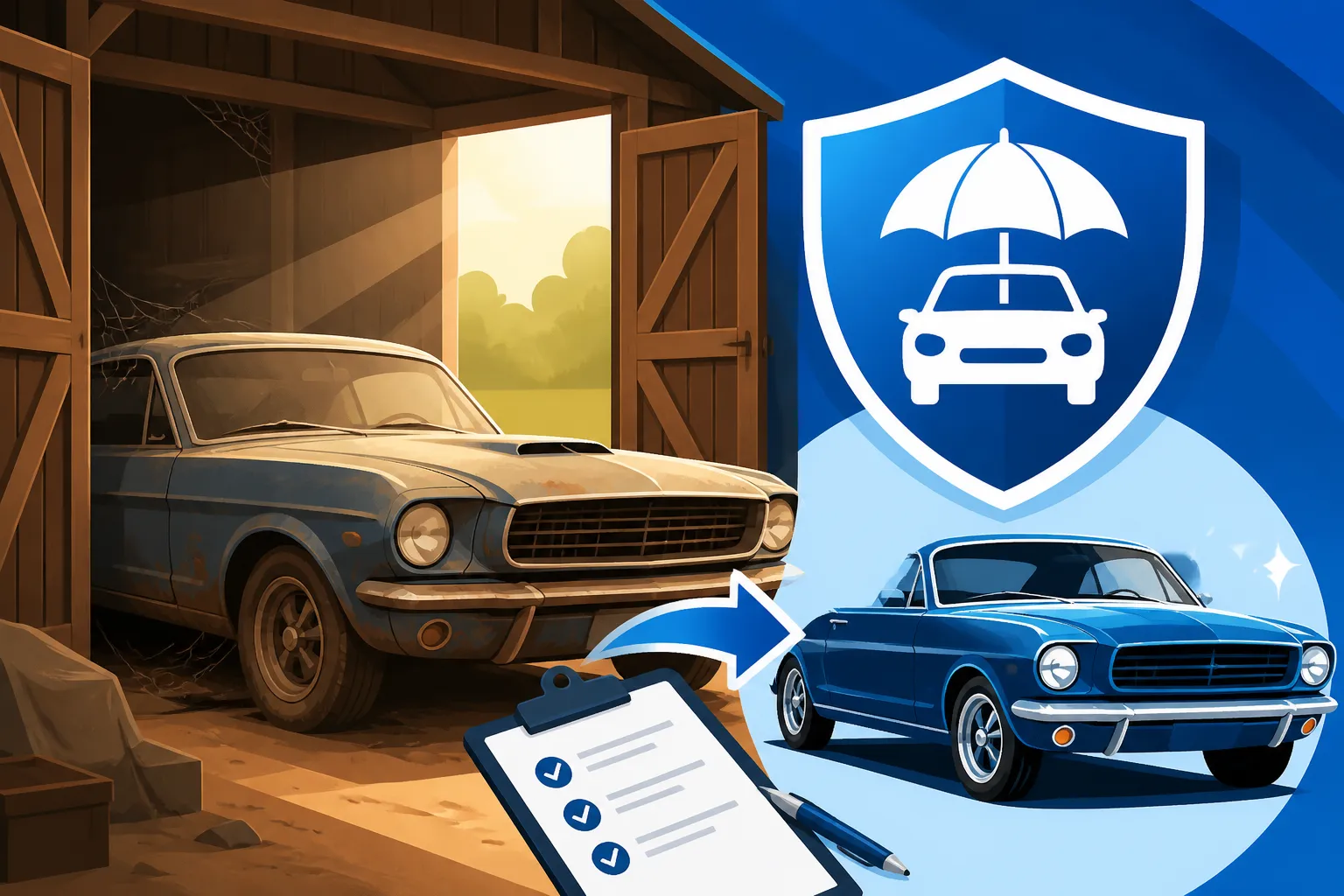
You've stumbled upon that dream forgotten classic – maybe it's tucked away in a dusty old barn, sitting silent in a forgotten field, or hidden deep within a garage that hasn't seen daylight in decades. It’s an exciting discovery, full of potential, but then the reality hits: how on earth do you legally make it yours, especially when there's no title to be found? Registering a barn find can feel like navigating a maze blindfolded, riddled with confusing state regulations and missing paperwork. This guide is here to walk you through the often-baffling process of legally registering your prized barn find, ensuring you can eventually get it insured and on the road.
Understanding the Unique Challenges of a Barn Find Registration
Finding a barn find is a thrill, a real treasure hunt come to life. You picture it restored, cruising down the highway, turning heads. But before any of that can happen, you need to tackle the bureaucratic beast: registration. And let me tell you, a barn find presents a whole different set of hurdles compared to buying a classic with a clear, current title. It's not just about the rust and the missing parts; it's about the missing paperwork.
The Elusive Title and Bill of Sale
The romantic notion of stumbling upon a forgotten classic often clashes with the harsh reality that most barn finds come without a clean title or a simple, traceable bill of sale. Perhaps the original owner passed away decades ago, the vehicle changed hands informally over generations, or the paperwork simply disintegrated in a damp garage. Whatever the reason, the absence of a legal title is the biggest obstacle you'll face.
Without a title, you don't legally own the vehicle in the eyes of the state. A simple bill of sale from the person who found it, or even the property owner, isn't usually enough to establish clear ownership. States have stringent laws to prevent vehicle theft and fraud, and these require a documented chain of custody. You might have paid good money for the car, but if you can't prove legitimate ownership back to a titled individual, you're stuck. Imagine pouring thousands into restoring a vintage Ford Mustang only to find you can't register it because of murky origins. It's a common, heartbreaking scenario.
The consequences of not having a clear title are significant: you can't legally register the vehicle, which means you can't get proper insurance, and you certainly can't drive it on public roads. It remains a fascinating, expensive lawn ornament at best. You also won't be able to legally sell it, severely limiting its value. It's critical to remember that while some states are more lenient with titles for very old vehicles, others are extremely strict, requiring a full paper trail. It's definitely something you need to research early, as different states have varying State Minimum Requirements for Classic Cars.
Overcoming Dormancy and Lack of Records
Another significant challenge with barn finds is their prolonged dormancy. Many have been off the road for so long that their records are either buried deep in state archives, completely purged from modern databases, or never even existed in the first place if the vehicle was never titled in that particular state. This lack of recent registration activity adds another layer of complexity.
While old license plates or physical VIN tags provide valuable clues, they don't substitute for official documentation. A faded plate from 1965 might be a cool piece of history, but it doesn't prove ownership or current registration. The VIN (Vehicle Identification Number) is paramount, but even with a clear VIN, tracing its history can be a monumental task if the car hasn't been in the system for decades. This can feel like detective work, trying to piece together a story from fragments.
It's also important to distinguish a "barn find" you've purchased from an "abandoned vehicle." If you bought the car from someone, even if it was just the farmer who owned the land it was sitting on, that's different from finding a truly abandoned car that no one claims. Abandoned vehicle processes often involve law enforcement, certified mail to last known owners, public notices, and a lien sale if no owner comes forward. While this can sometimes be a route to a title, it's typically more complex and time-consuming than trying to title a vehicle you've acquired through a transaction. Understanding this distinction is key to choosing the right path for your specific barn find.
Step-by-Step Guide to Registering Your Barn Find
So, you’ve got your barn find, and you understand the challenges. Now, let’s talk about how to actually get this beauty legally recognized. This isn’t always a straightforward process, but by breaking it down, you can navigate the path to proper registration.
Initial Documentation and Due Diligence
Your journey begins with gathering every single shred of information and physical evidence you can find. Don't underestimate anything! Did the seller have any old papers, even a handwritten note from a previous owner? Did you find an expired registration stub tucked under the seat? Get photos of everything. Document the full history of the car as best you can, asking the seller for any details they remember about its past, previous owners, or where it came from.
Next, you absolutely must verify the vehicle's VIN. This is crucial for every state's DMV. The VIN is essentially your car's unique fingerprint. On older classics, the VIN can be in various places: on the driver's side door jamb, stamped on the frame rail, on the dashboard, or even on the engine block itself. Carefully locate all VINs and document them with photos. Many states will require a law enforcement officer or an authorized VIN verifier to inspect the car and confirm the VINs match. This process helps prevent stolen vehicles from being retitled. Make sure the VIN on your car is untampered with and matches any paperwork you might have.
Finally, even if the seller doesn't have a valid title, ensure you get a thorough Bill of Sale. This document proves you purchased the vehicle, rather than simply taking possession of it. It should include the full names, addresses, and signatures of both buyer and seller, the date of sale, the purchase price, and a complete description of the vehicle, including the VIN. If possible, have it notarized. While not a title, it's essential proof of transaction, especially when you might need to pursue alternatives like a bonded title.
Navigating State-Specific DMV Processes
This is where things can get tricky, as motor vehicle laws vary wildly from state to state. What’s a walk in the park in one place might be an administrative nightmare in another. It's vital to research your specific state's Department of Motor Vehicles (DMV) (or equivalent agency) procedures for vehicles without titles. Don't assume anything; make the calls, check their websites, and if possible, visit in person with all your documentation.
Some states are surprisingly lenient, especially with very old vehicles. For example, in Vermont, vehicles over 15 years old can often be registered with just a bill of sale and a VIN verification, without ever receiving a formal title. Alabama also has a reputation for being relatively easy to register pre-1975 vehicles using a bill of sale. These states recognize that titles weren't always mandatory for older cars or that paperwork can simply get lost over time. Learning about specific requirements for Historic Vehicle Registration Explained or even Antique Vehicle Registration Requirements in your state will be immensely helpful here.
Other states might have specific "abandoned vehicle" or "unclaimed vehicle" procedures that, while designed for different scenarios, might be adapted for your barn find. This can involve sending certified letters to the last registered owner (if traceable), placing public notices, and waiting a specified period before you can apply for a title. This route is often more complex and time-consuming but can be a legitimate pathway if you've exhausted other options. Remember to explicitly ask the DMV about how to go about Registering a Car with No Title in your jurisdiction.
The Bonded Title Pathway
For many barn finds, especially in states with stricter titling requirements, a bonded title is a frequently used pathway to legal ownership. What exactly is a bonded title? It's essentially a way to obtain a title for a vehicle when you can't get the original, usually because it's lost, stolen, or the previous owner can't be found or won't cooperate. It involves obtaining a surety bond, which acts as a financial guarantee that you are the rightful owner.
The process typically involves an application to your state’s DMV, a thorough inspection of the vehicle, and obtaining a surety bond. The bond amount is usually set at a percentage of the vehicle's value, sometimes 1.5 to 2 times its appraised value, and it protects the state and any potential previous legitimate owners for a set period, often three to five years. If, during this period, someone comes forward with a valid claim of ownership, they can make a claim against the bond. After the bond period expires without a claim, the bonded title typically converts to a standard title. You can learn more about this in our guide on a Bonded Title for a Classic Car Explained.
To apply for a bonded title, you’ll usually need to complete specific forms from your DMV, provide your bill of sale, and possibly get an appraisal to determine the car's value for the bond calculation. You'll then contact a surety bond company, which will issue the bond for a premium (usually a few hundred dollars, depending on the bond amount). While it's a viable option in many states, the specific requirements regarding the bond amount, the waiting period, and any necessary appraisals can vary widely. Make sure to check your state’s exact regulations before proceeding.
Insuring Your Newly Registered Barn Find
Congratulations! You’ve navigated the bureaucratic jungle and successfully registered your barn find. Now for the equally crucial next step: insuring it. You can't just slap a standard auto policy on a classic, especially one that started life in a barn. Specialty insurance is key, and it all revolves around protecting your investment properly.
The Importance of Agreed Value Coverage
A barn find, once registered and potentially undergoing restoration, is far from a typical depreciating asset. Its value isn't dropping daily like a new car; in fact, it's likely increasing, especially with careful restoration. This is precisely why standard auto insurance policies, which typically offer "Actual Cash Value" (ACV), are utterly unsuitable for your classic. ACV policies would only pay out what the insurance company determines the car was worth at the moment of a total loss, often significantly less than its true collector value, leaving you devastated.
Instead, you need "Agreed Value Coverage Explained". This is the gold standard for classic car insurance. With an agreed value policy, you and your insurer, like Hagerty or American Collectors Insurance, agree upon the car's true market value before you even pay your first premium. If your barn find is unfortunately stolen or totaled, you receive that exact agreed-upon amount, no questions asked, no depreciation factored in. This peace of mind is invaluable for a vehicle that means so much to you.
The agreed value is typically determined through an appraisal by a qualified classic car appraiser, or sometimes through the insurer's specialized valuation tools, especially for common collector models. This process helps validate the car's condition, modifications, and overall market standing. It’s also important to understand Appraisal Requirements for Classic Car Insurance. As your barn find progresses through restoration, its value will naturally increase. It's crucial to document all your restoration expenses and inform your insurer regularly to adjust your agreed value. A good specialty policy will allow you to update the agreed value as improvements are made, ensuring your investment is always fully protected.
Finding the Right Specialty Insurance Provider
Traditional auto insurers often fall short when it comes to classics, mainly because they simply don't understand the unique risks, valuation, and usage patterns associated with collector vehicles. Your barn find isn't a daily commuter; it's a passion project, a piece of history. Standard insurers might struggle with valuation, offer inadequate coverage, or impose restrictions that don't make sense for a classic.
This is where specialty classic car insurers like Hagerty, Grundy, or American Modern come into play. These companies are built by and for car enthusiasts. They understand that your car is a collectible, not just transportation. They offer policies tailored to the nuances of classic car ownership, from flexible mileage plans to specialized coverage options. You'll want to explore options like Restoration Coverage for Classic Cars if your barn find is still a work in progress, spare parts coverage for those hard-to-find components, and even inflation guard to automatically adjust your agreed value over time.
When choosing a provider, look beyond just the premium. Consider their reputation for claims handling, their knowledge of the classic car market, and the range of specialized endorsements they offer. Ask specific questions about how they handle agreed value adjustments during restoration, their towing policies (flatbed is essential for classics!), and any mileage restrictions. Our guide on How to Buy Classic Car Insurance can provide a comprehensive checklist for what to look for, ensuring your newly registered barn find gets the comprehensive protection it deserves, meeting all Classic Car Insurance Eligibility Requirements.
Common Pitfalls and Expert Tips
Registering a barn find can be a marathon, not a sprint. Knowing what traps to avoid and how to lean on the vast network of the classic car community can save you a lot of heartache, time, and money.
Avoiding Scams and Legal Troubles
In the pursuit of getting a title for your prized barn find, it's easy to become desperate, which can make you vulnerable to scams. Be extremely wary of anyone promising a "no questions asked" title or a super-fast, seemingly magical way to get around state titling laws. These often involve illegal practices like "title washing" (registering a car in a lenient state to get a clean title, then transferring it to a stricter one, bypassing actual ownership proof) or simply selling fraudulent paperwork. If a deal sounds too good to be true, it almost certainly is. Always verify the legitimacy of any process directly with your state's DMV.
Furthermore, never operate your barn find on public roads without proper registration and insurance, even if it's "just around the block." The legal ramifications, including fines, impoundment, and personal liability in an accident, are severe. Until you have a valid title, registration, and a suitable classic car insurance policy, your vehicle should remain off the road, or only transported on a trailer with appropriate transport insurance. Before you even begin the registration process, it's wise to run the VIN through services like the National Insurance Crime Bureau (NICB) or a state police database to check for any stolen vehicle reports. If the VIN appears tampered with or flags a theft report, walk away immediately. It's never worth the legal headaches, no matter how rare or desirable the car.
Leveraging Collector Community Resources
You are not alone in this journey! The classic car community is incredibly vibrant and supportive, and many collectors have faced the exact same challenges you're experiencing. Online forums, local car clubs, and national organizations are invaluable resources. A quick search for "how to register a barn find [Your State]" on a classic car forum will likely yield countless threads with personal experiences and actionable advice. Someone in your local club has probably navigated the specific bureaucracy of your state's DMV, and their insights can save you hours of frustration and dead ends.
Car club memberships often come with more than just social gatherings. Many clubs have members who are experts in classic car law, appraisers, or even retired DMV officials who can offer guidance. They might also provide references for appraisers needed for agreed value insurance or bonded titles. Beyond advice, belonging to a recognized car club can sometimes even help when proving your car's "collectible status" to the DMV or an insurer, as discussed in How to Prove a Car's Collectible Status. Local officials at the DMV who specialize in classic or antique vehicle registrations can also be goldmines of information. Try to connect with these individuals directly, as their nuanced understanding of the rules can often simplify complex situations far more than relying solely on general information lines or websites.
| State Titling Approach | Common Barn Find Registration Path (Examples) | Key Considerations for Collectors |
|---|---|---|
| Lenient | Vermont (15+ yrs old), Alabama (pre-1975) | Often requires only Bill of Sale + VIN verification; no title issued for older cars. Great for straightforward barn finds. |
| Moderate | Florida, Georgia, Pennsylvania | Bonded title is a common option; strict abandoned vehicle processes; often requires extensive ownership proof and/or appraisal. |
| Strict | California, New York, Texas | Exhaustive owner search required; lengthy, complex abandoned vehicle procedures; legal counsel often advised for untitled vehicles. |
Disclaimer
Please note that the information provided in this article is for general guidance only and does not constitute legal advice. Vehicle registration and titling laws are complex and vary significantly by state and local jurisdiction. Always consult with your state's Department of Motor Vehicles (DMV) or a qualified legal professional for advice pertaining to your specific situation.