How to Buy Insurance for a Hot Rod
For many passionate enthusiasts, a hot rod isn't just a car; it's a labor of love, a piece of automotive art, and an extension of their personality. You've poured countless hours, sweat, and significant investment into building, customizing, or acquiring your unique machine, only to find that standard auto insurance doesn't quite grasp its true value or the specialized care it demands. This guide is designed to cut through the confusion and walk you through everything you need to know about securing the right insurance for your hot rod, ensuring your prized possession is properly protected.
Understanding What Makes Hot Rod Insurance Different
When you're dealing with a hot rod, you're not just insuring a vehicle; you're insuring a custom creation. This fundamental difference is why a standard car insurance policy simply won't cut it. Your hot rod has a unique identity, often built from the ground up or significantly modified, which means its value isn't determined by a Kelley Blue Book average.
Why Hot Rods Aren't Like Regular Cars to Insure
Think about your daily driver. When you get into an accident or it's stolen, a regular insurance company typically assesses its "Actual Cash Value" (ACV). This means they look at its market value, factoring in depreciation, mileage, and condition. For a brand-new car, that's fine; it's designed to lose value over time. But a hot rod? That's a whole different ballgame. Hot rods often appreciate in value, especially with high-quality custom work and meticulous maintenance. An ACV policy would severely shortchange you if something happened, leaving you far from able to replace your unique build. The emotional and financial investment in a hot rod demands a more sophisticated approach to valuation and coverage.
Moreover, the way hot rods are used also differs significantly. They're typically not daily commuters battling rush hour traffic. Instead, they're cherished for weekend cruises, car shows, and special events. This reduced exposure to typical risks means a specialized policy can often offer more comprehensive coverage at a surprisingly reasonable premium compared to a standard policy for a newer, less valuable vehicle that's driven every day.
The Agreed Value Advantage for Custom Builds
This is perhaps the most critical difference and the cornerstone of hot rod insurance: "Agreed Value coverage explained." Unlike ACV, Agreed Value means you and your insurance provider agree on your hot rod's value before the policy is issued. If a total loss occurs, you receive that exact agreed-upon amount, no questions asked, minus your deductible. This peace of mind is invaluable, especially when you consider the unique components and custom fabrication involved in a hot rod.
Imagine you've built a show-stopping 1932 Ford hot rod with a custom chassis, a high-performance engine, bespoke interior, and a stunning paint job. Its market value is subjective and influenced by unique elements. With an Agreed Value policy, you document all these details, usually through an appraisal and detailed photos, and the insurer acknowledges and agrees to that specific value. This ensures that every penny you've invested, and the inherent collectible value, is fully recognized. Without Agreed Value, you risk facing a standard insurer's lowball offer that barely covers the cost of parts, let alone your labor or the car's true worth.
Specific Coverage Needs for Unique Components
Hot rods are a collection of specialized parts and custom craftsmanship. A standard policy might cover a factory-issued engine, but what about your supercharged big-block Chevy or that meticulously restored flathead Ford? Specialty hot rod insurance understands these unique components. It offers coverage for:
- Custom Parts and Equipment: This includes everything from bespoke suspension systems, aftermarket wheels, and performance engines to custom upholstery, sound systems, and unique body modifications. These are often the most expensive and defining features of your hot rod.
- Restoration Coverage for Classic Cars: If your hot rod is still a work in progress, or you're planning future modifications, some policies offer "Restoration Coverage for Classic Cars" that allows your agreed value to increase as you invest more into the build. This means your coverage grows with your project, protecting your investment at every stage.
- Spare Parts Coverage: Many hot rod owners collect specific spare parts, rare components, or even tools vital to maintaining their vehicle. A robust policy can include "Spare Parts Coverage explained," ensuring these valuable extras are also protected against theft or damage, often up to a certain limit or as an add-on endorsement.
These specialized coverages acknowledge that your hot rod is an evolving project and a significant investment in unique, non-standard components, ensuring you're protected for more than just the sum of its basic parts.
Eligibility and Requirements for Hot Rod Insurance
Getting classic car insurance for your hot rod isn't quite the same as insuring your family sedan. Specialty insurers have specific criteria they look for to determine eligibility and offer their tailored policies. These requirements are put in place to reflect the lower risk profile of these cherished vehicles.
Driver and Usage Requirements for Hot Rod Policies
One of the main reasons hot rod insurance is often more affordable than standard auto insurance is that these cars are not typically daily drivers. Insurers expect specific usage patterns from hot rod owners:
- Limited Mileage: Most hot rod policies come with mileage restrictions. This could be 2,500, 5,000, or even more miles per year, depending on the policy and provider. The idea is that your hot rod is primarily for pleasure driving, shows, and club events, not commuting to work every day. You might want to consider "Pleasure-Use Requirement Explained" as this forms the basis of these limitations. Be realistic about your driving habits, as exceeding these limits could void your coverage in a claim situation.
- Primary Vehicle Ownership: Many specialty insurers require that you also own and insure a separate "daily driver" vehicle for your regular transportation needs. This helps reinforce the notion that your hot rod is a secondary, recreational vehicle, reducing its perceived risk. For more on this, you can look into "Do You Need a Separate Car for Classic Insurance".
- Driving Record and Experience: While specialty insurers are generally more understanding of a few minor infractions than standard carriers, a clean driving record is usually preferred. They also want to ensure the primary driver has adequate driving experience, typically expecting drivers to be over 25 years old. This aligns with the "Minimum Age for Classic Car Insurance Drivers" requirements often seen.
- Secure Storage: This is a big one. Insurers want to know your hot rod is kept safe and sound when not in use.
Storage and Security Expectations
Because hot rods represent a significant investment and are often targets for theft, secure storage is a non-negotiable requirement for most specialty policies.
- Enclosed and Locked Garage: The gold standard is a private, enclosed, and locked garage. This could be an attached garage at your home, a detached garage, or even a dedicated storage unit, provided it meets security standards. Insurers want to minimize exposure to the elements and theft. This is often part of the "Garage Storage Requirement for Classic Cars."
- Home Security: Some insurers may offer discounts or have preferences for homes with alarm systems or other security features, further reducing the risk of theft.
- Exceptions: While rare, some policies might allow for covered carports or even outdoor storage in very specific, low-risk scenarios, but you'll likely pay a higher premium and face stricter eligibility checks. Always be transparent about your storage situation when getting a quote.
Documentation and Appraisal Considerations
Proving the value and uniqueness of your hot rod is crucial for securing the right "Agreed Value coverage for classic cars explained" and ensuring a fair payout if a claim arises.
- Detailed Records: Keep meticulous records of your build. This includes receipts for parts, invoices from custom shops, photos of the restoration process, and any documentation of unique components or modifications. These records help substantiate your hot rod's value.
- Professional Appraisal: For higher-value or highly customized hot rods, a professional appraisal from a qualified, independent appraiser is often required or highly recommended. This appraisal provides a third-party, expert valuation that the insurer can use to establish the Agreed Value. For more on this process, see "How to Get a Classic Car Appraisal." The appraiser will consider the vehicle's condition, modifications, provenance, and current market trends for similar custom vehicles.
- Photos: High-quality, recent photos of your hot rod, inside and out, are essential. These visually support your stated value and the appraisal, allowing the insurer to see the condition and extent of your custom work.
Meeting these eligibility requirements helps specialty insurers like Hagerty understand the true nature of your hot rod and offer you a policy that genuinely protects your investment.
The Step-by-Step Process to Insure Your Hot Rod
Navigating the insurance world for a hot rod might seem daunting, but breaking it down into manageable steps makes the process straightforward. You'll want to ensure you're working with providers who understand the unique nature of these vehicles.
Gathering Essential Information for a Quote
Before you even pick up the phone or go online, do your homework. Having all your ducks in a row will make the quoting process much smoother and more accurate.
- Vehicle Details: You'll need the basics: Year, make, model (or the original vehicle's details if it's a heavily modified custom), Vehicle Identification Number (VIN). Be prepared to describe the extent of modifications, engine type, transmission, and any significant custom work done to the body or interior.
- Proof of Value: This is where all those receipts, build sheets, and photos come in. If you have a professional appraisal, even better. The more documentation you have, the easier it is to establish a fair Agreed Value for your hot rod. Remember, the goal is to get "How to value your classic car for insurance" correctly.
- Storage Information: Be ready to describe where your hot rod is stored – is it in a locked, private garage? Do you have additional security measures in place?
- Usage Plans: How often do you plan to drive it? What will you use it for (shows, pleasure cruises, parades)? This determines your mileage tier and helps establish your risk profile.
- Driver Information: You'll need details for all potential drivers, including their driving history.
Having this information readily available not only speeds up the process but also ensures you get the most accurate quote possible, reflecting the true nature of your hot rod and its usage.
Comparing Specialty Insurers and Their Offerings
This is not the time to call your everyday auto insurance provider. Hot rods require specialty coverage. Focus on insurers who understand the collector car market.
- Seek Out Specialty Providers: Companies like Hagerty, Grundy, American Collectors Insurance, and American Modern are leaders in the classic and collector car insurance space. They offer policies specifically designed for vehicles like hot rods. These companies understand Agreed Value, restoration coverage, and other unique needs. You can explore a broader list in "Best Specialty Classic Car Insurers."
- Compare Agreed Value Offers: Don't just look at the premium. The Agreed Value is paramount. Ensure the insurer is willing to agree to a value that genuinely reflects your hot rod's worth. Some insurers might be more flexible or have better valuation tools than others.
- Review Coverage Options: Look beyond the basic liability and agreed value. Does the policy include roadside assistance with flatbed towing, which is essential for modified vehicles? Do they offer "Spare Parts Coverage Explained" or coverage for tools? What about coverage for shows and tours? Each hot rod owner has unique needs, so tailor your coverage.
- Check Deductibles: Compare the deductible options. A higher deductible can lower your premium, but ensure it's an amount you're comfortable paying out of pocket if you need to file a claim.
- Read Reviews and Ask Questions: Before committing, read customer reviews about their claims process and customer service. Don't hesitate to ask specific questions about how they handle claims for custom parts or how to update your Agreed Value if you add more modifications later. This comprehensive approach is part of "How to compare classic car insurance quotes."
Finalizing Your Hot Rod Policy
Once you've done your research and chosen the best fit, it's time to seal the deal.
- Submit Documentation: Provide all requested documentation, including your appraisal, photos, and any build sheets. Some insurers may conduct a brief inspection, either physically or by reviewing photos, to verify the vehicle's condition and modifications.
- Review the Policy: Carefully read the entire policy document before signing. Pay close attention to the Agreed Value, mileage limitations, exclusions, and any special endorsements. Make sure you understand all the "Classic Car Insurance Exclusions to Know" so there are no surprises down the road. If anything is unclear, ask for clarification.
- Payment and Activation: Once you're satisfied, make your first payment to activate the policy. You'll then receive your insurance cards and policy documents. It's a good idea to keep a copy of your policy and the Agreed Value documentation with your hot rod's other important papers.
By following these steps, you're not just buying insurance; you're investing in peace of mind, knowing that the significant time, effort, and passion you've poured into your hot rod are fully protected by a policy that truly understands its unique value.
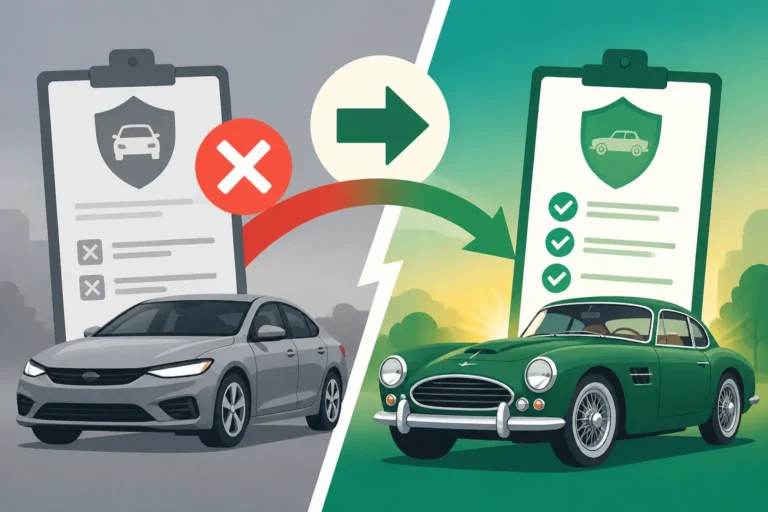
Here's a quick comparison of what makes hot rod insurance different:
| Feature | Hot Rod (Specialty) Insurance | Standard Auto Insurance |
|---|---|---|
| Valuation | Agreed Value (Set payout in event of total loss) | Actual Cash Value (Depreciated market value) |
| Usage | Limited, pleasure-use (Shows, cruises) | Daily driving, commuting |
| Mileage Limits | Common (e.g., 2,500 – 5,000 miles/year) | Typically unlimited |
| Storage Requirement | Secure, enclosed garage usually mandatory | Generally no specific storage requirements |
| Driver Requirements | Experienced drivers, clean record, separate daily driver | Broader age range, less strict daily driver rule |
| Custom Parts Coverage | Explicitly covers custom parts & modifications | Limited or no coverage for aftermarket parts |
| Cost | Often lower premiums due to limited use | Higher premiums for comparable value due to daily use |
| Restoration Coverage | Often available as an add-on | Not typically offered |
Ultimately, choosing the right insurance for your hot rod isn't just a formality; it's a crucial step in preserving your investment and passion. Don't settle for a policy that views your unique machine as just another used car. By understanding the distinct requirements and seeking out specialty providers, you can ensure your pride and joy is protected on its own terms. For a more general overview, check out "Classic Car Insurance Buying Guide."
Disclaimer
Please remember that insurance policies and requirements can vary significantly by state, insurer, and the specific characteristics of your vehicle. The information provided here is for general guidance only and should not be considered legal or financial advice. Always consult with a qualified insurance professional to discuss your individual needs and to obtain personalized quotes and policy details.