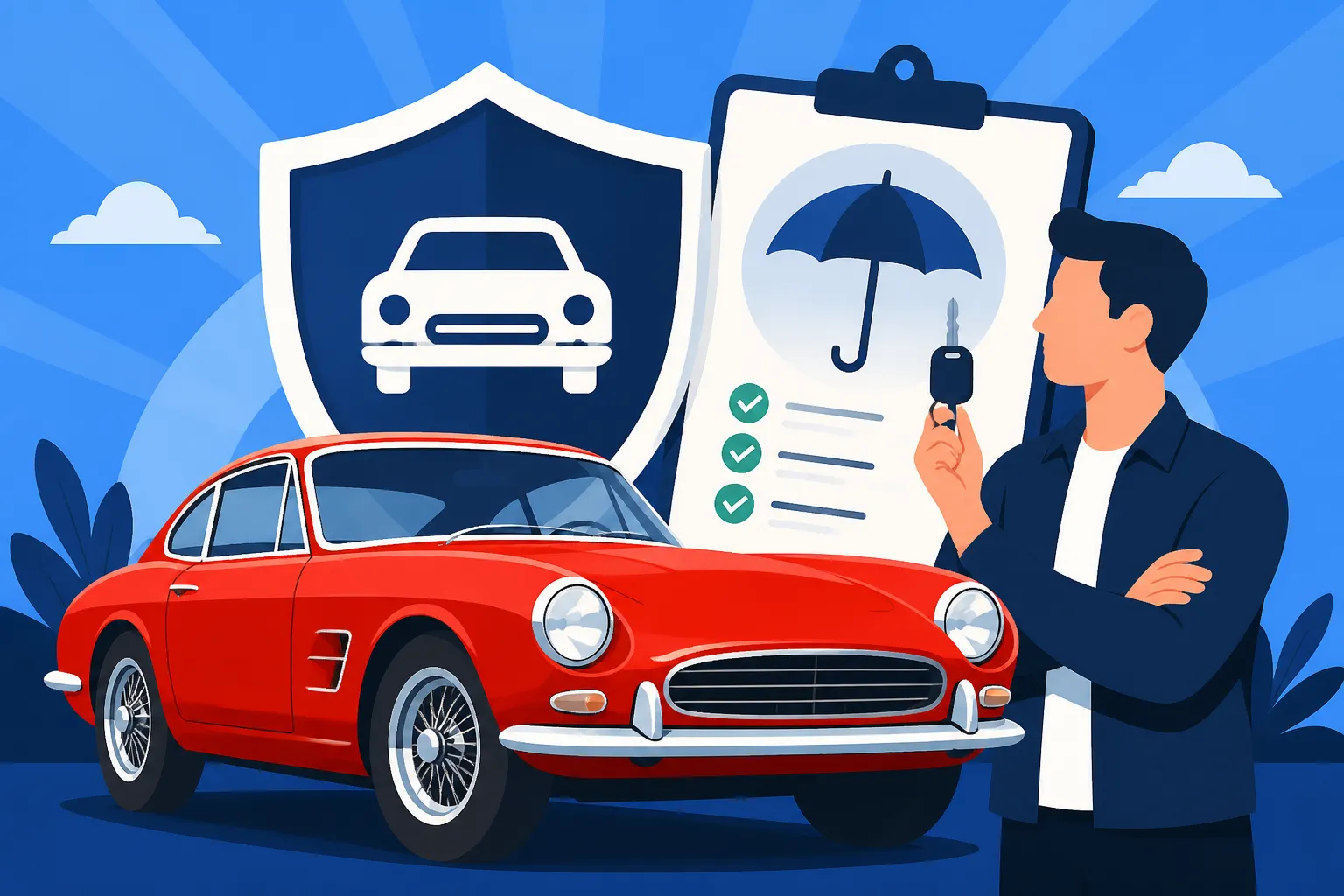
How to Insure a Classic Car You Just Bought
So, you've done it! You've finally bought that classic car you've been dreaming about, whether it's a sleek vintage cruiser or a roaring muscle machine. The excitement is palpable, but then the practical side kicks in: how on earth do you properly insure this new prized possession? It's not like insuring your daily driver, and trying to figure out the right coverage can feel like navigating a winding back road without a map. This guide is here to help you understand exactly what steps to take and what you need to know to insure that classic car you just bought, ensuring it's protected from day one.
The Immediate Steps After Bringing Your New Classic Home
That moment when your newly acquired classic pulls into your driveway, or maybe even gets unloaded from a transport truck, is pure magic. But before you uncork the celebratory champagne, there are some really important, immediate steps you need to take to ensure your new baby is properly protected. Don't let the excitement overshadow the necessity of good planning here.
Securing Temporary Coverage or Transit Insurance
One of the biggest anxieties for any new classic car owner is getting their vehicle home safely, especially if it's a long distance or if you just bought it at an auction. You might be thinking your regular auto insurance will cover it for a few days, but that's a gamble you absolutely do not want to take with a classic. Standard policies are built for depreciation, not appreciation, and they often have strict limitations on vehicle type and use.
Many specialty classic car insurance providers understand this unique need. They often offer a form of transit coverage or short-term temporary insurance that kicks in the moment you take possession. This is crucial if you're driving it home, trailering it yourself, or even having it professionally transported. For instance, if you just won a beautiful 1969 Camaro at a Barrett-Jackson auction, you'll want to have this coverage arranged before the hammer falls. This temporary coverage typically provides basic liability and sometimes physical damage coverage for the journey. Don't wait until you're halfway home to realize you're uninsured! It's always best to call your chosen classic insurer ahead of time to discuss your specific transit needs. Getting coverage before picking up your classic is a critical first step.
Gathering Essential Documentation
Paperwork isn't fun, but it's absolutely vital when insuring a classic car. Think of it as building your car's resume – the more comprehensive, the better. When you first acquire your classic, whether it was from a private seller, a dealership, or an auction, make sure you collect every piece of documentation available.
This includes the bill of sale, the title (or equivalent proof of ownership if it's a project car or a "barn find" you're working on how to register a barn find), maintenance records, restoration receipts, appraisal reports (if one was done recently), and any previous insurance history. These documents are your proof of ownership, condition, and value. Insurers, particularly those specializing in classics like Hagerty, will require this information to accurately assess the vehicle and offer you the right policy. Having these documents organized and readily available will not only streamline the quoting process but also be indispensable if you ever need to file a claim.
Preparing Your Vehicle for Inspection (if required)
While not all classic car insurance policies require an upfront inspection, many do, especially for higher-value vehicles or those undergoing significant modifications. Don't let this deter you; it's often for your own benefit, ensuring the agreed value is truly reflective of your vehicle's condition.
If an inspection is required, the insurer typically wants to see clear, high-quality photographs from all angles – interior, exterior, engine bay, trunk, and odometer reading. They might also ask for a video walkthrough. The goal is to document the car's current state accurately. If you've just bought a car that needs some cosmetic love, be honest about its condition. Trying to make it look better than it is could lead to issues down the road. Some insurers might even offer to send an appraiser if the value warrants it, or they might accept a recent professional appraisal you've had done. The key is transparency and providing all the information requested to help them understand the true nature of your new classic.
Understanding Specialty Classic Car Insurance
When you're talking about a classic, antique, or collector vehicle, you're not just buying a mode of transportation. You're acquiring a piece of history, an investment, a passion project, and often, a work of art. This unique nature means that standard car insurance just doesn't provide the specialized protection these vehicles truly need.
Why Regular Auto Insurance Won't Cut It
The fundamental difference between regular auto insurance and classic car insurance lies in how they value your vehicle. A standard auto policy is based on "Actual Cash Value" (ACV), which means if your car is totaled, the insurer will pay you its depreciated market value at the time of the loss. For a classic, which often appreciates in value or holds sentimental worth far beyond its depreciated state, ACV is a terrible deal. Imagine your meticulously restored 1967 Mustang being totaled and only getting a fraction of what you put into it – that's the nightmare scenario regular insurance presents.
Furthermore, standard policies are designed for daily drivers with high mileage and everyday risks. They don't account for the limited use, careful storage, and often higher replacement costs of classic parts. They might also have higher premiums because they perceive older cars as less safe or harder to repair, which simply isn't the case for a collector car driven sparingly and lovingly maintained. That's why understanding the nuances between classic car insurance vs regular insurance is paramount.
The Importance of Agreed Value Coverage
This is the cornerstone of specialty classic car insurance and the single most important factor for protecting your new purchase. With "Agreed Value" coverage, you and the insurance company agree upon the vehicle's worth before the policy is issued. In the event of a total loss, the insurer pays you that exact agreed-upon amount, no questions asked, minus your deductible. This eliminates the uncertainty and financial heartache of an ACV policy.
How Agreed Value is determined usually involves a discussion with your insurer, potentially submitting documentation like appraisals, recent sale prices of comparable vehicles, and detailed photos. For a car you just bought, the purchase price often serves as a strong starting point for the agreed value, especially if it was a recent transaction. You need to ensure that this figure truly represents what your car is worth. If you've just picked up a rare 1963 Split-Window Corvette, its value can fluctuate wildly, so having a firm agreed value provides incredible peace of mind. This is a huge benefit compared to stated value coverage, which might leave you short.
Key Coverage Types for Your Newly Acquired Gem
Beyond agreed value, classic car insurance offers several other vital coverage options tailored to collectors. Think about what truly matters to you and your new acquisition.
- Liability Coverage: This is mandated by law in most states and covers bodily injury and property damage you might cause to others if you're at fault in an accident. Even if you only drive your classic sparingly, you still need sufficient liability protection. You can learn more about classic car liability requirements by state.
- Comprehensive Coverage: This protects your classic from non-collision damage, such as theft, vandalism, fire, natural disasters (like hail or floods), and even falling objects. Given how often classics are stored or displayed, this is incredibly important.
- Collision Coverage: This covers damage to your classic resulting from a collision with another vehicle or object, regardless of who is at fault.
- Spare Parts Coverage: Many collectors accumulate valuable spare parts, tools, and automobilia. This optional coverage protects those items, usually while they are stored on your property or in transit to a show.
- Roadside Assistance & Towing: Not just any tow truck will do for a classic. Specialty policies offer roadside assistance that includes flatbed towing, ensuring your car is transported safely without further damage. This is a must-have for those unexpected moments on the road.
- Restoration Coverage: If your newly bought classic is a project car or a "barn find" that you plan to restore, this coverage is indispensable. It protects the increasing value of your vehicle as you invest time and money into its restoration, typically adjusting the agreed value as significant milestones are met. Understanding how restoration coverage works for collectors can save you significant money and heartache.
Here's a quick comparison of standard vs. classic insurance coverage types:
| Feature/Coverage | Standard Auto Insurance | Classic Car Insurance |
|---|---|---|
| Vehicle Valuation | Actual Cash Value (Depreciation) | Agreed Value (Pre-determined) |
| Use Restrictions | Daily Commuting, High Mileage | Limited, Pleasure-Use, Low Mileage |
| Premium Cost | Generally Higher for Classics | Often Lower (due to limited use) |
| Theft/Vandalism | Covered (ACV) | Covered (Agreed Value) |
| Specialized Towing | Standard Towing | Flatbed Towing Included |
| Spare Parts Coverage | Not typically included | Optional Add-on |
| Restoration Coverage | Not available | Optional Add-on (value increases) |
| Mileage Limits | Unlimited | Often has mileage limits by state |
| Driver Age | Any licensed driver | Primary driver usually 25+, experienced |
Navigating the Application Process for Your New Classic
Once you understand the 'why' behind specialty classic car insurance, the next step is actually getting that coverage in place. It's a straightforward process, but knowing what to expect can make it much smoother.
Getting Quotes from Specialty Insurers
Your first call shouldn't be to your regular auto insurance company (though it's always good to let them know about your new acquisition). Instead, focus on companies that specialize exclusively in classic and collector vehicles. These are the folks who truly understand the unique needs and values of these cars. Brands like Hagerty, Grundy, American Collectors Insurance, and J.C. Taylor are leaders in this space, offering tailored policies.
When you're ready to get a quote, have all your documentation handy. You'll generally be asked for:
- Vehicle year, make, model, and VIN
- Your intended agreed value for the vehicle
- Details about your driving history (tickets, accidents)
- Information about where the car will be stored (e.g., a locked garage)
- Estimated annual mileage
- Your other vehicles and daily drivers (some insurers require you to have a separate daily driver)
Don't just get one quote; comparing classic car insurance quotes from several providers is always a smart move. Look not just at the price, but at the specific coverage details, deductibles, and any exclusions. Each company might have slightly different requirements for classic car insurance eligibility requirements.
Providing Accurate Vehicle Information
Accuracy is key. When you're providing details about your newly bought classic, be as precise as possible. This includes the exact model, any notable modifications (like a swapped engine or custom paint), and its current condition. If the car has a unique history, like being a rare limited edition or having significant provenance, be sure to mention it. This information helps the insurer accurately assess its value and tailor the coverage.
For example, if you just purchased a 1970 Challenger R/T with its original, numbers-matching engine, that's a crucial detail that impacts its value significantly compared to a standard Challenger with a replacement engine. Document everything with photos and records. This attention to detail will help ensure your policy truly reflects the investment you've made.
Understanding Driver and Storage Requirements
Classic car insurance policies often come with specific requirements regarding who drives the car and how it's stored. These are usually in place because classic vehicles are driven less frequently and stored more securely, which contributes to their lower risk profile and, often, lower premiums.
Most specialty insurers require that the classic vehicle is not your primary daily driver. You'll typically need to have another primary vehicle insured for everyday use. They also often prefer that the classic is stored in a secure, enclosed, and locked garage when not in use. While some may accept a carport or other storage solutions, a dedicated garage is usually ideal. Additionally, insurers like Hagerty often require that all household drivers of the classic be over a certain age (often 25) and have a clean driving record. Understanding these household driver requirements explained is crucial to avoid any surprises down the line. If your new classic is going to be driven by multiple family members, ensure everyone meets the insurer's criteria.
Common Pitfalls and How to Avoid Them When Insuring a New Classic
Even with the best intentions, new classic car owners can sometimes stumble when it comes to insurance. Avoiding these common mistakes can save you a lot of headache and heartache in the long run.
Underinsuring Your Investment
This is perhaps the most significant mistake a new classic car owner can make. If you choose an Actual Cash Value policy from a standard insurer, or if you under-declare your classic's worth on an Agreed Value policy to save a few bucks on premiums, you're setting yourself up for financial loss. The thrill of getting a "cheap" quote might quickly fade if your prized 1957 Chevrolet Bel Air is totaled and you only receive a fraction of what it's truly worth to you, or what you've invested in it.
To avoid this, be honest and thorough when you value your classic car for insurance. Use recent appraisals, sales data from reputable sources, and document any significant restoration work or rare features. For instance, if you just bought a fully restored 1932 Ford, its value is likely far beyond a project car. Work closely with your specialty insurer to arrive at an agreed value that you both feel confident in. Remember, the goal of insurance is to make you whole again after a loss, and that means ensuring your policy reflects the true value of your investment.
Overlooking Essential Add-Ons
Basic agreed value, comprehensive, and collision coverage are excellent starting points, but classic cars often benefit from additional endorsements that regular policies simply don't offer. Neglecting these can leave significant gaps in your protection.
For example, if you're planning a cross-country road trip in your new 1955 Thunderbird, trip interruption coverage could be invaluable if you break down far from home. If you're accumulating rare parts for future restoration, spare parts coverage is a must. And if your car is mid-restoration, you absolutely need to add vehicle under construction coverage to protect the evolving value as you pour time and money into it. Discuss all available classic car insurance add-ons and endorsements with your insurer to build a truly comprehensive policy that fits your specific needs and plans for your new classic.
Not Updating Your Policy Over Time
A classic car's value isn't static. It can increase over time due to market trends, significant restoration work you undertake, or the acquisition of rare parts. Many new collectors buy a car, get it insured, and then forget about the policy until renewal or, worse, until a claim arises. This is a big mistake.
If you complete a major restoration on your newly acquired Datsun 240Z, adding thousands of dollars in value, your agreed value policy needs to reflect that increase. If you don't update it, you could still be paid out on the original, lower agreed value. Many specialty insurers offer an "inflation guard" endorsement, which automatically increases your agreed value by a small percentage each year to account for market appreciation, but it's still wise to review your policy annually and discuss any significant changes with your insurer. Staying proactive ensures your classic is always properly covered, protecting your investment for years to come.
Disclaimer
The information provided in this article is for general informational purposes only and does not constitute professional insurance advice. Insurance policies vary by provider, state regulations, and individual circumstances. It is essential to consult with a qualified insurance professional or specialty classic car insurance provider to discuss your specific needs and obtain tailored advice. Insurance coverage is subject to policy terms, conditions, limitations, and exclusions.