How to Insure a Car Bought at Barrett-Jackson
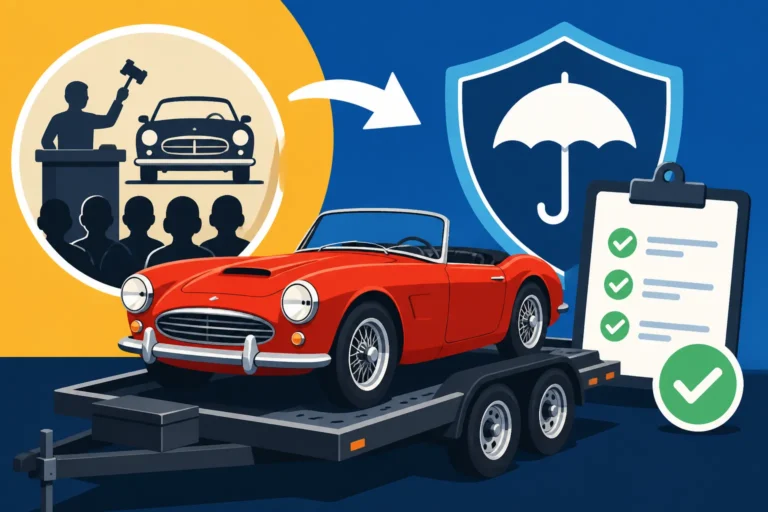
The sheer excitement of buying a classic car at a prestigious auction like Barrett-Jackson is unlike anything else. You've battled the bidders, secured your dream machine, and now it's yours! But amidst the adrenaline, a critical thought often hits: "How do I even get this incredible vehicle home, let alone insured?" It's a common worry, and this guide is here to walk you through the entire process of insuring your new acquisition, ensuring it's protected from the moment the hammer falls.
The Unique Thrill and Challenge of a Barrett-Jackson Purchase
Buying a car at a high-profile auction like Barrett-Jackson in Scottsdale, Palm Beach, or Las Vegas isn't like buying from a private seller or a local dealership. The speed, the spectacle, and the high-stakes environment mean that certain aspects of car ownership, especially insurance, need to be approached with a bit more foresight and a lot less procrastination. Many new owners find themselves scrambling to understand how to protect their new investment, often realizing too late that a standard auto policy just won't cut it.
Why Barrett-Jackson is Different for Insurance
When you're at Barrett-Jackson, you're not just buying a used car; you're often acquiring a valuable piece of automotive history, a meticulously restored muscle car, or a rare European exotic. These aren't daily drivers that depreciate the moment they leave the lot. Their values are often appreciating, and they come with unique risks that a standard auto insurance policy simply isn't designed to cover adequately. The "on-the-spot" nature of the sale means you need to be prepared for immediate action. You can't just take your time finding the best policy a week later; you need coverage almost instantly, especially if you plan to move the car yourself. The auction house needs to know it’s covered before it leaves their premises.
Moreover, the cars at Barrett-Jackson are often rare, highly modified, or one-of-a-kind. Finding replacement parts can be a nightmare, and repairs require specialized expertise. A regular insurance company might only offer you "actual cash value" if something happens, which for a classic car, could be a fraction of what you actually paid or what it would cost to truly restore it to its pre-loss condition. This is where specialty classic car insurance companies become your best friend, understanding the true value and unique needs of these vehicles.
The Immediate Need for Coverage
Imagine the scenario: the bidding ends, you shake hands, and suddenly that pristine 1969 Camaro is officially yours. What’s next? You can't legally or responsibly drive it off the auction grounds without proper insurance. Even if you're having it shipped, the car is vulnerable from the moment it's titled in your name. Liability concerns are paramount – what if something happens while it's being loaded onto a transporter, or if you decide to take it for a quick spin around the block? Without immediate coverage, you're looking at potentially catastrophic out-of-pocket expenses.
Beyond liability, there's the protection of your significant investment. These cars are often worth tens or even hundreds of thousands of dollars. Theft, fire, accidental damage during transport, or even an unexpected ding in the parking lot – these are all risks that demand immediate asset protection. Walking away from the auction with a bill of sale but no insurance in place is like walking out of a jewelry store with a diamond necklace in your pocket but no security. You need to ensure your new treasure is covered from every conceivable angle, right then and there.
Essential Steps to Insure Your Barrett-Jackson Treasure
The key to a smooth insurance process after a high-profile auction purchase lies in preparation. Thinking ahead can save you a ton of stress, time, and potential financial headaches. Don't wait until you're holding the keys to start thinking about insurance; the process should begin long before you even set foot in the auction hall.
Pre-Auction Insurance Preparation
This is perhaps the most crucial step. Before you even head to the auction, identify the specific cars you're interested in. Gather as much information as possible: VIN, make, model, year, photos, any unique features, and the estimated auction value. With this information in hand, reach out to specialty classic car insurance providers. Companies like Hagerty, Grundy, or American Collectors Insurance are experts in this field and understand the nuances of collector vehicles.
Get pre-approved for coverage or at least obtain quotes for the vehicles you're targeting. Explain that you'll be purchasing at auction and need immediate coverage upon winning. Many specialty insurers can provide "binders" or temporary proof of insurance that can be activated instantly with a phone call or email once the sale is confirmed. This proactive approach ensures you won't be scrambling on auction day. You can discuss various options, including Agreed Value Coverage for Classic Cars Explained, which is vital for protecting your investment at its true market worth, rather than a depreciated "actual cash value." Having a pre-established relationship with an agent who knows your needs can make all the difference.
Securing Immediate Post-Auction Coverage
So, the hammer fell, and you're the proud new owner! Congratulations! Now, it's time to act quickly on that pre-auction groundwork. Immediately after the sale, contact your chosen specialty insurer or agent. Provide them with the final sale price, the exact time of purchase, and any other required details. They can then issue a temporary binder or officially activate your policy. This immediate coverage is crucial for several reasons:
- Legal Compliance: Most states require proof of financial responsibility (insurance) to drive any vehicle, even if it's just off the lot.
- Auction Requirements: Barrett-Jackson and similar auction houses will want proof of insurance before releasing the vehicle for transport or pickup.
- Peace of Mind: Knowing your significant investment is protected against theft, damage, or liability during the immediate post-sale chaos is invaluable.
Keep all documentation – the bill of sale, title transfer documents, and your insurance binder/policy information – readily accessible. Many collectors keep a folder dedicated to their new acquisition to ensure everything is in order for registration and any unexpected situations. Having an electronic copy on your phone is also a smart move, as Wi-Fi and cell service can be spotty in crowded auction environments.
Understanding Valuation for Insurance
When insuring a classic car, especially one bought at auction, the concept of valuation is paramount. Unlike a new car that depreciates, a classic car's value is often subjective and can fluctuate. This is why traditional "actual cash value" policies are a poor fit.
For classic cars, you absolutely need an "Agreed Value" policy. This means you and the insurer agree on a specific value for your vehicle at the start of the policy term. If your car is declared a total loss, the insurer pays you that agreed-upon amount, no questions asked (assuming the car's condition matched what was agreed upon). At an auction like Barrett-Jackson, the final sale price is often the initial agreed value, as it represents a real-time market assessment. Your policy should reflect this. If you shelled out $150,000 for that stunning GTO, your insurance should cover $150,000, not some lower, generic market rate. Understanding How Agreed Value Is Determined can help you advocate for the correct coverage amount.
Agreed Value vs. Other Valuation Methods
| Feature | Agreed Value | Stated Value | Actual Cash Value (ACV) |
|---|---|---|---|
| Payout in Total Loss | Fixed amount agreed upon at policy inception | Max payout, but insurer can pay less | Market value at time of loss (depreciated) |
| Premium Basis | Based on the agreed value | Based on stated value, but often higher | Based on market value, often lower |
| Suitability | Ideal for classics, auction purchases | Riskier, often leads to underpayment | Unsuitable for classics; high depreciation |
| Proof Required | Appraisal/auction receipt often needed | Often requires less upfront, but risky later | No special proof; market guides settlement |
It's also important to consider if your vehicle's value might increase over time, especially if you plan further restoration or if it's a particularly desirable model. Some policies offer "inflation guard" coverage, which automatically adjusts your agreed value upwards by a small percentage each year, to account for rising market values.
Tailoring Your Classic Car Insurance Policy
Once you've secured that initial coverage, it's time to fine-tune your policy to truly match the unique needs of your Barrett-Jackson acquisition. This isn't a one-size-fits-all situation; your classic deserves specific attention to detail.
Key Coverages for Auction Purchases
Just like any vehicle, your classic needs standard liability, collision, and comprehensive coverage. However, the amounts and specifics for a classic car are often different.
- Liability Coverage: This protects you financially if you're at fault in an accident, covering bodily injury and property damage to others. While states have minimum requirements, for a high-value asset that you might occasionally drive on public roads, you'll want significantly higher limits than the state minimums. Imagine causing an accident with another modern vehicle – those repair costs can be substantial. For a deeper dive, check out Classic Car Liability Requirements by State.
- Collision Coverage: This pays for damages to your classic car resulting from a collision with another vehicle or object. Given the agreed value nature of classic car policies, this means you're covered up to that full amount, which is critical for restoring or replacing your unique asset.
- Comprehensive Coverage: This covers non-collision damages, such as theft, vandalism, fire, natural disasters (like hail or floods), or hitting an animal. For a car that might spend more time in storage or at shows than on the road, comprehensive coverage is incredibly important to protect against these common risks. Many collectors question Do Classic Cars Need Full Coverage, and for comprehensive protection, the answer is almost always yes.
Remember, many classic car policies are designed with the understanding that these vehicles are typically driven less and stored securely, which often makes them more affordable than standard auto insurance.
Specialized Endorsements for Your New Classic
Beyond the core coverages, specialty insurers offer endorsements that are tailor-made for the classic car lifestyle. These can provide invaluable protection that standard policies would never offer.
- Spare Parts Coverage: If your Barrett-Jackson acquisition comes with a treasure trove of original or hard-to-find spare parts, or if you plan to acquire them for future restoration, this coverage is a must. Losing a crate of NOS parts in a garage fire can be as devastating as damaging the car itself. This endorsement covers the value of those parts. You can read more about it in Spare Parts Coverage Explained.
- Roadside Assistance and Towing: Standard roadside assistance might send a hook-and-chain tow truck, which could severely damage a classic car's chassis, suspension, or delicate bodywork. Classic car policies often include or offer an endorsement for flatbed towing, ensuring your car is transported safely without further damage. This is essential, especially if you're planning a long drive home from the auction. More details can be found in Roadside Assistance Coverage for Classic Cars Explained.
- Trip Interruption Coverage: If you're driving your new classic a long distance home from the auction and it breaks down, this coverage can help with expenses like lodging, food, and alternative transportation while your car is being repaired. It’s a small add-on that offers great peace of mind for those maiden voyages.
- Restoration Coverage: If your auction purchase is a project car or something you plan to enhance, some policies, like those from Hagerty, offer coverage that allows the agreed value to increase as you invest more into its restoration. This means your insurance keeps pace with your investment.
The Role of Mileage and Usage
Specialty classic car insurance typically comes with mileage limitations and specific usage requirements because these cars are generally not daily drivers. This is part of why classic car insurance is often more affordable.
- Pleasure Use Requirement: Most policies stipulate "pleasure use" only, meaning the car is primarily used for leisurely drives, car shows, club events, or occasional errands, not for commuting, business, or competitive racing. This is a fundamental distinction from regular auto insurance. Understanding the Pleasure-Use Requirement Explained is critical to avoid voiding your policy.
- Mileage Limits: Insurers like Hagerty offer different mileage tiers, ranging from 1,000 to 5,000 miles per year, or even unlimited mileage options for certain vehicles and drivers. Be realistic about how much you plan to drive your auction purchase. If you envision cross-country tours, an unlimited or higher mileage option might be necessary, though it will affect your premium. Conversely, if it's a show car that only sees the road for a few parades, a lower mileage limit will save you money. Different states might also have specific Classic Car Insurance Mileage Limits by State due to their classic vehicle registration laws.
Being honest and accurate about your intended use and mileage is paramount. Misrepresenting your usage could lead to a claim denial down the line, which would be a heartbreaking situation after investing so much in a dream car.
Navigating the Specifics of Barrett-Jackson Logistics
Bringing home a car from a major auction isn't always as simple as hopping in and driving away. There are practical logistical considerations that your insurance policy needs to account for.
Transporting Your New Acquisition
The journey home for your Barrett-Jackson treasure is a critical period. You have a few options, and your insurance needs to align with each.
- Driving It Home: If you choose to drive your classic home, you must have active, comprehensive insurance coverage. This means not just liability, but also collision and comprehensive to protect your investment during the drive. Ensure your roadside assistance covers flatbed towing, as a breakdown on the highway is a distinct possibility for an older vehicle, even a perfectly restored one. This is where having activated your policy immediately post-auction pays off. You'll want to verify you have How to Get Coverage Before Picking Up Your Classic in place before you even turn the key.
- Shipping It: For many high-value or long-distance purchases, shipping via an enclosed transport carrier is the preferred method. While the transporter will have their own cargo insurance, it's wise to ensure your own policy covers the vehicle "in transit" as a secondary layer of protection. This can be especially important if the carrier's insurance limits are lower than your car's agreed value. Talk to your insurer about this specific type of coverage. They often have provisions for vehicles being shipped.
Regardless of how it travels, the period between the auction block and your garage is when your car is most exposed to immediate risks. Don't leave this to chance.
Registration and Titling Considerations
Once you have the bill of sale and signed-over title (or manufacturer's statement of origin, if applicable), you'll need to register your classic car in your home state. This process varies significantly by state, and it’s intertwined with your insurance requirements.
- State-Specific Rules: Each state has its own definition of what constitutes a "classic," "antique," or "historic" vehicle, and these classifications often come with special registration plates, reduced fees, and sometimes even exemptions from emissions or safety inspections. For example, some states require you to have a separate daily driver vehicle in addition to your classic to qualify for special plates and insurance. Understanding Classic Car Registration and Insurance by State is vital.
- Proof of Insurance for Registration: Just like with any other vehicle, you'll need to show proof of insurance to your state's Department of Motor Vehicles (or equivalent) to register your classic car and obtain license plates. Having your specialty classic car insurance policy in hand will streamline this process. If you've just moved to a new state or this is your first classic, you might need to understand Antique Vehicle Registration Explained or Historic Vehicle Registration Explained for your specific locale.
Make sure you have all the necessary paperwork from Barrett-Jackson – the bill of sale, the title, and any other transfer documents – as they are essential for both insurance activation and state registration.
Disclaimer
Please note that the information provided in this guide is for informational purposes only and does not constitute professional insurance advice. Insurance policies and requirements can vary significantly based on your individual circumstances, the specific vehicle, and your state of residence. Always consult with a qualified insurance professional to discuss your specific needs and obtain tailored advice and quotes for classic car insurance.