Do You Need Restoration Coverage for a Classic Car
Trying to bring a classic car back to its former glory is a labor of love, a journey filled with greasy hands, late nights, and often, unexpected challenges. But amidst the thrill of finding that perfect NOS part or finally getting an engine to fire up, many enthusiasts overlook a critical step: properly insuring their project. It’s easy to assume your regular classic car policy, or even your homeowner's insurance, will cover a car in pieces, but that's a dangerous misconception that can lead to heartbreaking financial loss if something goes wrong. This guide will walk you through why specialized restoration coverage isn't just a good idea, but an essential shield for your evolving investment.
Understanding the Unique Risks of a Classic Car Restoration
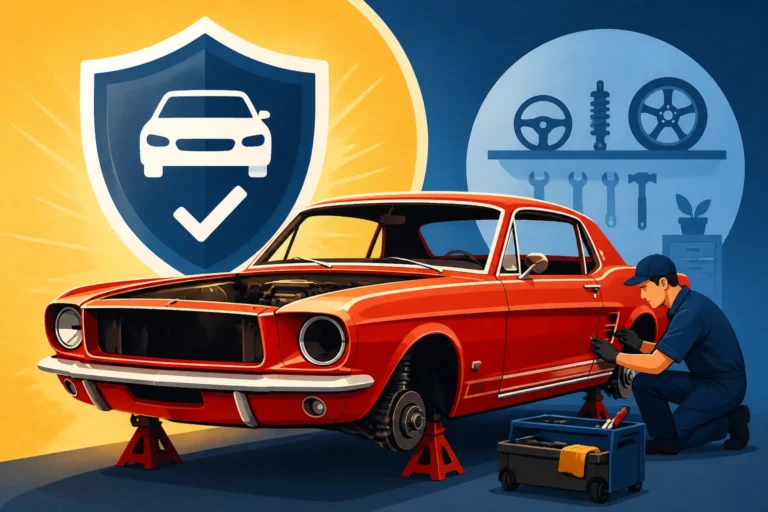
When your beloved classic is a collection of parts scattered across a garage floor, sitting on jack stands with its engine out, or patiently awaiting a fresh coat of paint, it faces an entirely different set of vulnerabilities than a fully assembled, road-ready vehicle. These aren't just minor inconveniences; they're substantial risks that traditional insurance policies simply aren't designed to handle.
The Vulnerability of a Disassembled Project
Imagine your garage, a sanctuary for your passion. It’s also, unfortunately, a vulnerable space when a project car is in pieces. A classic car undergoing restoration is far more susceptible to theft, fire, or accidental damage than one that’s safely parked and intact. Individual components, especially rare or expensive ones like a numbers-matching engine block, vintage carburetor, or pristine chrome trim, can be targeted by opportunistic thieves. These parts are often stored separately, sometimes even off-site, making them harder to track and protect.
Consider a hypothetical scenario: you’re midway through restoring a vintage Ford Mustang, with the engine on a stand, the interior stripped, and various body panels carefully stacked. A small electrical fire starts in the garage, not even touching the car itself, but critically damaging a box of expensive new wiring harnesses, the freshly re-upholstered seats, and melting some original plastic components. A standard classic car policy might only cover the vehicle as a whole, often at a pre-restoration value, leaving you to foot the bill for all those crucial, damaged parts that weren't "attached" to the car. This is where the distinction between typical coverage and Classic Car Insurance vs Regular Insurance: What's Required becomes incredibly clear.
The Fluctuating Value During the Restoration Process
One of the most frustrating aspects of standard insurance when it comes to restoration projects is the way they value your vehicle. Unlike a regular car that depreciates, a classic car under restoration is often gaining significant value with every hour of labor and every dollar spent on parts. You start with a "barn find" worth a few thousand dollars, invest tens of thousands in parts and professional work, and suddenly it's a show-stopper worth five or six times its original purchase price.
Most insurance policies operate on either Actual Cash Value (ACV) or Stated Value. ACV means you get the market value minus depreciation at the time of the loss – which is disastrous for a classic. Stated Value might give you a bit more, but it often caps out, and the insurer retains the right to pay out the ACV if it’s lower. Neither of these truly acknowledges the sweat equity and financial investment you're pouring into your project. Without specific restoration coverage, if disaster strikes when your car is 75% complete, you could be paid out only for its pre-restoration value, losing all the money, time, and effort you've invested since then. This fundamental difference is why understanding Agreed Value vs Stated Value vs Actual Cash Value is so critical for collectors.
What Exactly Is Classic Car Restoration Coverage?
This specialized coverage is designed to protect your investment precisely because it understands the unique journey of a restoration. It's not a one-size-fits-all solution but a tailored approach that evolves with your project.
Agreed Value for a Work in Progress
The cornerstone of effective restoration coverage is the "agreed value" principle, adapted for a vehicle that’s constantly increasing in worth. Unlike standard policies that try to guess market value at the time of a loss or cap your payout, agreed value means you and the insurer agree on your car's value before anything happens. For a restoration project, this is even more dynamic. Many specialty insurers, like Hagerty, offer a flexible agreed value policy that allows you to periodically update your vehicle's value as you complete stages of your restoration.
Here’s how it typically works: you start the policy with an agreed value reflecting the car's current condition (e.g., a rolling chassis with a disassembled engine). As you rebuild the engine, repaint the body, or install a new interior, you notify your insurer, provide documentation (receipts, photos, work orders), and the agreed value is increased to reflect these new investments. This ensures that no matter when a loss occurs, you are reimbursed for the actual value you've put into the car up to that point. This dynamic valuation protects against the financial heartbreak of being underinsured as your project progresses. Learning How Agreed Value Coverage Works for Collectors is key to fully utilizing this benefit.
Comprehensive Protection Beyond the Garage
Restoration coverage extends its protective umbrella far beyond just the car itself. It anticipates the realities of a project, recognizing that a car in restoration isn't always in one piece or confined to a single location.
- Parts Coverage: This is huge. Restoration policies often include coverage for spare parts, whether they are new-old stock (NOS), reproduction pieces, or original components sourced from swap meets. These parts might be stored in your garage, a dedicated storage unit, or even temporarily at a friend's shop. A good policy will cover these items, recognizing their value as integral to the complete restoration. This is distinct from standard policies that typically only cover parts attached to the vehicle. For a deeper dive into this, check out Spare Parts Coverage Explained.
- Tools and Equipment (Limited): While most policies don't cover your entire toolbox, some specialty restoration coverages might include a limited amount for specialized tools or equipment directly being used on the insured vehicle if damaged in the same incident. Always read the fine print here.
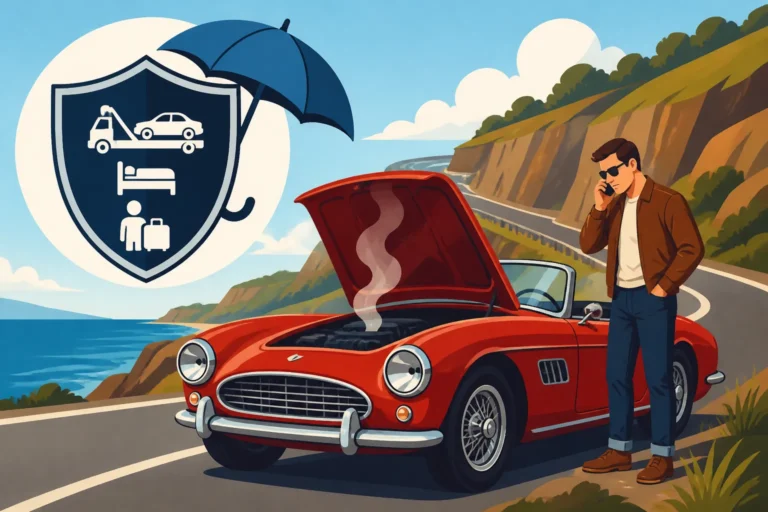
- Transit Coverage: Let’s be honest, few restorations happen entirely in one spot. Your car might need to be trailered to a paint shop, an upholstery specialist, an engine builder, or a chrome plater. Restoration coverage typically extends to the vehicle while it's in transit, often requiring specific methods like enclosed flatbed towing. This means if an accident occurs while your project car is on its way to getting its new coat of paint, you’re covered.
- Accidental Damage: This can range from a wrench slipping and scratching a fender, to a shelf collapsing and denting a door panel. While some policies might have exclusions for "poor workmanship" (meaning they won't pay if you mess up a repair), genuine accidental damage is often covered. It's about protecting against the unexpected, not the avoidable.
Imagine you've just spent a small fortune on a rare, uncracked dash for your 1969 Camaro. It's sitting in your workshop, waiting for installation, when a water pipe bursts overhead, soaking and destroying it. Without restoration coverage, that loss could be entirely out of pocket. With it, and proper documentation, you have a path to recovery.
When and Why You Absolutely Need Restoration Coverage
The question isn't whether you might need restoration coverage, but rather, when during your project it becomes indispensable. The answer is, sooner than you think, and for reasons that go beyond just financial protection.
Protecting Your Investment and Passion
Collecting and restoring classic cars is more than just a hobby; it's a profound investment of both capital and emotion. Each weld, each polished chrome piece, each hour spent sanding away old paint, represents a piece of your dedication and dream. Losing that investment due to an unforeseen event – a fire, theft, or catastrophic damage – can be utterly devastating.
Without dedicated Restoration Coverage for Classic Cars, you risk losing everything you've poured into the project. Picture this: you've spent three years meticulously bringing a family heirloom, a vintage Chevrolet C10 pickup, back to life. It's 90% complete, sitting in your garage, just needing final assembly and tuning. A severe hailstorm blows through, shattering windows, denting all the freshly painted bodywork, and ruining the custom interior you just installed. If your policy only covers the vehicle at its pre-restoration value, you’re left with a damaged, partially restored truck that's now worth significantly less than what you’ve invested. The emotional toll of seeing your hard work undone, coupled with the financial hit, can be crushing. Restoration coverage offers peace of mind, knowing that your financial and emotional investment is safeguarded at its current, evolving value.
The Cost-Benefit of Specialty Coverage
Some collectors might hesitate, thinking that adding specialized coverage will be prohibitively expensive. In reality, given the protection it offers, restoration coverage for classic cars is often remarkably affordable, especially when compared to the potential loss you face without it. Specialty insurers understand that project cars are driven very little, if at all, which reduces their risk profile for accidents on the road.
The key benefit is that your payout in the event of a total loss or significant damage will be based on the agreed value you've established and regularly updated. This means you'll receive fair compensation that reflects your true investment, rather than a depreciated market value. When you factor in the rising costs of parts, labor, and even the vehicles themselves, opting for a standard policy can actually be a far more expensive gamble in the long run. Companies like Hagerty have tailored their offerings to provide specific plans for cars "under construction," ensuring collectors don't overpay for coverage they don't need (like extensive road-use liability) while getting critical protection for their ongoing investment. This is often why Classic Car Insurance Is Cheaper Than Regular insurance in many cases, as the risk profiles are vastly different.
Key Features and Considerations for Restoration Coverage
Getting the right restoration coverage isn't just about picking a policy; it's about actively managing it and understanding its nuances. Your involvement is key to ensuring your investment is always adequately protected.
Documenting Your Progress and Costs
This is perhaps the most crucial aspect of managing your restoration coverage. For your agreed value to accurately reflect your investment, you need to provide a clear, undeniable paper trail. Think of it as building a resume for your car.
- Keep Meticulous Records: Every receipt for parts purchased, every invoice for professional labor (paint, engine rebuilds, upholstery), and even detailed logs of your own labor hours should be saved. Many collectors use digital spreadsheets or dedicated apps to track expenses.
- Photographic Evidence: Document your progress with extensive photographs. Take pictures before, during, and after major milestones. Show parts in their original condition, during the repair process, and after installation. This visual record is invaluable in proving the work completed and the value added.
- Regular Updates to Your Insurer: Don't wait until the car is finished to update your agreed value. Most specialty classic car insurers encourage and facilitate regular updates, often quarterly or after significant stages are completed (e.g., bodywork finished, engine rebuilt, interior installed). This ensures that your coverage always keeps pace with your investment. If you've been working on a project for a while and haven't updated your value, now is the time to consider How to Increase Your Agreed Value Over Time.
Without this documentation, it can be incredibly difficult to argue for a higher payout if you suffer a loss. Insurers need proof that the value has indeed increased.
Policy Limitations and Exclusions to Be Aware Of
While restoration coverage is powerful, it’s not a magic shield against all eventualities. It's vital to understand what your policy doesn't cover to avoid surprises.
- Poor Workmanship or Inherent Vice: Most policies will not cover damage resulting from shoddy repairs, improper installation, or pre-existing flaws (inherent vice) in parts or materials. The insurance is for unexpected damage, not for fixing mistakes made during the restoration process itself.
- Wear and Tear: Standard wear and tear, rust that develops naturally over time, or mechanical failures not caused by an external event are typically excluded.
- Racing or Performance Events: Unless specifically endorsed and paid for, restoration policies, like most classic car policies, do not cover damage incurred during competitive racing, track days, or other high-performance driving events. If you plan to hit the track, you’ll need Track Day and Autocross Coverage Options.
- Tools Not Directly Used: As mentioned, coverage for tools is often limited. Don't expect your policy to cover every tool in your workshop unless it was specifically being used on the insured vehicle and damaged as a direct result of an insured peril.
- Differentiation Between "Vehicle Under Construction" and "Full Restoration": Some insurers may have different policy wording or options depending on the scope of your project. A "vehicle under construction" might imply a ground-up build, while "restoration coverage" might be broader. Always clarify with your provider, like American Collectors Insurance or J.C. Taylor, what their specific terms mean for your project.
Always read your policy documents thoroughly and ask your agent questions if anything is unclear. A little bit of clarity upfront can save a lot of heartache later.
Comparing Standard Classic vs. Restoration Coverage
To really drive home the importance, let's look at a side-by-side comparison of typical classic car insurance (which might be adequate for a finished, rarely driven car) versus specialized restoration coverage.
| Feature | Standard Classic Car Insurance (for finished vehicle) | Specialty Restoration Coverage |
|---|---|---|
| Valuation | Often Agreed Value, fixed at policy start | Dynamic Agreed Value, updated as project progresses |
| Parts Coverage | Primarily for parts on the vehicle | Covers parts on and off the vehicle, even stored |
| Theft | Covered for the entire vehicle | Covered for the vehicle (whole or partial) AND valuable individual parts |
| Fire/Vandalism | Covered for the entire vehicle | Covered for the vehicle and associated restoration parts/materials |
| Transit | May require specific endorsement | Often included for trailering to shops/events |
| Accidental Damage | Covered for the intact vehicle | Covered for project car and parts; may exclude poor workmanship |
| Mileage Limits | Strict low mileage limits | Often flexible, acknowledging project car isn't driven much |
| Driver Restrictions | Primary driver requirements | May allow for different individuals working on the car |
| Cost | Generally low due to limited use | Slightly higher than standard, but reflects increasing value |
| Documentation | Initial appraisal/photos | Ongoing receipts, photos, and updates are critical |
This table makes it clear: if you're actively working on a classic, trying to make a standard policy fit is like trying to hammer a screw. It just won't work as effectively, and you'll likely damage your investment in the process.
Final Thoughts on Securing Your Dream Build
Undertaking a classic car restoration is a monumental task, a true test of patience, skill, and passion. It's a journey filled with incredible highs and, let's be honest, some frustrating lows. The last thing you need during this process is the added anxiety of knowing your significant financial and emotional investment isn't properly protected. Restoration coverage for your classic car isn't an optional luxury; it's a fundamental necessity that shields your dream build from unforeseen disaster.
Don't let the thought of insurance add another layer of complexity to your project. Reach out to a specialty insurer and discuss your specific needs. They understand these unique challenges better than anyone and can help you tailor a policy that evolves with your car, from barn find to boulevard cruiser. Whether you're dealing with Classic Car Insurance Requirements Explained or figuring out How to Insure a Car Under Restoration, getting the right coverage means you can focus on what truly matters: the joy of bringing a piece of automotive history back to life.
Disclaimer
Please note that this article is intended for informational purposes only and does not constitute financial or legal advice. Insurance policies vary widely, and it's essential to consult with a qualified insurance professional to understand the specific terms, conditions, and exclusions of any policy you consider. Always review your policy documents carefully.