Coverage for a Car Being Restored
You've finally found it—that dream project car. Maybe it's a rusty shell of a '69 Camaro or a partially disassembled '57 Bel Air. You're pouring countless hours, a significant amount of money, and all your passion into bringing it back to life. But as the car slowly transforms from a collection of parts into a rolling masterpiece, a nagging worry creeps in: what happens if something goes wrong during this delicate, often years-long process? Standard auto insurance policies simply aren't equipped to protect this evolving investment. This guide will walk you through the specialized classic car insurance coverages designed specifically to safeguard your car under restoration, ensuring your hard work and financial commitment are protected every step of the way.
The Unique Risks of a Car Under Restoration
Restoring a classic car is a journey, not a destination, and that journey is fraught with unique risks that a typical car insurance policy wouldn't even begin to understand. It's not just about the finished product; it's about all the stages in between, each with its own vulnerabilities. You're dealing with an asset whose value is constantly in flux, making traditional coverage models completely unsuitable.
Value Fluctuation During Restoration
Imagine you bought your project car for $15,000. You've since invested another $20,000 in parts, professional bodywork, and countless hours of your own skilled labor. The car is still far from complete, perhaps it's painted but the interior is bare, and the engine is on a stand. Its value isn't $15,000 anymore, but it's also not its final, fully restored market value. This fluctuating, increasing value is a critical consideration. A standard policy, if it covered the car at all, would likely only consider its "actual cash value" at the time of a loss, which for a disassembled project, could be shockingly low. This leaves a massive gap between what you've invested and what you could recover, turning a passion project into a financial nightmare if disaster strikes. Specialty insurers, however, understand that a car's value increases incrementally as you progress with your restoration.
Theft and Vandalism of Components
A complete, running classic car might be locked in a garage, but a project car is often a collection of valuable parts, sometimes spread across your workshop, awaiting installation or refinement. A pristine engine, a freshly chromed bumper, or a set of vintage wheels sitting off the car are all targets. These individual components are incredibly valuable on the classic car market, and they're often easier to steal than an entire vehicle. Picture this: you’ve just sourced a rare set of original magnesium wheels for your Shelby GT350 project, carefully stored in the corner of your garage. A break-in could see those wheels disappear, leaving you not just out of pocket for their replacement but also facing the daunting task of finding another set, potentially delaying your restoration for months or even years. Standard homeowners insurance might cover some personal property theft, but it's unlikely to properly value specialized car parts or account for the unique collectible nature of vintage components.
Accidental Damage in the Garage
Let's be honest, every car enthusiast has had a close call in the garage. Dropping a wrench on a freshly painted fender, slipping with a grinder and scratching a panel, or a jack slipping and damaging the undercarriage – these are real, ever-present dangers when you're actively working on a vehicle. You're often dealing with heavy equipment, sharp tools, and hazardous materials. A misplaced step or a moment of distraction can quickly turn a minor mishap into significant damage requiring costly repairs or repainting. If you're painstakingly wet-sanding a rare color for your Mustang, and a small but costly mistake happens, you're on the hook for the full cost of correcting it. Traditional auto policies are designed for road accidents, not garage mishaps. They simply don't envision a scenario where the car's owner is the primary risk factor for damage to the vehicle while it's stationary and being worked on.
Fire and Natural Disasters
Your garage isn't just a place to park; it's a workshop, a storage facility, and often, the nerve center of your restoration. Unfortunately, garages can be susceptible to fires due to electrical issues, flammable materials, or even just general workshop hazards. A fire can devastate not only your project car but also all the tools, parts, and equipment you've accumulated. Beyond fire, natural disasters like floods, hurricanes, or even severe hail storms can inflict catastrophic damage on a vehicle under restoration, especially if it's not fully sealed or protected. Imagine a flood submerging your partially completed '63 Split-Window Corvette, ruining its new interior and wiring. While homeowners insurance might cover the structure of your garage, it often provides very limited coverage for high-value vehicles or specialized parts stored within it, leaving a significant financial void if your project is destroyed.
Why Standard Auto Insurance Falls Short for Project Cars
It's a common misconception that your regular car insurance or even your homeowners policy will somehow magically cover your classic car under restoration. The truth is, these policies are fundamentally designed for completely different scenarios and fall tragically short when it comes to the unique needs of a project vehicle. Trying to force a square peg into a round hole here will only lead to heartbreak and financial ruin if something unexpected occurs.
Actual Cash Value vs. Agreed Value
This is perhaps the biggest and most critical difference. Standard auto insurance policies operate on an "Actual Cash Value" (ACV) basis. What does that mean? It means if your car is totaled, the insurer will pay you what they determine the car was worth minus depreciation at the exact moment of the loss. For a classic car, especially one under restoration, this is a disaster. If your partially restored 1970 Challenger, with its new engine and paint but unfinished interior, is damaged, an ACV policy might look at its current state and declare it to be worth little more than scrap, ignoring the value of the new components and your labor.
This is precisely why specialty classic car insurance policies offer "Agreed Value" coverage. With Agreed Value, you and the insurance company agree on the car's current worth at the beginning of the policy, and that's the amount you'll receive if it's a total loss, regardless of depreciation. For a car under restoration, this is paramount, as you need to be able to periodically update that agreed value as you invest more time and money. Without it, you're essentially gambling your entire investment against the very real possibility of being drastically underpaid in a claim. When considering how to choose classic car insurance, understanding the critical distinction between agreed value vs stated value vs actual cash value is fundamental for collectors.
Limitations on Storage and Use
Most standard auto policies are built around the assumption that your vehicle is a daily driver. It's expected to be registered, regularly driven, and kept in a certain condition. A car under restoration, however, rarely fits this mold. It might be in pieces for months, stored in a private garage, moved only occasionally on a trailer, or driven only on rare test runs around the block. These usage patterns often violate the terms of a standard policy, potentially rendering your coverage invalid.
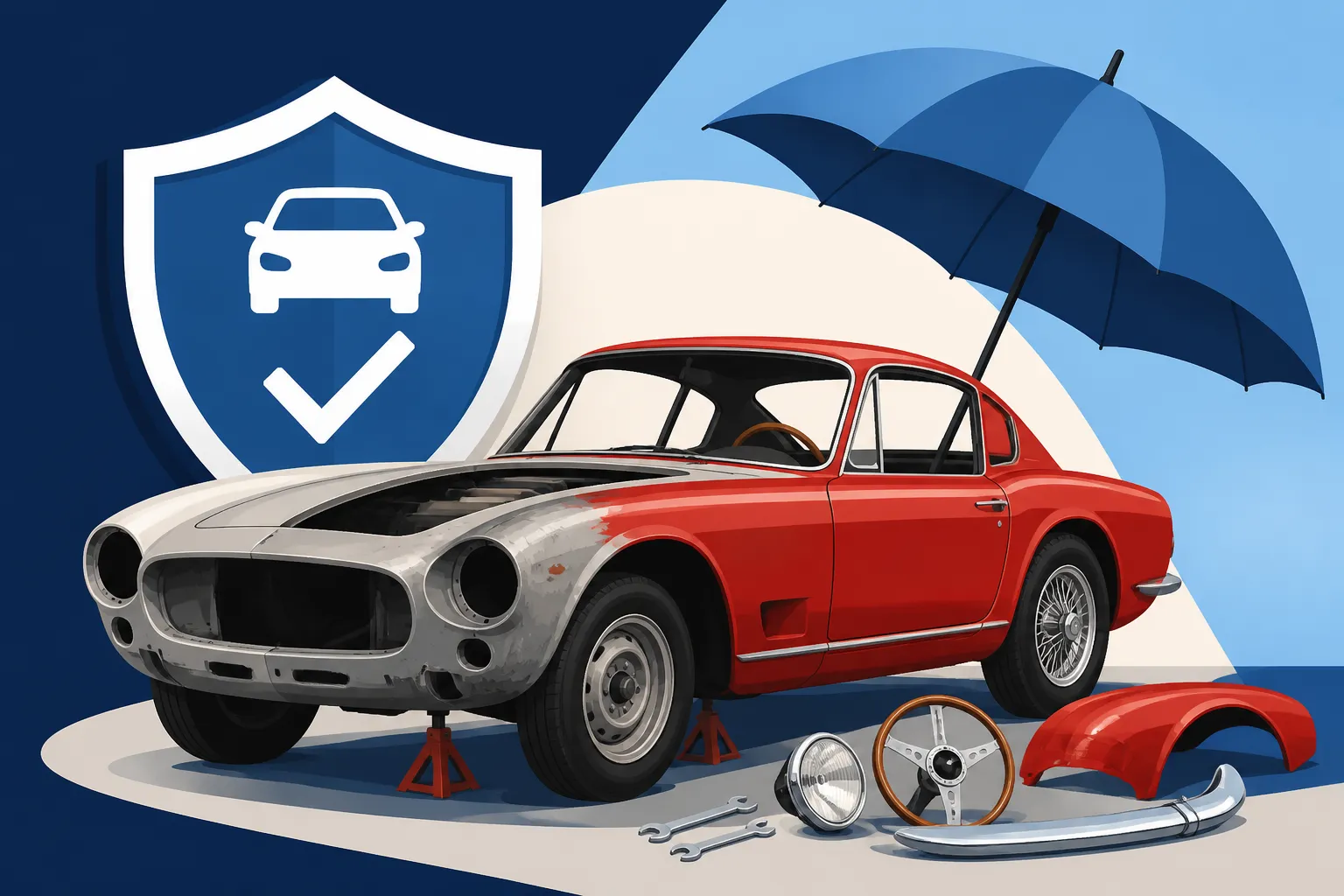
Furthermore, many general insurers might balk at insuring a non-operational vehicle, or one that’s extensively disassembled. They simply don't have the risk models or the understanding of how such a vehicle is typically stored or transported. If you’re storing your classic car in a non-traditional setting or it's not yet roadworthy, a regular policy just won't cut it. For example, if you're in the middle of a frame-off restoration of a Ford Model A and it's sitting on jack stands with its body separated from the frame, a standard insurer would likely deem it uninsurable or, at best, offer minimal coverage that doesn't reflect its collectible status or your investment.
Lack of Parts and Labor Coverage
When you restore a classic, you're not just replacing parts; you're often sourcing rare, original components, investing in specialized fabrication, and performing meticulous labor that commands a high price. A standard policy isn't going to understand the value of a New Old Stock (NOS) carburetor for a Datsun 240Z, nor will it factor in the hundreds of hours you spent perfecting the body lines or the custom upholstery work.
Regular insurers generally only pay for original equipment manufacturer (OEM) or aftermarket parts for modern vehicles and don't account for the specialized labor costs associated with classic car restoration. They'll pay to replace a fender on a modern sedan with a generic one; they won't pay to have a skilled artisan restore or recreate an irreplaceable fender for a rare classic. This huge disparity means that even if a standard policy did cover some damage, the payout would be insufficient to properly repair your classic project, forcing you to absorb significant out-of-pocket expenses to restore it to its pre-loss condition, let alone its intended restored condition. It’s a bitter pill to swallow when you've invested so much, and your insurance company treats your prized possession like any other commuter car.
Essential Classic Car Insurance Coverages for Restorations
When it comes to insuring a car that's undergoing restoration, you need to think beyond the basics. This isn't just about protecting a vehicle; it's about protecting a dynamic asset that's increasing in value with every hour of labor and every new part installed. Specialty classic car insurers offer specific coverages designed for this very unique situation, ensuring your investment is always protected. These types of policies are precisely what you'd expect from expert providers like Hagerty, who understand the evolving nature of collector vehicles.
Agreed Value Coverage
We touched on this earlier, but it's so fundamental it deserves a deeper dive. Agreed Value Coverage is the cornerstone of any proper classic car insurance policy, and it's absolutely non-negotiable for a car under restoration. Unlike Actual Cash Value (ACV) where the insurer decides the value after a loss (and usually offers you less than you'd expect), Agreed Value means you and the insurer mutually agree on a specific value for your vehicle at the start of the policy term. If your car is declared a total loss, you receive that agreed-upon amount, no questions asked, no depreciation applied.
The beauty of this for a restoration project is that a good specialty policy allows you to periodically update your agreed value. As you complete major milestones – a fresh paint job, an engine rebuild, a new interior – your car's value increases. You simply notify your insurer, provide documentation (receipts, photos), and the agreed value is adjusted upwards. This ensures that the policy always reflects your current investment. For example, if you start with a $20,000 project car, and after a year of work and $15,000 in expenses, its value has risen to $35,000, your policy should be updated to reflect that. If a tree falls on your garage the next day, you're covered for $35,000, not the original $20,000. Understanding how agreed value coverage works for collectors is vital.
Restoration Coverage
This is where specialty classic car insurance truly shines for project cars. Many leading insurers, including Hagerty, offer specific "Restoration Coverage" or "Vehicle Under Construction" endorsements. This isn't just basic collision or comprehensive; it's tailored to the unique circumstances of a car being worked on. This coverage often automatically increases the vehicle's insured value by a certain percentage over the policy term (e.g., 10% or 20%) to account for ongoing labor and parts costs, without requiring you to notify them every time you bolt on a new part.
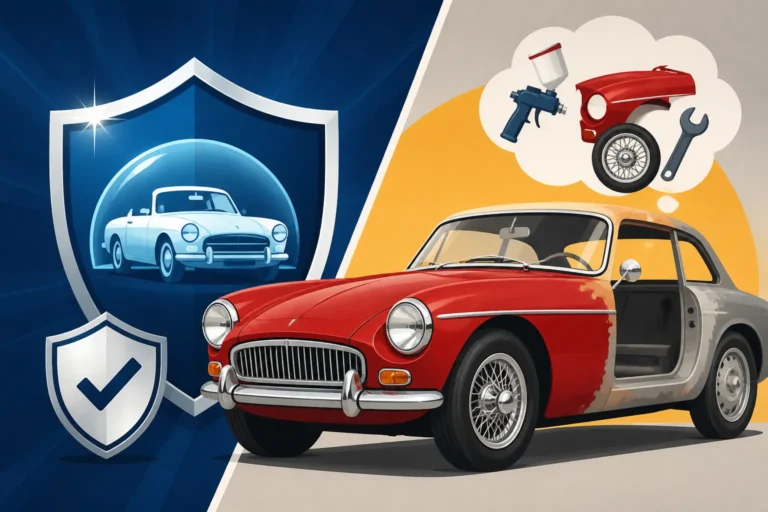
For more extensive projects, you might need to provide regular updates or even a detailed work plan to ensure the coverage matches your investment. This type of coverage often extends to cover the car even if it's disassembled, meaning if your frame is separated from the body, both components are protected. It recognizes that a car in pieces is still a valuable asset. Think of it as a safety net that continuously adjusts to the growing value of your efforts, ensuring that every dollar and every hour you pour into your project is accounted for. This is a far cry from what any standard auto policy would offer, demonstrating why it's a critical component for anyone undertaking a significant restoration. When you're trying to figure out if you need restoration coverage for a classic car, the answer is almost always yes.
Spare Parts and Tools Coverage
Most collectors accumulate a hoard of spare parts, specialty tools, and automobilia. For a restoration project, this collection is often integral to the car itself – rare trim pieces, engine components, an entire inventory of nuts and bolts, and specialized tools needed for vintage mechanics. A standard homeowners policy might cover some personal property, but it will almost certainly have low limits for valuable collectibles and won't recognize their true market value, especially for rare classic car parts.
Specialty classic car insurers, like American Collectors Insurance or Grundy, typically offer specific "Spare Parts Coverage" or "Automobilia and Memorabilia Coverage" as an add-on. This protects those valuable components that are not yet installed in the vehicle, as well as any dedicated tools you use for your restoration. If your garage is broken into and your collection of NOS tail lights for your '69 Camaro disappears, or your expensive vintage engine hoist is stolen, this coverage steps in. It ensures that the disruption to your project is minimized, and you have the funds to replace those crucial items. This is often an overlooked but incredibly important aspect, as many restoration budgets are eaten up by sourcing correct and often pricey components. If you're wondering how spare parts coverage works for collectors, it's designed to protect those vital components not yet installed on the vehicle.
Storage and Transit Coverage
A car under restoration spends a lot of time in storage, whether it’s in your home garage, a dedicated storage facility, or a professional restoration shop. It also spends time in transit – being trailered to a paint shop, an engine builder, or a car show. Standard policies typically only cover vehicles while they are being driven on public roads.
Specialized classic car insurance extends protection to your vehicle during these crucial phases. "Laid-Up Coverage for Winter Storage" or simply comprehensive coverage designed for stored vehicles protects against perils like fire, theft, vandalism, and natural disasters while the car is stationary. For transit, many policies include coverage for accidental damage while the vehicle is being loaded, unloaded, or transported on a trailer. This is particularly important for partially disassembled cars that are more vulnerable to damage during movement. Imagine you're trailering your prized '78 Firebird Trans Am project to a friend's shop for some specialized welding, and the trailer hitch fails, damaging the front end. Without transit coverage, you'd be looking at a significant out-of-pocket repair bill. These specialized coverages ensure that your project is protected whether it's sitting static in the garage or on the move.
How to Secure the Right Policy for Your Restoration Project
Getting the right insurance for your classic car under restoration isn't as simple as picking up the phone and getting a quick quote. It requires a thoughtful approach, meticulous documentation, and partnering with an insurer who truly understands the unique journey you're on. You're not just insuring a car; you're insuring a passion project whose value is constantly evolving.
Documenting Your Progress
This is perhaps the single most important step in protecting your restoration project. You need to become an obsessive documentarian. Every receipt for parts, every invoice for professional labor, every hour you personally spend, and an ongoing photographic log of your progress are critical.
- Financial Records: Keep detailed records of every penny spent. This includes the initial purchase price, major component acquisitions (engine, transmission, body panels), professional services (paint, upholstery, engine machining), and even smaller items like specialized tools directly related to the project.
- Photographic and Video Evidence: Take pictures and videos at every stage. Document the "before" state, progress shots of bodywork, engine assembly, interior installation, and specific rare parts. This visual proof not only serves as evidence of value but also helps the insurer understand the quality and extent of your work. Think of it as a restoration diary.
- Appraisals (When Appropriate): While you might not need a formal appraisal for a car that's still in pieces, as your restoration nears completion or reaches significant milestones (e.g., body and paint finished), a professional appraisal can solidify its current market value. This is especially useful for setting or updating your Agreed Value. Many insurers will accept photos and receipts for initial stages, but for higher-value projects nearing completion, an appraisal lends significant credibility. This is particularly useful for establishing how appraisals support agreed value.
Having this documentation readily available makes the claims process smoother and ensures you get a fair payout that reflects your true investment.
Choosing a Specialty Insurer
Attempting to insure a restoration project with a standard auto insurance carrier is usually an exercise in futility. They simply don't have the specialized knowledge, policy structures, or valuation methods required. You need an insurer that gets classics.
Look for companies that:
- Offer Agreed Value coverage with flexible updates: As discussed, this is non-negotiable. Ensure they have a clear process for you to adjust the agreed value as your project progresses.
- Provide specific Restoration or Vehicle Under Construction endorsements: This demonstrates they understand the unique risks and value progression of a project car.
- Understand storage and transit needs: They should offer coverage for your vehicle while it's stored and when it's being trailered.
- Have experience with spare parts and automobilia: This signals they recognize the value of the components surrounding your project, not just the car itself.
- Have a reputation for fair claims handling with classic cars: Check reviews and talk to other collectors. You want an insurer that appreciates the passion involved.
Brands like Hagerty, Grundy, American Collectors Insurance, and J.C. Taylor are well-known in the classic car insurance world for these exact reasons. They cater specifically to collectors and understand the nuances of owning, maintaining, and restoring these special vehicles. When comparing classic car insurance companies, prioritize those with deep expertise in the collector market.
Understanding Valuation Updates
Your restoration project isn't a static asset; its value is constantly increasing. Therefore, your insurance policy shouldn't be static either. You need a clear understanding of how to update your Agreed Value throughout the restoration process.
- Proactive Communication: Don't wait for renewal time. As soon as you complete a significant stage of your restoration – a new engine, a pristine paint job, a complete interior – contact your insurer. Provide them with your updated documentation (receipts, photos, work orders).
- Scheduled Reviews: Some insurers might suggest periodic reviews, perhaps quarterly or semi-annually, especially for longer or more extensive projects. This helps ensure your coverage keeps pace with your investment without you having to remember to call every few weeks.
- Future Value Considerations: While most Agreed Value policies focus on current market value, some specialized options or endorsements might offer slight upward adjustments (like inflation guard coverage for classic cars) to anticipate the final restored value, though this is less common for a car actively under restoration. The primary goal is to keep the current Agreed Value as close as possible to your total investment at any given time.
Failing to update your valuation is a common classic car insurance mistake to avoid. If you've spent an additional $10,000 on engine components since your last update, and your garage catches fire, you could be out that $10,000 if your policy wasn't adjusted. Treat your insurance policy as a living document that evolves with your project.
Your Investment Deserves Proper Protection
Embarking on a classic car restoration is one of the most rewarding experiences a gearhead can undertake. It's a testament to dedication, skill, and passion, and the final result is a rolling piece of automotive art. But during this often-long and intricate process, your investment—both financial and emotional—is vulnerable to a myriad of risks that standard insurance policies simply aren't designed to cover. From the fluctuating value of a partially restored vehicle to the specific perils of a garage environment, a traditional policy will leave you exposed and underinsured.
By understanding the critical difference that Agreed Value coverage makes, recognizing the necessity of specific Restoration Coverage, and ensuring your valuable spare parts and tools are protected, you can safeguard your dream. Choosing a specialty insurer who speaks the language of collectors and understands the journey of a project car is paramount. Don't let a moment of unforeseen misfortune turn your restoration dream into a nightmare. Get the right coverage for a car being restored, document your progress meticulously, and enjoy the satisfaction of bringing your classic back to life with complete peace of mind.
Disclaimer
The information provided in this guide is for general informational purposes only and does not constitute insurance advice. Classic car insurance policies and requirements can vary significantly by insurer, vehicle type, and individual circumstances. It is essential to consult with a qualified insurance professional to discuss your specific needs and obtain personalized recommendations for your classic car under restoration. Always review your policy documents carefully to understand your coverage, limits, and exclusions.