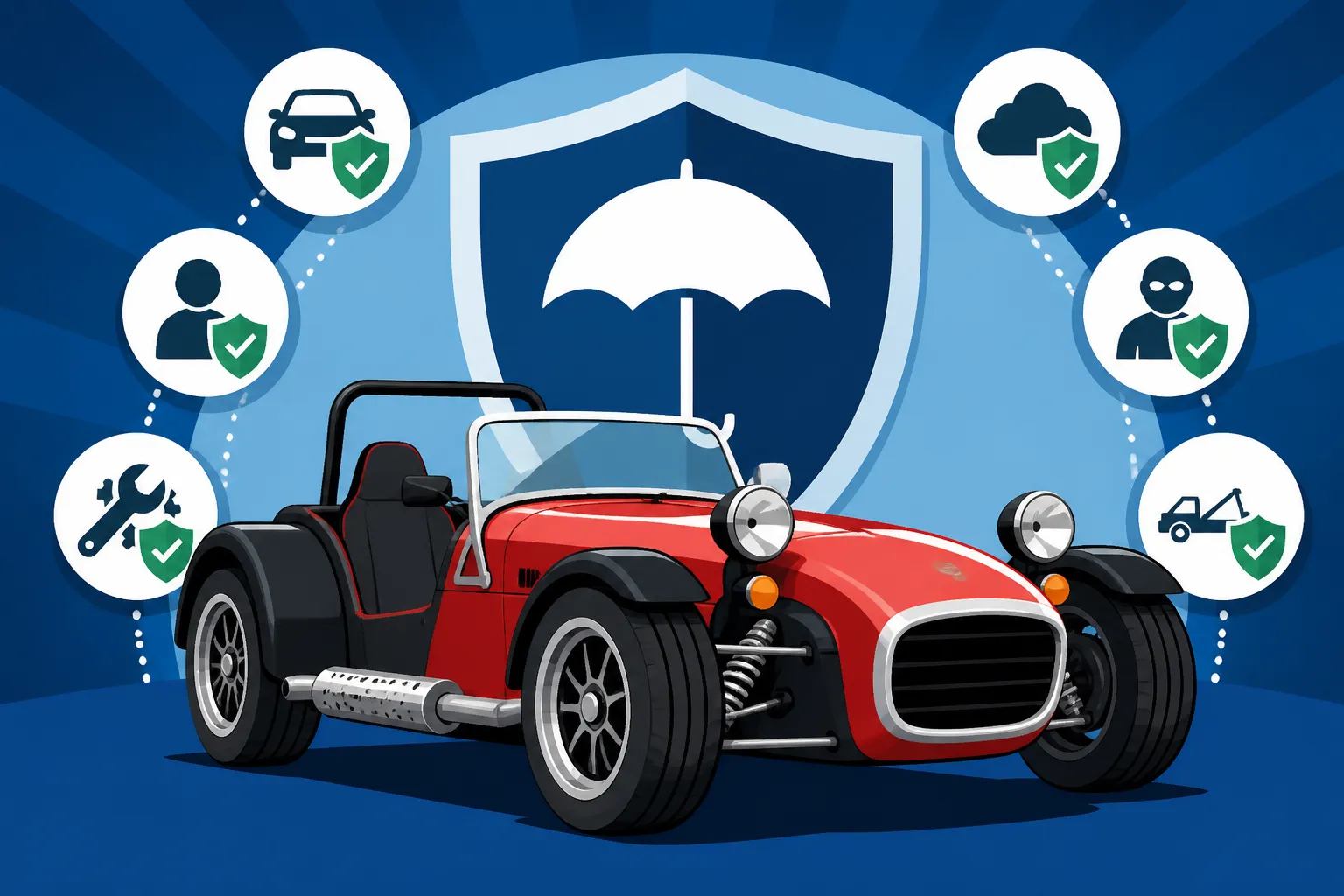
What Coverage a Kit Car Actually Needs
It can feel like a labyrinth trying to figure out insurance for your meticulously built kit car, can't it? You've poured countless hours, sweat, and hard-earned money into creating something truly unique, only to be met with blank stares or generic advice from standard insurance companies. Your kit car isn't just a vehicle; it's a testament to your passion and skill, and it deserves coverage that understands its special nature. This guide is here to cut through the confusion and explain exactly what kind of classic car insurance coverage your kit car actually needs, from the initial build phase right through to cruising down the open road.
Understanding What Makes Kit Cars Unique for Insurance
Insuring a kit car isn't like insuring a factory-built classic, or even a modified production car. Kit cars occupy a very specific niche, and understanding how insurers view them is the first step to securing proper coverage. Many standard auto insurance providers simply don't have the frameworks or valuation methods to accurately assess the risk and value of these unique builds, which can lead to inadequate coverage or even outright denial.
The Definition of a Kit Car in the Insurance World
When you talk to a specialty insurer, a "kit car" isn't just any old car you've tinkered with. Generally, it refers to a vehicle that has been assembled by an individual or small company using a pre-fabricated kit of components, often replicating a famous or classic automobile. Think of a Cobra replica, a Porsche 356 Speedster recreation, or even a custom hot rod built from a frame up with aftermarket parts. These aren't factory originals, nor are they simply vintage cars with new paint. They are vehicles where the builder often sources the chassis, body, engine, and interior components, then puts it all together.
From an insurance perspective, this means the vehicle doesn't have a standard VIN that immediately links to a known market value or repair database. Its value isn't easily looked up in a Kelley Blue Book or NADA guide. Instead, its worth is derived from the sum of its unique parts, the quality of the assembly, and the labor invested. This distinct identity is precisely why a one-size-fits-all approach to insurance simply won't work for your prized kit car. It’s a custom creation, and its policy needs to reflect that.
Valuation Challenges with Kit Cars
This is where many kit car owners hit their first major roadblock. How do you put a value on something that doesn't have a comparable mass-produced equivalent? Standard valuation methods used for regular cars, which rely on market data for similar make, model, and year vehicles, often fall flat. For instance, a beautifully constructed Cobra replica might cost over $70,000 to build, but a standard insurer might only see it as a "custom-built vehicle" with an arbitrary low value, leaving you drastically underinsured.
This is why working with insurers who understand the collector car market is crucial. Companies like Hagerty have specific processes to help assess the value of unique builds. They understand that the value of a kit car is built from the ground up, factoring in the cost of the kit itself, the donor vehicle (if any), all purchased parts, professional labor (if not done yourself), and even the value of your own meticulously documented time. Without this specialized understanding, you risk receiving only a fraction of your car's true worth if something unfortunate were to happen. It's not just about the components; it's about the entire project's worth.
Different Stages of a Kit Car's Life
Your kit car's insurance needs will actually evolve as your project progresses. It's not a static requirement.
- The "Under Construction" Phase: When your kit car is still a collection of parts in your garage – maybe the chassis is done, but the engine is still on the stand – it's vulnerable. Theft of valuable components, accidental damage during assembly, or even a garage fire could wipe out years of effort and thousands of dollars. Standard auto insurance offers absolutely no protection for a non-running vehicle that isn't yet registered or titled. You need a specific type of coverage that recognizes this "work in progress."
- The "Completed But Not Yet Registered" Phase: Once the car is assembled but maybe waiting for final inspections, DMV paperwork, or a shakedown drive, it's still in a precarious state. You might be moving it on a trailer, storing it securely, or doing test runs.
- The "Road Ready" Phase: Finally, when your kit car is titled, registered, and ready for pleasure drives, car shows, and club events, its insurance needs shift to include road-specific risks like liability, collision, and comprehensive coverage.
Each of these stages presents unique risks, and a truly comprehensive policy for a kit car will offer solutions that adapt to these phases. Don't wait until the car is finished to think about insurance; planning ahead is key to protecting your investment throughout its entire lifecycle.
Essential Coverage Types for Your Kit Car
Given the unique nature of kit cars, generic auto insurance simply won't cut it. You need specialized coverage types designed to protect your significant investment and passion project. Understanding these options is paramount to ensuring you're fully covered.
Agreed Value Coverage is Non-Negotiable
For any classic or custom vehicle, but especially for a kit car, Agreed Value coverage is the absolute cornerstone of a proper insurance policy. Here's why: unlike Actual Cash Value (ACV), which factors in depreciation, or Stated Value, which often leaves the insurer the final say in a payout, Agreed Value means you and the insurance company mutually agree on your car's value before the policy is issued.
If your kit car is ever declared a total loss due to theft, fire, or an accident, you will be paid that exact agreed-upon amount, minus any deductible. This is crucial because, as we discussed, your kit car's value isn't easily determined by market guides. You've invested time, unique parts, and custom fabrication that standard algorithms just can't quantify. With Agreed Value, you're guaranteed to recoup your investment, rather than battling with an adjuster who might undervalue your creation based on conventional metrics. This feature alone makes specialty classic car insurance worth its weight in gold for kit car owners. You can read more about what makes Agreed Value Coverage for Classic Cars Explained so vital for collectors.
Specialized Restoration and "Vehicle Under Construction" Coverage
Many kit cars are built over an extended period, moving from a pile of parts to a rolling chassis, and then to a finished vehicle. During this entire process, your investment is vulnerable. This is where specialized "Restoration Coverage" or "Vehicle Under Construction" coverage truly shines.
Imagine you're halfway through assembling your dream Shelby Cobra replica. The engine is installed, the chassis is perfect, and you've just received a shipment of expensive custom interior components. Then, a workshop fire occurs, or your garage is broken into. Without specific coverage for a car under restoration, your standard homeowner's policy might cover some structural damage to your garage, but it's unlikely to adequately cover the actual components of your kit car, especially if they're not yet part of a registered vehicle.
This specialized coverage protects the parts, materials, and labor you've invested while the car is still being built. It often allows you to periodically update the agreed value as you add more components and labor, ensuring your policy always reflects the current investment. This means if a disaster strikes during the build, you're not left with nothing but a pile of melted or stolen metal and a mountain of receipts. It's peace of mind for the journey, not just the destination.
Comprehensive and Collision Coverage Tailored for Customs
Once your kit car is complete and on the road, it needs protection from the everyday risks of driving and ownership, but still with that specialized Agreed Value lens.
- Comprehensive Coverage: This protects your kit car from damages not involving a collision with another vehicle. Think fire, theft, vandalism, falling objects (like a tree limb), and even natural disasters such as floods or hail. For a custom build that might attract attention, this coverage is critical. If your one-of-a-kind reproduction fiberglass body is damaged by hail, you want to know the unique repair costs will be covered up to your Agreed Value, not just a generic replacement cost for a standard car.
- Collision Coverage: This covers damage to your kit car resulting from an impact with another vehicle or object. While you might drive your kit car carefully, accidents happen. Having collision coverage means that if your custom suspension, unique bodywork, or specially tuned engine is damaged in a fender bender, the repair or replacement costs will be handled according to your pre-agreed valuation. This avoids the nightmare of an adjuster trying to estimate the cost of repairing a custom-fabricated panel as if it were a readily available part from a standard vehicle.
These coverages work in tandem with Agreed Value to ensure that your kit car is protected in real-world scenarios, acknowledging its singular identity and value.
Spare Parts and Tools Coverage
Kit car builders and owners often accumulate a significant collection of specialized tools, spare parts, and custom components, both during and after the build process. These items are frequently essential for maintenance, future repairs, or even for upgrading the vehicle. What happens if these valuable assets are stolen or damaged?
Specialty classic car insurance policies, often from providers like Hagerty, offer endorsements for spare parts and tools coverage. This can cover those vintage Weber carburetors you've been meticulously rebuilding, the specialized wrenches for your custom suspension, or the extra body panels you had fabricated. Standard homeowner's insurance often has very low limits for items like these when stored in a garage, and it definitely won't understand the intrinsic value of a rare or custom-made component for your kit car. Having dedicated coverage ensures that these vital accessories and tools are protected, allowing you to continue your passion without significant financial setback. It’s an aspect of Spare Parts Coverage Explained that many general insurers simply don’t offer.
Liability Protection for Your Custom Creation
Even though your kit car might be a weekend warrior or a show car, when it's on public roads, you need liability insurance. This is a non-negotiable legal requirement in almost every state. Liability coverage protects you financially if you're at fault in an accident that causes bodily injury to another person or damage to their property.
While your primary insurer for your daily driver might offer a basic liability policy, a specialty classic car insurer understands that a kit car, while driven infrequently, still needs robust protection. They can help you determine appropriate liability limits that align with your overall financial picture and the specific risks associated with driving a unique vehicle. Remember, even a minor accident in your kit car could lead to significant claims, especially if a standard vehicle is involved. Ensuring you have adequate liability coverage is not just about legal compliance; it's about protecting your personal assets from unforeseen circumstances. You can learn more about Classic Car Liability Coverage Explained to understand its importance fully.
Navigating the Insurance Process for Kit Cars
Getting the right insurance for your kit car can feel like a bespoke tailoring process. It requires attention to detail, thorough documentation, and partnering with the right experts. It's not a transactional purchase; it's a collaborative effort to ensure your unique vehicle is fully protected.
Documenting Your Build Journey
This cannot be stressed enough: documentation is your best friend when insuring a kit car. Because the value isn't factory-set, you are responsible for substantiating every dollar and hour invested.
- Keep meticulous records: Save every receipt for the kit, donor vehicle (if applicable), all parts purchased, and any professional services rendered (painting, engine tuning, upholstery, etc.). Organize them clearly.
- Photograph the process: Take clear, high-resolution photos at every stage of the build. Start with the bare chassis, photograph major component installations (engine, transmission, suspension), bodywork progress, paint application, and the finished interior. These images provide undeniable proof of your investment and the quality of your workmanship.
- Get professional appraisals: Once the car is nearing completion or fully finished, consider a professional appraisal from an expert specializing in custom and collector vehicles. An appraiser can assess the quality of the build, the rarity of components, and the overall market appeal, providing an independent valuation that strengthens your Agreed Value claim. This external validation is incredibly helpful for insurers and can streamline the process of setting your policy's value. These steps are crucial for How to Prove a Car's Collectible Status.
Choosing the Right Specialty Insurer
This is perhaps the single most important decision you'll make when insuring a kit car. Standard auto insurance companies are generally not equipped to handle the complexities of kit car valuation and usage. Their systems are designed for mass-produced vehicles with readily available parts and established market values. They might offer you a policy, but it will likely be based on an Actual Cash Value (ACV) or Stated Value, which could leave you severely underinsured.
Instead, you need to seek out specialty classic car insurance providers. These companies—like Hagerty, Grundy, or American Collectors Insurance—understand the passion, investment, and unique risks associated with collector vehicles, including kit cars. They have adjusters and underwriters who are enthusiasts themselves and know how to properly assess and value custom builds. They offer the essential Agreed Value policies and specialized coverages like "Vehicle Under Construction." They also typically have a network of repair shops and appraisers familiar with custom and classic vehicles. Engaging with them from the outset means you’re speaking the same language, and they truly appreciate the uniqueness of your vehicle.
Mileage and Usage Declarations
Kit cars, by their very nature, are usually not daily drivers. They're typically reserved for weekend cruises, car shows, and special events. Specialty insurers recognize this limited usage, and it's a key factor in how they underwrite policies and determine premiums.
You'll usually declare an annual mileage limit – often options like 1,000, 2,500, or 5,000 miles per year. Because you're not putting thousands of commuting miles on the car, the risk of an accident is significantly lower than with a daily driver. This reduced risk translates into lower premiums, making specialized classic car insurance much more affordable than trying to put a standard policy on your kit car. Be honest about your projected mileage; if you exceed the declared limit without updating your policy, it could impact claims processing. Many policies also have a "pleasure use" requirement, meaning the car shouldn't be used for regular commuting, business, or competitive racing (unless specific event coverage is added). This aligns perfectly with how most kit car owners intend to use their cherished vehicles. Understanding Classic Car Insurance Mileage Limits by State is also helpful.
Common Pitfalls and Smart Strategies for Kit Car Insurance
Insuring a kit car can be incredibly rewarding, offering peace of mind that your unique creation is protected. However, there are common mistakes owners make that can lead to frustrating and costly situations. Being aware of these pitfalls and adopting smart strategies will ensure your kit car insurance truly serves its purpose.
Avoiding Underinsurance
The biggest mistake a kit car owner can make is underinsuring their vehicle. This usually happens when they either don't accurately track all their costs during the build, or they opt for a cheaper, less comprehensive policy from a standard insurer that doesn't understand the true value of their custom build.
Imagine pouring $80,000 into a stunning Shelby Cobra replica, only to have an insurance policy based on a generic "custom car" valuation of $30,000. If that car is stolen or totaled, you've just lost $50,000 out of your own pocket. This scenario is all too common. The solution, as discussed, is meticulous record-keeping, professional appraisals, and most importantly, an Agreed Value policy from a specialty insurer. Regularly reviewing your policy and its Agreed Value, especially as market conditions or your car's condition changes, is crucial to avoiding this pitfall. You don't want to find out you're underinsured after a loss occurs.
Updating Your Policy as the Car Evolves
A kit car is often a dynamic project. Even after it's "finished," many owners continue to tinker, upgrade, or refine their vehicles. This means the value of your kit car can continue to increase over time, whether through significant performance upgrades, aesthetic enhancements, or even just the appreciation of unique components.
It's a smart strategy to periodically revisit your Agreed Value with your insurer. If you've just installed a more powerful engine, added a custom interior, or completed a concourse-level paint job, your car's value has likely increased. Notify your insurer and provide documentation of these enhancements. Most specialty insurers, like Hagerty, understand this and make the process of updating your Agreed Value straightforward, sometimes even without a full new appraisal if the changes are well-documented. Don't wait for your annual renewal; if you make a significant investment, update your policy promptly to ensure continuous, accurate coverage. This falls under the advice for How to Increase Your Agreed Value Over Time.
Understanding Exclusions and Limitations
While specialty classic car insurance offers far superior coverage for kit cars, it's vital to read the fine print and understand any exclusions or limitations that might apply. No policy covers absolutely everything, and being informed means no unwelcome surprises later.
Common exclusions you might encounter include:
- Racing or competitive events: If you plan on taking your kit car to the track for timed laps or drag racing, your standard classic car policy likely won't cover damage incurred during these activities. Some insurers offer special track-day coverage as an endorsement, but it's usually separate.
- Commercial use: Using your kit car for business purposes, like chauffeuring or advertising, will typically void your policy's pleasure-use clause.
- Off-road use: If your kit car is designed for road use, taking it off-road could also lead to claim denials.
- Damage from wear and tear: Insurance covers sudden, accidental losses, not maintenance issues or gradual deterioration.
Always have an open conversation with your insurance agent about how you intend to use your kit car. Be transparent about any modifications, planned upgrades, or specific activities you might participate in. This ensures that they can guide you toward the correct policy and any necessary endorsements, preventing coverage gaps and ensuring your kit car is truly protected for the way you enjoy it. It's about building How to Build a Complete Classic Car Policy that fits your lifestyle.
Here's a quick overview of key coverage considerations for your kit car:
| Coverage Type | Importance for Kit Cars | Key Benefit |
|---|---|---|
| Agreed Value | Absolutely critical; standard valuations don't apply to unique builds. | Guarantees payout of a pre-agreed amount in case of total loss. |
| Restoration/Construction | Essential for protecting investment during the build phase. | Covers parts, materials, and labor while the car is under construction. |
| Comprehensive | Protects against theft, fire, vandalism, natural disasters. | Replaces or repairs non-collision damage up to Agreed Value. |
| Collision | Covers damage from accidents with other vehicles or objects. | Replaces or repairs accident damage up to Agreed Value. |
| Spare Parts & Tools | Covers unique components, project parts, and specialized tools. | Protects valuable accumulated items often not covered by home insurance. |
| Liability | Legally required and protects assets from at-fault accidents on public roads. | Covers bodily injury and property damage to others if you're at fault. |
| Roadside Assistance | Useful for breakdowns, especially with older/custom components. | Provides flatbed towing for specialized vehicles, preventing further damage. |
Remember, your kit car is more than just a car; it's a piece of automotive art and a significant investment of your time and passion. Don't settle for less than the best, most comprehensive insurance coverage available. Talk to specialty insurers, get multiple quotes, and ensure every detail of your build is properly accounted for.
Disclaimer
Please remember that this article provides general information and guidance regarding classic car insurance for kit cars. Insurance policies can vary significantly based on the insurer, your specific vehicle, your location, and individual circumstances. It is always recommended to consult directly with a qualified insurance professional or specialty classic car insurance provider to discuss your specific needs and obtain personalized advice and quotes. Policy terms, conditions, and exclusions should be carefully reviewed before making any insurance decisions.