Best Insurance Company for a Hot Rod
Trying to find the right insurance for your prized hot rod can feel like navigating a maze built for sedans and minivans. Most standard insurance companies just don't "get it" – they don't understand the unique value, the custom work, and the sheer passion that goes into these rolling pieces of art. This guide is here to cut through that confusion, helping you understand what to look for and which companies truly specialize in protecting your hot rod investment.
What Makes Hot Rod Insurance Different?
When you’ve poured countless hours, sweat, and hard-earned cash into building or restoring a hot rod, you know it’s not just a car; it’s an extension of your personality, a testament to craftsmanship, and often, a dream realized. Traditional auto insurance policies, designed for depreciating daily drivers, simply aren't equipped to protect such a unique asset. The frustration comes when a standard insurer tries to value your bespoke machine like any other used vehicle, often leading to significant underinsurance.
Understanding "Hot Rod" in the Insurance World
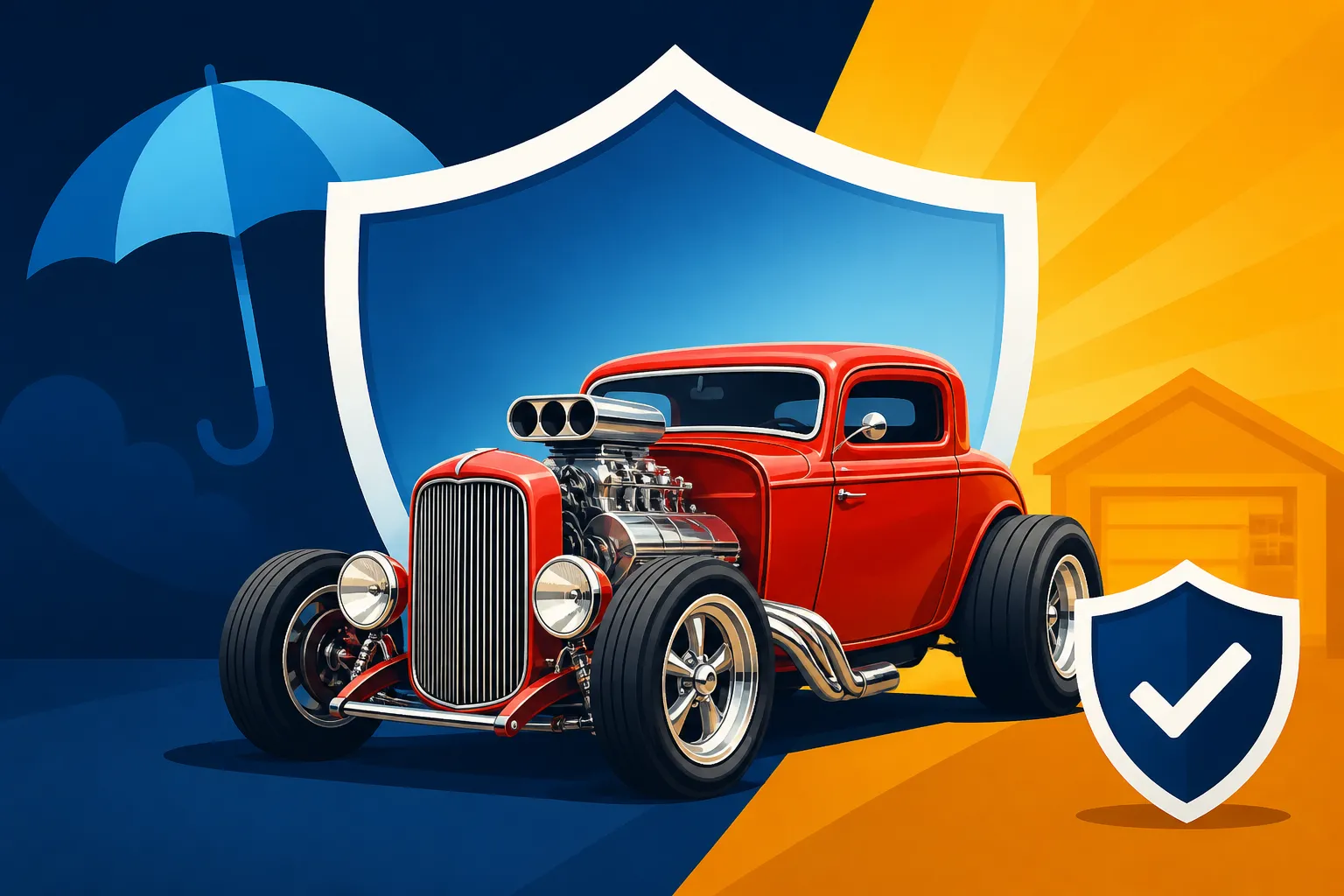
The term "hot rod" itself conjures images of souped-up engines, custom paint, and unique body modifications. For insurance purposes, it typically refers to a classic or antique vehicle that has undergone significant modifications to its engine, chassis, or body to enhance performance or appearance. These aren't factory-stock vehicles, and that's precisely where the challenge lies for many insurers. They might classify it as a "modified classic" or "custom build," but the core issue is that its value isn't easily found in a Kelley Blue Book or NADA guide. It’s an appreciation of custom work, rare parts, and often, professional labor that makes it special. Understanding these distinctions is crucial, as some policies might exclude coverage for certain modifications if not properly declared and valued.
Imagine trying to explain to a regular insurance agent why your 1932 Ford with a custom-built V8, hand-stitched interior, and a unique chopped top is worth more than its original market value plus a few bolt-ons. It's a different language, and many agents simply aren't fluent. This is why looking for companies that specialize in collector cars, particularly those with strong offerings for modified vehicles, is so important.
The Value of Customization and Agreed Value
The biggest differentiator for hot rod insurance is the concept of "agreed value" coverage. Unlike "actual cash value" (ACV) or "stated value" policies offered by standard insurers, agreed value ensures that if your hot rod is a total loss, you receive a payout for the amount you and the insurer agreed upon at the start of the policy. This figure takes into account all your customizations, the rarity of parts, the quality of the restoration, and even the sentimental value that often translates to real market worth in the collector car world. Without agreed value, a standard policy might only pay out what they deem the car was "worth" before your custom work, leaving you severely out of pocket.
For example, if you spent $75,000 building your dream hot rod from a derelict shell, a standard policy might look at the original chassis and basic components and only offer you a fraction of that in a total loss scenario. An agreed value policy, however, would honor the full $75,000 (or whatever amount was mutually agreed upon) because it recognizes the true cost and market value of your unique creation. This makes a massive difference, transforming a potential financial catastrophe into a manageable setback. You can learn more about this crucial distinction in our article on Agreed Value vs Stated Value vs Actual Cash Value.
Usage Limitations and Mileage
Another key area where hot rod insurance deviates from standard policies is in its understanding of vehicle usage. Most hot rods aren't daily drivers. They're weekend cruisers, show cars, and special occasion vehicles. Specialty insurers recognize this and structure their policies around "pleasure use" or "limited use" clauses, which often come with mileage restrictions. These restrictions, typically ranging from 1,000 to 5,000 miles per year, reflect the limited nature of hot rod driving and are a major reason why classic car insurance is often more affordable.
This limited usage also means insurers are less concerned with typical daily driving risks like commuting or running errands. They understand that these vehicles are meticulously cared for, stored securely, and driven more cautiously. While some specialty insurers offer more flexible mileage options or even unlimited mileage plans, the standard for hot rods usually involves these limits. This is a benefit, not a drawback, as it means lower premiums for a vehicle that isn't subjected to the wear and tear of a daily commute. You can dive deeper into this topic by reading our article on Classic Car Insurance Mileage Limits by State.
Key Features to Look for in a Hot Rod Insurance Policy
When you’re shopping for hot rod insurance, you're not just buying a piece of paper; you're buying peace of mind. Your policy needs to be as unique as your ride, offering comprehensive protection that acknowledges its special status. Don't settle for anything less than what truly covers your investment and passion.
Comprehensive Agreed Value Coverage
We touched on agreed value earlier, but it bears repeating: this is non-negotiable for a hot rod. A robust policy will not only offer agreed value but will make the process of establishing and updating that value straightforward. You want an insurer that understands how to properly appraise a custom vehicle, recognizing the value of bespoke parts, specialized labor, and meticulous craftsmanship that goes beyond off-the-shelf components. The best policies will even offer "inflation guard" coverage, which automatically adjusts your agreed value upwards by a small percentage each year to account for the rising value of collector cars, without you having to re-appraise it annually.
When discussing agreed value, make sure you're clear on how it's determined. Some companies may require a formal appraisal, especially for high-value or exceptionally unique builds. Others might rely on detailed photos, build sheets, and documentation of receipts for parts and labor. Transparency in this process is key to ensuring you and your insurer are on the same page about your hot rod's worth. Our guide on How Agreed Value Affects Premiums offers even more detail on this critical aspect.
Coverage for Custom Parts, Modifications, and Labor
This is where standard policies spectacularly fail hot rod owners. Your custom paint job, the specialized intake manifold, the hand-built headers, or the intricate interior stitching – these are the very essence of your hot rod, and they represent a significant financial and emotional investment. A superior hot rod insurance policy will explicitly cover these custom parts, modifications, and the labor associated with them. Look for policies that offer specific endorsements or built-in coverage for "modifications," "custom equipment," or "restoration costs."
Some policies will include coverage for spare parts, tools, and even automobilia, which can be invaluable for a dedicated enthusiast. Imagine losing your cherished hot rod and all your unique spare parts in a garage fire. A comprehensive policy designed for collectors will often have provisions for these items, ensuring that your entire passion project, not just the car itself, is protected. This type of detailed coverage demonstrates that the insurer truly understands the unique needs of a hot rod owner, going beyond the basic frame and engine.
Roadside Assistance and Flatbed Towing
Hot rods, while magnificent, can sometimes be temperamental. Breakdowns happen, and when they do, you can't just call any tow truck. Your custom low-rider chassis or gleaming classic paint job demands specific care during transport. A top-tier hot rod insurance policy will include specialized roadside assistance that provides flatbed towing. This ensures your vehicle is transported safely, without damage to its delicate suspension or custom bodywork.
This isn't just a convenience; it's a necessity. Traditional hook-and-chain towing can cause irreparable damage to classic vehicles, especially hot rods with their unique ground clearances and fragile components. Look for policies that explicitly state flatbed towing is included, and ideally, have a network of specialized towing providers who understand how to handle collector vehicles. This benefit reflects an understanding of the hot rod lifestyle and the care these vehicles require, even in unforeseen circumstances.
Top Insurance Providers for Hot Rods
When it comes to insuring a hot rod, you really need to look beyond the big-box insurance carriers. While they might offer some form of coverage, it's rarely tailored to the specific needs of a custom-built, high-value vehicle. Specialty insurers are in a league of their own, understanding the nuances of the collector car market and the passion of its owners.
Hagerty: A Leader in Collector Car Insurance
When people talk about classic car insurance, Hagerty Classic Car Insurance Review is almost always the first name that comes up, and for good reason. Hagerty has built its reputation by focusing exclusively on collector vehicles, including a strong emphasis on hot rods, muscle cars, and custom builds. They understand that a hot rod isn't just transportation; it's an investment, a hobby, and a piece of automotive art.
Hagerty's policies are built around the agreed value model, which, as we've discussed, is absolutely crucial for hot rods. They make the valuation process clear and often don't require an appraisal for many hot rods, relying instead on detailed owner statements, photos, and their extensive internal valuation data derived from auctions and sales. They offer comprehensive coverage that extends beyond just collision and comprehensive, including things like spare parts coverage, "automobilia" coverage for your garage treasures, and excellent roadside assistance with guaranteed flatbed towing. Their agents and adjusters are typically enthusiasts themselves, which means you're speaking with someone who genuinely understands your vehicle and its unique characteristics. Many hot rod owners find their rates to be surprisingly competitive, especially when comparing the specialized coverage to a generic policy. If you're looking to understand more about their offerings, our article Hagerty Classic Car Insurance: Coverage and Perks is a great resource.
Other Reputable Specialty Insurers
While Hagerty is a strong contender, several other specialty insurers also excel in the hot rod market, offering similar benefits and a deep understanding of collector vehicles. It’s always a good idea to shop around and get multiple quotes to ensure you're getting the best coverage and value for your specific hot rod.
- Grundy Insurance: Often considered a close competitor to Hagerty, Grundy offers excellent agreed value policies with robust coverage options. They are well-regarded for their comprehensive protection and can be particularly competitive for high-value collections. Their policies also typically include features like inflation guard and roadside assistance tailored for classics. You can explore their offerings in our Grundy Classic Car Insurance Review.
- American Collectors Insurance: This company also specializes in collector vehicles and provides agreed value coverage, often with flexible mileage plans and options for vehicles under restoration. They cater to a wide range of collectibles, including hot rods, and have a good reputation for customer service and understanding the unique needs of enthusiasts.
- American Modern Insurance Group: While they offer a broader range of insurance products, American Modern has a dedicated collector car division that provides agreed value policies for hot rods and other unique vehicles. They are known for their flexibility in coverage options and can be a good choice for unique situations or custom builds.
Comparing these companies side-by-side on their agreed value process, specific modification coverage, and customer service for claims is critical. A detailed comparison can be found in resources like Hagerty vs Grundy: Which Is Better.
| Insurance Provider | Key Differentiators for Hot Rods | Agreed Value Policy | Custom Parts/Mods Coverage | Roadside Assistance |
|---|---|---|---|---|
| Hagerty | Deep collector market expertise, enthusiast staff | Yes, often no appraisal required | Excellent, specific endorsements | Flatbed included |
| Grundy | Strong competitor, competitive for high-value | Yes, often flexible | Very good, comprehensive | Flatbed included |
| American Collectors | Flexible mileage, good for restorations | Yes, clear process | Good, specific endorsements | Often included |
| American Modern | Broad options, flexible, good for unique builds | Yes, tailored | Good, detailed options | Often included |
| Standard Insurers | General market focus, limited understanding | No (ACV/Stated Value only) | Very limited, often excluded | Basic, usually no flatbed |
Why Standard Insurers Often Fall Short
Trying to insure a hot rod with a standard, everyday auto insurance company like Geico, Progressive, or State Farm can be an exercise in futility and frustration. These companies are set up to insure the millions of mass-produced vehicles that depreciate with age and mileage. Their entire valuation system is based on market values found in common databases, which simply do not apply to a custom-built hot rod.
Here’s why they usually fall short:
- Actual Cash Value (ACV): Most standard policies default to ACV, which means they'll pay out the replacement cost minus depreciation. For a vehicle that appreciates in value due to custom work, this is a disaster waiting to happen.
- Stated Value: Some might offer "stated value," which sounds promising, but often allows the insurer to pay out either the stated value or the ACV, whichever is less. This is a huge risk for a hot rod owner, leaving you vulnerable to significant financial loss.
- Limited Customization Coverage: Standard policies might offer a tiny allowance for "custom parts and equipment," but this amount is usually a few thousand dollars at most – a drop in the bucket compared to the cost of a hot rod build. Anything beyond that is typically uninsured.
- Lack of Expertise: Their adjusters and agents are not trained to understand the unique components, specialized labor, or market dynamics of hot rods. This can lead to delays, disputes, and unfair settlements if you ever need to file a claim.
- Usage Restrictions: While you might expect limited use to save you money, some standard insurers don't have suitable classifications and may still charge higher premiums based on a general risk profile, even if you rarely drive the car.
Ultimately, the inherent structure and operational models of standard insurers are simply not designed for the unique world of hot rods. You need a partner who speaks your language and understands the true value of your vehicle.
Getting the Right Quote and Protecting Your Investment
Navigating the insurance world for a hot rod doesn't have to be intimidating. With the right approach and knowledge, you can secure a policy that truly protects your rolling artwork. It's all about being prepared and knowing what questions to ask.
Gathering Documentation and Valuation
Before you even start getting quotes, the most crucial step is to gather thorough documentation of your hot rod. This isn't just about proving ownership; it's about proving its value. Start with detailed photographs – not just glamour shots, but clear images of the engine, interior, chassis, custom work, and any unique features. Document every stage of the build if you were involved in the restoration, with receipts for major parts, specialized labor, and paintwork. A comprehensive build sheet listing all modifications and custom components will also be invaluable.
For higher-value hot rods, especially those that have won awards or been featured in magazines, a professional appraisal might be necessary or highly recommended. An independent appraisal by a qualified classic car appraiser provides an unbiased, expert opinion on your vehicle's agreed value, which gives both you and the insurer a solid baseline. Companies like Hagerty have extensive resources and advice on how to value your classic car for insurance, and some even have their own valuation tools based on auction results and private sales. The more documentation you have, the smoother the process will be and the more accurately your vehicle will be valued.
Comparing Policies and Understanding the Fine Print
Once you have your documentation ready, it’s time to start comparing quotes from specialty insurers. Don't just look at the bottom-line premium. Dive into the details of what each policy offers. Ask specific questions:
- Agreed Value: Is it a true agreed value, or a stated value with a caveat? How often can you update the agreed value? Is there an inflation guard?
- Customization Coverage: What are the specific limits and exclusions for custom parts, modifications, and labor? Are specific high-value components covered?
- Usage: What are the mileage limits? Are there restrictions on car shows, parades, or club events? What about touring and rallies?
- Storage Requirements: Are there specific requirements for garage storage vs. a carport, or can you insure a classic car parked outside?
- Roadside Assistance: Is flatbed towing explicitly included? What’s the maximum towing distance?
- Claims Process: How do they handle claims for custom vehicles? Are their adjusters knowledgeable about hot rods?
It's tempting to go with the cheapest option, but for a hot rod, that can be a costly mistake. Prioritize comprehensive coverage and a true agreed value over a slightly lower premium. Read the fine print carefully, and if anything is unclear, ask for clarification. You want to know exactly what you're covered for, and just as importantly, what you're not. Learn more about How to Compare Classic Car Insurance Quotes to make an informed decision.
Maintaining Coverage as Your Hot Rod Evolves
Hot rods are often works in progress. You might add new modifications, upgrade the engine, or complete a major restoration phase. It's absolutely crucial to communicate these changes to your insurance provider. If you increase the value of your hot rod through significant upgrades and don't inform your insurer, you could find yourself underinsured in the event of a loss. Many specialty insurers are accustomed to this evolutionary process and have provisions for updating your agreed value mid-policy or at renewal.
For example, if you complete a full engine swap that significantly boosts horsepower and value, reach out to your insurer immediately. Provide them with the new documentation, photos, and receipts. This proactive approach ensures your policy always reflects the true, current value of your hot rod. Neglecting to do so could lead to a painful realization during a claim that your payout won't cover the full extent of your investment. Think of it as a living policy that needs to grow with your car. Our guide on How to Update Coverage After Restoration provides a practical walkthrough for this.
Disclaimer
Please remember that this article provides general information and recommendations. Insurance policies and requirements can vary significantly by state, insurer, and the specific characteristics of your hot rod. It is always best to consult directly with a qualified insurance professional or agent to discuss your individual needs and to obtain personalized quotes and advice.