Best Insurer for a Car Under Restoration
It’s a unique kind of dread, isn't it? You’ve got your dream car in pieces, scattered across the garage floor, or perhaps it’s a rolling shell slowly transforming into a masterpiece, and then it hits you: what if something happens? Standard auto insurance often views a disassembled car as next to worthless, completely overlooking the immense effort, expensive parts, and countless hours you're pouring into bringing it back to life. This guide will help you understand why specialized insurance is crucial for cars under restoration and which insurers truly protect your evolving investment.
Why Standard Auto Insurance Fails Restoration Projects
Trying to fit a restoration project into a conventional auto insurance policy is like trying to put a square peg in a round hole – it just doesn't work, and you're the one who ends up with a broken piece. Traditional insurance models are built around the idea of a fully assembled, operational vehicle with a clear market value. Your project car, sitting partially complete, defies this logic, leaving you dangerously exposed.
The "Actual Cash Value" Trap
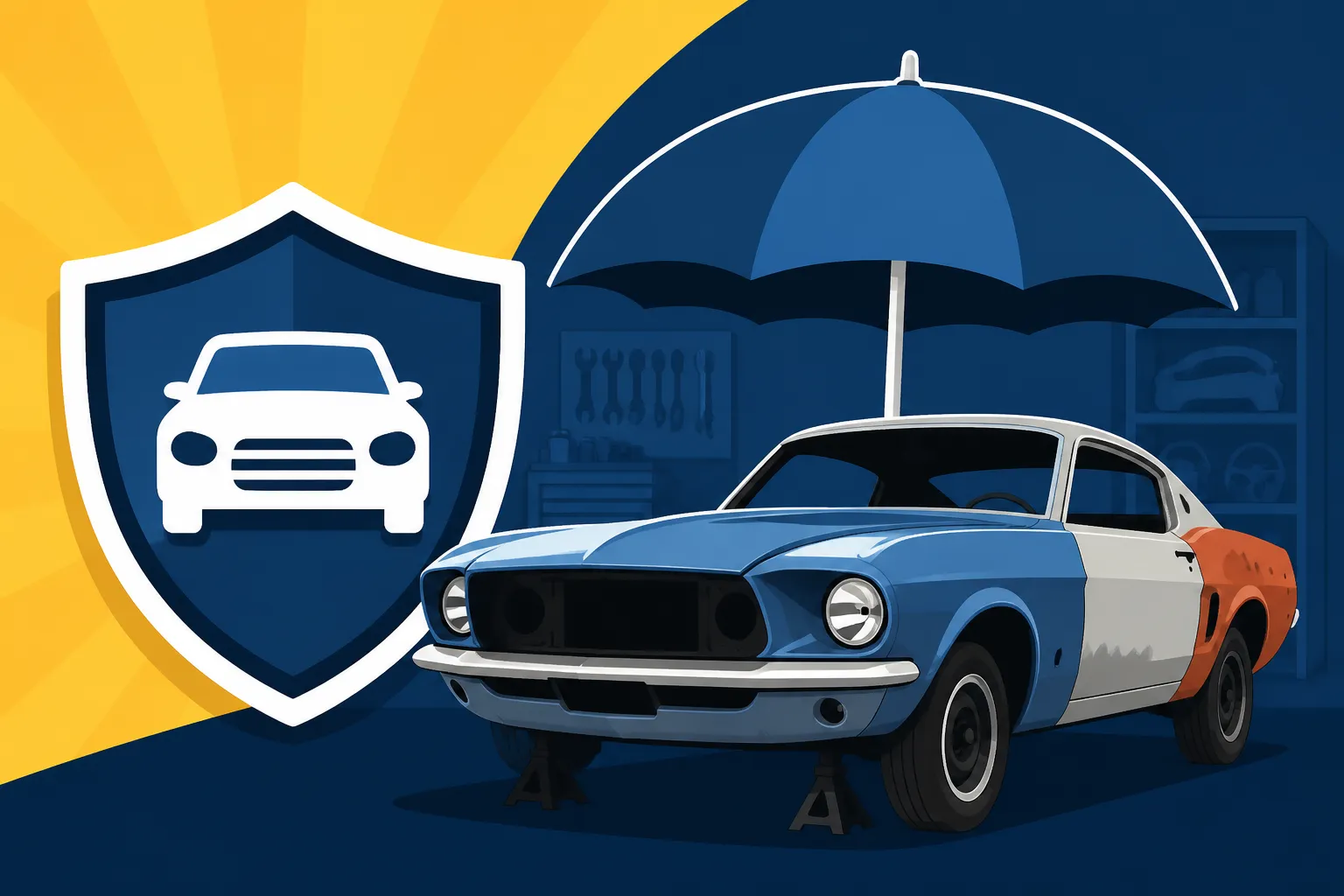
One of the biggest pitfalls with standard auto insurance when it comes to a car under restoration is the "Actual Cash Value" (ACV) clause. Most regular policies will only pay out what your car was worth at the moment of loss, minus depreciation. Imagine your cherished 1969 Mustang, half-sanded and primed, with a brand-new crate engine sitting on a stand next to it. Under an ACV policy, if a fire rips through your garage, the insurer might only value the car as a beat-up, non-running shell – ignoring the thousands you've spent on parts, bodywork, and the engine.
This is a gut punch no enthusiast should ever experience. Your financial investment in new parts, the professional labor you've paid for, and even the value of your own sweat equity are rarely factored into an ACV calculation for a non-operational vehicle. It's a system designed for daily drivers that lose value the moment they're driven off the lot, not for passion projects that are steadily appreciating in value through meticulous restoration.
Lack of Specialized Coverage for Parts and Labor
Beyond the valuation nightmare, standard policies simply aren't equipped to cover the unique circumstances of a restoration. What about all those rare, NOS parts you just bought from a swap meet in Carlisle, Pennsylvania, or the custom-fabricated panels sitting in your workshop? Most homeowner's policies might offer some limited coverage for personal property, but it often comes with low limits, high deductibles, and specific exclusions for vehicle parts.
Even worse, the labor you've invested, whether your own or that of a professional shop, is virtually impossible to recover with a standard policy. If your car is damaged during transport to a paint shop, or if tools are stolen from your garage mid-project, you're usually left holding the bag. Specialty insurers, on the other hand, understand that the value of your project isn't just the car itself, but also the components, the expertise, and the time that goes into making it special.
Key Features to Look for in a Restoration Insurance Policy
When your classic is in mid-transformation, you need an insurance policy that understands the journey, not just the destination. This means looking beyond the conventional and focusing on features specifically designed for cars under construction.
Agreed Value Coverage Evolution
The cornerstone of any good classic car insurance policy, especially for a restoration, is Agreed Value Coverage Explained. Unlike ACV, Agreed Value means you and the insurer agree on your car's value before the policy starts. If a total loss occurs, you receive that agreed-upon amount, no questions asked, no depreciation factored in. For a restoration project, however, this needs to be a dynamic, evolving Agreed Value.
A truly supportive policy for a car under restoration will allow you to adjust this Agreed Value as your project progresses. Every major milestone – a new engine installed, a fresh paint job completed, a pristine interior fitted – adds significant value. You should be able to update your insurer with receipts, photos, and professional appraisals to reflect these increases. This ensures that the policy keeps pace with your investment, protecting you from the financial heartache of being underinsured when your car is nearly complete. Some policies even have built-in "inflation guard" features that can incrementally increase the agreed value over time, accounting for the rising cost of parts and labor.
Coverage for Parts, Tools, and Materials
When your car is a collection of components, it's those components that need protecting. Look for a policy that offers robust Spare Parts Coverage Explained. This isn't just about the parts that are already installed; it’s about all the expensive, hard-to-find components waiting to be bolted on. Imagine sourcing an original carb for your vintage Thunderbird, only for it to be stolen from your workbench. A good restoration policy will specifically cover these valuable loose parts, often up to a generous limit, both at your primary storage location and sometimes even while in transit or at a secondary location like a mechanic's shop.
Beyond just parts, some premier policies will also extend coverage to valuable tools and equipment used solely for your restoration. If you’ve invested in specialized lifts, welding equipment, or specific diagnostic tools, you know their value can quickly add up. Be sure to ask about coverage for "Vehicle Under Construction Coverage" which specifically addresses these kinds of scenarios, safeguarding your entire investment in the project, not just the car itself.
In-Transit and Storage Coverage
A car under restoration often moves around. It might go from your garage to a body shop, then to an upholstery specialist, and perhaps to a mechanical expert across town. Each leg of that journey presents a risk. Standard policies rarely offer adequate Towing Coverage for Classic Cars or transit protection for a non-running vehicle, let alone one in pieces.
A specialty policy should include coverage for your vehicle while it's being transported, whether on your own trailer or by a professional hauler. This is crucial because an incident during transit could set your project back significantly, both financially and emotionally. Additionally, the policy must cover the car while it's stored, whether in your secure garage or at a third-party restoration shop. This "laid-up" or "storage-only" coverage is essential, as the car might sit idle for months, yet still be vulnerable to fire, theft, or natural disasters. Make sure to discuss your specific storage arrangements and any planned movements with your insurer to ensure continuous protection.
Top Insurers Offering Restoration Coverage and What Makes Them Stand Out
When it comes to insuring a car under restoration, you really want to partner with an insurer who "gets it." These aren't just policies; they're partnerships that understand the passion, the process, and the increasing value of your project.
Hagerty: A Leader in Restoration Coverage
When you think about specialty classic car insurance, Hagerty often comes to mind, and for good reason. They are renowned for their deep understanding of the collector car market and offer robust solutions for vehicles in various stages of restoration. What sets Hagerty apart for restoration projects is their flexible approach to agreed value and their tailored endorsements.
With Hagerty, you can typically establish an initial agreed value for your car in its current state, then provide updates as you complete stages of restoration or purchase significant parts. They encourage this proactive communication, recognizing that the value of your project is constantly increasing. This means your insurance coverage grows with your investment. They offer specific "Vehicle Under Construction" endorsements that can cover not only the physical car but also the tools and equipment you're using. If you're looking for detailed insights, their Hagerty Classic Car Insurance Review provides a comprehensive look at their offerings.
For example, imagine you're restoring a rare 1970 Plymouth Barracuda in your garage in upstate New York. You start with a shell valued at $15,000. Over six months, you invest $20,000 in engine work, suspension components, and body repairs. Hagerty allows you to submit documentation of these expenditures, increasing your agreed value to $35,000, ensuring your growing investment is protected. They understand that a project car's value isn't static; it's a journey.
Other Specialty Insurers to Consider
While Hagerty is a prominent name, other specialty insurers also offer excellent options for cars under restoration. Companies like Grundy, American Collectors Insurance, American Modern, and J.C. Taylor have strong reputations in the classic car community. Each might have slightly different stipulations regarding how often you can update your agreed value, what documentation they require, and specific limits on parts and tools coverage.
| Feature / Insurer | Standard Auto Insurance (ACV) | Specialty Classic Insurer (Agreed Value) | Specialty w/ Restoration Coverage (e.g., Hagerty) |
|---|---|---|---|
| Valuation Method | Actual Cash Value (depreciated) | Agreed Value (fixed at policy start) | Evolving Agreed Value (adjusts with project progress) |
| Coverage for Loose Parts | Very Limited (Homeowner's policy, low limits) | Often limited or an add-on | Dedicated Spare Parts Coverage Explained (generous limits) |
| Coverage for Labor/Sweat Equity | No | Potentially included in Agreed Value | Explicitly factors into evolving Agreed Value updates |
| In-Transit Coverage | Limited/None for non-running | Can be an add-on | Specific Towing Coverage for Classic Cars and transport for projects |
| Tools & Equipment | No (covered by Homeowner's, low limits) | No | Often available as an add-on endorsement |
| Project Milestones | Ignored | Ignored after initial agreement | Encouraged updates to reflect increased value |
| Required Inspections | Sometimes | Sometimes | Often photo-based or self-assessment |
When you're trying to figure out How to Insure a Car Under Restoration, it really pays to get multiple quotes and compare them meticulously. Don't just look at the premium; dive into the policy details, especially the clauses related to valuation, parts coverage, and how they handle value increases during the restoration process. Ask about their claims process specifically for partial losses on restoration projects.
Steps to Insure Your Car Under Restoration
Insuring a restoration project might seem daunting, but by following a structured approach, you can ensure your investment is thoroughly protected from day one. It's all about diligent documentation and clear communication with your chosen insurer.
Documenting Your Project's Value and Progress
The single most important step in insuring a car under restoration is meticulous documentation. Insurers want to see proof of your investment and the increasing value of your vehicle. Start with a comprehensive set of "before" photos and videos. Document the condition of the car as you acquired it, noting any existing damage or unique features.
As you embark on your restoration journey, keep a detailed log of every purchase and every hour of labor.
- Receipts: Save every single receipt for parts, materials, and outsourced services (e.g., engine rebuilds, paintwork, chrome plating). These are irrefutable proof of your financial outlay.
- Photographs: Take "before and after" photos of major components and stages of the restoration. Did you rebuild the engine? Document it with photos at various stages. Did you finish the bodywork? Take detailed shots of the bare metal, primer, and paint.
- Appraisals: For significant projects, consider getting an initial appraisal when you start and periodic updates from a qualified classic car appraiser. This can be especially helpful in establishing a baseline and validating major value increases. Many insurers, like Hagerty, have internal valuation tools or can recommend appraisers.
- Professional Estimates: If you're having professional work done, obtain detailed estimates and invoices for the labor involved.
This documentation serves a dual purpose: it helps you establish the correct Agreed Value Coverage for Classic Cars with your insurer and provides invaluable evidence should you ever need to file a claim. You want to make it as easy as possible for the insurer to see the true worth of your developing masterpiece. This is crucial, as you learn How to Prove Restoration Costs to an Insurer.
Getting Quotes and Choosing the Right Policy
Once you have your documentation in order, it's time to shop for insurance. Don't rely solely on online quote tools for restoration projects; these are often geared towards fully operational classics or daily drivers. Instead, reach out directly to specialty classic car insurance providers. You might even want to consult with an independent agent who specializes in collector car insurance.
When you're comparing quotes, focus on more than just the premium. Here are key questions to ask:
- How flexible is your Agreed Value policy for a car under restoration? How often can I update it, and what documentation do you require?
- What kind of Restoration Coverage for Classic Cars do you offer? Does it cover the car at my garage, during transit, and at a professional shop?
- What are the limits for Spare Parts Coverage for Classic Cars? Does this include tools and equipment?
- Do you offer any specific "Vehicle Under Construction" endorsements?
- What is your claims process like for partial losses or theft of parts on a restoration project?
- Are there any mileage restrictions or Pleasure-Use Requirement Explained while the car is under restoration? (Often, this isn't an issue until the car is drivable, but it's good to confirm).
Consider contacting multiple providers, including reputable names like Hagerty, Grundy, and American Collectors Insurance, to get a comprehensive understanding of your options. Each might have different sweet spots or cater to slightly different types of projects or values. You'll want to avoid Common Classic Car Insurance Mistakes to Avoid by thoroughly understanding the policy. After all, your goal is to protect not just a car, but a labor of love and a significant investment of time and money. When you finally finish your project, you'll also want to know How to Update Coverage After Restoration.
Disclaimer
Please remember that this article provides general information and guidance regarding classic car insurance for vehicles under restoration. Insurance policies and requirements can vary significantly by state, insurer, and the specific details of your vehicle and restoration project. It is always recommended to consult directly with a qualified insurance agent or specialist classic car insurer to discuss your individual needs and obtain precise policy details and quotes.