Garage Storage Requirement for Classic Cars
It's incredibly frustrating when you've finally found that perfect classic car, or maybe you've nurtured one for years, only to hit a roadblock when it comes to insurance because of something as seemingly simple as where you park it at night. Many folks don't realize that standard auto insurance companies often don't truly understand the unique value and care a classic requires, and that extends right down to its storage. This guide will help you navigate the often-confusing world of classic car insurance storage requirements, ensuring your prized possession is properly protected without unnecessary headaches.
Why Garage Storage is a Cornerstone for Classic Car Insurance
When you're dealing with a vehicle that isn't just transportation but a piece of history, an investment, and a passion project, its safekeeping becomes paramount. Insurance providers specializing in classic cars see things a little differently than those insuring your daily driver. They understand the inherent risks and also the mitigating factors that make these policies surprisingly affordable. And a big part of that equation, often the very first thing they look at, is how and where your classic is stored.
Protecting Your Investment from the Elements
Let's be real: classic cars, especially those with original paint, pristine chrome, or carefully restored interiors, are incredibly vulnerable to the whims of Mother Nature. A scorching summer sun can fade paint and crack dashboards. Hailstorms, even minor ones, can ding those irreplaceable body panels. And don't even get me started on the havoc that rust-inducing rain, snow, and humidity can wreak over time. A secure, enclosed garage acts as a shield, protecting your classic from these daily threats, which in turn significantly reduces the likelihood of weather-related claims. Insurers know this, and it’s a key factor in their underwriting.
Deterring Theft and Vandalism
Sadly, classic cars are also prime targets for thieves and vandals. A beautiful vintage Mustang sitting exposed in a driveway or on the street is an open invitation for trouble, whether it's someone trying to hotwire it, steal parts, or simply key the paint for a cruel laugh. A locked, secure garage provides a formidable barrier. It makes the car less visible to opportunistic criminals and adds crucial layers of physical security. This reduced risk of theft or vandalism claims is a major reason why classic car insurers, like the experts at Hagerty, almost universally require some form of enclosed, secure storage. It's not just about protecting their assets; it's about protecting yours.
Decoding "Secure Storage" for Classic Car Insurers
The term "secure storage" might sound straightforward, but in the world of classic car insurance, it has a very specific meaning. It goes beyond just 'somewhere out of sight' and delves into the specifics of how your vehicle is protected. Understanding these nuances is crucial for meeting eligibility and securing the best rates.
The Gold Standard: Private, Locked Garage
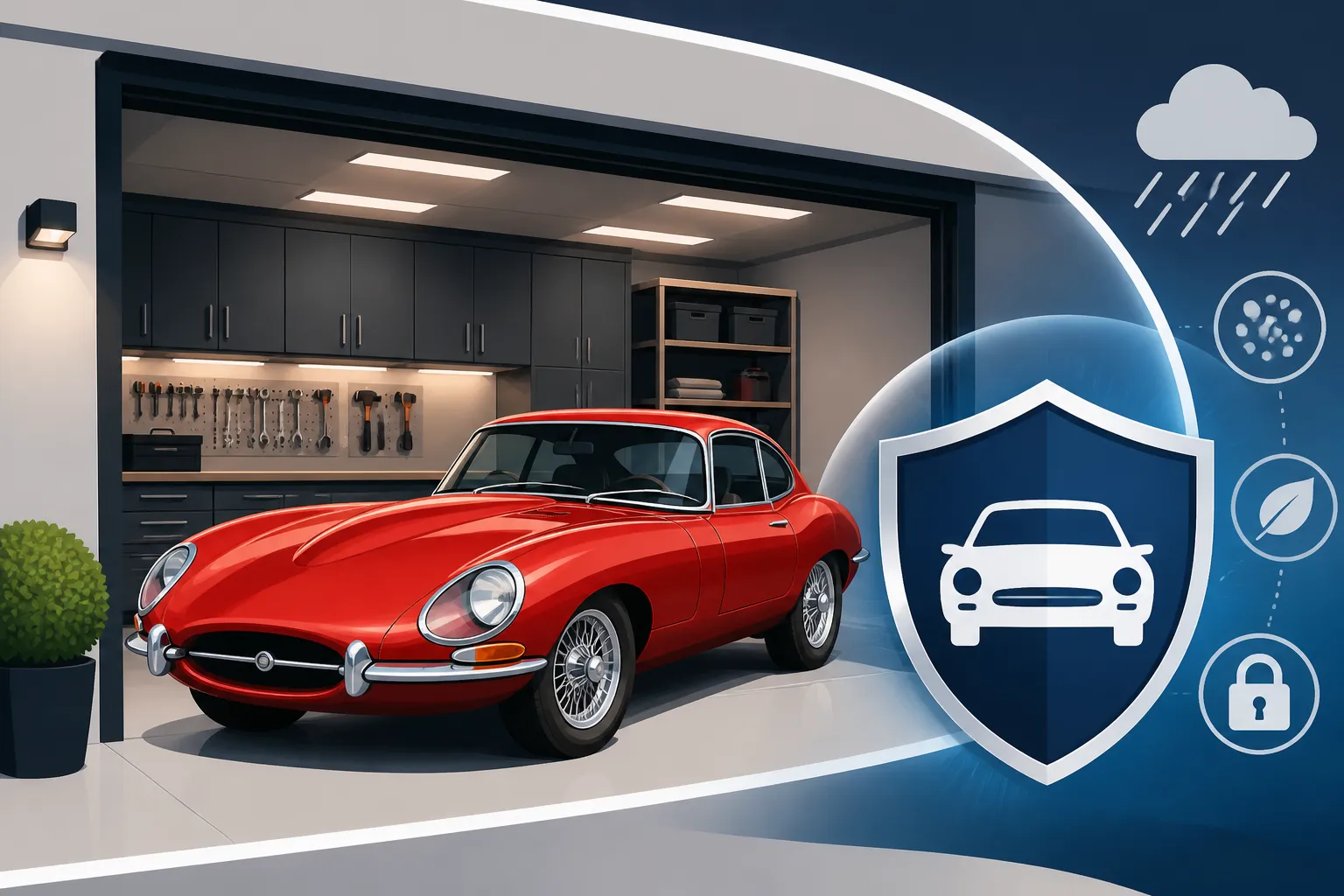
When a classic car insurer talks about secure storage, what they typically mean by the "gold standard" is a private, fully enclosed, and lockable garage. This isn't just a suggestion; it's often a strict requirement. This could be an attached garage to your home, a detached garage on your property, or even a rented unit in a secure storage facility. The key elements are that it's fully enclosed (four walls and a roof), for your exclusive use or a designated, secure space within a facility, and most importantly, it can be locked. This setup offers maximum protection from both environmental factors and potential theft. You might find that some policies even specify the type of door lock or suggest additional security measures, but a solid, lockable garage is the baseline. This requirement is often a part of the broader Classic Car Insurance Eligibility Requirements.
What About Carports, Driveways, or Street Parking?
This is where many aspiring classic car owners hit a snag. Unfortunately, carports, driveways, and especially street parking, generally do not meet the secure storage criteria for most classic car insurance policies. Why? Because they lack the crucial elements of enclosure and robust physical security. A carport might offer some protection from rain or sun, but it does nothing to deter theft or vandalism. The same goes for a driveway. Insurers operate on risk assessment, and an exposed vehicle represents a significantly higher risk profile. This is a common point of confusion, and we often get questions like Can You Insure a Classic Car Parked Outside. The short answer is usually no, or if you can, it might not be through a specialty classic insurer and the coverage will likely be much less comprehensive or far more expensive.
Common Storage Requirements Across Insurers
While the specific wording might vary from one insurance provider to another, the underlying principles of classic car storage requirements are remarkably consistent. These aren't arbitrary rules; they're based on years of data regarding vehicle safety, theft statistics, and preservation best practices.
Enclosed Structure and Locking Mechanisms
The most fundamental requirement you'll encounter is for an enclosed structure. This means a building with four permanent walls and a roof. Think traditional garage. This isn't a suggestion; it's almost universally non-negotiable for specialty classic car insurance. Furthermore, this structure must be lockable. A standard garage door that latches and can be secured, or a sturdy personal lock on an individual storage unit, is usually sufficient. Some insurers, particularly for higher-value vehicles, might inquire about the type of locking mechanism or recommend additional security, such as an alarm system or heavy-duty padlocks. This detailed attention to storage is a primary reason why Classic Car Insurance vs Regular Insurance: What's Required often highlights the differences in protection philosophy.
Homeowner's or Renter's Insurance Policy
Believe it or not, many classic car insurers also require that you hold an active homeowner's or renter's insurance policy for your primary residence. This might seem unrelated to your classic car, but it speaks to a broader risk assessment. It indicates that you have a stable residence and are already taking steps to protect your property generally, which correlates with responsible ownership. It’s also often a prerequisite because, in many cases, your garage (where the classic is stored) is an extension of your primary dwelling covered by your homeowner's policy. This requirement reinforces the idea that specialty insurers are looking for responsible, long-term collectors.
Exclusivity of Use and Accessibility
While not always explicitly stated as a "requirement," the exclusivity of your garage space or its accessibility plays a role. Most insurers prefer that the garage is either on your property or a dedicated, private unit you rent. Shared garages, like those in apartment complexes or multi-unit dwellings, can be a grey area. If it's a shared garage, insurers will look for specific security measures – like dedicated, lockable parking spots or a gate with controlled access. The less public access to your classic car's storage location, the better. This reduces the risk of casual theft or accidental damage. When considering Storage Options Specialty Insurers Accept, it's clear that privacy and restricted access are highly valued.
Navigating Alternative Storage Solutions
While the private, locked garage is ideal, not every classic car enthusiast has access to one. So, what if your situation isn doesn't perfectly fit that mold? Are you out of luck? Not necessarily, but it will require more discussion with your insurer and potentially some compromises.
Professional Storage Facilities and Their Requirements
For many collectors, especially those with limited space at home or multiple vehicles, professional storage facilities are a fantastic option. These facilities are specifically designed to house vehicles, often offering climate control, advanced security systems, and even on-site staff. Many specialty classic car insurers, including providers like Hagerty, are quite amenable to these types of arrangements because they often meet or even exceed the security requirements of a home garage. However, it's not a blanket acceptance. You'll still need to provide details: Is it climate-controlled? What are the security features (cameras, guards, gated access)? Is your unit individually locked? The more secure and professional the facility, the more likely it is to be accepted without issue. You'll want to ensure the facility's security protocols align with what your chosen insurer needs.
What About Car Barns or Sheds?
This is where things can get a bit trickier. A "car barn" or a robust shed on your property might be acceptable, but it really depends on the specifics. For an insurer to consider it "secure," it needs to be structurally sound, fully enclosed, and, critically, lockable. A flimsy garden shed with a simple latch won't cut it. However, a well-built, lockable barn with solid doors, a concrete floor, and perhaps even some basic alarm capabilities could very well pass muster. The key is to demonstrate that it offers a comparable level of protection to a traditional garage. It’s always best to be transparent with your insurance agent and provide photos and descriptions of such alternative structures. This is particularly relevant when you're exploring different How Storage Affects Classic Car Eligibility.
Temporary or Seasonal Storage Considerations
Life isn't always perfectly stable, and sometimes you need temporary storage, or perhaps you only store your classic for certain seasons. For instance, if you live in a region with harsh winters, you might "lay up" your classic for several months. During these periods, the storage location is just as important, if not more so, because the car will be static for extended periods. Most insurers understand seasonal storage, but again, the expectation remains a secure, enclosed, and lockable space. If you're undertaking a major home renovation that temporarily displaces your classic from its usual garage, discussing this with your insurer beforehand is paramount. They might require a short-term solution, like a professional storage facility, to maintain coverage.
Documenting Your Storage for Insurance Purposes
Getting classic car insurance isn't just about telling your agent where you keep your car; it's often about proving it. Insurers want confidence that your storage meets their criteria, and proper documentation can make the process smooth and quick, avoiding delays or potential coverage issues down the line.
Providing Photographs of Your Garage
A picture is worth a thousand words, especially to an insurance underwriter. When applying for classic car insurance, expect to be asked for photographs of your storage location. These photos should clearly show the exterior of the garage, demonstrating it’s a fully enclosed structure. You should also include interior shots that show the car inside, along with the garage door or entrance and its locking mechanism. If you have any additional security features like an alarm system, motion-activated lights, or surveillance cameras, be sure to include those in your photos as well. These visual proofs help solidify your claim that your vehicle is kept in a secure environment. This ties into the general advice of How to Document Your Classic's Condition for insurance, but with a specific focus on its dwelling.
Describing Security Features and Environment
Beyond photographs, a detailed written description of your storage area is incredibly helpful. Don's just say "a garage." Elaborate a bit! Mention the construction materials (e.g., brick, wood, concrete), the type of garage door (e.g., roll-up, swing-out), and the locking mechanisms (e.g., deadbolt, smart lock). If your garage is attached to your home, mention that. If it's detached, specify its proximity to your home and any surrounding fencing or lighting. Don't forget to include any alarm systems, security cameras, or even if your garage is typically occupied or frequently visited. For a rented storage unit, provide the facility's name, address, and describe its security features like gated access, on-site personnel, or CCTV. This comprehensive detail can significantly influence your classic car insurance rates.
The Role of Home Appraisals and Inspections
Sometimes, especially for higher-value classics or unique storage situations, an insurer might request a home appraisal or an inspection of your property. While these are less common for basic storage verification, they can happen. A home appraisal might inadvertently confirm the existence and nature of your garage as part of your overall property value. In some cases, for particularly rare or valuable vehicles, a representative from the insurance company, or a contracted inspector, might want to verify the storage conditions firsthand. This isn't usually meant to be intrusive, but rather to ensure that the risk assessment is as accurate as possible. These steps are part of a thorough underwriting process to ensure proper coverage for your valuable classic.
Consequences of Not Meeting Storage Requirements
It's easy to dismiss storage requirements as a mere formality, but neglecting them can have serious repercussions, impacting everything from your eligibility to the validity of a future claim. These aren't just suggestions; they are fundamental aspects of your policy agreement.
Denial of Coverage or Policy Cancellation
The most immediate and severe consequence of not meeting storage requirements is a denial of coverage. If an insurer determines during the application process that your proposed storage doesn't meet their minimum standards, they simply won't offer you a policy. If you manage to get a policy by misrepresenting your storage situation, and the truth comes out later (perhaps during a policy review or inspection), your policy could be canceled, leaving your classic car uninsured. This scenario is a major headache and can be incredibly frustrating for collectors who just want to protect their cars. This is why understanding Classic Car Insurance Requirements Explained in detail is so vital.
Voided Claims and Financial Loss
Imagine the nightmare scenario: your classic car, perhaps a cherished 1969 Camaro, is stolen from your driveway. You file a claim, only to have it denied because your policy explicitly required it to be stored in a locked garage, and it wasn't. This can happen. Insurance policies are contracts, and if you fail to uphold your end of the agreement regarding storage, the insurer may deem a claim void. This means you would be entirely on the hook for the financial loss, which for a classic car can be tens or even hundreds of thousands of dollars. This is a crucial distinction between standard auto and specialty classic policies; the latter often have stricter terms but offer superior value protection via "agreed value" coverage, making compliance with rules like storage even more critical.
Higher Premiums and Limited Options
Even if an insurer offers some flexibility for less-than-ideal storage, you can expect to pay a higher premium. The increased risk associated with less secure storage translates directly into a higher cost for you. Furthermore, your options for specialized classic car insurance might become severely limited. Many of the top providers, like Grundy and American Collectors Insurance, are quite firm on their secure storage requirements. This means you might be forced to consider a standard auto policy, which typically insures classics at Actual Cash Value (ACV) rather than Agreed Value. This could mean a significant financial shortfall if your car is totaled or stolen. It's a stark reminder that while storage might seem like a small detail, its impact on How Much Does Classic Car Insurance Cost can be substantial.
Common Myths and Misconceptions About Classic Car Storage
The world of classic car insurance is ripe with assumptions and misunderstandings, and storage requirements are no exception. Let's clear up some common myths to ensure you're approaching this aspect of your policy with accurate information.
"My Homeowner's Policy Covers My Classic Car"
This is a really common and potentially dangerous misconception. While your homeowner's policy might offer some very limited coverage for vehicles stored on your property, it's almost certainly not designed for a classic car's unique needs. Homeowner's policies typically cover personal property, but vehicles often have specific exclusions or very low limits that won't come close to covering the true value of your classic. More importantly, they definitely won't offer "agreed value" coverage, which is crucial for classics. You absolutely need a separate, dedicated classic car insurance policy to adequately protect your prized possession. Thinking your homeowner's policy is enough is a classic way to be severely underinsured.
"It Only Needs to Be Covered, Not Enclosed"
Another pervasive myth is that a simple car cover, even a high-quality one, is sufficient to meet insurance requirements. While a cover is great for protecting paint from dust and minor scratches, it provides zero security against theft, vandalism, or significant weather events like hail. Insurers require a physical, structural barrier – an enclosed and lockable space – precisely because a cover offers no real security. Don't confuse basic protection from dust with the robust security measures insurers mandate. Your car might look great under its custom cover, but it's still exposed to major risks if not inside a proper garage.
"I Only Drive It to Shows, So Storage Doesn't Matter as Much"
The logic here is that if the car is rarely on the road, its storage requirements should be relaxed. This couldn't be further from the truth. In fact, for a car that spends most of its time parked, the quality of its storage becomes even more critical. It's during these long periods of inactivity that environmental damage can accumulate and that the vehicle is most vulnerable to being discovered and targeted by thieves. Insurers understand that classic cars have limited use, and that's often a factor in their lower premiums, but that limited use makes secure storage more important, not less. Whether it's a show car, a Sunday driver, or a project car, secure storage is a non-negotiable part of the agreement.
Table of Storage Types and Insurer Acceptance
To give you a quick overview, here's a table outlining common storage scenarios and how they're generally viewed by specialty classic car insurance providers. Remember, this is a general guide, and it's always best to confirm with your specific insurer.
| Storage Type | Description | General Insurer Acceptance | Key Considerations |
|---|---|---|---|
| Private, Locked Garage | Attached or detached, fully enclosed, lockable, on your property. | High | The gold standard. Minimizes risk, often leads to best rates. |
| Professional Storage Facility | Dedicated vehicle storage, often climate-controlled, with enhanced security. | High | Must be a reputable facility with robust security (gates, cameras, staff). |
| Secure Car Barn / Outbuilding | Sturdy, fully enclosed, lockable structure on your property. | Moderate to High | Must be well-constructed, genuinely secure, and lockable; photos often required. |
| Carport | Covered structure, open on one or more sides, typically on your property. | Low to None | Lacks full enclosure and security; rarely accepted for primary classic car coverage. |
| Private Driveway | Paved area on your property, exposed to elements and public view. | Very Low to None | No security or weather protection; almost never accepted. |
| Street Parking | Parked on a public road or street. | None | High risk of theft, vandalism, and damage; completely unacceptable for classic insurance. |
| Shared Garage (e.g., Condo/Apt) | Multi-vehicle garage shared with other residents. | Low to Moderate | Requires dedicated, lockable space and strong overall facility security. |
Ensuring Your Classic Car's Home Meets Requirements
The bottom line is that the home for your classic car is just as important as the car itself when it comes to insurance. It’s not just about protecting the vehicle from physical harm; it's about demonstrating to your insurer that you are a responsible owner who understands the unique nature of these cherished machines.
Communicate Openly with Your Insurer
The best advice I can give you is to be completely open and honest with your classic car insurance provider from the very beginning. Don't assume anything. If you have any doubts about your storage situation, discuss it with them. They'd much rather address potential issues upfront than discover them after a claim has been filed. Many specialty insurers, like Hagerty, have experienced agents who can guide you through the requirements and even offer advice on how to improve your storage to meet their standards. This proactive approach ensures you get the right coverage from the start.
Regularly Review and Update Your Storage Information
Life changes, and so might your storage situation. Maybe you moved to a new house, added a second garage, or invested in a high-tech alarm system. These changes, especially improvements, can affect your policy and even your rates. Conversely, if your storage becomes less secure for any reason, you absolutely need to inform your insurer. Regularly review your policy details, especially the sections pertaining to How Storage Affects Classic Car Rates, and update your insurer with any significant changes to your storage location or its security features. Keeping them in the loop is key to maintaining continuous, valid coverage for your classic car.
Explore Options for Improved Security
If your current storage doesn't quite meet the mark, or if you simply want to enhance the protection for your classic, there are always options. Consider upgrading your garage door, installing better locks, adding a security system (like those with motion sensors or CCTV), or even looking into professional storage facilities if your home garage isn't feasible. Even simple steps like ensuring good lighting around your garage can deter potential trouble. Remember, every layer of security you add not only reduces your risk but also demonstrates your commitment to preserving your classic, which your insurer will appreciate. You might even find some insurers offer discounts for enhanced security features, further sweetening the deal on How to Save on Classic Car Insurance.
Disclaimer
Please remember that this article provides general information and guidance regarding classic car insurance storage requirements. Insurance policies and their specific terms can vary significantly between providers and depend on individual circumstances and state regulations. Always consult directly with a qualified insurance professional or your chosen classic car insurance company to discuss your specific needs and obtain accurate, personalized advice.