How to Avoid Underinsuring a Classic
Few things sting a classic car owner more than the realization, usually after a devastating incident, that their cherished vehicle was severely underinsured. It's a gut-wrenching moment when you discover that the policy you've been paying for simply doesn't cover the true value, the passion, or the countless hours you've poured into your automotive masterpiece. This guide is here to walk you through the often-confusing world of classic car insurance valuations and equip you with the knowledge to sidestep the painful financial and emotional blow of underinsuring your classic.
Understanding the Perils of Underinsurance for Your Classic
The world of classic car ownership is a labor of love, a dedication to history, craftsmanship, and often, personal memories. But when it comes to insurance, treating your classic like just another car on the road can lead to catastrophic financial and emotional loss. Underinsurance isn't just about getting a lower payout; it's about not being able to restore what you've lost, or worse, losing it completely without adequate compensation.
The Heartbreak of Actual Cash Value (ACV) Payouts
Imagine for a moment that you own a meticulously restored 1969 Chevrolet Camaro SS, the one you spent years perfecting, sourcing original parts, and agonizing over every detail. You've got it insured with a standard auto policy because, well, it's a car, right? Then, a careless driver T-bones it, and the insurance company declares it a total loss. This is where the term "Actual Cash Value" (ACV) comes into play, and it's almost always a disaster for classic car owners.
Actual Cash Value typically means the replacement cost minus depreciation. For a common modern car, this makes sense – a 10-year-old Honda Civic is worth less than a new one. But for a classic car, depreciation often doesn't apply in the same way; in fact, many classics appreciate in value. However, a standard insurer looking at ACV might only consider the "blue book" value for a standard 1969 Camaro, which doesn't factor in your concours-level restoration, the rare engine option, or the fact that it's a sought-after collectible. The payout could be a fraction of what you invested, leaving you heartbroken and unable to replace your beloved vehicle. You might find yourself thousands, even tens of thousands, short of what it would cost to buy a comparable replacement, let alone rebuild your specific car.
Diminished Value and Repair Challenges
Even if your classic isn't a total loss, underinsurance can still leave you in a tough spot. Standard insurance policies often focus on repairing a vehicle to its pre-accident functional condition, not necessarily its collectible condition. This can lead to what's known as "diminished value," where even after repairs, your car is worth less than it was before the accident because it now has a collision history or because non-original parts were used.
Think about a classic with original paint that gets damaged. A standard insurer might approve a repaint that matches the color but doesn't use the period-correct techniques or materials, affecting its originality and thus its value to collectors. Furthermore, finding skilled craftsmen who truly understand classic car restoration, or sourcing rare, original equipment manufacturer (OEM) parts, can be a monumental challenge and expense that generic policies aren't equipped to handle. They might push for readily available aftermarket parts, which can severely impact a classic's authenticity and value. It's not just about getting it "fixed"; it's about getting it fixed right, which often costs significantly more and requires specialized expertise.
The Hidden Costs Beyond the Car's Value
When you underinsure a classic, you're not just risking the car's market value. You're risking a multitude of hidden costs and lost investments. Consider the money you've spent on tools specifically for restoration, the inventory of spare parts you’ve collected over the years, or the automobilia you’ve gathered that complements your car’s era. These items, valuable in their own right, are rarely covered by a standard auto policy.
Then there's the sentimental value – the car that was your grandfather's, the one you built with your child, or the vehicle that represents a significant milestone in your life. While insurance can never replace sentiment, proper coverage ensures you have the financial means to replicate the physical asset, giving you a chance to rebuild those memories. Without adequate coverage, you could lose not only the car but also the years of appreciation and dedication that went into its care and maintenance, with no financial recourse for the specialized knowledge, labor, and irreplaceable parts.
The Cornerstone of Proper Valuation: Agreed Value Coverage
For true classic car owners, the concept of "Agreed Value" coverage is not just a perk; it's an absolute necessity. It stands in stark contrast to standard auto insurance and is the single most important factor in ensuring your classic is properly protected. If you're serious about your collectible, this is where your focus needs to be.
What "Agreed Value" Truly Means for Your Classic
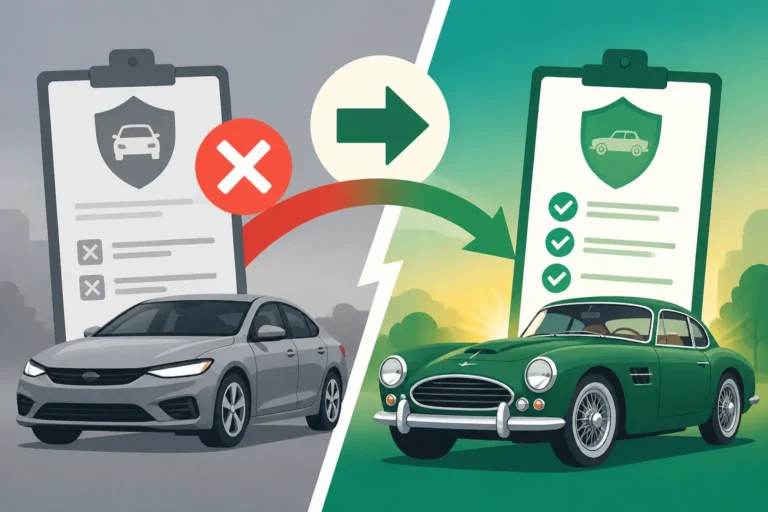
Unlike Actual Cash Value (ACV) which subtracts depreciation, or "Stated Value" which often caps payouts at market value or the stated amount (whichever is lower), Agreed Value coverage is straightforward and transparent. When you secure an agreed value policy, you and your insurance provider agree upon a specific value for your classic car at the beginning of the policy term. This agreed-upon amount is precisely what you will receive if your vehicle is deemed a total loss, regardless of fluctuations in market value or depreciation concerns. It’s a guarantee, giving you peace of mind that your investment is fully protected.
Imagine you and your insurer agree your pristine 1967 Ford Mustang Fastback is worth $75,000. If it's totaled, you get $75,000, period. No haggling, no unexpected depreciation calculations. This is fundamentally different from a regular auto policy, which might only offer you the ACV for a standard 1967 Mustang, completely disregarding its concours restoration and rarity. This crucial distinction ensures that the unique nature and true market value of your collectible are acknowledged and protected. For an even deeper dive into these options, check out our guide on Agreed Value vs Stated Value vs Actual Cash Value and explore what Agreed Value Coverage Explained truly entails.
The Role of Appraisals and Documentation
Establishing that "agreed value" isn't just pulling a number out of thin air, especially for high-value or highly customized classics. This is where a professional appraisal becomes your best friend. A qualified classic car appraiser will meticulously inspect your vehicle, document its condition, originality, modifications, and any unique features. They'll research market comparables, recent auction results, and consider the car's provenance to arrive at an expert opinion of its current market value.
This appraisal serves as concrete evidence when negotiating your agreed value with the insurer. Beyond a formal appraisal, robust documentation is vital. Keep detailed records of all restoration work, including invoices for parts and labor, photographs before, during, and after the process, and any certifications of authenticity or awards the car has won. Even a logbook detailing maintenance, mileage, and events attended can support your car's value. For example, a recent restoration receipt from a renowned shop like Kindig-It Design for your custom build, combined with high-resolution photos, paints a clear picture of its value. To understand more about this process, our article on How Classic Car Appraisals Work for Insurance offers invaluable insights, and you can also learn When You Need a Classic Car Appraisal to stay proactive.
Negotiating and Setting Your Agreed Value
Once you have your comprehensive documentation and ideally, a professional appraisal, it's time to work with your classic car insurance provider to set the agreed value. This isn't usually a contentious negotiation if you've done your homework. Specialty insurers, unlike standard carriers, understand the classic car market. They know that a numbers-matching 1965 Chevrolet Corvette Sting Ray Convertible with a 396 big block will command a much higher price than a standard small-block model, even if they're both '65 Corvettes.
When discussing the value, present your appraisal and documentation clearly. Be prepared to explain any unique features, rare options, or the provenance of your vehicle. It’s a good idea to research recent sales of similar vehicles – look at results from reputable auction houses like Mecum Auctions or Barrett-Jackson, or online platforms like Bring a Trailer. These real-world sales data points provide excellent benchmarks. Companies like Hagerty, for instance, are deeply immersed in the collector car market and often have extensive valuation tools and expertise, making the process smoother. They understand that a vehicle's value isn't static, so discussing market trends and future appreciation can be part of the conversation, ensuring you arrive at a fair and comprehensive agreed value that truly reflects your car's worth.
Crucial Coverages Beyond the Car's Core Value
While agreed value coverage is paramount for protecting the vehicle itself, true classic car insurance goes much further. Collectors often have significant investments tied up in their passion beyond the car's current market value, and underinsuring means neglecting these critical aspects too. Think about the garage full of irreplaceable parts or a project car that's still years from completion.
Restoration Coverage: Protecting Your Investment in Progress
Many classic cars are not static objects; they are ongoing projects, undergoing meticulous restoration, upgrades, or custom builds. A standard auto policy has no framework for insuring a car that is disassembled, has a significantly altered value mid-project, or is stored off-road for years. This is where specialized restoration coverage truly shines.
Traditional insurance is designed for operational vehicles with a fixed market value, not for a chassis on a rotisserie or an engine undergoing a complete rebuild. Restoration coverage, sometimes called "vehicle under construction" coverage, is specifically designed for these scenarios. It allows you to gradually increase your car's insured value as you invest more time, money, and rare parts into the project. As you complete milestones – say, the engine rebuild, the bodywork, or the interior restoration – you inform your insurer, and the agreed value is adjusted upward to reflect the added value. This protects your escalating investment against theft, fire, or damage during the restoration process, ensuring that if something goes wrong, you don't just get back the "before" value, but a value that reflects your hard work and financial outlay. Our in-depth guide on Restoration Coverage for Classic Cars explains how this works, and you can also learn more about Coverage for a Car Being Restored.
Spare Parts and Automobilia Coverage
For many serious collectors, the passion extends beyond the car itself to the ecosystem of spare parts, special tools, and automobilia. Imagine you have a cache of rare, New Old Stock (NOS) parts for your vintage Ferrari or a collection of signed Shelby American memorabilia – these items can be incredibly valuable, sometimes rivaling the value of the car itself. A typical homeowner's policy might offer limited coverage for personal property, but it's often insufficient for such specialized and high-value items, especially if they are related to a commercial activity or stored off-site.
Specialty classic car insurance policies often provide riders or endorsements specifically for spare parts and automobilia. This means you can insure your rare carburetor, your vintage racing jacket, or your collection of original factory manuals against theft, fire, or damage. You'll need to document these items meticulously, much like you would the car itself, providing photos, receipts, and even appraisals for particularly valuable pieces. This ensures that if your garage succumbs to a fire, or your valuable collection is stolen, you're not left without recourse for these integral parts of your hobby. Learn more about protecting these treasures with our guide to Spare Parts Coverage Explained.
Inflation Guard and Market Appreciation
Classic car values aren't static; they can fluctuate dramatically based on market trends, collector demand, and rarity. Sometimes, values can appreciate rapidly, leaving an agreed value policy from a year or two ago potentially underinsuring your vehicle. This is where an "Inflation Guard" or "Market Appreciation" endorsement can be a true lifesaver.
Inflation guard coverage is designed to automatically increase your agreed value by a small percentage (e.g., 2% to 6%) each year at renewal, without you having to initiate a new appraisal or adjustment. This proactively accounts for general market appreciation, ensuring your policy keeps pace with the rising value of your classic. While it doesn't replace the need for a major re-evaluation after significant restoration work or a monumental market shift, it provides a crucial buffer against gradual underinsurance. It's especially valuable for cars in a hot market where values are consistently climbing. It means your insurer recognizes that classic cars are investments that can grow in value, unlike depreciating daily drivers. Understanding this feature is key to long-term protection; our article on Inflation Guard Coverage for Classic Cars Explained elaborates further.
Avoiding Common Pitfalls and Misconceptions
Even with a specialty policy, there are common mistakes and misunderstandings that can inadvertently lead to underinsurance or coverage gaps for your beloved classic. Navigating these pitfalls requires attention to detail and a clear understanding of what a classic car policy is designed for.
The "Daily Driver" Dilemma
One of the biggest misconceptions new classic car owners face is thinking they can use their vintage ride as an everyday commute vehicle and still qualify for specialty classic car insurance. The reality is, most classic car policies are designed for vehicles with limited, pleasure-use mileage, not for regular daily driving. Trying to force a classic into a standard auto policy as a daily driver is a recipe for underinsurance, or worse, denied claims.
Specialty classic car insurance is cheaper than regular insurance precisely because these vehicles are driven less, carefully maintained, and typically stored securely. They are not subjected to the daily grind of traffic, parking lots, and environmental wear and tear. If you're using your 1970 Dodge Challenger as your primary mode of transport to and from work every day, a specialty insurer will likely deny a claim if an accident occurs, stating you violated the policy's usage clauses. Furthermore, a standard policy will only cover your classic at its depreciated ACV, leading to the underinsurance we discussed earlier. If you genuinely want to drive your classic more often, some specialty insurers like Hagerty or Grundy offer slightly more flexible mileage options, but they will still likely have limitations and require a separate "daily driver" vehicle to be insured. It’s crucial to be honest about your intended use to avoid major issues; our piece on Classic Car Insurance for a Daily Driver provides excellent guidance.
Not Updating Your Policy Regularly
Many classic car owners fall into the trap of "set it and forget it" once they've secured a policy. However, classic car values, especially for specific models, can be dynamic. A car might appreciate significantly due to a recent auction trend, a feature in a prominent magazine, or simply increasing demand for that particular era or make. Conversely, a major restoration or modification project you undertake will dramatically increase your car's value, rendering its original agreed value obsolete.
Failing to update your policy regularly means your coverage could quickly become inadequate. Imagine you installed a new, period-correct engine that cost you $20,000, or you completed a multi-year, frame-off restoration that added $50,000 to your car's worth. If you haven't informed your insurer and updated your agreed value, you're essentially still insured for the "before" value. Most specialty insurers recommend an annual review, or immediately after any significant work or market shift. Keeping an open line of communication with your insurer and providing updated documentation will ensure your policy accurately reflects your car's current worth. To prevent this oversight, make sure to read about How to Increase Agreed Value at Renewal.
Assuming All Insurers Are Equal
This is perhaps the most critical misconception. Many car owners assume "insurance is insurance" and simply look for the cheapest option from their existing auto insurer or a large national brand. For a classic car, this is a dangerous assumption that almost guarantees underinsurance. Standard auto insurers, even major ones like State Farm or GEICO, simply are not set up to understand the nuances of collectible vehicles.
They typically lack the specialized adjusters, valuation databases, and coverage options (like agreed value, restoration coverage, or spare parts coverage) that a classic car demands. When a claim arises, they'll often default to their standard procedures, which are designed for modern depreciating assets, not appreciating classics. This often leads to frustrating disputes over value, repair methods, and parts sourcing. Specialty classic car insurers, such as Hagerty, Grundy, American Collectors Insurance, or Heacock Classic, are built from the ground up to cater to collectors. They employ staff who are enthusiasts themselves, understand market trends, and are equipped to handle claims with the care and expertise a classic deserves. Choosing a specialist is not just about a better price (which they often are due to lower risk), but about ensuring your car is understood, respected, and properly protected. For a deeper dive into why specialists are essential, explore our article on the Best Specialty Classic Car Insurers.
| Feature/Coverage Type | Standard Auto Insurance | Specialty Classic Car Insurance |
|---|---|---|
| Valuation Method | Actual Cash Value (ACV) | Agreed Value (Guaranteed Payout) |
| Depreciation | Applied | Generally Not Applied |
| Usage Restrictions | None (Daily Driver) | Limited/Pleasure Use, Mileage Caps |
| Restoration Coverage | None | Available, Value increases with work |
| Spare Parts Coverage | Limited/None | Available, separate limits |
| Inflation Guard | None | Often Available |
| Appraisal Requirement | Rarely | Often Required/Recommended |
| Repair Expertise | Standard shops | Specialist classic repair network |
| Cost | Higher (for comparable value) | Often Lower (due to limited use) |
| Claims Handling | Generic | Collector-focused, specialized |
Steps to Ensure Your Classic is Properly Valued and Covered
The thought of underinsuring your classic car can be a source of constant anxiety for any passionate owner. But with a proactive approach and the right knowledge, you can ensure your treasured vehicle is protected adequately. Taking these deliberate steps will safeguard your investment and, more importantly, your peace of mind.
Document Everything Meticulously
Think of your classic car as a valuable piece of art or a historical artifact. You wouldn't expect to insure a Rembrandt painting without extensive documentation of its authenticity, condition, and provenance, would you? The same principle applies, perhaps even more so, to a classic car. Every detail, every receipt, and every photograph tells a story about your vehicle's value and uniqueness.
Start by creating a comprehensive dossier for your car. This should include:
- Detailed Photographs and Videos: Capture every angle, inside and out. Highlight unique features, rare options, engine bay, trunk, and undercarriage. Take close-ups of VIN plates, engine stamping, and any original decals. These visual records are invaluable for substantiating condition and originality.
- Restoration Receipts and Invoices: Keep every single receipt for parts purchased, labor performed, and services rendered. Organize them by date or project phase. This directly proves the investment you've made and the quality of the work. If you had a specific engine rebuild, document the components and labor involved.
- Maintenance Records: A well-maintained classic holds its value. Keep a logbook of oil changes, tune-ups, and any other maintenance work, especially if performed by a reputable specialist.
- Certificates of Authenticity/Provenance: If your car has a known history, original build sheets, or has been authenticated by a marque expert, include these documents. For example, a certificate from a Shelby registry for a Cobra or Mustang significantly adds to its value.
- Appraisals: As discussed earlier, a professional appraisal is often the gold standard. Ensure it's current and conducted by an appraiser specializing in classic vehicles.
- Market Comparables: Keep an eye on recent auction results or sales of similar vehicles. Print out listings with high-quality photos and descriptions. This helps establish market value.
This meticulous documentation serves as irrefutable proof of your car's condition, originality, and the financial investment you've made, making the agreed value discussion with your insurer much smoother and more accurate.
Partner with a Specialty Insurer
This cannot be stressed enough: do not rely on a standard auto insurance policy for your classic car. The best way to avoid underinsuring your classic is to work exclusively with insurance companies that specialize in collector vehicles. These companies aren't just selling a policy; they're offering a partnership based on a shared understanding and appreciation for classic cars.
Specialty insurers like Hagerty, Grundy, American Collectors, American Modern, and others have business models, staff expertise, and policy structures specifically designed for the unique needs of collectors. They understand:
- Agreed Value: It's their standard, not an exception. They know that ACV doesn't work for classics.
- Usage Limitations: They understand that classics are driven for pleasure, shows, and events, not daily commutes, which impacts risk and premiums.
- Specialized Claims Handling: If a claim does arise, their adjusters are typically classic car enthusiasts themselves, fluent in the terminology, the cost of rare parts, and the importance of period-correct repairs. They often have networks of trusted classic repair shops.
- Additional Coverages: They offer essential add-ons like restoration coverage, spare parts coverage, trip interruption, and automobilia coverage, which are virtually nonexistent in standard policies.
- Valuation Tools and Resources: Many, like Hagerty, offer robust valuation tools and market reports to help you accurately determine your car's worth.
Choosing a specialty insurer means your car is insured by people who "get it." They're not just processing numbers; they're protecting a passion. This leads to more accurate valuations, fairer claims settlements, and a much better overall experience. For further research on reputable providers, consider exploring guides like Best Classic Car Insurance Companies and Hagerty vs Grundy: Which Is Better.
Regularly Review and Adjust Your Policy
Your classic car isn't a static asset, and neither should its insurance policy be. Market conditions, your car's condition, and your investment in it can all change over time, making regular policy reviews absolutely essential to prevent underinsurance.
Think of it like this: if you complete a full engine rebuild, increasing your car’s value by $15,000, but don't tell your insurer, that $15,000 might as well be uninsured. You’re effectively taking on that risk yourself.
Here's a schedule and triggers for reviewing your policy:
- Annually at Renewal: This is the bare minimum. Take the time to re-evaluate your agreed value. Review recent sales of similar vehicles, consult updated valuation guides, and consider any minor improvements you've made.
- After Significant Restoration or Modification: As soon as a major project is completed, contact your insurer with updated documentation (receipts, photos) to adjust the agreed value. Don't wait until renewal.
- Following Major Market Shifts: If there's a sudden surge in value for your specific make and model (e.g., a similar car sells for record prices at a prominent auction), reach out to your insurer to discuss a value adjustment.
- Changes in Storage or Use: If you move to a new garage, install enhanced security, or plan a cross-country tour, these changes might affect your policy or require additional endorsements.
- New Acquisition: When adding another classic to your collection, ensure it's integrated into your existing policy or a new multi-car policy with appropriate agreed values. For advice on how to handle new purchases, our article on Classic Car Insurance for a Recent Purchase is a good read.
Here’s a quick reference table for key review points:
| Review Trigger | Action to Take | Documentation Needed |
|---|---|---|
| Annual Renewal | Review market values, minor updates | Current photos, valuation guide comparables |
| Major Restoration/Mod | Immediately increase agreed value | All receipts, detailed work logs, new appraisals/photos |
| Significant Market Trend | Discuss potential value adjustment with insurer | Auction results, reputable sales data |
| Enhanced Security/Storage | Inform insurer; may qualify for discounts | Photos of new security, alarm installation receipts |
| New Collector Purchase | Add to existing policy with agreed value | Bill of sale, appraisal, pre-purchase inspection report |
By proactively managing your classic car insurance, you're not just buying a policy; you're building a robust shield around your cherished investment, ensuring its true worth is always recognized and protected.
Disclaimer
Please remember that this article provides general information and guidance. Insurance policies and requirements can vary significantly by state, insurer, and the specific characteristics of your vehicle. It is always crucial to consult directly with a qualified classic car insurance professional to discuss your individual needs and to obtain a policy that is specifically tailored to your classic car. This information should not be considered legal or financial advice.