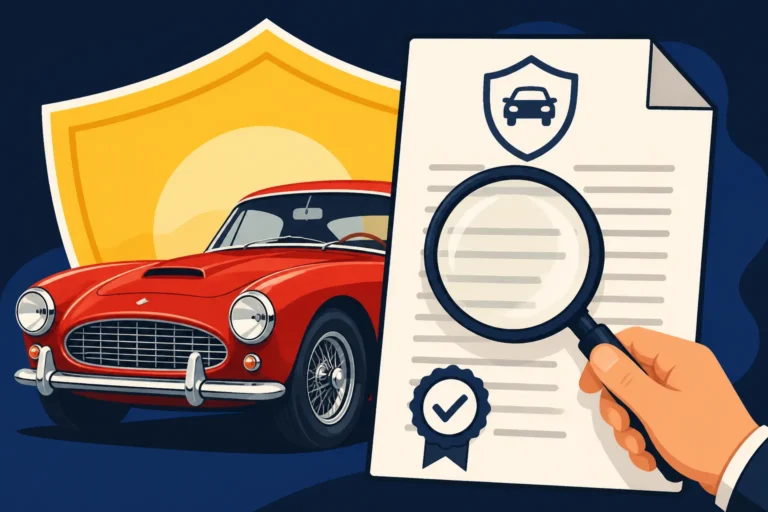
How to Value a Rare Classic for Insurance
Trying to put a fair value on a run-of-the-mill daily driver for insurance is usually straightforward, but when you own a truly rare classic, things get a lot trickier. You know your car isn't just a vehicle; it's a piece of history, often with unique provenance or features that make it one-of-a-kind. This guide will walk you through the essential steps to accurately value your rare classic car for insurance purposes, ensuring its true worth is protected.
Understanding What Makes a Classic "Rare" and Why it Matters for Insurance
When we talk about a "rare classic," we're not just talking about any old car. We're delving into the realm of vehicles that often transcend typical market trends due to their extremely limited production numbers, historical significance, racing pedigree, celebrity ownership, unique factory options, or even a one-off custom build from a renowned coachbuilder. This distinction is crucial because the standard valuation methods used for more common collector cars simply won't cut it. For insurance, "rare" means that establishing a fair market value is far less about comparing it to recent sales of similar models and much more about a deep dive into its individual story and condition.
The challenge with rarity is that there might not be a direct comparable sale to point to, making it difficult for insurers to grasp its true monetary value without proper documentation. If you don't adequately convey and prove its rarity and associated value, you risk your insurance company underestimating its worth, which could lead to a significant financial loss if something catastrophic were to happen. It's not just about what the car is; it's about what it means in the collector world and how that translates to its financial standing.
Defining "Rare" in the Collector Car World
It’s easy to throw around the term "rare," but in the classic car world, it carries specific weight. A rare classic isn't just old; it's scarce. Perhaps only a handful were ever built, or even fewer exist today. Think of vehicles like a Bizzarrini 5300 GT Strada, a pristine original Shelby Cobra 427, or a specific variant of a Ferrari that saw incredibly limited production. These aren't cars you see at every local car show. Their value isn't just about the sum of their parts or even their condition, but also their story and scarcity. A rare classic might also be a specific "one of one" build, or a prototype, or a car with an unbroken chain of ownership from a significant historical figure.
The insurance industry, particularly specialty insurers like Hagerty, understands these nuances. They know that a rare car isn't bought and sold like a typical commodity. Its value can be influenced by factors far beyond blue book values or even typical auction results. The key is articulating these unique attributes in a way that an underwriter can understand and appreciate, aligning with the actual market demand for such an exclusive piece of automotive history.
The Pitfalls of Standard Valuation for Rare Classics
Most standard auto insurance policies use Actual Cash Value (ACV) or Stated Value. ACV means that in the event of a total loss, the insurer will pay you the vehicle's market value less depreciation. For a rare classic, this is an absolute disaster. These cars typically appreciate, not depreciate, and "market value" for a one-of-a-kind vehicle is incredibly hard to determine by standard means. Stated Value policies are slightly better, allowing you to "state" a value, but the insurer usually reserves the right to pay out the lesser of the stated value or the actual cash value, which still leaves you vulnerable.
This is why classic car insurance fundamentally shifts the game by offering Agreed Value coverage. Under an Agreed Value policy, you and the insurer agree upon a specific value for your vehicle before the policy goes into effect. In the event of a total loss, the insurer pays you that agreed amount, no questions asked, minus your deductible. For a rare classic, understanding Agreed Value coverage explained is paramount. It's the only way to truly protect the significant investment you've made in your irreplaceable automobile. Without it, you're essentially gambling with its worth.
Comprehensive Methods for Establishing Your Rare Classic's Value
Because your rare classic isn't just another car, you can't just pull up a Kelley Blue Book value or glance at a NADA guide. Those resources are great for mass-produced vehicles but utterly inadequate for true rarities. For these special machines, you need a multi-faceted approach, combining expert analysis, meticulous documentation, and historical research to build an undeniable case for its worth. It’s about creating a narrative of value that is backed by solid evidence.
When it comes to how to value your classic car for insurance, especially a rare one, the effort you put into gathering this information will directly translate to the protection you receive. Don't shy away from investing time and resources into this phase; it's an investment in safeguarding your asset.
Professional Appraisal by a Specialty Expert
For rare classics, a standard appraisal won't cut it. You need an appraiser who specializes in high-end, rare, and unique collector cars, not just someone who appraises common classics. These experts have a deep understanding of market trends for specific marques, historical significance, and the minutiae that can drastically affect a rare car's value. They know, for example, that original factory documentation for a limited-run model like a 1969 Boss 429 Mustang is gold, or that a specific paint code on a pre-war Duesenberg changes its value significantly.
The appraisal process typically involves a thorough physical inspection, checking for originality, condition, and restoration quality. But for rare cars, it goes further, delving into historical provenance, verifying matching numbers, examining period-correct components, and researching the specific vehicle's history. They will often consult specialized databases, auction results for comparable (though perhaps less rare) vehicles, and their network of collectors and experts. This detailed report, which you'll provide to your insurer, is often the backbone of establishing your Agreed Value. Understanding how classic car appraisals work for insurance is crucial for this step.
Documenting Provenance and History
The story of a rare classic can be as valuable as its sheet metal. Provenance, the history of ownership, modifications, and significant events, plays a massive role. Did a famous race car driver once pilot it? Was it owned by a royal family? Did it win a major concours d'elegance award? Was it featured in a prominent automotive magazine? All these details add layers to its desirability and, consequently, its value.
Gathering documents like original titles, build sheets, factory invoices, service records, historical photographs, award certificates, magazine articles, and even personal letters from previous owners creates an indisputable timeline of your car's life. For truly rare cars, this documentation proves its collectible status and helps differentiate it from even slightly less significant examples. Insurers rely on this evidence to justify higher Agreed Values, as it solidifies the car's place in automotive history and confirms its uniqueness.
Leveraging Auction Results and Market Trends
While direct comparables might be scarce, an expert appraiser or a well-informed owner can still glean insights from high-profile auction results. Look for sales of similar types of rare cars, even if not the exact make or model. For instance, if you have a rare pre-war European grand tourer, looking at the sale prices of other coach-built vehicles from the same era, even different marques, can provide a general idea of market appetite for such craftsmanship and scarcity.
However, be cautious: auction results can be volatile. A record-breaking sale at a prestigious event like the Pebble Beach Concours d'Elegance might not reflect the everyday market. It's about understanding the trend and the reasons behind exceptional sales. Are similar vehicles appreciating steadily? Is there a new wave of interest in a particular niche? Specialty insurers like Hagerty offer extensive valuation tools and market reports that can provide invaluable insights into these trends, helping you justify your valuation.
Working with Insurers to Secure Agreed Value for Rare Classics
Once you've done your homework and assembled a robust valuation package, the next step is to present it to an insurer, ideally one specializing in classic and rare vehicles. This isn't a passive process; it's a negotiation where your diligent preparation will pay off. Your goal is to convince them that the value you've arrived at is fair and defensible, ensuring they agree to that figure for your policy.
Don't settle for an insurer who doesn't understand the unique requirements of a rare classic. A general insurer might balk at a high valuation, simply because it doesn't fit their standard underwriting models. You need a partner who comprehends why Agreed Value is critical and how to properly assess a truly unique asset.
The Importance of Agreed Value Coverage
As mentioned, Agreed Value Coverage Explained is the bedrock of insuring any classic, but especially a rare one. It removes the guesswork and dispute potential if your beloved vehicle is ever stolen or totaled. With a rare classic, the difference between an Agreed Value and any other form of valuation could be hundreds of thousands, or even millions, of dollars. Imagine having a priceless prototype totaled and being offered a fraction of its true value because the insurer used a depreciated "market value" for a production model. It's a nightmare scenario no collector wants to face.
When you secure an Agreed Value policy, you have peace of mind that the financial protection aligns with the historical and monetary worth of your car. This is why you put in all the effort to properly document and appraise it; the Agreed Value is the culmination of that work.
| Valuation Method | Description | Best For | Risks for Rare Classics | Benefits for Rare Classics |
|---|---|---|---|---|
| Actual Cash Value (ACV) | Market value minus depreciation at time of loss. | Daily drivers, common used cars. | Significant underpayment; classics appreciate, not depreciate. | None. |
| Stated Value | You state a value, but insurer may pay less (ACV or stated, whichever is lower). | Less common classics where agreed value isn't offered, but still risky. | Still leaves room for underpayment, not guaranteed. | Better than ACV, but far from ideal for high-value rarities. |
| Agreed Value | Insurer agrees to pay a specific, predetermined amount if totaled or stolen. | All classic, antique, and rare collector cars. | Requires thorough documentation and appraisal upfront. | Guaranteed payout, peace of mind, protection of true investment and historical value. |
| Professional Appraisal | Expert assessment of condition, originality, provenance, and market. | All high-value, rare, or unique classics. | Costly, requires time, needs a specialty appraiser. | Provides concrete evidence for Agreed Value, legitimizes high valuations. |
| Market Research (DIY) | Looking at auction results, online listings for similar (not exact) cars. | General understanding of market sentiment. | Lack of direct comparables, easy to over/underestimate without expertise. | Can inform your initial conversations with an appraiser or insurer. |
Providing Necessary Documentation for Review
When you engage with a specialty classic car insurer, be prepared to share everything. This means the detailed professional appraisal report, all your provenance documentation (photos, service records, ownership history, awards), and any other supporting evidence you've gathered. The more comprehensive your package, the easier it is for the underwriter to understand and agree to your proposed value.
Think of it as presenting a business case. You're demonstrating not just the condition of the car, but its unique market position and why it commands a specific value. Insurers like Hagerty or Grundy are well-versed in handling these types of submissions, as their entire business model revolves around understanding the nuanced world of collector vehicles. They often have in-house experts who can review your materials and, if necessary, suggest adjustments or ask for further clarification. This collaborative process ensures that the How Agreed Value Is Determined for your rare classic is fair and accurate for both parties.
Navigating the Appraisal Requirements
Some insurers might have specific requirements regarding the appraisal itself. They might prefer appraisers from a particular list of approved experts, or they might have criteria for the appraisal report's format and content. Always ask about these requirements upfront. For instance, some may require an updated appraisal every few years, especially if the market for your specific type of rare vehicle is volatile, or if you've done significant restoration work that has increased its value.
Be proactive. If you're unsure about Appraisal Requirements for Classic Car Insurance, don't hesitate to ask your potential insurer for their guidelines. This ensures that the time and money you invest in an appraisal are well spent and that the report will be accepted without issues when it comes time to set your Agreed Value.
Maintaining and Updating Your Rare Classic's Valuation
The value of a rare classic car isn't static. It can fluctuate with market trends, economic shifts, and any improvements or changes you make to the vehicle itself. It's vital to treat your Agreed Value policy as a living document, revisiting and updating it regularly to ensure your rare asset remains fully protected. Neglecting this step could leave you significantly underinsured years down the line.
Even with the best initial appraisal, time marches on. A car that was valued at $500,000 five years ago might be worth $750,000 today, or perhaps even more, especially if its rarity is further cemented by declining numbers of similar vehicles. Staying on top of its value is just as important as the initial valuation process.
Regular Re-Appraisals and Documentation
It’s a good practice to get a professional re-appraisal every 3-5 years, or sooner if there's been a significant market shift for your type of vehicle. Additionally, any major restoration work, significant repairs, or acquisition of further provenance (e.g., discovering new historical photos, winning new awards) should prompt an immediate update to your documentation and a discussion with your insurer.
Think about it: if you spent $100,000 on a concourse-level restoration for a rare model, that investment needs to be reflected in your Agreed Value. Providing receipts, photos, and updated appraisal details will help your insurer understand the increased worth. This proactive approach allows you to How to Increase Your Agreed Value Over Time and prevent being caught off guard should a claim arise.
Tracking Market Shifts and Trends
Staying informed about the collector car market isn't just a hobby; it's a responsibility for a rare classic owner. Subscribe to reputable auction house newsletters, follow industry news, and pay attention to significant sales of comparable rare vehicles. While direct comparables are rare, you can still observe the general health and direction of the high-end collector car market.
Websites and publications dedicated to collector cars, such as those often associated with Hagerty, provide invaluable data and analysis. They track trends for various segments, from pre-war classics to modern supercars, and can give you a heads-up if your car's value is likely to be on the move. When you see a clear upward trend, it's time to initiate a conversation with your insurer about an updated Agreed Value. Knowing When to Update Your Classic Car's Agreed Value is a key part of smart ownership.
Utilizing Inflation Guard Coverage
Some specialty classic car policies offer an endorsement called Inflation Guard Coverage Explained. This can be a fantastic feature for rare classics whose values are consistently appreciating. How it works is that your Agreed Value automatically increases by a small, predetermined percentage (often 2-6%) each year at renewal, without needing a new appraisal every single time. This helps keep your coverage current with minor market fluctuations and the steady upward climb many rare classics experience.
While Inflation Guard is incredibly useful, it's not a substitute for periodic full re-appraisals, especially for highly volatile or exceptionally valuable vehicles. It helps bridge the gaps between major valuations, providing continuous protection against creeping inflation and appreciation, but for truly significant jumps in value or major restoration, a formal update is still recommended.
Disclaimer
The information provided in this article is for general informational purposes only and does not constitute professional financial, insurance, or legal advice. Classic car insurance requirements and valuation methodologies can vary significantly. Always consult with a qualified classic car insurance specialist and a certified appraiser to discuss your specific situation and ensure your rare classic car is adequately protected. Market values can change rapidly, and proper documentation is crucial for accurate coverage.