When to Update Your Classic Car’s Agreed Value
It’s a feeling every classic car owner knows all too well: the anxiety that your pride and joy, your meticulously restored or perfectly preserved classic, isn't adequately protected by your insurance. The value of these special vehicles isn't static; it can rise dramatically with market shifts, extensive restoration work, or even just the passage of time. This guide is here to help you understand precisely when and why you should update your classic car's agreed value to ensure you're always fully covered, come what may.
Why Agreed Value is Crucial for Classic Cars
When you pour your heart, soul, and hard-earned money into a classic car, you want to know that if something unexpected happens – a fender bender, theft, or a devastating fire – you'll be compensated fairly. This isn't just about getting some money; it's about getting the right amount of money that truly reflects your car's unique worth. This is where agreed value coverage shines and why it’s so important for enthusiasts like us.
Understanding Agreed Value vs. Other Options
The world of auto insurance can be a bit of a maze, especially when you're dealing with a vehicle that isn't just a daily commuter. Most standard auto insurance policies operate on what's called Actual Cash Value (ACV) or, in some cases, Stated Value. With ACV, if your car is totaled, the insurer pays out its depreciated market value at the time of the loss, factoring in age, wear, and tear. For a classic, this is almost always a disaster waiting to happen. Imagine a pristine 1969 Chevrolet Camaro, lovingly restored over years, being assessed as a 55-year-old vehicle with minimal value by a standard insurer who doesn't understand its collector status. It's a gut punch, to say the least.
Stated value is a slight improvement, where you state a value, and the insurer agrees to consider it. However, they often reserve the right to pay out less, typically the actual cash value or market value if it's lower than your stated amount, especially if they didn't properly verify the value upfront. This leaves a massive loophole, putting the burden of proving the car's worth on you after a loss, which is precisely when you're most vulnerable. When considering Agreed Value vs Stated Value vs Actual Cash Value, the distinction becomes crystal clear: agreed value is the only truly secure option for a classic.
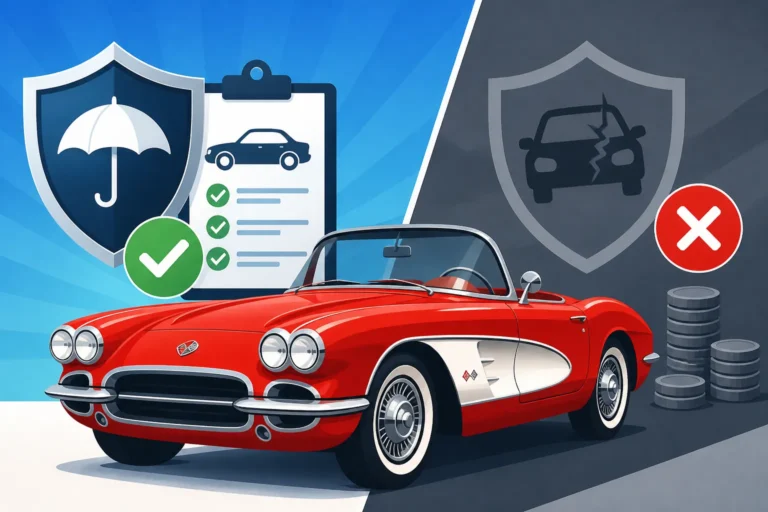
Agreed value coverage, on the other hand, is the gold standard for classic cars. With this type of policy, you and your insurer agree on a specific value for your vehicle before the policy is issued. This figure is based on appraisals, market data, and often your vehicle's condition and features. If your classic car is stolen or declared a total loss, the insurer pays you that exact agreed-upon amount, no questions asked, minus your deductible. This removes all the guesswork and heartache, giving you peace of mind that your investment is fully protected. Companies like Hagerty specialize in this, understanding that a classic car isn't just transportation, it's a passion and an investment.
The Pitfalls of Underinsurance
The biggest risk of not having an up-to-date agreed value is underinsurance. This means that if something catastrophic happens, the payout you receive won't be enough to replace your car with a comparable one, or to cover the significant investment you've already made. Let's say you bought a project car for $15,000 and spent another $30,000 on a full, frame-off restoration, bringing its market value to $60,000. If your agreed value is still stuck at $20,000 from when you first got liability-only coverage, you're looking at a $40,000 shortfall in the event of a total loss. That's not just a financial hit; it's a dream shattered.
This isn't just a hypothetical scenario. Many collectors, especially new collectors, mistakenly assume their initial agreed value will automatically adjust or that their standard policy will cover the true cost. They might not realize that the labor and parts that went into transforming a beat-up shell into a show-winner drastically increased its value, and that this increase needs to be formally recognized by the insurer. Without an updated agreed value, your carefully managed restoration could lead to a massive personal loss. This is also why understanding How Agreed Value is Determined initially is so important, and why regular checks are vital. It’s not just about protecting the car; it’s about protecting your financial and emotional investment.
Key Triggers for Updating Your Classic Car's Agreed Value
Knowing that agreed value is vital is one thing, but pinpointing the exact moments when it needs adjusting can be tricky. Classic car values aren't fixed; they can be quite dynamic. Several common scenarios should immediately trigger a call to your classic car insurance provider to discuss a valuation update.
Significant Restoration or Upgrades
This is perhaps the most obvious, yet often overlooked, trigger. When you embark on a restoration project, whether it's a full rotisserie restoration or a series of significant upgrades, you are almost certainly increasing your vehicle's value. Think about installing a more powerful engine, upgrading the braking system, a full repaint, or completely redoing the interior with high-quality materials. These aren't just minor fixes; they are substantial enhancements that contribute directly to the car's overall worth and desirability.
During a restoration, especially a multi-year project, the value of your car changes dramatically, sometimes monthly. For instance, a 1967 Ford Mustang that started as a rough driver might be worth $25,000. After new paint, a fresh engine, and interior, it could easily jump to $50,000 or more. If you're undertaking a major project, you should actively track and update your agreed value. Many specialty insurers offer specific Restoration Coverage for Classic Cars that allows you to increase the agreed value incrementally as your project progresses and expenses accumulate. This way, if a fire breaks out in the garage or another mishap occurs during the restoration process, your investment up to that point is protected. Don't wait until the car is "finished" to update the value; the value accrues with every dollar you spend.
Market Value Fluctuations
The classic car market isn't immune to economic trends and collector demand. What's hot today might be less so tomorrow, and vice versa. Certain models, makes, or eras can suddenly see a surge in popularity, driving their values sky-high. Conversely, sometimes a particular segment of the market can cool off. For example, some '80s and '90s "youngtimers" have exploded in value recently, with certain BMW M3s or Porsche 911s fetching prices unimaginable a decade ago. If you own a model that's experiencing a significant market boom, your agreed value from five years ago might be woefully outdated.
Staying informed about classic car market trends is crucial. Follow auction results from major events like Barrett-Jackson or Mecum Auctions, consult valuation guides, or simply chat with fellow enthusiasts. Publications and online resources dedicated to classic cars often provide valuable insights into market movements. If you notice a substantial upward trend for your vehicle's make and model, it's time to reach out to your insurer. A simple phone call can often lead to a discussion about adjusting your agreed value based on current market data, ensuring you're not left behind. This proactive approach helps protect your investment as the market evolves. If you're unsure, a quick check of Hagerty Valuation Tools Reviewed can offer excellent market insights.
Major Condition Changes
While restoration improves a car's condition, other factors can also lead to major changes, both positive and negative, that warrant an agreed value adjustment. Perhaps you've finally sourced a rare, period-correct engine or transmission that significantly enhances its authenticity and value. Maybe you've had an award-winning detailer bring the paint to concours quality, adding thousands to its presentation. These subtle yet impactful improvements should be documented and reflected in your policy.
On the flip side, sometimes a classic car might suffer damage that, while not a total loss, significantly impacts its pristine condition and thus its value. While repairs will ideally restore it, the perception of a car with a major repair history can sometimes affect its market appeal, even if done perfectly. For instance, a vehicle that suffered significant flood damage, even if meticulously restored, might carry a stigma that affects its top-tier value compared to an untouched counterpart. While agreed value aims to protect against total loss, understanding how any significant change impacts future valuations is important. However, the most common reason for condition-based updates is positive improvements that elevate its status from a "driver" to a "show car" or from "good" to "excellent."
New Appraisals or Valuations
Many specialty classic car insurers, including American Collectors Insurance, don't always require an appraisal at the initial policy inception, especially for lower-value classics. However, a professional appraisal is often the most definitive way to establish your vehicle's true market value and should be a trigger for updating your agreed value. An independent, certified appraiser will meticulously inspect your vehicle, document its condition, originality, modifications, and any awards or provenance, then use current market data to provide an expert valuation. This document is a powerful tool when negotiating your agreed value with your insurer.
You might get a new appraisal for various reasons: selling the car, estate planning, or simply wanting a fresh, unbiased assessment. Whenever you have a new appraisal, especially if it shows a significant increase or decrease from your current agreed value, it's absolutely the time to contact your insurance provider. Presenting this professional documentation makes the update process much smoother, as it provides clear, verifiable evidence for the revised value. For more details, refer to When You Need a Classic Car Appraisal. Insurers like Hagerty often have networks of trusted appraisers they can recommend, simplifying the process for you.
The Process of Updating Your Agreed Value
So, you've identified a trigger – perhaps a fresh coat of paint, a surging market, or a new appraisal. What's the next step? Don't fret; updating your agreed value with a specialty insurer is usually a straightforward process, designed to be as collector-friendly as possible. It's about providing the right information to help them help you.
Gathering Documentation
Before you make that call, do your homework. The more organized and thorough you are with your documentation, the smoother and faster the update process will be. Here's what you should have ready:
- Recent Photos: High-quality, clear photos of your car from all angles (exterior, interior, engine bay, trunk, underside if possible). If the change is due to restoration, include "before," "during," and "after" photos to show the transformation and quality of work.
- Appraisal Report: If you've had a professional appraisal done, this is your golden ticket. Make sure it's current, detailed, and from a reputable, certified appraiser.
- Receipts and Records: For restorations or significant upgrades, gather all receipts for parts, labor, and specialized services. This proves your investment and the quality of the work performed.
- Market Research: If you're basing your update on market trends, have examples of recent comparable sales. This could be auction results, sales from reputable dealers, or classifieds for similar vehicles in comparable condition.
- Vehicle Specifications: Be ready to confirm mileage, storage conditions (e.g., Garage Storage Requirement for Classic Cars), and primary usage.
Having these documents readily available not only supports your requested value but also demonstrates to your insurer that you're a diligent owner who cares deeply about their vehicle's accurate valuation. This often helps build a stronger case for your desired agreed value.
Contacting Your Insurer
Once your documentation is in order, reach out to your classic car insurance provider. This can typically be done through their website, a dedicated collector car agent, or by phone. Clearly state that you wish to review and potentially update your vehicle's agreed value. You'll likely speak with a specialist who understands the nuances of classic car valuation.
Be prepared to explain the reason for your request. "I just completed a two-year restoration on my '72 Chevelle SS, and the value has increased significantly," or "I received a new appraisal, and the market value for my Datsun 240Z has climbed." They will guide you through submitting your documentation. This is also a great opportunity to ask about other aspects of your policy, like Inflation Guard Coverage Explained, which can automatically adjust your agreed value slightly each year to keep pace with minor market changes, avoiding the need for frequent manual updates.
What to Expect During the Review
After submitting your information, your insurer will review your request. This process can vary depending on the company and the complexity of your case. For minor adjustments based on clear market trends or modest upgrades, it might be a quick review. For substantial increases, especially after a major restoration, they might delve deeper. They may:
- Ask Follow-Up Questions: Be ready to answer questions about the nature of your restoration, the quality of parts used, or specific market comparables.
- Request Additional Documentation: Sometimes, they might ask for more photos, specific receipts, or details about the previous condition of the vehicle.
- Suggest an Appraisal: If you haven't provided one, or if your requested value is substantially higher than their internal data, they might recommend you get a professional appraisal to substantiate the new agreed value. This is a common step to ensure accuracy for both parties.
- Offer a Revised Agreed Value: Based on their assessment, they will propose a new agreed value. It might be exactly what you requested, or it might be slightly different. Be prepared to discuss and, if necessary, negotiate, especially if you have strong appraisal evidence.
- Policy Endorsement: Once a new agreed value is settled, your policy will be updated with an endorsement reflecting this change. You'll receive updated policy documents, and your premium may adjust to reflect the new insured value.
The goal here is a mutually agreed-upon value. Most specialty insurers want to ensure you're happy and adequately covered, as it benefits everyone in the long run. Don’t be afraid to engage in a conversation; it's your car and your investment.
Maintaining Accurate Agreed Value for Long-Term Protection
Updating your agreed value isn't a one-time event; it's an ongoing commitment to protecting your cherished classic. Just like you regularly check your oil or tire pressure, periodically reviewing your insurance coverage is a vital part of classic car ownership.
Regular Review Schedule
Even without major changes, it's a good practice to review your classic car's agreed value annually, typically around policy renewal time. This might seem frequent, but it's the easiest way to catch any creeping discrepancies before they become significant issues. Set a reminder in your calendar or add it to your annual classic car maintenance checklist. This isn't about calling your insurer every single month, but rather taking a proactive stance.
During your annual review, consider:
- Minor Upgrades: Did you replace those worn tires with correct bias-ply ones, or finally install that rare factory option you've been hunting for?
- Local Market Changes: Have you noticed similar cars selling for more in your region?
- Overall Condition: Has the car been meticulously maintained, perhaps even winning a local show? These small increments add up.
Even if you don't make a formal change, the act of reviewing keeps you engaged with your car's true worth and ensures you're ready to act if a larger adjustment becomes necessary. This vigilance is a cornerstone of responsible classic car ownership.
The Role of Appraisals in Ongoing Valuation
While not always required annually, professional appraisals play a significant role in maintaining accurate agreed values, especially for high-value or highly customized classics. Most experts recommend getting a fresh appraisal every three to five years, or immediately after any major restoration or market shift. Think of it as a comprehensive health check for your car's financial standing.
An updated appraisal isn't just a document for your insurer; it's a valuable record for you. It confirms your car's current status and can be essential for resale, estate planning, or even for simply understanding your asset's true worth. When you receive a new appraisal, it becomes the foundation for updating your agreed value. For more insights, check out How Appraisals Support Agreed Value. It provides a concrete, third-party validation that specialty insurers, like Grundy, highly regard.
Keeping Detailed Records
The importance of meticulous record-keeping cannot be overstated. Every classic car has a story, and documentation helps tell that story in a way that directly impacts its value. Keep a comprehensive binder or digital file with:
- Purchase Records: Original bill of sale, previous titles, etc.
- Service History: All maintenance records, detailing oil changes, tire rotations, brake work, etc.
- Restoration Logs: Itemized lists of all parts purchased, labor hours, and before/during/after photos.
- Award Certificates: Any trophies or recognitions your car has received at shows.
- Valuation Documents: All previous appraisals, insurance endorsements, and market research.
- Original Documentation: Owner's manuals, original window stickers, build sheets – anything that speaks to the car's authenticity.
These records not only make the process of updating your agreed value easier but are also invaluable if you ever need to make a claim. Proving a car's collectible status and the extent of your investment becomes much simpler when you have all the paperwork to back it up. If you're a collector with multiple vehicles, having a well-organized system for each car is a game-changer. This level of detail also helps when you want to How to Prove a Car's Collectible Status to an insurer.
Summary of Agreed Value Update Triggers
To make it easy, here’s a quick overview of the key times you should consider updating your classic car's agreed value:
| Trigger Event | Reason for Update | Supporting Documentation | Recommended Action |
|---|---|---|---|
| Major Restoration/Upgrades | Significant increase in vehicle value and condition | Receipts (parts/labor), before/after photos, build sheets | Contact insurer immediately, consider restoration coverage. |
| Significant Market Shifts | Value of your specific make/model has risen or fallen | Recent auction results, valuation guide data, comparable sales | Annual review, or immediate contact if a sharp change is noted. |
| New Professional Appraisal | An independent expert confirms a new valuation | Full appraisal report from a certified appraiser | Submit appraisal to insurer, request a review of agreed value. |
| Major Condition Improvement | Enhancements like rare parts, awards, show-quality details | Photos, detailed descriptions of improvements, award certificates | Annual review, or when the improvement is completed. |
| Transfer of Ownership/Estate | Re-evaluation needed for new owner or legal purposes | New appraisal for estate, bill of sale, market research | Ensure new owner updates, or estate executor handles valuation. |
| Annual Policy Renewal | General check-up, minor market adjustments | General review of market and vehicle condition | Proactive annual check, consider Inflation Guard Coverage for Classic Cars Explained. |
By staying on top of these triggers and maintaining open communication with your classic car insurance provider, you can rest easy knowing that your treasured vehicle is always protected at its true worth.
Disclaimer
Please remember that the information provided in this guide is for informational purposes only and does not constitute professional insurance advice. Insurance policies and requirements can vary significantly by provider and state. Always consult with a qualified insurance professional or your specific classic car insurance provider to understand your policy, coverage options, and any state-specific regulations that may apply to your vehicle.