How to Insure a 1969 Charger
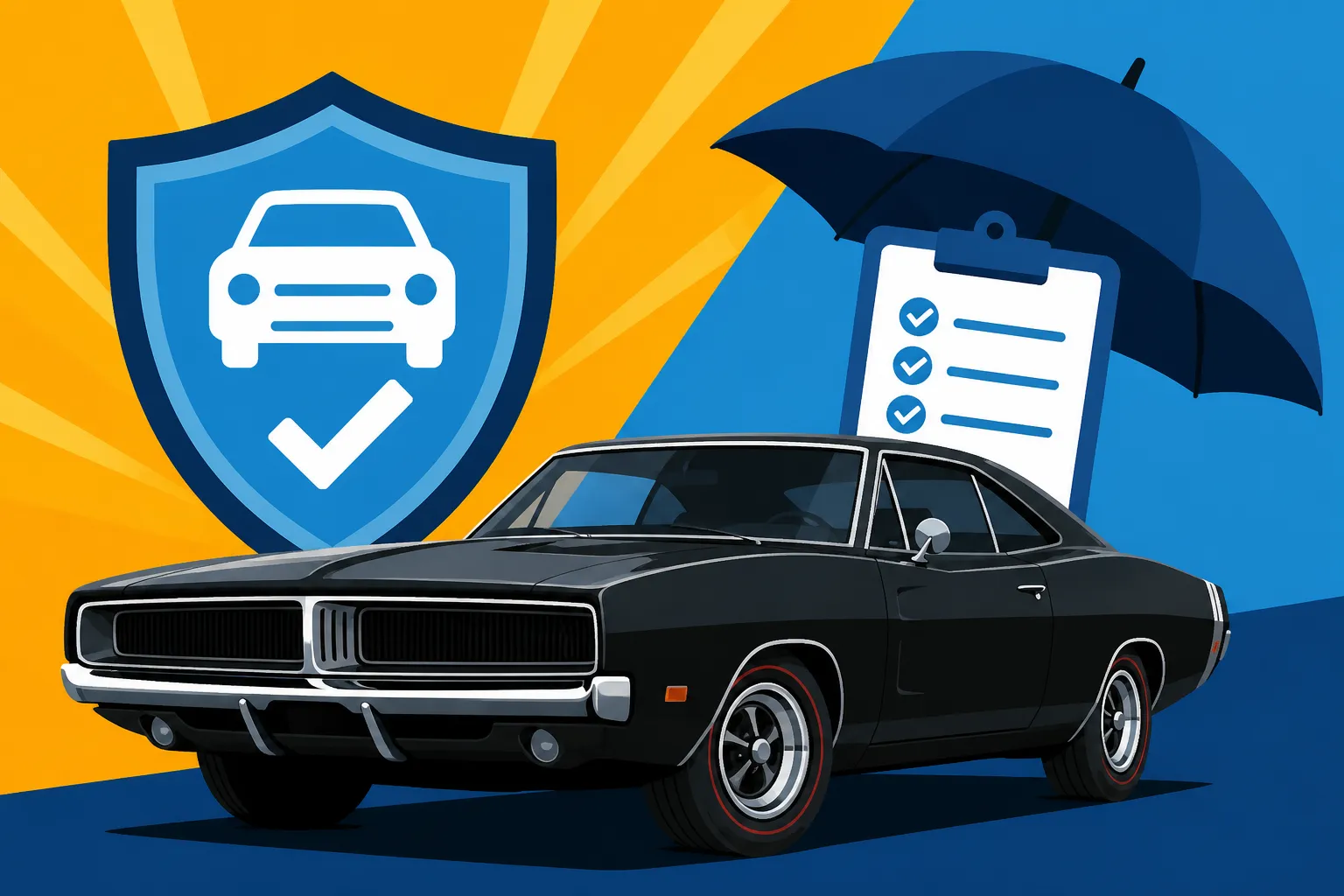
Bringing home a legendary machine like a 1969 Dodge Charger is an absolute thrill, but that excitement can quickly turn into a headache when you start looking into insurance. You know this isn't just any car; it's a piece of automotive history, and trying to fit it into a standard auto policy often feels like trying to put a square peg in a round hole. This guide is here to cut through the confusion, explaining precisely how to secure the right insurance for your magnificent '69 Charger so you can enjoy it with peace of mind.
Why Your 1969 Charger Demands Specialty Classic Car Insurance
You wouldn't insure a Rembrandt like a poster print, right? The same logic applies to your 1969 Charger. It's not just transportation; it's an investment, a passion, and a valuable collectible. Regular car insurance simply isn't designed to protect the unique financial and emotional value of a classic like a Charger, and relying on it could leave you severely underinsured after a loss.
The Pitfalls of Standard Auto Policies for Classics
Standard auto insurance policies are built for daily drivers – cars that depreciate over time, are easily replaceable, and are expected to accumulate significant mileage. Your Charger doesn't fit this mold. If you tried to insure your '69 Charger with a typical policy, you'd quickly run into several significant problems. First, these policies typically base payouts on Actual Cash Value (ACV), meaning they'd factor in depreciation. Imagine your pristine, numbers-matching Charger getting totaled, and the insurer offers you a payout that reflects what a 50-year-old car should be worth according to their algorithm, not its true collector value. It's a frustrating thought that can keep any classic car owner up at night.
Furthermore, standard policies often have limitations on modifications, custom parts, and restoration costs, which are all incredibly common – and often increase value – in the classic car world. Your Charger might have a rebuilt engine, a custom interior, or a concours-level paint job, none of which a standard policy is equipped to properly value. This leads to a massive gap between what you've invested and what you might recover.
The Unmatched Benefits of Specialty Coverage
This is where specialty classic car insurance steps in, offering tailored protection that acknowledges the true nature and value of your '69 Charger. The cornerstone of this specialized coverage is the "Agreed Value" clause. Unlike ACV, Agreed Value means you and the insurer agree upon the car's worth before the policy begins. Should a total loss occur, you are guaranteed to receive that agreed-upon amount, no questions asked, no depreciation applied. This peace of mind is invaluable for any classic car owner. To learn more about this crucial difference, check out our detailed guide on Agreed Value vs Stated Value vs Actual Cash Value.
Beyond Agreed Value, these policies understand the unique usage patterns of a classic. They anticipate that your Charger won't be commuting daily through rush hour but will instead be enjoyed for leisurely drives, weekend cruises, car shows, and club events. Because of this limited, careful use, specialty classic car insurance is often surprisingly affordable compared to what a standard policy might charge for a similar agreed value. Companies like Hagerty specialize in these types of vehicles, offering policies that truly cater to the collector community.
Essential Eligibility Requirements for Your 1969 Charger
While a 1969 Charger is undeniably a classic in most people's eyes, insurance companies have specific criteria it needs to meet to qualify for a specialty policy. These aren't arbitrary hoops to jump through; they're designed to ensure the vehicle is genuinely a collectible and will be treated as such by its owner. Understanding these requirements from the outset can save you a lot of time and potential frustration.
Vehicle Age and Condition Status
The first hurdle is usually age. For a 1969 Charger, this isn't typically an issue, as most specialty insurers consider vehicles 25 years or older to be "classic" or "antique." However, it's not just about age; the condition of your Charger also plays a significant role. Is it a fully restored, show-quality example? A meticulously maintained original? Or is it a project car still undergoing restoration?
- Pristine to Excellent Condition: Most insurers prefer cars in excellent, near-original, or professionally restored condition. A well-maintained 1969 Charger with solid bodywork, a clean interior, and a properly running engine will almost always qualify. The better the condition, the easier it is to get an accurate appraisal and secure comprehensive coverage.
- Project or Under Restoration: If your Charger is currently a project car, some specialty insurers do offer Restoration Coverage for Classic Cars. This type of policy understands that the car's value is increasing as you invest in its restoration. It's crucial to document your work thoroughly, keep receipts, and update your insurer as the project progresses and the vehicle's value grows.
Usage Restrictions and Storage Requirements
This is where classic car insurance truly diverges from standard auto policies. Specialty insurers offer lower premiums because they assume your Charger will be used sparingly and carefully, not as a daily commuter.
- Limited Mileage and Pleasure Use: Expect mileage limits, often ranging from 2,500 to 7,500 miles per year. This isn't meant to restrict your fun, but to reflect the intended "pleasure use" of the vehicle – think weekend cruises, car shows, and special events. You'll usually need to have a separate, primary vehicle for daily transportation. If you're wondering about the specifics, our guide on Pleasure-Use Requirement Explained goes into greater detail.
- Secure Storage: Insurers typically require your 1969 Charger to be stored in a secure, enclosed, and locked facility, such as a private garage or a professional storage unit. This significantly reduces the risk of theft and damage from the elements. Some policies might accept a carport or even outdoor storage in very rare, specific circumstances, but a locked garage is the gold standard. To understand more about these rules, you might find our article on Garage Storage Requirement for Classic Cars helpful.
Driver Qualifications and Driving Record
Just as they assess the car, insurers also assess the primary driver of the classic vehicle. They're looking for responsible individuals who understand the value and care required for a collectible.
- Age and Experience: While there's no strict age limit that applies universally, younger drivers (under 25) might face higher premiums or specific conditions. Most specialty insurers prefer drivers with a good driving record, free from major accidents or traffic violations. If you have a teenager in the household who might occasionally drive the car, it's essential to disclose this, as it can impact the policy's terms. Our guide on Minimum Age for Classic Car Insurance Drivers can provide more insights.
- Primary Driver Status: The primary driver of the '69 Charger should also be the primary driver of the household's regular vehicles. This reinforces the idea that the Charger is a secondary, pleasure-use vehicle.
Choosing the Right Coverage Options for Your Charger
Once you've confirmed your 1969 Charger and its intended use meet the eligibility criteria, the next critical step is to select the right types of coverage. This isn't just about meeting state minimums; it's about comprehensive protection for an irreplaceable asset. The options available through specialty insurers are far more robust and relevant to a classic car owner than anything a standard policy could offer.
Agreed Value: The Cornerstone of Classic Car Protection
As mentioned earlier, Agreed Value coverage is absolutely non-negotiable for a valuable classic like your Charger. This is the single most important difference between a specialty policy and a regular one. Without it, you risk receiving a mere fraction of your car's true worth if it's ever totaled or stolen.
- How Agreed Value Works: When you get a quote, you'll propose an Agreed Value, often supported by an appraisal, recent sales data, or the insurer's own valuation tools (like those offered by Hagerty). The insurer will review this, and once approved, that figure becomes the guaranteed payout amount in case of a total loss. This means if you and the insurer agree your 1969 Charger is worth $75,000, that's what you'll get back, period. This eliminates the uncertainty and potential disputes common with Actual Cash Value policies. For a deep dive into how this vital coverage works, read our article on Agreed Value Coverage Explained.
- Maintaining Your Agreed Value: It's important to periodically review and update your Agreed Value, especially if you undertake significant restoration work, the market value of 1969 Chargers increases, or if you make valuable modifications. You want to ensure your policy always reflects the current, accurate value of your pride and joy.
Beyond Agreed Value: Essential Add-Ons and Endorsements
While Agreed Value covers the car itself, a comprehensive classic policy for your Charger should include a suite of other protections designed for collectors.
- Liability Coverage: Even with a classic car, liability is paramount. This covers property damage and bodily injury to others if you're at fault in an accident. State laws mandate minimum liability coverage, but for a valuable asset and your financial protection, it's wise to carry higher limits than the bare minimum. Our guide to Classic Car Liability Coverage Explained can help you determine appropriate levels.
- Comprehensive and Collision Coverage: These are your protections against physical damage to your Charger.
- Comprehensive: This covers non-collision events like theft, vandalism, fire, natural disasters (hail, floods), and falling objects. Given the value and desirability of a 1969 Charger, robust comprehensive coverage is crucial.
- Collision: This covers damage to your car resulting from a collision with another vehicle or object, regardless of fault.
- Roadside Assistance and Towing: Don't underestimate this one. If your Charger breaks down, you don't want it towed by a standard hook-and-chain wrecker. Specialty policies offer flatbed towing, which is essential to prevent damage to classic vehicles during transport. This often includes coverage for trip interruption, which can reimburse you for lodging, food, and alternative transportation if a breakdown occurs far from home.
- Spare Parts Coverage: Many collectors accumulate valuable spare parts, either for future repairs or as part of the car's history. Some specialty policies offer coverage for these parts, protecting your investment even when they're not installed in the vehicle.
- Inflation Guard: The market for classic cars can fluctuate. Inflation guard is an endorsement that automatically increases your Agreed Value by a small percentage (e.g., 2-6%) at renewal, without requiring a new appraisal. This helps ensure your car's coverage keeps pace with potential market appreciation, especially for iconic models like the '69 Charger.
Here's a quick comparison of standard vs. classic insurance for your '69 Charger:
| Feature | Standard Auto Insurance | Specialty Classic Car Insurance |
|---|---|---|
| Valuation | Actual Cash Value (depreciation applied) | Agreed Value (guaranteed payout) |
| Usage | Daily commuting, high mileage expected | Pleasure use, limited mileage |
| Storage | No specific requirements | Secure, enclosed storage often required |
| Modifications | May not cover custom parts, little added value | Covers custom parts & restoration value |
| Affordability | Often higher for high-value classics | Generally more affordable due to limited use |
| Roadside Assistance | Standard towing (hook & chain) | Flatbed towing for classics |
| Driver Requirements | Focus on general driving history | Focus on responsible, experienced classic owner |
How to Get the Best Insurance for Your 1969 Charger
Now that you understand why you need specialty insurance and what kind of coverage to look for, let's talk about the practical steps to getting your magnificent 1969 Charger properly insured. It’s a process that requires a little homework but pays off immensely in protection and peace of mind.
Gathering Your Charger's Details and Documentation
Before you even reach out for a quote, have all your Charger's vital statistics and relevant documentation ready. This will streamline the process and help you get the most accurate and favorable quotes.
- Vehicle Identification Number (VIN): This is essential for any insurance quote.
- Year, Make, Model: Of course, 1969 Dodge Charger. Be specific about trim levels (e.g., R/T, SE) as these greatly impact value.
- Current Condition: Be honest and thorough. Is it concourse quality, driver quality, or a work in progress? Documenting this helps establish the initial Agreed Value.
- Modification and Restoration Records: Do you have receipts for engine rebuilds, paint jobs, interior restorations, or performance upgrades? These are crucial for proving increased value.
- Photos: High-quality photos of your Charger, inside and out, from multiple angles, are invaluable. They provide visual evidence of its condition and any unique features.
- Appraisal (Recommended): For a car like a 1969 Charger, especially a valuable model or a highly restored one, a professional appraisal is highly recommended. An independent appraisal by a qualified expert gives an objective, third-party assessment of your car's market value, which greatly supports your proposed Agreed Value with the insurer. This can make the process of setting your How Agreed Value Is Determined much smoother.
- Storage Location Details: Be ready to describe where your Charger will be kept overnight – whether it's a locked garage, a private storage unit, or another secure facility.
- Intended Usage and Estimated Annual Mileage: Confirm your Charger will be used for pleasure, car shows, and club events, not daily commuting, and provide your estimated annual mileage within the typical classic car limits.
Shopping for Specialty Classic Car Insurers
This isn't a job for your regular insurance agent unless they specialize in collector vehicles. You need to seek out companies that truly understand the classic car market.
- Dedicated Classic Car Insurers: Companies like Hagerty, Grundy, American Collectors Insurance, and American Modern are household names in the classic car insurance world. They have decades of experience insuring vehicles like your 1969 Charger and offer policies specifically designed for collectors. Many collectors find that getting a How to Get a Hagerty Quote is a great starting point for comparison.
- Independent Agents Specializing in Classics: Some independent insurance agents specialize in classic and collector car insurance. They can shop multiple specialty carriers for you, helping you compare options and find the best fit.
- Comparison is Key: Don't just get one quote. Compare at least two or three different specialty insurers to understand their coverage options, pricing, and specific requirements. Ask detailed questions about their claims process, roadside assistance, and any unique endorsements they offer. Our guide on How to Compare Classic Car Insurance Quotes offers a comprehensive checklist.
Fine-Tuning Your Policy and Maximizing Savings
Once you have quotes, it’s time to dial in the details and ensure you’re getting the best possible protection at a reasonable price.
- Choose Your Agreed Value Wisely: Work with your chosen insurer to set an accurate Agreed Value. This might involve submitting your appraisal or utilizing their in-house valuation tools. Don't underestimate or overestimate your car's worth; aim for a realistic figure that reflects its current market value and condition.
- Consider Mileage Tiers: Many classic car policies offer different mileage tiers (e.g., 1,000, 3,000, 5,000 miles per year). If you know you'll only drive your Charger sparingly, opting for a lower mileage tier can often reduce your premium. Be honest about your usage, as exceeding these limits can impact claims. You can learn more about How Mileage Tiers Work for Classic Cars.
- Look for Discounts: Specialty insurers often provide discounts for things like car club memberships, multiple classic vehicles on one policy (a Multi-Car Collector Policy Requirements can save you money), anti-theft devices, and even taking classic car safety courses. Always ask about available discounts.
- Review All Endorsements: Make sure all the add-ons you need, such as roadside assistance, spare parts coverage, and restoration coverage (if applicable), are included in your policy. Don't assume anything; read the fine print. Understanding Classic Car Insurance Add-Ons and Endorsements can help you choose wisely.
- Regular Policy Reviews: Your 1969 Charger’s value isn't static. The classic car market changes, and your car's condition might improve with further restoration. Schedule an annual review with your insurer to adjust your Agreed Value and ensure your coverage remains adequate.
Insuring your 1969 Charger isn't just a formality; it's an essential part of owning such a cherished vehicle. By understanding the unique requirements and benefits of specialty classic car insurance, you can ensure your piece of muscle car history is protected for years to come.
Disclaimer
The information provided in this article is for general informational purposes only and does not constitute insurance advice. Insurance requirements and policy offerings can vary significantly by state, insurer, and individual circumstances. It is crucial to consult with a qualified insurance professional to discuss your specific needs and obtain personalized recommendations for insuring your classic car. Always review your policy documents thoroughly to understand your coverage, limits, and exclusions.