Classic Car Insurance Add-Ons and Endorsements
Getting classic car insurance often feels like a triumphant step for any collector, a shield for their beloved machine. But many classic car owners soon realize that a standard specialty policy, while offering excellent primary protection like agreed value coverage, might not cover every unique situation or specific part that makes their vehicle truly special. This comprehensive guide will walk you through the world of classic car insurance add-ons and endorsements, ensuring you know exactly how to bolster your policy for true peace of mind.
Understanding the Foundation: Beyond Basic Classic Car Coverage
When you first dive into classic car ownership, the excitement can sometimes overshadow the nitty-gritty details of insurance. Most specialty classic car policies shine because they offer "agreed value" coverage, which is a huge step up from the "actual cash value" you'd get with a regular car policy. This means you and your insurer agree on your car's value upfront, and that's the amount you'll receive if it's ever declared a total loss. But even with this fantastic foundation, a one-size-fits-all approach rarely works for the diverse world of collector vehicles.
Why Standard Policies Aren't Always Enough
Imagine you own a beautifully restored 1965 Ford Mustang, a car that's been your passion project for years. Your classic car insurance policy has a great agreed value, covering the car itself. But what if you're on your way to a major car show, and you have a trunk full of rare, period-correct tools you use for display, or a few valuable vintage advertisements you've collected to go with the car? A standard policy might cover the car, but those unique items might be left unprotected. Or perhaps your pride and joy is still in the middle of a meticulous restoration, and its value is constantly increasing with every new part and hour of labor. A static agreed value might not reflect its true worth until the next renewal. These are the kinds of gaps that add-ons and endorsements are designed to fill, ensuring your specific needs as a collector are met.
The Role of Agreed Value in Specialty Policies
Agreed value coverage is truly the cornerstone of classic car insurance. Unlike a depreciating daily driver, classics often appreciate, and their market value can fluctuate based on condition, rarity, and historical significance. When you sign up for a policy, you and the insurer agree on a specific dollar amount for your vehicle. If the worst happens and your classic is totaled or stolen, you get that agreed-upon amount, no haggling over depreciation. This protects your investment in a way standard auto insurance simply cannot. However, even with agreed value, the policy might not automatically account for sudden spikes in market value or the increasing worth of a car as a restoration progresses. This is where endorsements like inflation guard become incredibly valuable, helping to automatically adjust that agreed value over time. For a deeper dive, you can learn more about Agreed Value Coverage for Classic Cars Explained.
The Importance of Customization for Unique Vehicles
Every classic car and its owner's situation is unique. A show-winning concourse car that rarely sees the road has different needs than a weekend cruiser or a vintage pickup used for light hauling. Someone restoring a rare barn find will require different protection than a collector with a multi-vehicle garage full of finished projects. This is precisely why customization is key. Specialty insurers understand this implicitly. They offer a menu of endorsements and add-ons that allow you to tailor your coverage, transforming a good policy into a truly great one that anticipates and protects against a wider array of potential risks. Without these specific customizations, you could find yourself in a bind, discovering too late that a crucial part of your classic car hobby wasn't covered.
Essential Add-Ons for Everyday Protection and Peace of Mind
Even the most meticulously maintained classic car can encounter unexpected issues on the road or while being transported. When you’re out enjoying your cherished vehicle, the last thing you want is a mechanical breakdown or a flat tire leaving you stranded with no easy solution. Standard auto insurance roadside assistance might be adequate for a modern sedan, but it often falls short for a classic. Furthermore, your travels often involve more than just the car itself, bringing along personal items or even other rare collectibles.
Roadside Assistance and Flatbed Towing Coverage
Let's be honest, breakdowns happen, even to our beloved classics. An old fuel pump might give out, a tire might fail, or an electrical gremlin could rear its ugly head. With a classic, you can't just call any tow truck. You absolutely need flatbed towing to prevent damage to the drivetrain or bodywork that standard hook-and-chain towing can cause. Most specialty classic car insurance policies, like those offered by Hagerty, provide or offer optional roadside assistance that specifically includes flatbed towing. This means if you break down in your 1970 Plymouth Barracuda outside of town, you can call a dedicated service that knows how to handle a classic with care, transporting it safely to your mechanic or home. This endorsement often covers jump-starts, tire changes, fuel delivery, and lockout services, all tailored for the unique needs of a collector vehicle. Understanding Roadside Assistance Coverage for Classic Cars Explained can save you a lot of stress.
Trip Interruption Coverage for Road Warriors
For many classic car enthusiasts, owning these vehicles isn't just about polishing them in the garage; it's about hitting the open road, attending distant car shows, or embarking on scenic rallies. But what happens if your classic breaks down hundreds of miles from home? Beyond the cost of repairs, you're faced with unexpected expenses for lodging, meals, and alternative transportation. This is where trip interruption coverage becomes a lifesaver. This add-on provides reimbursement for these unplanned expenses when a covered mechanical breakdown or accident occurs far from your primary residence. It's designed to minimize the financial burden and inconvenience, allowing you to focus on getting your classic back on the road. Imagine you're driving your vintage Porsche 911 from Seattle to Monterey Car Week and have an unexpected issue in Oregon; this coverage helps cover your hotel and food while repairs are underway. Details on Trip Interruption Coverage for Classic Cars Explained can help you plan your next long-distance drive.
Personal Effects and Memorabilia Coverage
Many collectors don't just collect cars; they collect everything associated with them. This could be rare vintage posters, model cars, period luggage, expensive tools, or even car show awards. When you take your classic to a show, or even just out for a drive, you might have some of these valuable personal effects or automobilia with you. Standard auto insurance policies rarely offer adequate coverage for these items, treating them as typical personal belongings with very low limits, if any. Personal effects and memorabilia coverage, offered as an add-on by specialty insurers, extends protection to these specific items while they are with your insured classic car or at a car event. This ensures that your valuable accompanying items, which often enhance the car's story or presentation, are protected against theft or damage. This is different from insuring a stationary collection of items at home, but rather covers them while they are out and about with your vehicle. For broader collections, you might consider specific Automobilia and Memorabilia Coverage.
Protecting Your Investment: Valuation and Restoration Endorsements
The value of a classic car isn't static. It can appreciate over time due to market trends, or it can significantly increase during a meticulous restoration project. Many collectors also invest heavily in spare parts, tools, and equipment essential for maintaining and enhancing their vehicles. Without specific endorsements, a standard agreed value policy might not keep pace with these evolving valuations or protect these crucial assets.
Inflation Guard Coverage Explained
The classic car market, like any other, experiences fluctuations. A model that was worth $50,000 last year might be worth $55,000 this year due to increased demand or a shift in collector interest. If your agreed value remains fixed at the original $50,000, you're essentially underinsured. Inflation guard coverage is an endorsement designed to combat this. It automatically adjusts your agreed value upwards by a small, predetermined percentage (often 2-6%) each year at renewal, typically without requiring a new appraisal. This helps ensure your policy's payout keeps pace with the appreciating market value of your classic, protecting your true investment over the long term. It's a subtle but powerful safeguard, particularly for highly desirable models like a meticulously kept 1969 Chevrolet Camaro SS. For a comprehensive understanding, check out Inflation Guard Coverage Explained.
Restoration Coverage for Works-in-Progress
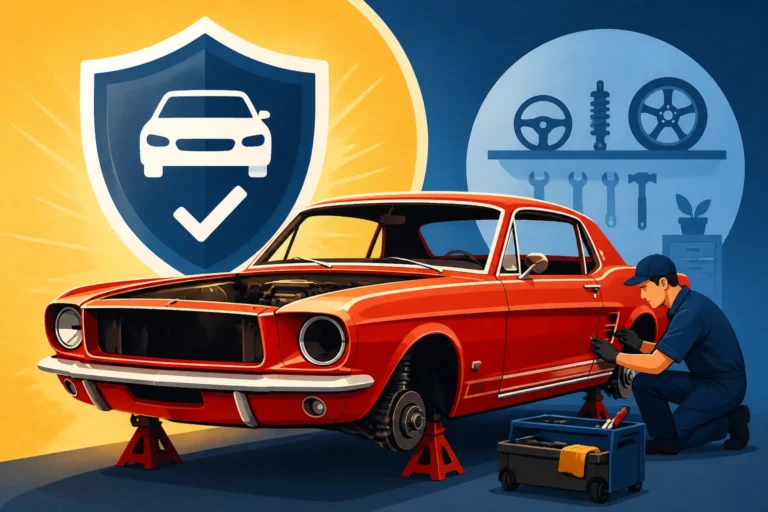
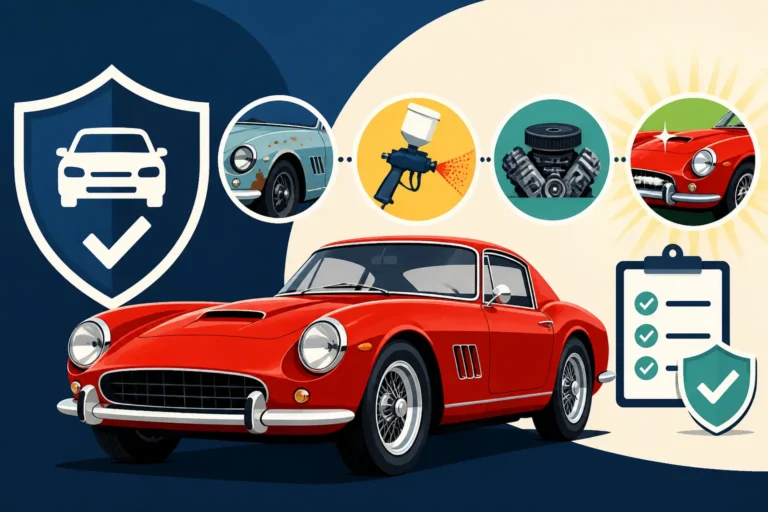
For many enthusiasts, the journey of restoring a classic is as rewarding as owning the finished product. These "works-in-progress" represent significant investments of time, money, and passion. However, insuring a car under restoration presents unique challenges. Its value is constantly changing as new parts are added and labor is expended. Standard policies often struggle with this, as the car isn't fully operational or might even be disassembled. Restoration coverage is a specialized endorsement that addresses this by allowing you to update the car's agreed value as the restoration progresses. You typically provide receipts for parts and labor, and the insurer adjusts the coverage amount, ensuring that your increasing investment is always protected. This is vital, whether you're tackling a full frame-off restoration of a 1957 Chevrolet Bel Air or simply performing a rolling restoration, piece by piece. You can read more about Restoration Coverage for Classic Cars to understand how this crucial add-on works.
Spare Parts and Tools Coverage
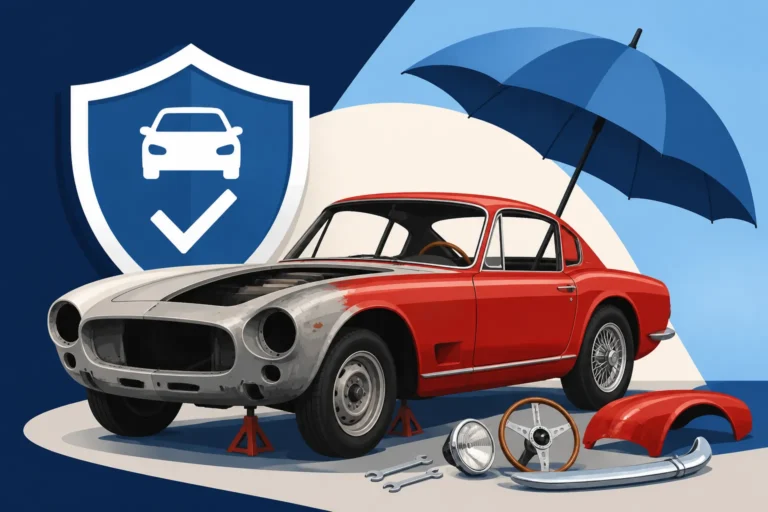
Any serious classic car owner knows that the garage is often as important as the car itself. It's where we store invaluable spare parts – a period-correct carburetor, an extra set of chrome trim, or even an entire engine block. We also accumulate specialized tools, lifts, and equipment necessary for maintenance and repairs. These items can represent a substantial financial investment and are often difficult, if not impossible, to replace. A typical homeowner's policy might offer limited coverage for tools, but rarely understands the true value or rarity of classic car spare parts. Spare parts and tools coverage, available as an endorsement, provides specific protection for these assets, whether they are stored in your garage, a separate facility, or even transported with your vehicle to a show or a mechanic. This ensures that if your rare NOS grille for your 1963 Corvette Split-Window Coupe is stolen or damaged, you're covered for its true value, not just a depreciated amount. Learn more about Spare Parts Coverage Explained to ensure your invaluable garage items are safeguarded.
Specialized Coverage for Unique Scenarios and Collectibles
The world of classic cars is incredibly diverse, encompassing everything from pristine show vehicles to modified hot rods, and even "barn finds" that have seen better days. Each type of collectible car, and each owner's specific relationship with their vehicle, can create unique insurance needs that go beyond standard policy offerings. Thankfully, specialty insurers have developed add-ons to address these distinct scenarios.
Cherished Salvage Coverage: When a Total Loss Isn't the End
For most cars, if an insurer declares it a "total loss" after an accident, they pay out the agreed value, and the car is often sold for salvage. But for a classic car, especially one with deep sentimental value or a unique history, a total loss doesn't always mean the end of the road. Many collectors would rather salvage the car and restore it, no matter the damage. Cherished salvage coverage is a unique endorsement that allows you to retain ownership of your classic after a total loss payout, enabling you to undertake the repairs yourself. The insurer pays you the agreed value, and you get to keep the vehicle (which will now have a salvage title) to restore. This is particularly valuable for cars with personal significance or for rare models where replacement parts or donor cars are simply not available, making the vehicle irreplaceable in your eyes. It gives you the option to bring your beloved classic back to life, even after severe damage.
Automobilia and Collectibles Coverage Beyond the Vehicle Itself
Beyond the classic cars themselves, the hobby often extends to collecting related memorabilia, known as automobilia. This can include vintage gas pumps, rare dealership signs, racing helmets, signed photographs, trophies, and scale models – essentially anything that celebrates automotive history. These items can be incredibly valuable, sometimes individually worth more than a daily driver. While the personal effects coverage mentioned earlier is for items with your car, dedicated automobilia and collectibles coverage is for your broader collection stored in your home, office, or dedicated display space. Specialty insurers understand the unique value of these collections and offer policies that specifically cover them against theft, damage, or loss, often with agreed value provisions similar to those for your cars. This ensures your entire automotive passion, not just your vehicles, is adequately protected.
Event, Show, and Touring Coverage
Participating in classic car shows, club events, parades, and organized tours is a huge part of the collector experience. These activities bring joy but also expose your vehicle to different risks that might not be fully covered by a standard policy designed for limited, pleasure-use driving. Event, show, and touring coverage endorsements provide specialized protection while your vehicle is on display, in transit to and from an event, or participating in a specific rally or tour. This might include coverage for:
- Display Damage: Protection against accidental damage while your car is parked and on display, such as a spectator leaning on it or a falling display item.
- Theft at Events: Enhanced theft protection when your car is at an open-air show or public gathering.
- Loss of Earnings/Awards: In some cases, coverage might extend to potential loss of income or prize money if your car is damaged and unable to attend a crucial event.
- Additional Transit Coverage: Ensuring your car is fully covered during transport, whether it's trailered or driven, to and from distant shows.
This specialized coverage recognizes that participating in the classic car community comes with its own set of unique exposures and ensures you're protected throughout your involvement.
Driver-Centric and Liability Enhancements
While protecting your classic car itself is paramount, ensuring you and other drivers are adequately covered against liabilities and personal injury is equally critical. Specialty classic car policies focus heavily on physical damage to your unique vehicle but often have options to enhance the personal injury and liability aspects of your coverage. These add-ons are designed to fill potential gaps that could arise when operating a classic on public roads.
Uninsured/Underinsured Motorist Protection for Classics
It's an unfortunate reality that not every driver on the road carries adequate insurance. If an uninsured or underinsured driver hits your classic, their policy might not be enough to cover the extensive repair costs or, heaven forbid, the agreed value of your cherished vehicle. Uninsured/underinsured motorist (UM/UIM) coverage is a vital add-on that protects you in such a scenario. It steps in to cover your damages, medical expenses, and sometimes even pain and suffering, up to your policy limits, when the at-fault driver either has no insurance or insufficient coverage. This is especially important for classics, where repair costs for rare parts and specialized labor can quickly escalate, far exceeding the typical state minimum liability coverages held by many drivers. This protection offers an essential safeguard against the financial ramifications of encountering an irresponsible driver.
Medical Payments and Personal Injury Protection
When an accident occurs, injuries can happen, regardless of who is at fault. While your health insurance might cover some of these costs, medical payments (MedPay) or personal injury protection (PIP) endorsements can provide crucial immediate coverage for medical expenses for you and your passengers, regardless of fault. These coverages can help with ambulance fees, hospital stays, doctor visits, and even funeral expenses in the tragic event of a fatality. In some states, PIP is mandatory, while MedPay is often optional but highly recommended. For classic car enthusiasts, especially those who often take passengers for rides or participate in events with friends, having this added layer of personal injury protection ensures that medical costs are addressed quickly and efficiently, without waiting for fault determination.
Multi-Car Collector Policy Requirements and Benefits
Many classic car enthusiasts don't stop at just one vehicle; they build entire collections. Managing separate insurance policies for each car can be cumbersome and potentially more expensive. Multi-car collector policies are designed to simplify this by bundling all your classic vehicles under a single policy, often leading to significant savings and streamlined administration. Insurers like Hagerty specialize in these types of policies, offering a unified approach to agreed value, liability, and optional add-ons across your entire fleet.
The benefits extend beyond mere convenience:
- Cost Efficiency: Insurers often provide discounts for insuring multiple vehicles with them.
- Shared Mileage Limits: Some policies allow for a combined mileage limit across the collection, giving you flexibility to drive different cars more or less as you please, as long as the total remains within the limit.
- Consistent Coverage: Ensures all your vehicles benefit from the same high level of specialty coverage and endorsements you choose.
- Simplified Management: One policy, one renewal date, one point of contact for all your cherished automobiles.
If you're growing your collection, understanding Requirements for a Multi-Vehicle Collection Policy can help you structure your insurance smartly and economically. This endorsement is a game-changer for serious collectors, allowing them to expand their passion without getting bogged down in administrative complexity.
Navigating Policy Details: Deductibles, Exclusions, and Limits
Understanding the core coverages and available add-ons is essential, but a truly comprehensive classic car insurance strategy also involves delving into the finer print of your policy. Deductibles, exclusions, and limits are critical components that directly impact your out-of-pocket expenses and the extent of your coverage when a claim arises. Overlooking these details can lead to unexpected financial burdens.
Choosing the Right Deductible for Your Classic
The deductible is the amount you agree to pay out of pocket before your insurance coverage kicks in for a claim. For classic cars, choosing the right deductible requires a careful balance between premium cost and financial comfort.
- Higher Deductible, Lower Premium: Opting for a higher deductible (e.g., $1,000 or $2,500) will generally result in lower annual premiums. This can be a smart choice if you have significant savings and are comfortable bearing more risk in the event of a minor claim, especially for a car that is driven sparingly.
- Lower Deductible, Higher Premium: A lower deductible (e.g., $0 or $250) means you'll pay less out of pocket if you need to file a claim, but your annual premium will be higher. This might be preferable if you prefer minimal out-of-pocket costs or if your classic is driven more frequently, increasing the statistical likelihood of a minor incident.
Consider your financial situation, the frequency of your classic's use, and your personal risk tolerance when making this decision. A $0 deductible, for instance, can provide ultimate peace of mind, knowing that even a fender bender won't incur immediate costs beyond your premium.
Common Exclusions to Be Aware Of
Even with a robust policy and multiple endorsements, classic car insurance policies come with exclusions – situations or damages that are specifically not covered. Being aware of these is crucial to avoid unpleasant surprises. Common exclusions often include:
- Racing or Competitive Events: While some policies offer event coverage for parades or tours, actual racing, drag racing, or track days are typically excluded unless a specific, often expensive, add-on is purchased. This is a common area of misunderstanding; if you participate in autocross, you need to check if your policy has that specific coverage.
- Wear and Tear: Standard maintenance and repairs due to normal aging or mechanical failure are not covered. Insurance is for sudden, accidental damage.
- Off-Road Use: Taking your classic off paved roads, unless it's an antique 4×4 with specific coverage, is usually excluded.
- Commercial Use: Using your classic for business purposes, such as livery service, commercial photography, or delivery, is almost always excluded from a personal collector car policy.
- Intentional Acts: Damage or loss resulting from deliberate acts by the insured is never covered.
- Theft if Not Stored Properly: If your policy requires garaged storage, and your car is stolen while routinely parked outside overnight, coverage might be denied.
Always read your policy documents carefully or discuss potential exclusions with your insurer. Understanding Classic Car Insurance Exclusions to Know is paramount to avoiding coverage gaps.
Understanding Coverage Limits and How to Adjust Them
Beyond the agreed value for physical damage to your car, other sections of your policy, especially liability and some endorsements, will have specific coverage limits.
- Liability Limits: This is the maximum amount your insurer will pay for bodily injury and property damage to others if you're at fault in an accident. State minimums are often woefully inadequate, especially when driving a classic that can draw significant attention and potential liability. Many collectors opt for higher liability limits (e.g., $500,000 or $1,000,000) for enhanced protection.
- Endorsement Limits: Add-ons like spare parts coverage, personal effects coverage, or trip interruption coverage will also have their own specific maximum payout limits. For example, spare parts might be capped at $1,000 or $5,000, or a percentage of the agreed value. If your spare parts collection is worth $15,000, you'll need to ensure the endorsement limit is sufficient or negotiate a higher one.
- Adjusting Limits: You can often adjust these limits by contacting your insurer. It's wise to periodically review your policy limits, especially if your financial situation changes, your collection grows, or the value of your related collectibles increases. Don't assume your limits are set in stone; they should evolve with your needs.
By carefully considering your deductibles, being aware of exclusions, and understanding (and adjusting) your coverage limits, you can ensure your classic car insurance truly offers comprehensive and appropriate protection for all aspects of your collecting journey.
How to Evaluate and Select the Right Add-Ons
With so many add-ons and endorsements available, it can feel a bit overwhelming to figure out which ones are truly necessary for your specific situation. The key is a personalized approach. What works for a collector in Arizona who takes their convertible on frequent desert tours might be entirely different from what a collector in Michigan needs for their garage-kept muscle car that only sees summer cruises.
Assessing Your Classic Car's Specific Needs
The first step in selecting the right add-ons is to perform an honest assessment of your classic car and your habits.
- How do you use your classic? Is it a garage queen, a weekend cruiser, a show vehicle, or a regular participant in rallies?
- Example: If you frequently drive your classic long distances to shows or on tours, Trip Interruption Coverage for Classic Cars Explained and enhanced roadside assistance are almost certainly good investments. If it rarely leaves the garage, these might be less critical.
- Where is it stored? Is it in a climate-controlled private garage, a shared storage facility, or perhaps a more exposed carport?
- Example: Secure storage might reduce the need for certain theft deterrent discounts but still warrants comprehensive coverage.
- What is its value and how is it trending? Is your car appreciating rapidly, or is its value fairly stable?
- Example: For a rapidly appreciating car or one under restoration, Inflation Guard Coverage Explained and Restoration Coverage for Classic Cars are crucial.
- Do you have valuable associated items? Are there rare tools, spare parts, or automobilia that travel with the car or are stored with it?
- Example: If you have a collection of rare, period-correct tools that you bring to car shows, personal effects coverage or Spare Parts Coverage Explained could be essential.
- Who drives the car? Are you the sole driver, or do other household members or trusted friends occasionally take the wheel?
- Example: If a younger driver in your household is permitted to drive it, you'll want to ensure all liability and personal injury coverages are robust.
By answering these questions, you can start to prioritize which endorsements genuinely enhance your protection and which might be less relevant.
Comparing Endorsement Options Across Providers
Not all specialty insurers offer the exact same suite of add-ons, nor do they always offer them with the same limits or at the same price. This is where comparison shopping becomes invaluable.
- Review Policy Brochures: Most specialty classic car insurers, like Hagerty, American Collectors, or Grundy, provide detailed brochures or online explanations of their available endorsements.
- Look Beyond the Basics: While all will offer agreed value and basic liability, compare the specifics of their roadside assistance (e.g., flatbed only vs. any tow), trip interruption limits, or restoration coverage flexibility.
- Get Detailed Quotes: When getting a quote, explicitly ask about the cost of specific add-ons you've identified as important. Don't just settle for the base policy quote.
- Read the Fine Print: Understand the specific conditions, exclusions, and limits for each endorsement. For instance, some inflation guard policies might only adjust by a fixed percentage, while others might require an updated appraisal if the market value spikes significantly.
Creating a simple comparison table can be incredibly helpful here:
| Add-On/Endorsement | Purpose | Typical Coverage Limit/Benefit | Hagerty Example/Note | Other Provider Example/Note | Cost Impact (Estimate) |
|---|---|---|---|---|---|
| Roadside/Flatbed Towing | Towing, jump-starts, fuel delivery | Varies by provider (e.g., up to $250/incident) | Standard for many Hagerty policies; specific to flatbed for classics. | May be an optional add-on with limits. | Low |
| Trip Interruption | Meals, lodging, alternative transport after breakdown | Up to $500 – $1,000 per incident | Available as an add-on, covers specific expenses. | Often similar limits from other specialty insurers. | Low/Moderate |
| Inflation Guard | Automatically adjusts agreed value for appreciation | 2%-6% annual increase | Hagerty offers an automatic annual increase. | May vary, some require more frequent reappraisal. | Low |
| Restoration Coverage | Covers value increase during restoration | Varies based on documented costs | Allows value updates as project progresses; requires documentation. | Some insurers have specific tiers or limits based on project scope. | Moderate |
| Spare Parts Coverage | Protects spare parts and components | Up to $1,000 – $10,000+ | Hagerty offers dedicated coverage for specified parts. | May be a fixed dollar amount or percentage of vehicle value. | Low/Moderate |
| Cherished Salvage | Retain vehicle after total loss payout | Agreed value payout, you keep car | Yes, allows collector to retain vehicle to rebuild. | Not all standard insurers offer this; specialty insurers typically do. | N/A (policy feature) |
This kind of detailed comparison ensures you're not just getting the cheapest policy, but the right policy with the most valuable add-ons for your specific needs.
Working with a Specialty Insurance Advisor
Navigating the intricacies of classic car insurance can be complex, especially with unique vehicles, collections, or restoration projects. This is where a knowledgeable specialty insurance advisor or broker can be an invaluable resource.
- Expert Guidance: They understand the nuances of the classic car market and the specific offerings from different insurers. They can help you identify potential gaps in your existing coverage or recommend endorsements you might not have considered.
- Access to Multiple Providers: Unlike direct insurers, a broker can often provide quotes and compare policies from several different specialty carriers, ensuring you get the best value and coverage for your unique situation. They might work with companies like American Modern, J.C. Taylor, and Leland-West, in addition to larger players like Hagerty and Grundy.
- Advocacy During Claims: In the event of a claim, a good broker can act as your advocate, helping to streamline the process and ensure you receive a fair settlement based on your agreed value and chosen endorsements.
- Ongoing Support: Your needs may change over time as your collection grows, cars are bought and sold, or market values shift. An advisor can provide ongoing support, helping you update your policy and endorsements as needed.
Don't hesitate to reach out to a professional who specializes in collector car insurance. Their expertise can save you time, money, and a great deal of stress, ensuring your prized possessions are protected with a truly comprehensive and customized policy. Building a complete classic car policy is an art, and they are the masters.
Disclaimer
Please remember that this article provides general information and is not a substitute for professional insurance advice. Policy terms, conditions, coverages, and availability can vary significantly between insurance providers and depend on your specific circumstances and location. Always consult with a qualified insurance agent or broker to discuss your individual needs and to obtain personalized quotes and advice. Review your actual policy documents carefully to understand your coverage fully.