How Storage Affects Classic Car Eligibility
It’s a frustrating reality for many classic car enthusiasts: you’ve found your dream vintage ride, lovingly restored it, or maybe you’re just starting your journey into the collector car world, only to hit a snag with insurance because of where you plan to keep it. The truth is, how you store your classic car isn't just a minor detail for insurance companies; it's often a make-or-break factor in determining your eligibility for specialty classic car insurance and can significantly impact your premiums. This comprehensive guide will peel back the layers of this critical requirement, helping you understand exactly what insurers are looking for.
The Foundation of Classic Car Insurance: Secure Storage
When you're dealing with a prized possession like a classic car, the way it's stored isn't just about tidiness; it’s a direct indicator of how seriously you, as the owner, take its preservation and protection. Unlike a daily driver, which might spend its nights on the street or in an open driveway without much consequence for standard auto insurance, a classic car is viewed through a different lens by specialty insurers. They're looking for a commitment to safeguarding an appreciating asset, and secure storage is paramount to that commitment.
Why Insurers Care So Much About Storage Location
For a specialty classic car insurance provider, every policy they write is a calculated risk. The unique nature of classic cars means their value often hinges on their condition, originality, and rarity. Damage, theft, or deterioration due to exposure can significantly diminish that value, leading to substantial claims. Therefore, insurers meticulously evaluate the environment in which your classic car will live.
Think about it: a 1969 Chevrolet Camaro SS parked nightly on a busy city street in an area with high crime rates is an entirely different risk profile than the same car tucked away in a private, locked, climate-controlled garage in a quiet suburban neighborhood. The potential for theft, vandalism, accidental damage from other vehicles, or even environmental harm like hail, falling branches, or excessive sun exposure is drastically different. This isn't just about saving themselves money; it's about helping you preserve the investment you've made in your classic vehicle. They want to ensure your car is given the respect and protection it deserves.
The Collector's Mindset and Storage Standards
Specialty classic car insurers aren't just selling a policy; they're catering to a specific culture—that of the passionate collector. This culture implies a certain level of care and dedication to the vehicle. Your storage solution reflects that dedication. If an insurer sees that you're willing to invest in a secure, protective environment for your classic, it tells them you’re likely to be a responsible owner in other areas too, such as limiting mileage, performing regular maintenance, and driving safely.
This is why you'll often find that one of the core Classic Car Insurance Eligibility Requirements is having an appropriate storage facility. It’s part of a holistic approach to risk management that differentiates classic car insurance from standard auto policies. They understand that these aren't just cars; they're pieces of history, works of art, and significant personal investments.
Unpacking Common Storage Requirements for Classic Car Insurance
So, what exactly do classic car insurance companies consider "acceptable" storage? While specific requirements can vary slightly between providers, there's a widely accepted gold standard, along with some nuanced alternatives and definite no-gos. Understanding these will put you in a much better position when seeking coverage for your cherished automobile.
The Gold Standard: Enclosed, Locked Garages
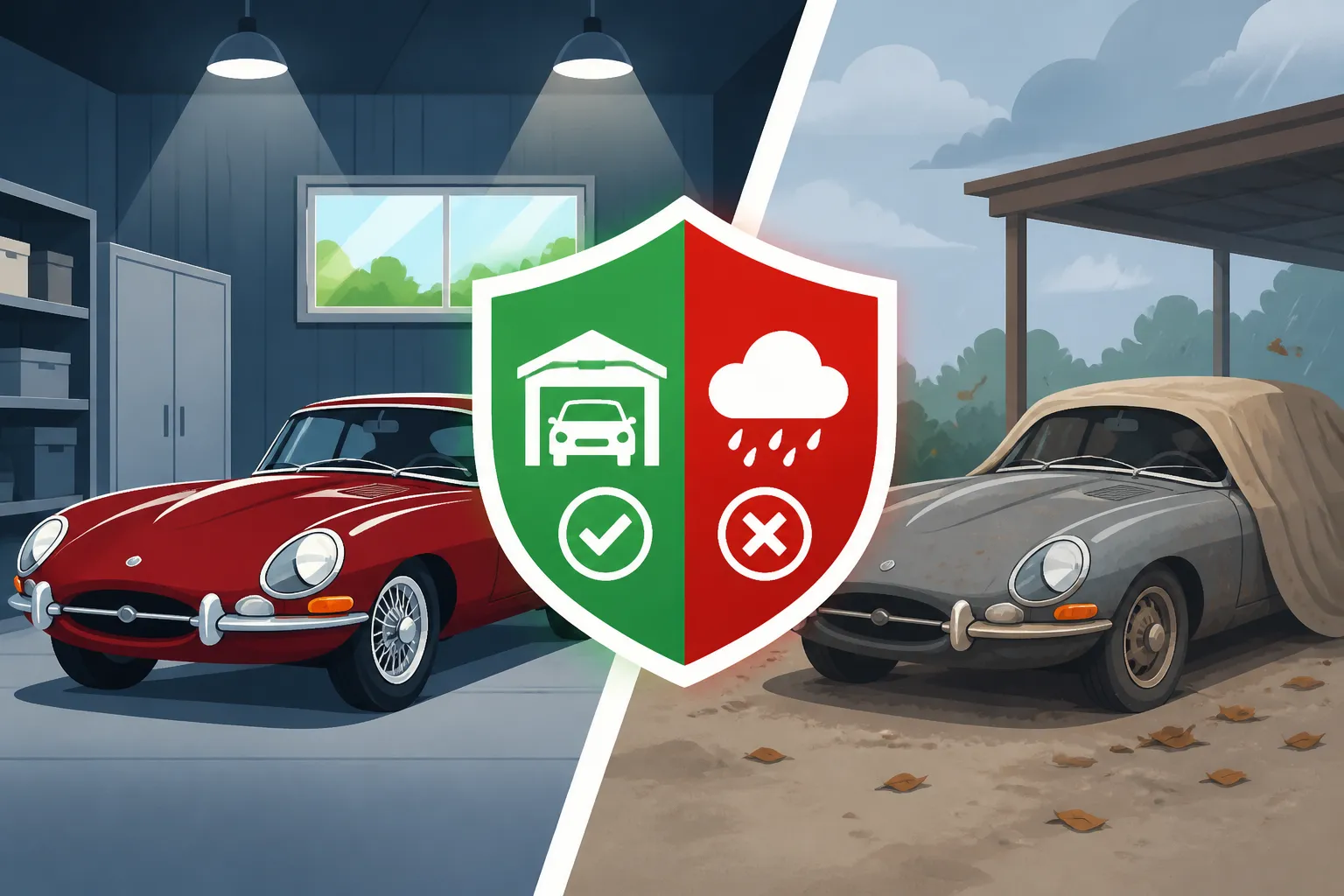
For nearly every specialty classic car insurer, an enclosed, private, and locked garage is the ideal storage solution. This means a structure that is fully enclosed on all sides, with a roof, and can be securely locked to prevent unauthorized access. This could be an attached garage, a detached garage, or even a dedicated barn, provided it meets the security criteria.
- Attached Garages: These are often preferred because they share walls with your primary residence, potentially benefiting from home security systems and a general sense of occupancy. The risk of someone breaking into an attached garage without attracting attention is often lower than a standalone structure.
- Detached Garages and Outbuildings: Perfectly acceptable, as long as they are robustly built and have secure locking mechanisms. Insurers might ask about the construction materials (e.g., concrete slab, brick walls) and the quality of the doors and windows. A flimsy shed with a simple padlock isn't going to cut it for a high-value classic.
- Security Features: Beyond just a lock, many insurers appreciate or even require additional security measures, especially for higher-value vehicles. This could include alarm systems (connected to a central monitoring station or just a local siren), security cameras, reinforced garage doors, or even specific lighting. If you've invested in a good home security system, make sure it extends to your garage.
This emphasis on secure, enclosed storage directly contributes to why Classic Car Insurance is Cheaper Than Regular auto insurance. The reduced risk of theft and damage due to proper storage is a major factor in those lower premiums.
Navigating Alternatives: Carports, Shared Spaces, and Storage Units
Life isn't always a three-car garage in the suburbs. Many collectors live in apartments, condos, or homes without traditional garages. In these situations, specialty insurers might offer some flexibility, but it often comes with caveats.
- Carports: This is where things get tricky. A carport, by definition, is open on one or more sides. While it offers protection from overhead elements like sun, rain, and hail, it provides virtually no security against theft or vandalism. Some insurers, particularly for lower-value classics or those with other mitigating factors (like extremely low declared mileage and a clean driving record), might accept a carport, but it's rare. You're far more likely to face a higher premium, limited coverage, or outright denial for comprehensive aspects. It's often asked, "Storage Requirements: Garage vs Carport?", and for classic car insurance, the garage almost always wins.
- Shared Garages/Underground Parking: For urban dwellers, an assigned space in a shared underground garage (common in apartment complexes or condos) might be your only option. Many specialty insurers like Hagerty or Grundy will consider these, provided the garage itself is secure—meaning it’s typically locked, has controlled access (key fob, gate), and potentially surveillance. They'll want to know about the overall security of the facility, not just your specific parking spot.
- Dedicated Storage Facilities: A fantastic alternative for many. Commercial self-storage facilities, especially those specializing in vehicle storage, can be a great option. When considering these, look for:
- Climate Control: Essential for preserving paint, interiors, and mechanical components from extreme temperatures and humidity fluctuations.
- 24/7 Security: Surveillance cameras, on-site personnel, gated access, and individual unit alarms.
- Pest Control: Critters can wreak havoc on wiring and interiors.
- Accessibility: How often can you access your car?
- Insurance Partnership: Some facilities even have relationships with classic car insurers, simplifying the process.
It's always best to be transparent with your insurer about your exact storage situation. Trying to conceal an open-air parking spot could lead to severe consequences if you ever need to file a claim. You can find more details on this in Storage Options Specialty Insurers Accept.
The Absolute No-Gos: What Insurers Will Not Accept
Just as there are preferred and acceptable storage solutions, there are also scenarios that almost universally disqualify a vehicle for classic car insurance. These are considered too high-risk for the specialized policies designed to protect collector vehicles.
- Street Parking: Parking your classic car on a public street, even occasionally, is generally a non-starter. The risk of theft, vandalism, accidental damage from passing traffic, and exposure to the elements is simply too high.
- Open Driveways/Unsecured Lots: Similar to street parking, an open driveway or any unsecured parking lot offers minimal protection. While it's on private property, the lack of an enclosure and physical barriers makes it an easy target. The question of "Can You Insure a Classic Car Parked Outside?" almost always yields a "no" for specialty policies designed for collector vehicles, at least for comprehensive coverage.
- Communal Parking Areas (Unsecured): If your apartment complex has an open, common parking lot with no controlled access or security, it typically won't meet classic car insurance requirements.
In these "no-go" situations, you might be forced to get a standard auto insurance policy, which often uses "Actual Cash Value" (ACV) for payouts, potentially significantly undervaluing your classic after a loss, rather than the "Agreed Value" coverage typical of specialty policies.
How Different Storage Types Directly Influence Your Classic Car Policy
Beyond just being eligible for coverage, the specific type and security level of your classic car’s storage can have a tangible impact on the details of your policy, including your premiums, deductibles, and even the types of endorsements available.
The Financial Benefits of Secure Garage Storage
There’s a direct correlation between highly secure storage and lower classic car insurance premiums. When an insurer sees that your vehicle is housed in a locked, private garage, they immediately assess it as a lower risk.
- Reduced Premiums: This is the most obvious benefit. Less risk of theft, vandalism, and environmental damage translates directly into a more favorable rate for you. The peace of mind this offers is invaluable, and the financial savings are a nice bonus. For example, a collector in Raleigh, North Carolina, keeping their classic muscle car in a secure, attached garage will likely pay a lower premium than someone attempting to insure a similar vehicle stored in a less secure environment.
- Broader Coverage Options: Insurers are more willing to offer comprehensive coverage, agreed value policies, and specialized endorsements like Spare Parts Coverage Explained or Restoration Coverage for Classic Cars when the primary asset is well-protected. They trust that your efforts in storage align with your commitment to the car's overall well-being.
- Lower Deductibles: In some cases, insurers might offer lower deductibles for vehicles with exceptional storage, as the likelihood of a claim (especially minor ones) is reduced.
Think of it as a partnership: you do your part to protect the vehicle, and the insurer does their part to offer you the best possible coverage and rates. Companies like Hagerty actively promote and incentivize responsible storage practices.
Considerations for Off-Site Storage Facilities
As mentioned, dedicated storage facilities can be excellent alternatives, especially if you lack suitable space at home. However, it's crucial to understand how insurers view these and what information they'll need.
- Facility Security Assessment: Your insurer will want detailed information about the facility's security. This includes gates, surveillance, access control (keypad, guard), lighting, and whether individual units are alarmed. They might even require photos or a description from the facility manager.
- Climate Control and Environmental Protection: Facilities offering climate control (temperature and humidity regulation) are highly regarded. This protects against rust, paint damage, interior degradation, and fluid breakdown, all of which are common concerns for long-term classic car storage. For instance, storing a valuable classic in a damp, unheated shed in Michigan versus a climate-controlled facility in Arizona makes a huge difference to its long-term condition and thus its insurable value.
- Access Limitations: Some policies might have restrictions on how often or when you can access your car in an off-site facility, particularly if it's considered "laid up" for extended periods. Be clear about your intended use and access frequency.
Choosing a reputable, secure, and ideally climate-controlled off-site storage facility can keep your classic car insurance rates competitive and ensure you maintain comprehensive coverage, even if you don't have a personal garage.
The Impact of Less Secure Options on Coverage and Cost
If you must use a less secure option like a carport or a communal but unsecured parking area, be prepared for potential limitations and higher costs.
- Increased Premiums: The higher risk of theft, vandalism, and environmental damage will almost certainly translate into higher premiums. Insurers are compensating for the elevated risk they are taking on.
- Limited Coverage: You might find that some insurers will only offer liability-only coverage, or they might exclude comprehensive coverage elements like theft or vandalism if the car isn't securely garaged. This means if your car is stolen from an open carport, you might be out of luck for anything beyond the basic legal minimums.
- Specific Exclusions: Policies might contain explicit exclusions for damage occurring while the vehicle is stored in an unapproved manner. This is why reading the fine print of your policy is absolutely critical, as outlined in "What to Look for in a Classic Car Policy".
The table below illustrates a general comparison of how different storage types are perceived by classic car insurers:
| Storage Type | Insurer Perception (Risk) | Likelihood of Eligibility | Typical Premium Impact | Coverage Scope (Common) |
|---|---|---|---|---|
| Private, Locked, Enclosed Garage | Very Low | High | Lowest | Full Agreed Value, Comp, Etc. |
| Secure Shared/Underground Garage | Low to Moderate | High (with verification) | Low to Moderate | Full Agreed Value, Comp, Etc. |
| Commercial Storage Facility (Secure, Climate-Controlled) | Low to Moderate | High | Low to Moderate | Full Agreed Value, Comp, Etc. |
| Commercial Storage Facility (Unsecured, No Climate) | Moderate | Moderate | Moderate to High | Limited Comp, Theft Excl. Possible |
| Carport | High | Low to Very Low | High | Liability-Only or Limited Comp |
| Open Driveway/Street Parking | Extremely High | Extremely Low (or None) | Highest (if any) | Standard ACV (not specialty) |
Remember, this is a general guide. Always discuss your specific situation with a reputable classic car insurance broker or company.
Ensuring Your Storage Meets Insurer Standards: Documentation and Updates
It's not enough to simply have proper storage; you need to be able to prove it to your insurer. Furthermore, classic car ownership is dynamic—you might move, change storage, or make improvements. Keeping your insurer in the loop is crucial to maintaining continuous and appropriate coverage.
Providing Proof of Secure Storage
When you apply for classic car insurance, expect questions about your storage. Insurers will ask for details to assess the risk accurately.
- Photos are Your Friend: Take clear, well-lit photos of your garage or storage facility. Show the exterior, the entry points (garage doors, regular doors, windows), and the interior with your car parked securely. These visual proofs help the underwriter understand your situation much better than just a description.
- Security System Details: If you have an alarm system, security cameras, or other protective measures, be prepared to provide details. This could include the type of system, whether it's monitored, and the company providing the service. Mentioning brands like Ring, Nest, or local security providers adds a layer of credibility.
- Lease Agreements for Off-Site Storage: If you're using a commercial storage facility, a copy of your lease agreement, along with the facility's security information (often available from the management), will be required. This confirms the nature of the facility and your arrangement.
- Description of Location and Neighborhood: You might be asked to describe the general area where your garage is located. Is it in a gated community, a quiet residential street, or a bustling urban area? While the primary focus is on the garage itself, the surrounding environment can sometimes play a role in risk assessment, especially for theft.
- Property Details: For a home garage, details about your property (e.g., single-family home, condo) might be collected. This helps the insurer understand the context of your storage.
Being proactive and having these documents and photos ready when you How to Get a Classic Car Insurance Quote will streamline the application process and help you get the best possible rate.
The Importance of Updating Your Insurer
Life changes, and so might your storage situation. It’s absolutely vital to inform your classic car insurer about any significant changes to your storage arrangements. Failing to do so could jeopardize your coverage, especially in the event of a claim.
- Moving to a New Residence: If you move, your new storage location will need to be re-evaluated. Even if your new home has an equally secure garage, the new address itself (and associated geographic risks) will be a factor.
- Changing Storage Facilities: Moving your classic from one commercial storage unit to another, or from your home garage to an off-site facility, requires an update. The new facility will need to meet the insurer's standards.
- Improvements or Downgrades to Security: If you install a new, state-of-the-art security system in your garage, tell your insurer! This could potentially lead to a discount. Conversely, if your garage door is damaged and temporarily unsecured, you need to inform them immediately to understand any potential impact on your coverage.
- Temporary Storage Changes: Even temporary changes, like taking your car to a mechanic for an extended period or storing it at a friend's house while you're on vacation, should be communicated, especially if it's for more than a few days. While short-term transit or mechanic visits are usually covered, long-term temporary changes might not be.
Maintaining an open and honest relationship with your classic car insurer, and providing timely updates, is key to ensuring that your policy remains valid and fully protects your valuable classic car. This proactive approach helps avoid any nasty surprises down the road, especially if you ever need to file a claim.
Geographic Location and Climate: Additional Storage Considerations
While the physical structure and security of your storage are paramount, the broader environment in which your classic car resides also plays a significant role in insurance eligibility and rates. Where your classic car is stored, both geographically and climatically, can introduce additional layers of risk that insurers carefully consider.
Regional Theft Rates and Climate Challenges
The location of your garage, even if it's top-tier, is still assessed within the context of its surroundings.
- Urban vs. Rural Risk: A secure garage in a high-crime urban area might still present a higher theft risk than an identical garage in a very low-crime rural area. Insurers use data on local crime statistics, especially vehicle theft rates, to inform their risk assessments. For example, insuring a classic in Los Angeles or Miami might involve a different risk profile than insuring one in a small town in Vermont.
- Severe Weather Zones: Storing a classic car in an area prone to hurricanes (e.g., Florida coast), tornadoes (e.g., Tornado Alley states like Oklahoma), or severe hailstorms (e.g., parts of Texas or Colorado) adds another layer of risk. Even if your garage is robust, the potential for catastrophic damage to the structure itself or during transit outside the garage is higher. Insurers will consider this, and some may have specific requirements or exclusions related to certain natural disasters.
- Humidity and Temperature Extremes: High humidity, especially when combined with temperature fluctuations, can accelerate rust and degrade components. Conversely, extreme heat and sun can damage paint and interiors. While a climate-controlled garage mitigates this, the general climate of the region can influence how insurers view even excellent storage, particularly for cars that might be exposed during drives or short periods outside.
Understanding these broader geographic influences helps to explain some of the subtle differences in classic car insurance requirements and premiums from state to state. For instance, you might find nuances in Classic Car Insurance Requirements in Florida compared to Classic Car Insurance Requirements in New York.
Seasonal Storage and Laid-Up Coverage
For collectors in regions with harsh winters or extreme summers, seasonal storage is a common practice. Many classic cars are put away for several months to avoid salt, snow, extreme heat, or excessive humidity. This practice ties directly into specific insurance options.
- Laid-Up Coverage: This type of coverage is specifically designed for vehicles that are stored and not driven for extended periods, typically over the winter months. It's often referred to as "storage-only" coverage. When your classic is "laid up," you might temporarily reduce certain parts of your active driving coverage (like collision or liability if it's truly off the road and not registered), but you'll maintain comprehensive coverage against theft, fire, vandalism, and natural disasters while it's in storage. This can lead to significant premium savings during the off-season. You can learn more about this in Laid-Up Coverage for Winter Storage.
- Requirements for Laid-Up Policies: Even with laid-up coverage, the secure storage requirement remains paramount. The insurer still needs to know the car is safely tucked away, probably even more so since it won't be actively monitored or moved as frequently. They’ll want to know the storage location, its security, and the duration it will be stored.
- Reactivating Driving Coverage: When spring rolls around and you're ready to hit the road, you'll need to contact your insurer to reinstate your full driving coverage. This is a crucial step that many collectors overlook, inadvertently driving uninsured.
Seasonal storage and laid-up coverage options are excellent examples of how specialty classic car insurers adapt to the unique needs and driving habits of collectors, while still emphasizing the core principle of secure storage.
What Happens When Storage Requirements Aren’t Met?
It's tempting to try and cut corners or stretch the truth to get coverage, especially if your storage situation isn't ideal. However, being less than forthcoming about where your classic car is stored can lead to severe and costly repercussions. Understanding these consequences is critical for any classic car owner.
Policy Denial or Cancellation
The most immediate and straightforward consequence of not meeting an insurer's storage requirements is the denial of your application. If, during the underwriting process or an inspection, the insurer discovers that your proposed storage doesn't meet their criteria, they simply won't issue a policy.
- Initial Application Denial: This typically happens early in the process. If you disclose you only have a carport or plan to park on the street, many specialty insurers will immediately inform you that they cannot offer coverage. They're upfront about their risk profile.
- Mid-Term Cancellation: More concerning is when a policy is canceled after it's been issued. If an insurer discovers (through an inspection, claim investigation, or even a casual conversation) that your storage facility doesn't match what you stated on your application, they have the right to cancel your policy. This isn't just an inconvenience; it can make it harder to get any insurance in the future, as insurers view cancellations as a red flag.
- No "Grandfathering": Don't assume that if your storage was acceptable five years ago, it still is. Insurer guidelines can change, and they will apply current standards upon renewal or if you modify your policy.
It’s always better to be honest and explore all your options, even if it means investing in better storage or finding a different type of insurance. Trying to force a square peg into a round hole will only lead to trouble.
The Devastating Impact of Denied Claims
This is the scenario every classic car owner dreads. You have a policy, an incident occurs (theft, fire, damage), you file a claim, and then it's denied because your storage didn't meet the policy's terms.
- Breach of Contract: Your insurance policy is a contract. A fundamental part of that contract with specialty classic car insurers is often a clause regarding secure storage. If you fail to uphold your end of that agreement (by not storing the car as stipulated), the insurer can argue a breach of contract and deny your claim.
- Zero Payout: Imagine your beautiful 1965 Ford Mustang, valued at $75,000, is stolen from an open driveway that you implicitly (or explicitly) told your insurer was a locked garage. In such a case, the insurer could deny the claim entirely, leaving you with no financial recourse for your loss. All the premiums you paid would have been for naught. This is one of the most significant Classic Car Insurance Exclusions to Know.
- Reduced Payouts: In some less severe cases, or if there's ambiguity, an insurer might offer a reduced payout rather than a full denial. However, this is still a far cry from the agreed-value payout you expected.
- Legal Battles: Denied claims can lead to frustrating and expensive legal disputes. While you might feel justified, the burden of proof is often on you to demonstrate that you met all policy conditions.
This highlights why transparency is so crucial when dealing with classic car insurance. It's not about being punished; it's about the insurer accurately assessing and managing risk. If they assume a lower risk due to secure storage, and that assumption proves false, the entire basis of the policy is undermined.
Ultimately, secure storage isn't just a hurdle to jump through; it's a foundational element of responsible classic car ownership and a cornerstone of specialized insurance policies. Investing in proper storage protects your vehicle, validates your commitment as a collector, and ensures your insurance policy will be there for you when you need it most.
Disclaimer
Please note that the information provided in this article is for general informational purposes only and does not constitute financial, legal, or insurance advice. Specific insurance requirements, coverages, and eligibility criteria can vary significantly based on the insurer, the specific vehicle, your personal circumstances, and state regulations. You should always consult with a qualified insurance professional to discuss your individual needs and to obtain precise quotes and policy details. Insurance policies are contracts, and it is crucial to read and understand all terms, conditions, limitations, and exclusions before purchasing coverage.