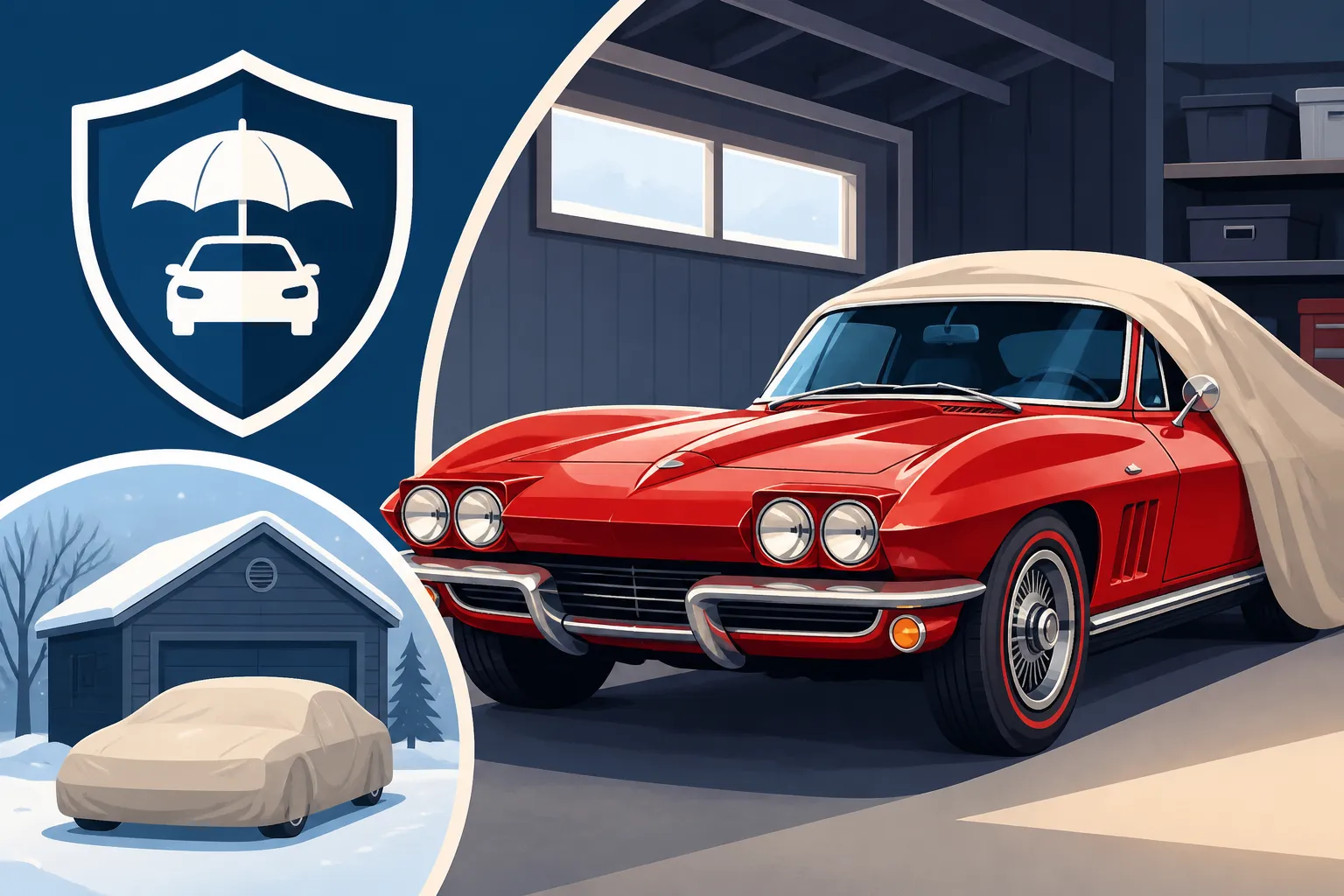
Laid-Up Coverage for Winter Storage
Putting your beloved classic car away for the winter can be a bit bittersweet. On one hand, you know it's safe from the harsh elements, but on the other, you're constantly worrying about what could happen to it while it’s tucked away. Many collectors wrestle with the dilemma of paying for full-blown insurance coverage when their prized possession isn't even touching the road for months, yet they dread the thought of it being unprotected. This guide is all about understanding "laid-up coverage," a smart, specialized insurance solution designed to offer peace of mind and protection for your classic car during its off-season hibernation.
Understanding Laid-Up Coverage for Your Classic Car
When the leaves start to fall and the salt trucks prepare for their first run, most classic car owners begin the annual ritual of winterizing their vehicles. This usually means parking them in a secure spot and not driving them until spring. It’s during this "laid-up" period that your insurance needs change dramatically. You're no longer concerned with collision coverage from daily driving, but rather the unique risks associated with long-term storage.
What Exactly Is Laid-Up Coverage?
Laid-up coverage, often referred to as "storage-only" or "seasonal storage" insurance, is a specific type of policy offered by specialty classic car insurers like Hagerty. It's designed for vehicles that are not being driven on public roads for an extended period, typically during colder months or while undergoing a restoration. Essentially, it strips away the active driving coverages like collision and liability, which are unnecessary when the car is stationary, and focuses purely on protecting it from non-driving perils.
Think of it this way: your classic isn't going to get into a fender bender if it's sitting safely in your garage from November to April. So why pay for that kind of protection? Laid-up coverage significantly reduces your premium by eliminating these active driving risks, replacing them with a comprehensive suite of protections tailored for stationary vehicles. It’s not just about saving money; it’s about having the right kind of coverage for the specific situation your car is in.
Why Your Classic Needs This Specific Type of Protection
You might be thinking, "Can't my regular classic car insurance just be put on hold, or will my homeowner's policy cover it?" This is a common misconception that can leave collectors vulnerable. Your standard auto policy is geared towards driving risks, and while some may offer limited comprehensive coverage, it’s rarely sufficient or cost-effective for a valuable classic in storage. Homeowner's insurance typically has very low limits for vehicles stored on the property, often only covering a fraction of your classic's true value.
Laid-up coverage addresses the unique risks of storage head-on. These risks include fire, theft, vandalism, natural disasters like floods, hurricanes, or heavy snow, falling objects (think a branch through the garage roof), and even less common issues like rodent damage or structural collapse of the storage building. Your classic isn't just a car; it's an investment, a piece of history, and often a labor of love. Losing it or seeing it damaged while it's simply sitting idle is a heartbreaking thought, and generic policies usually fall short in providing adequate financial protection. This specialized coverage ensures that your vehicle's agreed value is protected, giving you peace of mind throughout the long winter months. If you're wondering about the nuances of specific insurance needs, our article on Do You Need Special Insurance for a Classic Car might be helpful.
Key Benefits and What Laid-Up Policies Typically Cover
Opting for laid-up coverage isn't just about cutting costs; it's about smart, targeted protection for your classic car. It acknowledges that your vehicle's risks change dramatically when it's not being driven, allowing you to tailor your insurance to match its actual exposure.
Comprehensive Protection While Stored
The core of laid-up coverage is its robust comprehensive protection. This isn't the same as collision coverage; it's designed for incidents that aren't related to driving. Imagine a severe winter storm hitting your area in January. Your laid-up policy would typically cover damage from hail, heavy snow, or even a tree limb falling on your garage. If a pipe bursts and floods your garage, or if a fire breaks out, this coverage steps in.
Vandalism and theft are also major concerns for stored classics. Unfortunately, even a secure garage isn't always impregnable. Laid-up coverage often includes protection against these disheartening events, ensuring that if someone breaks in and damages your car or, heaven forbid, steals it, you're covered for its agreed value. Many policies even extend to cover damage from non-collision animal impacts, like a deer somehow getting into an open barn or rodents chewing through wiring – scenarios that would be an absolute nightmare for any collector. For a deeper dive into the specifics of this kind of protection, check out our guide on Comprehensive Coverage for Classic Cars Explained.
Significant Cost Savings During Off-Season
This is where laid-up coverage really shines for many collectors. By removing the need for collision coverage and certain liability components during the non-driving season, your premiums can see a substantial drop. Collision and liability are often the most expensive parts of a standard auto policy because they cover the most frequent and potentially costly driving-related claims. When your car is parked, these risks are virtually eliminated.
Consider a beautiful 1969 Chevrolet Camaro that's typically driven to shows and weekend cruises. During the winter, it's stored safely in a heated garage. Without laid-up coverage, you'd be paying for collision protection even though the car isn't moving. With laid-up coverage, you only pay for the risks it actually faces while stored. This can free up significant funds that you could put towards maintenance, upgrades, or even securing another classic project. This smart approach to insurance means you're not overpaying for coverage you don't need, making classic car ownership more financially manageable. We also have a great resource on How to Save on Classic Car Insurance that might give you more ideas.
Optional Coverages for Enhanced Peace of Mind
While the core laid-up policy focuses on comprehensive protection, specialty insurers understand that collectors often have unique needs. That's why many providers offer a range of endorsements and optional coverages that can be added to your laid-up policy, ensuring every aspect of your classic car hobby is protected.
For instance, if you're like many enthusiasts, you probably have a stash of original parts or rare accessories for your classic. Spare Parts Coverage Explained is a fantastic add-on that protects these valuable components from theft or damage while they're stored alongside your vehicle. Or perhaps you're using the winter months to tackle a major restoration project. In that case, Restoration Coverage for Classic Cars can be invaluable, covering the increasing value of your car as you invest time and money into its rebuild, even when it's not roadworthy. Some policies even allow for coverage of automobilia and other related collectibles you might have in your garage. These options really allow you to customize your protection, knowing that everything connected to your passion is safeguarded.
Eligibility and Requirements for Laid-Up Coverage
While laid-up coverage offers fantastic benefits, it's not a free-for-all. Specialty insurers have specific criteria to ensure the vehicles they cover meet certain risk profiles. Understanding these requirements is key to successfully obtaining this tailored protection.
Vehicle Storage Location and Security
One of the most critical factors for laid-up coverage is the vehicle's storage environment. Insurers need to know your classic is genuinely secure and protected from the elements. Typically, they require the vehicle to be stored in an enclosed, locked facility, such as a private garage, a dedicated storage unit, or a professional climate-controlled facility. A simple carport or an uncovered spot in your driveway usually won't cut it. This is because these less secure locations significantly increase the risk of theft, vandalism, and weather-related damage, which goes against the lower-risk profile laid-up coverage is designed for.
For example, if you live in a suburban area, storing your cherished 1967 Ford Mustang in your attached, locked garage is ideal. If you're doing a full body-off restoration and need more space, a secure, commercial storage facility in a place like Phoenix, Arizona, that specializes in vehicle storage would also typically meet the requirements. It’s all about minimizing the exposure to common perils while the car is stationary. This is directly tied to the Garage Storage Requirement for Classic Cars that many insurers emphasize. You might also want to look into Storage Options Specialty Insurers Accept for more detailed information on acceptable locations.
Usage Limitations During the Laid-Up Period
The fundamental premise of laid-up coverage is that the vehicle is not being driven. This is a strict requirement, and any violation could void your policy. While the car is covered under a laid-up policy, it is generally prohibited from being driven on public roads. This means no quick trips to the hardware store, no "just around the block" test drives, and no joyrides until you've transitioned back to active driving coverage.
However, there can be some minor exceptions. For instance, moving the car short distances on private property for maintenance, or loading it onto a trailer for transport to a show or a mechanic, might be permissible under certain conditions, but it's crucial to clarify these specifics with your insurer beforehand. The purpose is to protect a stationary asset, not one that is in transit or actively being operated. This ties directly into the general Pleasure-Use Requirement Explained for classic cars, but with an even stricter interpretation during the laid-up period.
Maintaining a Primary Driver Policy
Specialty classic car insurance, including laid-up coverage, often operates under the assumption that the classic vehicle is not your primary mode of transportation. Most insurers, including prominent ones like Grundy, require that you also own and insure a separate, modern vehicle for your daily transportation needs. This helps reinforce the "collector" status of your classic and confirms it's not being used for routine errands or commuting, which would negate the low-mileage and limited-use assumptions of specialty policies.
This requirement ensures that you have continuous, full coverage liability through a standard insurer for your everyday driving activities. It’s a way for specialty insurers to mitigate risk, as their policies are specifically tailored for leisure use, not primary transportation. So, if you're considering laid-up coverage for your classic, make sure your daily driver has its own active, comprehensive policy in place. This common requirement is a good thing to be aware of, as explained further in articles such as Do You Need a Separate Car for Classic Insurance.
How to Get Laid-Up Coverage and What to Consider
Securing laid-up coverage is a straightforward process, but it pays to be thorough and ask the right questions. Making an informed decision will ensure your cherished classic is perfectly protected throughout its winter slumber.
Comparing Providers and Policy Details
The first step is to seek out specialty classic car insurance providers. Companies like Hagerty, American Collectors Insurance, and J.C. Taylor are well-known for understanding the unique needs of collectors. Don't just go with the first quote you get; compare several to find the best fit for your specific vehicle and storage situation.
When comparing, always look beyond just the premium. Key elements to scrutinize include:
- Agreed Value Coverage: Does the policy offer agreed value? This is paramount for classics. It means that if your car is a total loss, the insurer pays out a pre-determined amount that you and they agreed upon at the start of the policy, rather than a depreciated "actual cash value." This protects your investment. You can learn more about this in Agreed Value Coverage Explained.
- Perils Covered: What exactly does the comprehensive portion cover? Ensure it includes fire, theft, vandalism, natural disasters, and any other specific risks you're concerned about in your storage location.
- Deductibles: What are your deductible options? A higher deductible often means a lower premium, but ensure it's an amount you're comfortable paying out of pocket if a claim arises.
- Customer Service and Claims Process: Research the insurer's reputation for customer service and how they handle claims. A smooth, empathetic claims process can make a world of difference during a stressful time.
It's a bit like choosing the right winter jacket for your car – you want one that fits perfectly and offers maximum protection. Our guide on How to Compare Classic Car Insurance Quotes offers excellent advice on this process.
Transitioning from Active to Laid-Up Coverage
Transitioning your coverage is typically quite simple. As your classic car season winds down, simply contact your specialty insurer. Let them know the exact date you plan to put your vehicle into storage and when you anticipate needing active driving coverage again. They will then adjust your policy, removing the driving-related coverages and applying the laid-up comprehensive protection.
It’s crucial to communicate clearly and confirm the effective dates of these changes. Mark your calendar for when you plan to reactivate driving coverage in the spring, and proactively reach out to your insurer a few weeks before that date. This ensures there's no lapse in the necessary liability and collision coverage once your car hits the road again. A seamless transition prevents any potential headaches or, worse, driving uninsured. Remember, under laid-up coverage, your car is not legally permitted to be driven on public roads.
Documenting Your Car's Condition Before Storage
Before you tuck your classic away for the winter, take some time to thoroughly document its current condition. This step is often overlooked but can be incredibly valuable if you ever need to file a claim. Take detailed photos and videos of your car from all angles, inside and out. Pay close attention to any existing minor dings, scratches, or unique features. Note the odometer reading, the condition of the tires, and any accessories or valuable items stored within the vehicle.
This documentation serves as proof of your car's condition before it went into storage. If, for instance, a fire occurs and damages your car, your pre-storage photos can help substantiate its value and the extent of the damage, making the claims process much smoother. It eliminates any ambiguity and ensures you're compensated fairly for any covered losses. Think of it as creating a "before" snapshot to compare with any "after" damage, providing irrefutable evidence for your claim.
Active vs. Laid-Up Classic Car Insurance
Here’s a quick overview contrasting the typical features of an active driving policy versus laid-up coverage for classic cars.
| Feature | Active Driving Classic Car Insurance | Laid-Up Classic Car Insurance |
|---|---|---|
| Primary Use | Occasional pleasure driving, shows, tours. | Long-term storage, restoration. |
| Core Coverages Included | Agreed Value, Liability, Collision, Comprehensive, UM/UIM, etc. | Agreed Value, Comprehensive (Fire, Theft, Vandalism, Natural Disasters) |
| Collision Coverage | Included | Excluded |
| Liability Coverage | Included (for driving on public roads) | Excluded (for driving on public roads) |
| Cost | Higher due to driving risks | Significantly lower due to reduced risks |
| Mileage Restrictions | Often 1,000-5,000 miles/year | Strictly 0 miles on public roads |
| Storage Requirement | Secure, enclosed storage preferred | Secure, enclosed storage required |
| Daily Driver Rule | Typically required | Typically required (to cover primary transport) |
| Flexibility | Designed for intermittent use | Designed for stationary protection |
Disclaimer
Please remember that this article provides general information about classic car laid-up coverage for winter storage. Insurance policies can vary significantly between providers and based on individual circumstances. It is essential to consult with a qualified insurance professional and carefully review the terms and conditions of any policy before making coverage decisions. This information should not be considered legal or financial advice.