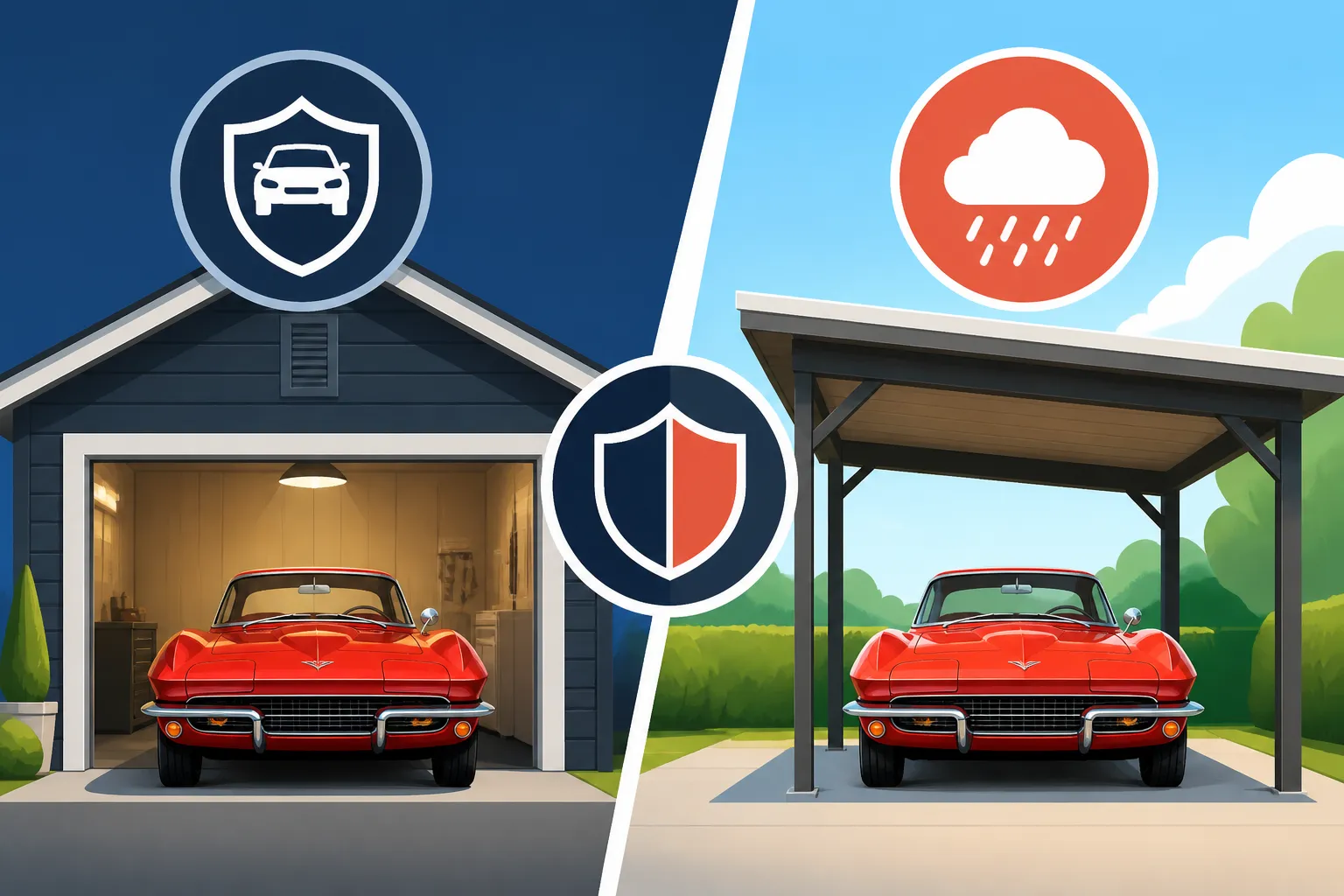
Storage Requirements: Garage vs Carport
You've finally got your dream classic car, or perhaps you're deep into the search for that perfect vintage ride, and one of the first practical questions that pops up is where to keep it safe. It's not just about protecting your prized possession from the elements or sticky fingers; where and how you store your classic is a massive factor when it comes to getting the right classic car insurance. This guide will dive deep into the differences between a garage and a carport when it comes to insurance eligibility, coverage, and rates, helping you understand exactly what your insurer expects.
The Core Dilemma: Why Storage Matters to Classic Car Insurance
When you're dealing with a classic, you're not just insuring a car; you're insuring a piece of history, an investment, and often, a cherished hobby. This is why classic car insurance isn't quite like regular auto insurance. Standard policies are built around the assumption of daily driving, parking in various public places, and a certain level of wear and tear. Classic policies, on the other hand, assume limited use, careful handling, and, crucially, secure storage. The place your classic calls home directly impacts the risk assessment for insurers.
Understanding Insurer Risk Assessment for Storage
Insurers evaluate risk based on how likely your vehicle is to be damaged, stolen, or vandalized. A car that sits out in the open or under a flimsy cover is inherently at a higher risk than one tucked away in a locked, climate-controlled space. This isn't just common sense; it's actuarial science at work. They look at factors like protection from weather, security against theft, and overall exposure. If your storage solution doesn't meet certain standards, it can significantly affect your eligibility for a specialized policy, or at the very least, drive up your premiums. It's all about minimizing the chances of something bad happening to your beautiful machine.
Let's be realistic, nobody wants to pay for damages that could have been prevented with proper storage. Insurers are in the business of calculating probabilities, and a secure storage environment dramatically lowers those probabilities for them. This is one of the key reasons why understanding Classic Car Insurance Requirements Explained is so critical right from the start.
The Impact of Storage on Premiums and Eligibility
It’s no secret that What Affects Classic Car Insurance Rates can be a complex puzzle, but storage is undeniably a top piece. A secure, enclosed garage almost always leads to lower premiums because the risk of theft, vandalism, and weather-related damage is significantly reduced. You're effectively telling the insurance company, "My car is protected, and I take its safety seriously." This commitment translates into tangible savings.
Conversely, less secure options, like parking on the street or even under a basic carport, can either lead to higher premiums or, in some cases, outright disqualification from specialized classic car insurance plans. Companies like Hagerty and Grundy, who specialize in collector vehicles, often have very clear guidelines on acceptable storage. They understand the value of these vehicles and expect you to protect them properly. Some policies might still offer coverage if you don't have a garage, but it will almost certainly be more expensive and might come with stricter stipulations. It’s a trade-off: convenience versus cost and comprehensive protection.
The Gold Standard: Why a Fully Enclosed Garage Reigns Supreme
For classic car owners, the fully enclosed garage is almost universally considered the ideal storage solution by insurance providers. It offers a level of protection that no other option can truly match, addressing multiple risk factors simultaneously. This isn't just about having a roof over your car; it's about comprehensive security and environmental control.
Superior Protection from the Elements
A garage, by its very nature, provides unparalleled protection from the elements. Think about it: a classic car parked in a garage is shielded from scorching summer sun that can fade paint and crack dashboards, from relentless rain and hail that can cause dents and rust, and from harsh winter snow and ice that can lead to structural damage and operational issues. The consistent environment helps preserve the vehicle's finish, interior, and mechanical components, preventing accelerated deterioration that exposure to the elements can cause.
This isn't just aesthetic protection; it's crucial for maintaining the car's value. Every classic car owner knows that originality and condition are paramount. A car consistently exposed to the whims of Mother Nature will degrade faster, losing its luster and, consequently, its appraised value over time. Insurance companies recognize this, and a garage minimizes these long-term risks, which is why the Garage Storage Requirement for Classic Cars is often explicitly mentioned in policy terms.
Enhanced Security Against Theft and Vandalism
Beyond weather, the security aspect of a garage is a huge draw for insurers. A locked garage acts as a formidable physical barrier against thieves and vandals. It hides your car from plain sight, reducing opportunistic crimes. Most garages also allow for additional security measures, like robust locks, alarm systems, and even surveillance cameras, further deterring unauthorized access. Imagine a thief trying to get to a car inside a locked garage versus one under a tarp in a driveway – the difference in effort and risk is enormous.
Specialty insurers like Hagerty often appreciate owners who go the extra mile with their garage security. They might even offer discounts for features like monitored alarm systems or reinforced garage doors. The logic is simple: a more secure environment means a lower chance of a theft claim, which benefits both you and the insurer. Protecting your classic from theft is not just about its monetary value; it's about safeguarding a cherished item that often holds immense sentimental worth. For guidance on truly secure options, you might look into various Storage Options Specialty Insurers Accept.
Environmental Control and Maintenance Benefits
A garage offers more than just basic protection; it provides an environment where you can actively care for your classic. Many garages can be temperature and humidity-controlled, which is vital for preserving delicate materials like leather, wood, and sensitive electronics, and for preventing rust. Think about those humid summer days or freezing winter nights – a controlled environment significantly slows down the aging process for an older vehicle.
Beyond environmental control, a garage provides a private, dedicated space for maintenance, detailing, and minor repairs. You can keep your tools, cleaning supplies, and spare parts organized and accessible. This means you’re more likely to keep your classic in top condition, addressing minor issues before they become major problems. This proactive maintenance routine, facilitated by a garage, also contributes to the vehicle's longevity and value, which, again, is a positive factor for insurance providers.
The Carport Conundrum: Understanding Its Limitations for Classic Cars
While a carport might seem like a decent compromise, offering some protection from overhead elements, it generally falls short of the ideal storage solution for classic cars in the eyes of most specialized insurers. It presents several inherent limitations that elevate the risk profile of the vehicle.
Inadequate Protection from Side Elements and Theft
A carport, by definition, is typically open on at least two sides, sometimes more. This means your classic car is still significantly exposed to side-driven rain, wind-blown debris, and even low-angle sun exposure throughout the day. While it might prevent direct hail damage from above, it offers minimal defense against horizontal weather patterns. More critically, a carport offers virtually no security against theft or vandalism compared to a locked garage. The vehicle is still in plain sight, easily accessible, and can be quickly entered or removed without significant barriers.
Imagine living in an area prone to strong winds or even just heavy downpours. A carport might keep the direct rain off, but it won't stop moisture from blowing in, potentially leading to rust in hidden crevices or dampness in the interior. From an insurer's perspective, the risk of theft and weather damage under a carport remains substantially higher than in an enclosed garage. This increased risk translates directly into higher premiums or stricter policy terms, if coverage is even offered at all. The distinction is clear, and it’s a major factor in How Storage Affects Classic Car Eligibility.
Increased Scrutiny from Insurance Providers
Because of these inherent vulnerabilities, classic car insurers often view carports with a much higher degree of scrutiny. Some specialty carriers might flat-out deny coverage for a classic stored primarily in a carport, especially if it's a high-value vehicle or located in an area with elevated crime rates. Others might offer coverage but with significantly higher deductibles, more restrictive mileage limits, or a higher premium.
They understand that a classic car isn't just a vehicle; it's a collectible. Leaving it exposed, even partially, undermines the core principle of responsible classic car ownership that these policies are designed to support. This is where understanding the subtle differences between Classic Car Insurance vs Regular Insurance: What's Required becomes crucial. Regular insurance might be fine with a carport, but classic insurance demands more.
When a Carport Might Be Considered (and the Caveats)
There are rare instances where a carport might be acceptable to an insurer, but usually with significant caveats. This often applies to classics with lower appraised values, or if the carport is unusually robust – perhaps fully enclosed on three sides, gated, or located within a highly secure, monitored property. Even then, you can expect an insurer to ask a lot more questions and probably still charge more.
Some insurance companies may tolerate a carport if it's a temporary solution or if the car is also stored in a climate-controlled facility for the majority of the year, only occasionally residing in the carport for short periods. But for primary, year-round storage, a carport is generally a red flag for specialized classic car insurers. If you're wondering Can You Insure a Classic Car Parked Outside, the answer is often "yes, but with significant drawbacks."
Here's a quick comparison of how insurers typically view each option:
| Feature | Enclosed Garage (Ideal) | Carport (Less Ideal) |
|---|---|---|
| Weather Protection | Excellent (all elements) | Partial (overhead only, exposed to wind/rain/sun) |
| Security (Theft/Vandalism) | High (locked, out of sight, harder to access) | Low (visible, easily accessible) |
| Environmental Control | Possible (temperature, humidity) | None (fully exposed to ambient conditions) |
| Insurance Eligibility | Generally preferred, few issues | Possible limitations, higher scrutiny, potential denial |
| Premium Impact | Lower premiums, potential discounts | Higher premiums, no discounts, higher deductibles |
| Maintenance Access | Dedicated, private, secure workshop space | Open, exposed, limited privacy |
| Long-Term Value Preservation | Optimal, protects against degradation | Suboptimal, faster wear and tear, value depreciation |
Navigating Storage Challenges: What if a Garage Isn't an Option?
It's a common predicament: you've found the perfect classic, but you don't have access to a traditional, fully enclosed garage. Don't despair! While it presents challenges, there are still paths to getting proper classic car insurance, though they might require a bit more legwork and potentially a higher investment.
Exploring Alternative Secure Storage Solutions
If a personal garage isn't in the cards, the next best thing is often a dedicated, professional storage facility. These can vary widely, but the best ones offer many of the benefits of a private garage, often with enhanced security features. Look for:
- Climate-Controlled Storage Units: These facilities maintain consistent temperature and humidity, which is absolutely critical for preserving classic cars, especially in regions with extreme weather fluctuations. They prevent rust, protect interiors, and maintain the integrity of delicate components. Many even offer individual units where you can store your car, tools, and parts.
- Secure, Monitored Facilities: The gold standard often includes 24/7 surveillance, gated access, security personnel, and robust alarm systems. Some facilities are specifically designed for collector vehicles, offering specialized care and amenities.
- Dehumidified Bubbles/Capsules: For an individual solution, a car bubble or capsule can provide a stable, controlled micro-environment around your vehicle, protecting it from dust, moisture, and pests, even if it's in a less-than-ideal space like a barn or a shared warehouse.
When considering these alternatives, remember to discuss them openly with your insurance provider. Companies like Hagerty are often familiar with these types of arrangements and can guide you on what specific features they require for coverage. Documenting the security measures of any alternative storage is key. Getting the Classic Car Insurance Eligibility Requirements nailed down for your specific situation is critical.
Working with Your Insurer on Less-Than-Ideal Storage
Even if your storage isn't perfect, communication is paramount. Don't try to hide your storage situation from your insurer. Be upfront and honest about where and how your classic car will be kept. They might be able to offer solutions or suggest specific upgrades that would make your current setup more acceptable.
For instance, if you only have a carport, an insurer might suggest installing a high-quality, motion-activated security camera system, a robust steering wheel lock, or even a GPS tracking device. These measures, while not replacing a garage, can demonstrate your commitment to security and might help mitigate some of the increased risk in their eyes. Always ask about How Garage Type Affects Your Premium to understand the financial implications of different choices.
It's also worth exploring if your vehicle truly qualifies for a classic policy. If your car is a borderline classic and you plan on using it more frequently, or if your storage options are limited, you might need to consider Classic Car Insurance for a Daily Driver or even a standard policy with specific endorsements for agreed value coverage, though this often comes at a higher cost.
Documenting Your Storage Environment
Regardless of your storage choice, thorough documentation is non-negotiable. Take clear, well-lit photographs of your storage location from multiple angles. Document any security features you have in place—locks, alarms, cameras, fencing, even the strength of your garage door. If you're using a professional facility, get documentation from them detailing their security protocols, climate control systems, and monitoring services.
This documentation serves two purposes:
- For your insurer: It provides tangible proof of your efforts to protect your classic, which can positively influence their risk assessment and your premium.
- For your peace of mind: In the unfortunate event of a claim, having robust evidence of your storage conditions can expedite the process and ensure you receive a fair payout based on your agreed value coverage.
Ultimately, while an enclosed garage is the preferred solution for classic car insurance, it's not the only path. By understanding insurer expectations, exploring alternative secure storage, openly communicating with your provider, and meticulously documenting your efforts, you can find a suitable insurance solution that protects your cherished classic. You might find some useful tips on How to Get the Cheapest Classic Car Insurance by optimizing your storage solution.
Disclaimer
Please remember that insurance policies and requirements can vary significantly by state, insurer, and the specific vehicle being covered. This guide provides general information and recommendations. Always consult directly with a qualified insurance professional to discuss your individual circumstances and ensure you have appropriate coverage for your classic car.