How to Decide on Optional Coverages
Deciding on the right insurance for your beloved classic car can feel like navigating a maze blindfolded. You've got your pride and joy, maybe a meticulously restored muscle car, a sleek vintage roadster, or even a quirky imported gem, and you know a standard auto policy just won't cut it. But then you start looking at specialty classic car insurance, and suddenly you're drowning in a sea of "optional coverages," wondering which ones you actually need, which are overkill, and which could save your bacon when the unexpected happens. It's a common frustration for collectors, new and seasoned alike, because you want to protect your investment without overpaying. This guide is here to demystify those crucial optional coverages, helping you understand their value and confidently choose the perfect protection for your classic.
Understanding the Core: Beyond Basic Liability
When you first think about insuring any vehicle, the immediate thought often goes to basic liability – what's legally required to drive on the road. But for a classic car, this minimalist approach is akin to bringing a butter knife to a sword fight. Your classic isn't just a mode of transport; it's a piece of history, an investment, and often, a part of your soul. Relying solely on standard auto insurance liability or even its other typical offerings can leave you severely exposed.
The Foundation: Why Standard Coverage Isn't Enough for a Classic
The biggest pitfall with regular car insurance for a classic is how it determines value. Most standard policies operate on an "Actual Cash Value" (ACV) basis. This means if your car is totaled, the payout will be its market value at the time of the loss, minus depreciation. For a daily driver, that might be acceptable, but for a classic car, depreciation works differently, often appreciating in value rather than losing it. A beautiful 1969 Camaro, for instance, isn't going to be valued like a run-of-the-mill used sedan from the same year. If you have $20,000 invested in a restoration and a standard policy only offers you $5,000 for its ACV, you're left holding the bag for a massive loss.
This is precisely why specialty classic car insurance exists. It moves beyond the limitations of ACV and offers valuation methods that truly understand the unique nature of these vehicles. Trying to fit a square peg (your classic) into a round hole (a standard policy) just doesn't work when it comes to safeguarding your passion and financial investment. It's a critical distinction to grasp right from the start, setting the stage for why those "optional" coverages are actually indispensable. To learn more about how specialty policies are different, you might find our article on Classic Car Insurance vs Regular Insurance: What's Required helpful.
The Role of Comprehensive and Collision in Classic Policies
Even with standard insurance, you're familiar with comprehensive and collision coverage. Collision covers damage to your vehicle from an accident, regardless of fault. Comprehensive covers damage from non-collision events like theft, fire, vandalism, hail, or hitting an animal. For a classic, these are still vital, but their value is supercharged when paired with the right valuation method – typically "Agreed Value."
Unlike a standard policy where comprehensive or collision payout might be based on ACV, a classic policy with an Agreed Value clause ensures that if your 1957 Chevrolet Bel Air is stolen or wrecked, the insurance company pays out the amount you and they agreed upon at the start of the policy, no questions asked, no depreciation applied (assuming your valuation was accurate and up-to-date). This makes a world of difference. Imagine a scenario where a tree falls on your perfectly restored Bel Air during a storm. With a standard policy, you might argue endlessly about its true worth. With an agreed value classic policy, if you and the insurer, like Hagerty, set the value at $75,000, that's the check you get. This protection extends to scenarios like vandalism at a car show or an unfortunate fender bender on a Sunday drive. Understanding Agreed Value Coverage Explained is crucial for any classic car owner.
Essential Optional Coverages Every Collector Should Consider
Once you move beyond the bare minimum of liability, a whole new world of protection opens up, specifically designed for the unique needs of classic car ownership. These aren't just "nice-to-haves"; many of them are critical for truly safeguarding your investment and your peace of mind.
Protecting Your Investment: Agreed Value and Inflation Guard
Let's dive deeper into the cornerstone of classic car insurance: Agreed Value. This isn't just an "optional" coverage; for any collector worth their salt, it's non-negotiable. With Agreed Value coverage, you and your insurer agree on the true market value of your classic vehicle at the beginning of the policy term. If a total loss occurs (theft, irreparable damage), the insurance company pays you that exact agreed-upon amount, without any deduction for depreciation or market fluctuations. This means no haggling, no unexpected lowball offers, and a clear understanding of your payout should the worst happen. For example, if you own a meticulously restored 1965 Corvette valued at $120,000, and you have an Agreed Value policy set for that amount, that's what you'll receive if it's totaled. This gives you the financial security to replace your lost classic or recover your investment. Learn more about How Agreed Value Is Determined to ensure you're setting your value correctly.
Complementing Agreed Value is "Inflation Guard" coverage, which is a brilliant addition many collectors overlook. The market for classic cars can be incredibly dynamic, with values for certain models increasing significantly over time. Inflation Guard automatically increases your car's Agreed Value by a small percentage (e.g., 2-6%) each year at renewal, typically without you needing a new appraisal. This helps prevent your policy from falling behind the rising market value of your classic. Imagine your 1970 Dodge Challenger, valued at $80,000 a few years ago, is now worth $95,000 due to market trends. Without Inflation Guard, you'd only be covered for the original $80,000. With it, your coverage value could have incrementally kept pace, offering greater protection. This is especially valuable for long-term collectors. Our article on Inflation Guard Coverage Explained offers a deeper dive into this vital protection.
Beyond the Car: Spare Parts and Automobilia Coverage
Collectors know the value isn't just in the car itself. Often, an equally significant investment lies in the spare parts and related memorabilia. Think about it: finding original, period-correct parts for a rare classic can be incredibly difficult and expensive.
"Spare Parts Coverage" is designed specifically for this. It protects your stash of valuable spare parts, tools, and accessories that are specifically for your classic car, whether they're still in your garage, at a restorer's shop, or even in transit to a swap meet. This coverage often has a specified limit (e.g., $5,000, $10,000, or more, depending on your needs). Let's say you've got a new-old-stock (NOS) carburetor for your Datsun 240Z, a set of original wheels, or a rare engine block, all stored carefully. If your garage has a fire, these items could be damaged or destroyed. Without this specific coverage, your standard homeowner's policy might not cover them adequately, if at all, especially given their specialized nature and value. Spare Parts Coverage Explained goes into more detail about how this works.
Similarly, "Automobilia and Memorabilia Coverage" extends protection to your collection of car-related artifacts. This could include vintage dealership signs, scale models, racing posters, original manuals, or even a signed helmet from a legendary driver. These items, while not part of the car, are an integral part of the collecting hobby and can hold significant monetary and sentimental value. Policies like those offered by Hagerty often provide options for covering these non-vehicle assets, acknowledging that the passion for classics goes beyond just the car in the garage. If your garage or home collection were to suffer a loss, this coverage ensures those cherished pieces of automotive history aren't overlooked.
Specialized Protections for Unique Classic Car Needs
The journey of classic car ownership isn't always about cruising down a scenic route. Sometimes it involves bringing a project back to life, transporting it to a new home, or showcasing it at events. For these scenarios, generic insurance just won't cut it, and specialized optional coverages step in to provide peace of mind.
Coverage During Restoration and Transit
Bringing a "barn find" back to its former glory or undertaking a frame-off restoration is a monumental task, often spanning years and involving significant investment. Most standard policies, if they even cover a non-running vehicle, certainly won't appreciate its increasing value as components are repaired, rebuilt, and reinstalled. This is where "Restoration Coverage for Classic Cars" becomes an absolute lifeline. This unique coverage option typically allows you to insure your classic even when it's disassembled or undergoing extensive work. Critically, it allows you to periodically increase its Agreed Value as you invest more money, time, and parts into the restoration process. So, if you start with a $15,000 project car and sink another $50,000 into it over two years, your policy can reflect that escalating value, protecting your growing investment every step of the way. Without it, a workshop fire or theft could wipe out years of effort and tens of thousands of dollars with minimal reimbursement.
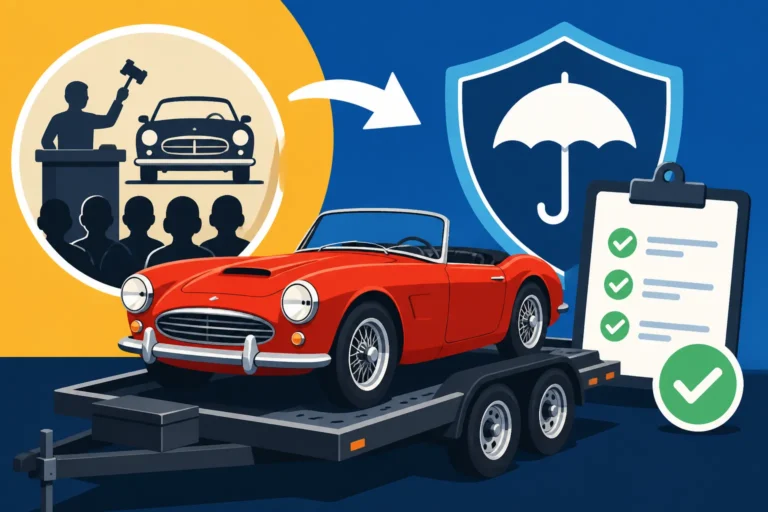
Then there's the inevitable movement of your classic. Whether you're trailering your project car to a specialist shop across the state, moving a newly purchased vintage vehicle home, or sending your pride and joy to an auction, "Transit Coverage" is essential. This often comes as part of your comprehensive policy but can have specific clauses regarding open vs. enclosed transport, cross-country distances, and professional carriers. It ensures that if something happens while your car is being moved – say, it shifts off a trailer, or a mishap occurs during loading – you're covered. Think about the peace of mind knowing your valuable 1932 Ford hot rod is protected when it's on a flatbed heading to a major car show in another state. Many specialty insurers understand that classic cars require careful, often flat-bed, transportation, and their policies are designed accordingly. You can delve into more specifics on Vehicle Under Construction Coverage to understand how to protect your project.
Roadside Assistance, Trip Interruption, and Touring Coverage
It's every classic car owner's nightmare: cruising along, enjoying the rumble of the engine, and then… a sputter, a cough, and silence. Unlike modern cars equipped with sophisticated diagnostics, an older vehicle can leave you stranded in unfamiliar territory with limited options. That's why specialized "Roadside Assistance Coverage for Classic Cars" is not just a convenience, it's a necessity. This isn't your average roadside service. It specifically arranges for flatbed towing, which is critical for classics to prevent damage to delicate suspensions, drivetrains, and bodywork. Many policies also include basic services like battery jumps, tire changes, or fluid delivery, but the flatbed towing is the real MVP here. Imagine breaking down on a remote country road; knowing a specialized service is on its way to handle your classic with care is invaluable.
For those adventurous souls who love taking their classics on long-distance tours or rallies, "Trip Interruption Coverage for Classic Cars" can be a lifesaver. If your classic breaks down far from home and requires an overnight stay for repairs, this coverage can help reimburse you for unexpected expenses like lodging, rental car fees, and even meals while you wait for your vehicle to be fixed. It takes the sting out of an unforeseen mechanical hiccup and lets you focus on getting your car back on the road.
Finally, if you're a regular on the car show circuit or participate in club events, parades, or organized tours, "Club and Exhibition Use Coverage" is worth considering. While standard comprehensive coverage might offer basic protection, this specialized option can provide enhanced coverage for your vehicle while it's displayed at an event, being transported to or from a show, or participating in a non-competitive rally. This additional layer of protection acknowledges the unique risks associated with public display and collective travel, offering broader coverage against potential damage, theft, or even unique liabilities that might arise in such settings. For detailed information on specific usage allowances, our guide on Pleasure-Use Requirement Explained can provide context.
Making Smart Choices: Factors to Consider When Selecting Optional Coverages
With so many optional coverages available, it’s easy to feel overwhelmed. The key is to approach this systematically, considering your specific classic, how you use it, and your budget. This isn’t about checking every box, but about making informed decisions that give you the best protection for your unique situation.
Assessing Your Car's Value and Usage
The very first step in choosing optional coverages is to have a crystal-clear understanding of your classic car's value and how you intend to use it. Is it a high-value, concourse-level show car that rarely leaves the garage, or is it a fun, reliable weekend cruiser?
- Vehicle Value: For high-value classics, those rare beauties that have seen significant restoration or are appreciating rapidly, coverages like Agreed Value and Inflation Guard are absolutely essential. Without them, you're taking a monumental risk. If your car is more of a driver-quality collectible with moderate value, Agreed Value is still paramount, but the limits for things like spare parts or automobilia might be lower. An appraisal can be incredibly helpful here; our article on How Classic Car Appraisals Work for Insurance can guide you through the process.
- Modifications and Rarity: Heavily modified cars, like hot rods or restomods, or extremely rare vehicles, often require specific valuation and coverage considerations. Standard policies might not understand the bespoke nature of these vehicles. Specialty insurers like Hagerty are far better equipped to insure these unique builds, often offering endorsements for custom parts and labor.
- Usage Patterns: How often do you drive it? Where do you store it? If your classic sees limited "pleasure use" – parades, car shows, Sunday drives – you'll likely qualify for lower premiums and specific mileage tiers. However, if you plan on longer road trips, robust roadside assistance and trip interruption coverage become far more valuable. Conversely, if your car is primarily a garage queen, laid-up coverage or comprehensive-only might be sufficient, but you'd miss out on driving protection. Understanding How Mileage Tiers Work for Classic Cars is essential for tailoring your policy to your driving habits.
Budgeting and Prioritizing Your Coverage
Let's be realistic: while we'd all love to have every possible coverage option, budgets are a factor. The goal is to maximize protection where it matters most, without breaking the bank on coverages you truly don't need.
- Prioritize Agreed Value: This cannot be stressed enough. Agreed Value coverage should always be at the top of your list. It's the core difference between specialty and standard insurance and protects your principal investment. If you have to choose between a lower Agreed Value or skipping a less critical add-on, always go for the full Agreed Value.
- Assess Risks: Think about the most probable risks for your specific situation. Do you live in an area prone to hail? Comprehensive coverage with strong limits for weather damage would be high priority. Is your garage in an area with higher theft rates? Adequate Agreed Value and possibly additional anti-theft discounts could be crucial. Are you restoring a car with a stash of valuable original parts? Spare parts coverage is a must.
- Review Annually: Your classic car's journey isn't static. Its value might increase, you might add new parts, or your usage might change. It's critical to review your policy annually with your agent or insurer. This ensures your Agreed Value remains accurate and that your optional coverages still align with your needs. Don't be afraid to ask questions like, "What to Look for in a Classic Car Policy" or "How to Choose Classic Car Insurance" during your review. By taking a proactive approach, you can maintain comprehensive protection and potentially discover Classic Car Insurance Discounts You Might Miss.
When considering optional coverages, think of it as building a custom suit for your car. You wouldn't buy a one-size-fits-all off the rack for a bespoke event, and you shouldn't do the same for your prized possession.
| Optional Coverage | What It Covers | Who Needs It Most | Why It Matters |
|---|---|---|---|
| Agreed Value | Payout of a pre-determined, agreed amount if your car is a total loss. | All classic car owners. | Guarantees full value, no depreciation debates. |
| Inflation Guard | Automatically increases Agreed Value over time to account for market appreciation. | Owners of appreciating classics, long-term collectors. | Prevents underinsurance as market values rise. |
| Spare Parts Coverage | Covers loss or damage to your collection of spare parts specifically for your classic. | Restorers, collectors with valuable NOS parts or a significant parts inventory. | Protects irreplaceable or expensive components not attached to the car. |
| Automobilia/Memorabilia | Protects car-related collectibles (signs, models, manuals) in your possession. | Collectors with a passion for automotive history beyond the vehicle itself. | Safeguards valuable non-vehicle assets. |
| Restoration Coverage | Covers the car's increasing value as it undergoes restoration, even when disassembled. | Owners of project cars, vehicles undergoing extensive repair or customization. | Ensures your growing investment is protected throughout the restoration process. |
| Specialized Roadside Assistance | Flatbed towing and roadside services tailored for classic vehicles. | All classic car owners, especially those who drive their cars frequently or on tours. | Prevents further damage during towing; provides reliable help when stranded. |
| Trip Interruption | Reimburses for expenses (lodging, rental car) if your classic breaks down away from home. | Owners who take their classics on long road trips, rallies, or tours. | Reduces financial stress and inconvenience during unexpected breakdowns far from home. |
| Club/Exhibition Use | Enhanced coverage for your classic at car shows, parades, and club events. | Owners who regularly display their cars or participate in organized events. | Addresses unique risks associated with public display and group travel. |
Disclaimer
This article is for general informational purposes only and does not constitute professional advice. Laws, prices and regulations vary by location and change over time. Consult a qualified professional for guidance on your specific situation.