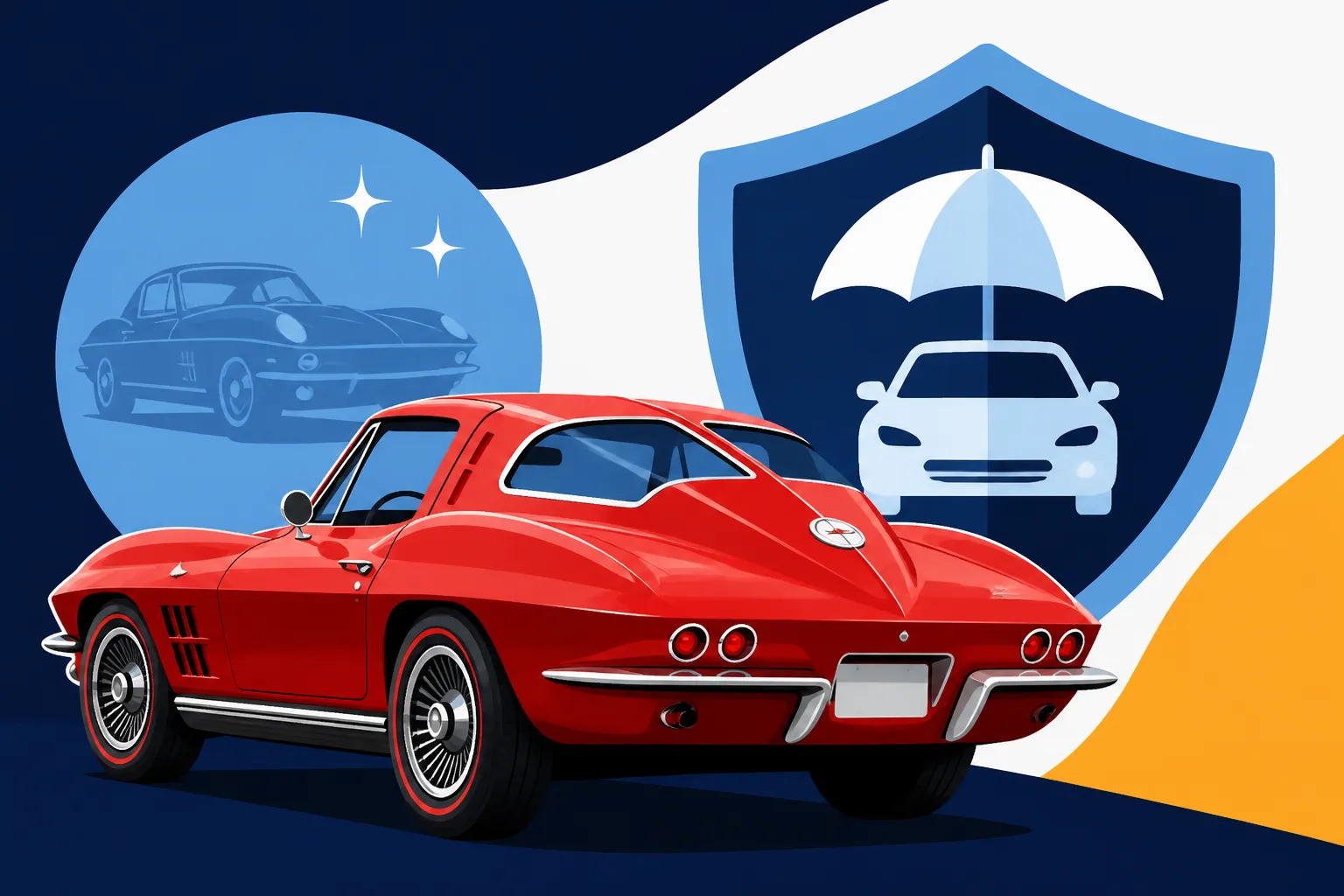
Cost to Insure a 1963 Split-Window Corvette
For anyone lucky enough to own a true automotive legend like the 1963 Split-Window Corvette, the joy is immeasurable. But along with that immense pride comes the very real and often confusing challenge of protecting such a valuable, irreplaceable piece of history. This guide is dedicated to breaking down the intricacies of insuring your iconic 1963 Split-Window Corvette, helping you understand the costs and critical factors involved.
Understanding Why a 1963 Split-Window Corvette Needs Specialty Insurance
When you own a car that's more than just a mode of transport—a car that embodies a significant piece of automotive design and engineering history, like the '63 Split-Window Corvette—standard car insurance simply won't cut it. Your average auto policy is designed for depreciation, not appreciation, and that's a fundamental mismatch for a collectible. Trying to insure a vintage masterpiece on a policy meant for a modern daily driver can lead to serious headaches and financial disappointment if something goes wrong.
The Critical Role of Agreed Value
The single most important difference when insuring a 1963 Split-Window Corvette, or any high-value classic, is the concept of "agreed value." Unlike regular policies that pay out "actual cash value" (which accounts for depreciation) or "stated value" (which can cap payouts at market value or less), agreed value means you and the insurer agree on your car's value before the policy even starts. This figure is then guaranteed, so if your Split-Window is ever a total loss, you receive that agreed-upon amount, no questions asked. Given that a well-maintained 1963 Split-Window Corvette can easily command six figures, even upwards of $300,000 or more for pristine or rare examples, this guarantee is absolutely non-negotiable. Without it, you could be left significantly short-changed after a devastating incident. You can dive deeper into Agreed Value Coverage Explained to truly grasp its importance.
Usage Limitations and Their Impact
Specialty classic car insurance policies are designed for vehicles that aren't subjected to the wear and tear of daily commuting or regular errands. Insurers understand that a 1963 Split-Window is a cherished collectible, used sparingly for pleasure drives, car shows, club events, or occasional tours. This limited-use profile is a key reason why classic car insurance is often more affordable than standard policies, despite the higher vehicle value. The reduced exposure to common road hazards, coupled with the careful nature of most classic owners, translates to lower risk for the insurer. This is a primary differentiator when considering Classic Car Insurance vs Regular Insurance: What's Required.
Secure Storage Requirements
Most specialty insurers, like Hagerty, will have specific requirements regarding where your prized Split-Window is stored. Typically, this means an enclosed, locked garage or other secure facility. This isn't just a suggestion; it's often a policy prerequisite. The logic is simple: a classic car stored in a secure environment is far less likely to be stolen, vandalized, or damaged by weather than one parked on the street or in an open carport. This requirement significantly reduces risk for the insurer and helps keep your premiums in check. Understanding the Garage Storage Requirement for Classic Cars is vital before seeking a quote.
Key Factors Influencing Your Premium for a 1963 Split-Window Corvette
Determining the exact cost to insure a rare and valuable car like a 1963 Split-Window Corvette isn't a one-size-fits-all calculation. Several factors come into play, each contributing to your overall premium. Let's break down what truly moves the needle.
Vehicle Value, Condition, and Rarity
The inherent value of your specific 1963 Split-Window Corvette is, without a doubt, the most significant factor. But "value" isn't a static number; it's a dynamic assessment based on several nuances.
Pristine Originality vs. Restored Beauty
Is your Split-Window a perfectly preserved, numbers-matching original, or has it undergone a meticulous frame-off restoration? Both can be incredibly valuable, but the premium might differ. An original car with documented provenance, factory options like fuel injection, or a rare color combination could command a higher agreed value. Similarly, a professionally restored car, especially one that has won awards, will also be at the top end of the valuation scale. Insurers look at the quality of the restoration, the parts used (original versus reproduction), and the car's overall presentation. For example, a Z06 package Split-Window, of which only 199 were built in 1963, will naturally have a much higher agreed value – and thus a higher premium – than a standard 327 V8 model, even if both are in immaculate condition. This is where understanding How to Value Your Classic Car for Insurance becomes crucial.
Provenance and Unique History
Does your '63 Split-Window have a compelling story? Was it owned by a celebrity? Did it participate in a significant race or a famous show? Documented history, especially if it adds to the car's mystique or cultural significance, can further elevate its value. Insurers and appraisers consider these aspects when determining the agreed value, as they contribute to the car's collectibility and market desirability. A car with a solid paper trail, detailing its ownership history and any notable events, is often seen as more valuable and less risky to insure than one with gaps in its records.
Driver Profile and Experience
Believe it or not, you are a significant part of the equation when it comes to insuring your classic. Insurers are looking for responsible owners who will treat their cherished vehicle with the respect it deserves.
Your Driving Record
A clean driving record is paramount. If you have a history of accidents, speeding tickets, or other moving violations on your regular vehicles, it will likely impact your classic car insurance rates. Insurers see this as an indicator of risk, even if your classic isn't driven frequently. Conversely, a long history of safe driving can work in your favor, potentially leading to lower premiums.
Age and Experience as a Collector
Many classic car insurers prefer to cover drivers who are older and have more experience, not just with driving, but specifically with owning and maintaining classic vehicles. Typically, drivers over 25 or even 30 years old with a proven track record of responsibility tend to qualify for better rates. This isn't just ageism; it reflects statistical data that older, more experienced drivers are generally less prone to accidents. Some specialty insurers might even have Minimum Age for Classic Car Insurance Drivers requirements.
Usage, Mileage, and Storage
How and where you use and store your 1963 Split-Window Corvette profoundly impacts your insurance cost.
Pleasure Use is Key
As mentioned, classic car policies are built around the understanding that these vehicles are not daily drivers. They are for leisure, parades, car shows, and the occasional Sunday cruise. If you intend to use your Split-Window as a primary vehicle, you'll find it difficult to get a specialty policy, or the rates will be significantly higher, blurring the line with regular insurance. This "pleasure use" requirement is a cornerstone of the classic car insurance model.
Mileage Tiers
Most specialty insurers offer different mileage tiers. You might choose 1,000, 2,500, or even 5,000 annual miles, with premiums adjusted accordingly. Since a 1963 Split-Window Corvette isn't typically driven thousands of miles a year, opting for a lower mileage tier can help reduce your premium. Be honest about your expected usage, as exceeding your declared mileage could impact a claim. Understanding Classic Car Insurance Mileage Limits by State is also good practice, as rules can vary.
Secure Storage Location
We touched on this, but it's worth reiterating. Your '63 Split-Window needs to be garaged securely. This generally means an enclosed, locked structure, not a carport or driveway. Insurers factor in the safety and security of your storage location, recognizing that a vehicle in a climate-controlled, alarm-equipped garage is at a much lower risk of theft, vandalism, or environmental damage. Your geographic location also plays a role; insuring a classic in a high-theft urban area might cost more than in a rural, low-crime region.
Coverage Choices and Optional Add-ons
While agreed value is fundamental, the specific types and levels of coverage you select will also shape your premium.
Beyond Agreed Value: Comprehensive and Collision
For a car like the Split-Window, full coverage is almost always recommended. This includes:
- Agreed Value Comprehensive: Covers non-driving incidents like theft, vandalism, fire, natural disasters (hail, floods), and falling objects. Given the rarity and value of your Corvette, this is indispensable.
- Agreed Value Collision: Covers damage to your vehicle resulting from an accident with another vehicle or object, regardless of fault. Even a minor fender bender could require specialized bodywork and parts, making this coverage critical. For more on this, check out Do You Need Full Coverage on a Classic Car.
Essential Add-ons
Consider these additional coverages to ensure complete protection for your investment:
- Spare Parts Coverage: If you have a stash of original or hard-to-find spare parts for your Split-Window, this covers them against theft or damage. Given the scarcity and cost of C2 Corvette parts, this can be incredibly valuable.
- Roadside Assistance and Towing: Standard roadside assistance might not be equipped for a classic car. Specialty policies often offer flatbed towing, which is essential to prevent further damage to a vintage vehicle.
- Trip Interruption: If your Split-Window breaks down far from home during a tour or event, this can cover lodging, food, and alternative transportation.
- Inflation Guard: This endorsement automatically increases your vehicle's agreed value by a small percentage (e.g., 2-6%) each year to account for market appreciation, without requiring a new appraisal every time. For a car like the Split-Window that often appreciates, this can be very beneficial. Learn more about Inflation Guard Coverage Explained.
Estimated Cost Range for a 1963 Split-Window Corvette
Pinpointing an exact annual premium for a 1963 Split-Window Corvette is challenging without a specific quote, as rates are highly individualized. However, we can provide a realistic range based on current market trends and the factors we've discussed.
General Premium Expectations
For a 1963 Split-Window Corvette with an agreed value ranging from $150,000 to $300,000 (which is a common range for a well-maintained to pristine example), a typical annual premium with a reputable specialty insurer like Hagerty or Grundy might fall between $1,000 and $2,500 per year.
Let's look at how that breaks down:
- Lower End ($1,000 – $1,500): This might apply to a slightly lower-value Split-Window (e.g., agreed value closer to $150,000), owned by a very experienced collector with a spotless driving record, living in a low-risk area, opting for a lower mileage tier (e.g., 1,000 miles per year), and possibly a higher deductible. They would still have excellent agreed value coverage, but potentially fewer add-ons.
- Mid-Range ($1,500 – $2,000): This is where most well-insured Split-Windows with agreed values around $200,000-$250,000 will land. This would typically include comprehensive coverage, collision coverage, roadside assistance, and perhaps some spare parts coverage, with a moderate deductible and mileage tier (e.g., 2,500 miles).
- Higher End ($2,000 – $2,500+): For a concours-quality Split-Window, a rare Z06, or one with an agreed value approaching or exceeding $300,000. These policies would likely include all available add-ons, a lower deductible, and possibly higher mileage tiers. This could also apply to owners in higher-risk metropolitan areas or those with a shorter history of classic car ownership.
Keep in mind that these are estimates. Factors like your specific state (e.g., Classic Car Insurance Cost in California will differ from Classic Car Insurance Cost in Ohio), the exact agreed value, the chosen deductible, and any discounts you qualify for will cause fluctuations. For a comprehensive overview, explore Classic Car Insurance Cost: Complete Breakdown.
Factors That Can Push Your Premium Higher
- Extremely High Agreed Value: If your Split-Window is a particularly rare or significant example (e.g., a racing provenance, extremely low mileage Z06) that appraises for $400,000 or more, your premium will definitely be on the higher end of the spectrum, potentially exceeding $2,500 annually.
- High-Risk Location: Living in areas with high rates of auto theft, vandalism, or severe weather events can increase costs.
- Lower Deductible: Choosing a $0 or very low deductible will result in a higher annual premium.
- More Extensive Coverage: Adding every possible endorsement, while providing peace of mind, will add to the overall cost.
- Younger Driver: If you are a relatively younger collector (though still meeting minimum age requirements), you might pay a bit more.
Factors That Can Help Lower Your Premium
- Higher Deductible: Opting for a higher deductible ($1,000 or $2,500) can significantly reduce your annual premium.
- Low Mileage Tier: Sticking to a low annual mileage limit (e.g., 1,000 miles) reflects lower risk.
- Car Club Membership: Many specialty insurers offer discounts for members of recognized classic car clubs, such as the National Corvette Restorers Society (NCRS) or local Corvette clubs.
- Multi-Car Collection: If you have other classic vehicles, bundling them under a single policy can often lead to a multi-car discount.
- Advanced Security: Installing approved alarm systems or GPS tracking devices can sometimes earn you a discount.
Ultimately, the best way to get an accurate quote is to contact several specialty insurers directly.
Strategies for Securing the Best Classic Car Insurance Rates
Insuring a 1963 Split-Window Corvette is an investment in protecting an investment. While you want robust coverage, you also want to ensure you're not overpaying. Here are some smart strategies to help you get the best rates without compromising on the vital protections your iconic car deserves.
Shop Around with Specialty Insurers
This is probably the most crucial piece of advice. Do not simply assume your current auto insurer can adequately cover your Split-Window, or that the first quote you get is the best one. Regular insurance companies often use different valuation methods (like Actual Cash Value) that don't recognize the appreciating nature of classics. Instead, focus on companies that specialize in collector car insurance. Brands like Hagerty, Grundy, American Collectors Insurance, and J.C. Taylor are experts in this niche. They understand the unique needs of classic car owners and offer policies specifically designed for them. Get quotes from at least three to five of these specialty providers. Each may weigh risk factors slightly differently, leading to variations in premiums. This process will also help you understand how to Compare Classic Car Insurance Quotes.
Maintain an Impeccable Driving Record
As discussed earlier, your driving history is a major factor. A clean driving record—free of accidents, speeding tickets, and other moving violations—signals to insurers that you are a responsible driver. This reduces their perceived risk, which translates to lower premiums for you. If you've had a recent mishap, it might be worth waiting until it's off your record before seeking new quotes for your classic.
Choose Your Agreed Value Wisely
The agreed value for your 1963 Split-Window Corvette is the bedrock of your policy. While you want it to accurately reflect your car's true market value, don't inflate it beyond what's realistic. An inflated agreed value will lead to higher premiums without necessarily providing additional benefit if the true market value is lower. Conversely, underinsuring your classic to save a few dollars is a grave mistake, leaving you exposed to significant financial loss in the event of a total loss. Work with appraisers or use valuation tools (many specialty insurers like Hagerty offer them) to determine a fair and accurate agreed value. Knowing How Agreed Value Affects Premiums is key here.
Optimize Your Deductible
A deductible is the amount you pay out-of-pocket before your insurance coverage kicks in. Choosing a higher deductible (e.g., $1,000 or $2,500 instead of $250 or $500) can significantly lower your annual premium. For a cherished car like a Split-Window, many owners prefer to take on a higher deductible, knowing that they will only make a claim for a major incident, not minor scrapes. This strategy can save you a good chunk of change over time.
Leverage Security Features
Installing approved anti-theft devices can often qualify you for a discount on your classic car insurance. These can include:
- Alarm Systems: Comprehensive alarm systems that deter thieves and alert you to potential intrusion.
- GPS Tracking Devices: Systems like LoJack or other integrated GPS trackers can significantly improve recovery rates if your car is stolen.
- Immobilizers: Electronic devices that prevent the engine from running unless the correct key or transponder is present.
Even if a discount isn't explicitly offered, these measures provide an additional layer of protection for your valuable asset, giving you peace of mind.
Join a Classic Car Club
Many specialty insurers offer discounts to members of recognized classic car clubs or enthusiast organizations. For a 1963 Split-Window Corvette, this could mean joining the National Corvette Restorers Society (NCRS), the Corvette Club of America, or a local chapter of a Corvette club. These affiliations demonstrate your commitment to the hobby and responsible ownership. When you go to How to Get a Classic Car Insurance Quote, be sure to mention any club memberships.
Bundle Your Collection
If you're fortunate enough to own more than one classic vehicle, inquire about multi-car or collection policies. Many specialty insurers offer discounts when you insure multiple vehicles under one policy. This not only streamlines your insurance management but can also lead to noticeable savings on your overall premiums.
Review and Update Your Policy Annually
Don't just set it and forget it! Your Split-Window's value can fluctuate, and so can the insurance market. Annually review your policy to ensure the agreed value is still accurate (especially if you've made significant upgrades or the market has shifted). Also, re-evaluate your mileage limits and explore any new discounts or coverage options that may have become available.
By implementing these strategies, you can feel confident that you're getting comprehensive, tailored coverage for your magnificent 1963 Split-Window Corvette at the most competitive rate possible.
Comparing Classic Car Insurance Options
To illustrate how various factors might affect the cost of insuring a 1963 Split-Window Corvette, let's look at a hypothetical comparison of different scenarios. This table is for illustrative purposes only and does not represent actual quotes.
| Feature / Scenario | Basic Coverage (Driver Quality) | Standard Coverage (Well-Maintained) | Premium Coverage (Pristine/Rare) |
|---|---|---|---|
| Agreed Value | $150,000 | $225,000 | $300,000+ |
| Driver Age | 45+ | 35+ | 50+ |
| Driving Record | Clean | Spotless | Impeccable |
| Annual Mileage Limit | 2,500 miles | 1,500 miles | 1,000 miles (or less) |
| Storage | Locked, private garage | Secure, locked garage | Climate-controlled, alarm-equipped garage |
| Deductible | $1,000 | $500 | $0 – $250 |
| Key Coverages Included | Agreed Value Comp & Collision, Liability | All above + Roadside, Trip Interruption | All above + Spare Parts, Inflation Guard |
| Car Club Discount | Possible | Likely | Very Likely |
| Estimated Annual Premium | $1,000 – $1,400 | $1,500 – $2,000 | $2,100 – $2,800+ |
| Example Insurer | Hagerty, American Collectors | Hagerty, Grundy, American Modern | Grundy, Hagerty, Chubb |
This table underscores how your car's condition, your personal profile, and your chosen coverage level all intertwine to determine the final cost. For instance, while a lower mileage limit reduces your risk exposure and thus your premium, for a significant investment like a 1963 Split-Window, ensuring comprehensive protection with all necessary endorsements, even if it pushes the premium slightly higher, is often the wiser choice. This is where researching Best Classic Car Insurance Companies becomes vital to find a provider that truly understands and values your classic.
Disclaimer
Please note that the information provided in this article is for general informational purposes only and does not constitute financial, insurance, or legal advice. Insurance policies and requirements can vary significantly based on individual circumstances, location, and specific insurance providers. It is essential to consult with a qualified insurance professional to obtain accurate quotes and personalized advice tailored to your needs. Always read your policy documents carefully to understand your coverage.