Do You Need Spare Parts Coverage for a Classic Car
It’s a scenario many classic car enthusiasts know all too well: you’ve spent countless hours tracking down that perfect, irreplaceable part for your vintage beauty, maybe a New Old Stock (NOS) carburetor for your ’60s muscle car or an original trim piece for your pre-war Ford. Then, the thought hits you—what if something happens to it before it’s installed? Standard auto insurance often falls short, leaving these precious, often highly valuable spare parts vulnerable. This guide will meticulously break down whether you truly need dedicated spare parts coverage for your classic car and how to ensure your precious inventory is adequately protected.
Understanding the Unique Challenge of Classic Car Parts
Owning a classic car isn't just about the vehicle itself; it's a deep dive into history, mechanics, and the art of preservation. A significant part of this journey often involves accumulating a stash of specialized parts, some of which are as rare and valuable as the car they're destined for. This isn't like popping down to the local auto parts store for a new wiper blade; we're talking about a completely different ballgame.
The Scarcity and Cost of Original Components
Let's be real, finding original components for a classic car is often a quest. You're not just buying a part; you're often acquiring a piece of automotive history. Imagine needing a correct, date-coded distributor for a 1969 Camaro Z/28 or an authentic hood scoop for a 1957 Chevrolet Bel Air. These aren't manufactured anymore, or if they are, the reproductions often lack the original quality and provenance. Owners spend years scouring swap meets, online forums, specialty vendors, and even other salvaged vehicles to find these treasures.
The market for such parts is driven by scarcity and demand. A single NOS fender for a particularly rare model, say an early 1960s Corvette, could easily fetch thousands of dollars, far exceeding the cost of almost any modern car part. The price isn't just about the material; it reflects the difficulty of finding it, its originality, and its perfect fit for a cherished vehicle. Losing such a component to theft, fire, or damage before it ever makes it onto the car can be a devastating financial and emotional blow, setting back a restoration project by months or even years. This is why understanding Classic Car Insurance Eligibility Requirements and the specific needs of your collection is so vital.
The Value of Restoration and Project Parts
Many classic cars are ongoing projects. Owners might spend years, patiently collecting components for a full frame-off restoration before ever turning a wrench in earnest on the car itself. These accumulated parts, even if they're sitting in boxes in your garage, represent a substantial investment of both capital and time.
Consider the "barn find" scenario: you unearth a forgotten gem, perhaps a 1932 Ford, and it comes with a trove of original, period-correct parts that are absolutely essential for its eventual return to glory. The car itself might not be running, but those boxes of irreplaceable trim, engine components, or interior pieces are priceless. If these parts are lost or damaged while in storage, the entire project's viability and ultimate value could be severely compromised. Even parts acquired for a future dream project, or simply as backups for your existing fleet of classics, hold considerable intrinsic and monetary value. Insurance needs to reflect this reality, extending beyond just the vehicle on the road to cover your entire investment. For those deeply engrossed in a build, understanding Requirements to Insure a Car Under Restoration becomes just as important as the car's eventual roadworthiness.
What is Spare Parts Coverage and How Does It Work
Given the unique nature and value of classic car components, it's clear that relying on a standard homeowner's policy or typical auto insurance to cover a valuable stash of spare parts is often a recipe for disappointment. This is where specialized spare parts coverage, usually an endorsement or add-on to a classic car insurance policy, truly shines.
Types of Items Covered
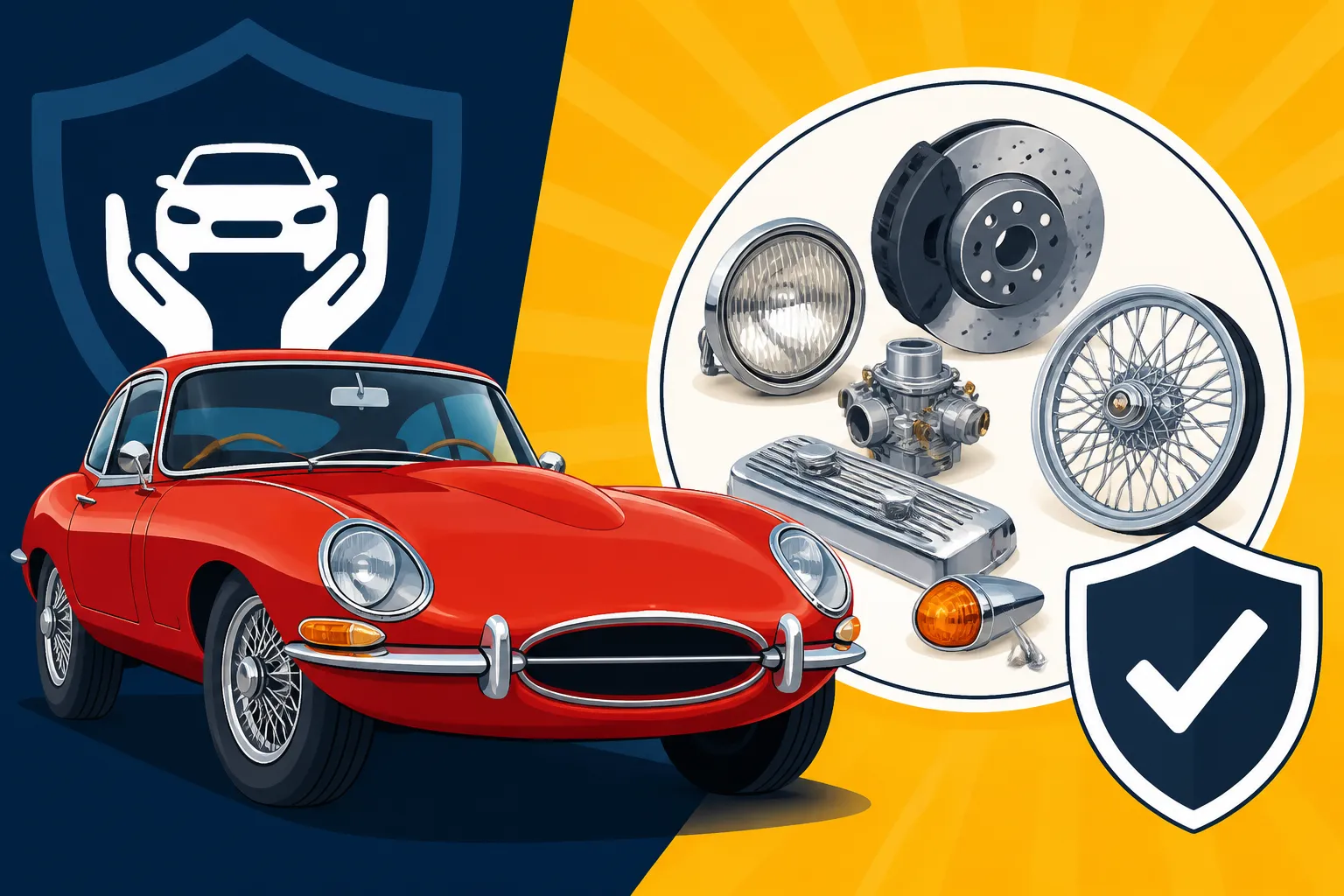
When we talk about "spare parts" in the context of classic car insurance, we're discussing far more than just common consumables. This coverage is designed to protect significant, valuable components that are not currently installed on an insured vehicle but are held for future use, restoration, or as part of a collection. This can include a wide array of items:
- Major Mechanical Components: Think engine blocks, transmissions, carburetors, differentials, alternators, or steering boxes – especially if they are period-correct, numbers-matching, or rare performance parts.
- Body Panels and Trim: Fenders, doors, hoods, trunk lids, grilles, chrome trim, emblems, and glass. Finding an un-dinged, rust-free panel for an obscure 1950s sedan can be nearly impossible, making its value sky-high.
- Interior Components: Original dashboards, seats (upholstered or frames), door panels, steering wheels, gauges, and unique interior trim pieces.
- Wheels and Tires: Original factory wheels, rare mag wheels, or period-correct tires that are difficult to source.
- Specialty Tools: While some policies focus strictly on vehicle parts, some specialty insurers like Hagerty might offer riders that extend to very specific, expensive tools used exclusively for classic car maintenance and restoration.
- Automobilia and Memorabilia: In some cases, and with the right policy, this can even extend to valuable historical documents, vintage advertising, or specific car-related collectibles that are intrinsically linked to your passion.
The critical distinction here is that this coverage is for parts stored separately from the insured vehicle. Parts installed on your classic are typically covered under the comprehensive and collision sections of your primary classic car policy. Spare parts coverage fills the gap for those valuable items residing in your garage, workshop, or dedicated storage facility. For a deeper dive into what exactly is protected, exploring the specifics of Spare Parts Coverage Explained is highly recommended.
Valuation Methods for Spare Parts
This is perhaps the most crucial aspect of spare parts coverage. Unlike standard auto insurance, which often defaults to Actual Cash Value (ACV) – meaning replacement cost minus depreciation – classic car insurance, especially for parts, offers much more favorable valuation methods. The depreciation model simply doesn't make sense for parts that often appreciate in value.
-
Agreed Value Coverage: This is the gold standard for classic car parts, just as it is for the cars themselves. With agreed value, you and the insurance provider agree on the value of your specific parts inventory at the beginning of the policy term. If those parts are then stolen, destroyed, or damaged beyond repair, you will receive that agreed-upon amount, no questions asked about depreciation. This provides immense peace of mind, knowing that your investment is fully protected regardless of market fluctuations or post-loss appraisals. For a 1965 Corvette, that set of original knock-off wheels or a numbers-matching engine block could represent a significant portion of its value, and agreed value ensures you're reimbursed appropriately. Learn more about why this is essential in Agreed Value Coverage Explained.
-
Stated Value Coverage: While better than ACV, "stated value" coverage is a step down from agreed value. With this option, you declare a value for your parts. However, in the event of a loss, the insurer typically reserves the right to pay up to the stated amount or the actual cash value, whichever is less. This means you could still be underinsured if the market value has dipped, or if the insurer's appraisal after a loss differs significantly from your stated value. Always strive for agreed value when insuring valuable classic car parts.
To prove the value of your parts, documentation is key. Keep detailed receipts, invoices, and any appraisal reports. High-quality photos showing the condition and any unique identifying marks are also incredibly helpful. Specialty insurers like Hagerty are usually very understanding of the unique valuation challenges of classic parts and can guide you through the process, often without requiring individual appraisals for every single bolt and washer, but rather a collective valuation for your inventory. The distinction between these methods is laid out clearly in Agreed Value vs Stated Value vs Actual Cash Value.
Deciding If Spare Parts Coverage is Right for Your Collection
Determining whether spare parts coverage is a necessity for your classic car passion depends largely on the nature of your collection, the value of your stored components, and your personal risk tolerance. It's not a one-size-fits-all answer, but understanding the scenarios where it's most beneficial can help you make an informed decision.
Scenarios Where It's Essential
If any of these situations describe your classic car ownership experience, then spare parts coverage should be high on your list of insurance priorities:
-
High-Value, Rare, or Irreplaceable Parts Inventory: This is the most obvious indicator. If you possess parts that are genuinely hard to find, command significant prices on the market, or are simply irreplaceable due to their rarity or unique characteristics (e.g., a specific trim piece for an obscure European classic from the 1930s, or a genuine factory competition part), then leaving them uninsured is a substantial risk. Think of components like a complete, correct engine for a highly sought-after muscle car or NOS body panels for a limited-production vintage sports car. These items are often investments in their own right.
-
Active Restoration Projects: When you're in the midst of a serious restoration, your garage or workshop becomes a veritable parts depot. Many components will be removed from the car, awaiting refurbishment, paint, or reinstallation. These parts, temporarily detached from the main vehicle, are vulnerable. If a fire breaks out, or thieves target your garage, those uninstalled parts could be lost. For such projects, securing a policy that includes robust spare parts coverage, alongside dedicated Restoration Coverage for Classic Cars, is paramount to protecting your ongoing investment.
-
Collecting Parts as an Investment or for Future Projects: Some enthusiasts aren't just restoring one car; they're collectors of parts themselves, perhaps for a future dream build or simply as a hedge against future scarcity. These parts, though not assigned to a specific, currently insured vehicle, still represent substantial capital. If you're holding onto a complete engine for a future hot rod project, or a rare set of wheels you plan to use on a car you haven't even bought yet, that inventory needs protection.
-
Vulnerable Storage Conditions: Even if you have a secure garage, no storage solution is entirely impenetrable. Theft, fire, natural disasters (like floods or severe storms), or even accidental damage can occur. If your valuable parts are stored in a detached garage, a rented storage unit, or any area that could be compromised, this coverage provides a critical safety net.
-
Multi-Car Collector with Shared Inventory: If you own several classic cars, you might maintain a shared inventory of common spare parts or specialized tools that serve your entire collection. Losing this central cache of components could impact multiple vehicles, making dedicated coverage for this inventory incredibly important. For these comprehensive collections, exploring the Best Coverage Types for a Collector Car will offer a holistic approach to protection.
Situations Where It Might Be Less Critical
While spare parts coverage is generally a good idea for most serious collectors, there are situations where its necessity might be diminished:
-
Minimal or Easily Replaceable Parts: If your "spare parts" consist mainly of common, low-cost consumables that can be readily purchased (e.g., extra oil filters, spark plugs, common belts, or simple gaskets), then the financial risk of their loss is likely minimal. The cost of dedicated coverage might outweigh the potential payout in such cases.
-
Very Low-Value Collection: If your classic car itself has a modest value and its associated spare parts are equally inexpensive and widely available, the need for a specific spare parts endorsement might be reduced. Your existing homeowner's policy might offer a small amount of personal property coverage, but remember that standard policies usually have very low limits for specialized items and often use ACV.
-
All Valuable Parts Integrated into Insured Vehicles: If every valuable component you own is already installed on one of your insured classic cars, and you rarely remove them for separate storage, then the comprehensive and collision coverage on your vehicle policies should cover those items. However, be realistic about this; most classic owners inevitably have some uninstalled treasures.
-
Extremely Secure, Insured Storage: While few scenarios truly negate the need for any insurance, if your parts are stored in a highly secure, purpose-built, climate-controlled facility with extensive security systems that are themselves separately insured, your direct risk of theft might be lower. Even then, fire or natural disaster remain possibilities. Always check the fine print for Classic Car Insurance Exclusions to Know to ensure there are no surprises.
Tips for Maximizing Your Spare Parts Protection
Once you've decided that spare parts coverage is a smart move for your classic car collection, the next step is to ensure you're getting the most out of your policy. It's not just about buying coverage; it's about smart documentation and working with the right partners to fully protect your investment.
Documenting Your Inventory
This cannot be stressed enough: thorough documentation is the bedrock of a successful insurance claim, especially for items as unique and varied as classic car spare parts. Without solid proof of what you own and its value, even the best policy can fall short.
-
Detailed, Itemized Records: Create an exhaustive list of every significant part you want to insure. Don't just list "engine parts." Be specific: "NOS Mopar 440 Six-Pack carburetor," "original date-coded 1965 Ford Mustang K-code 289 cylinder head," or "complete set of five original magnesium Shelby American wheels." Include the make, model, year, specific part number (if available), and a clear description of its condition (e.g., "New Old Stock in original packaging," "professionally restored," "good used condition").
-
Photographic and Video Evidence: Take clear, high-resolution photographs of each part. Capture different angles, any unique markings, part numbers, and the overall condition. Timestamped photos are excellent for proving when the photos were taken. For larger inventories, a video walkthrough of your storage area can also be incredibly useful. Store these photos and lists digitally in multiple locations – on a cloud service, an external hard drive, and perhaps even a printed copy stored off-site.
-
Receipts and Provenance: Keep all purchase receipts, invoices, and any documentation that validates the part's authenticity, origin, or value. If you inherited parts, gather any historical documents or even anecdotal information that helps establish their provenance. This is especially critical for rare or high-value items where proof of origin can significantly impact their worth. This meticulous approach directly supports your ability to How to Prove Restoration Costs to an Insurer down the line if parts are lost or damaged during a build.
-
Regular Updates and Valuations: The market for classic car parts is dynamic. What was worth $500 last year might be worth $1,000 this year, or vice versa, especially with collector trends. Review and update your inventory list and valuations annually. If you make a significant new purchase, add it to your documentation immediately. If a part has undergone restoration or its market value has notably increased, consider getting a re-appraisal or updating your agreed value with your insurer.
Choosing the Right Insurer and Policy Limits
Securing the right spare parts coverage isn't just about having any policy; it's about having the right policy with a specialized insurer that understands the unique needs of classic car owners.
-
Opt for Specialty Insurers: This is non-negotiable. Standard auto insurance companies often don't have the expertise or the policy structures to properly value and insure classic car parts. Specialty insurers like Hagerty, Grundy, American Collectors Insurance, or J.C. Taylor are entirely focused on the collector market. They understand the nuances of agreed value, the rarity of components, and the passion that drives these investments. They offer specific endorsements designed precisely for spare parts coverage. Exploring Best Specialty Classic Car Insurers will highlight providers best equipped to handle your needs.
-
Set Adequate Coverage Limits: One of the most common mistakes collectors make is underestimating the true value of their spare parts inventory. Go through your documented list and honestly tally up the replacement cost (or agreed value) of all the parts you wish to cover. If you have $30,000 worth of parts, ensure your policy limit for spare parts coverage is at least that amount, if not slightly more to account for potential appreciation or unforeseen costs. Don't try to save a few dollars by short-changing your coverage – the cost of a loss will far outweigh any premium savings.
-
Scrutinize Policy Wording: Don't just glance at the premium. Take the time to read the policy document carefully. Understand exactly what perils are covered (e.g., theft, fire, flood, vandalism, transit damage for parts being shipped) and, critically, any exclusions. Familiarize yourself with the deductible amount for spare parts claims. Some policies might have specific requirements for storage (e.g., parts must be stored in a locked garage) that you need to adhere to. When you How to Choose Classic Car Insurance, the fine print on spare parts is a major consideration.
-
Consult with Your Agent: Have an open and detailed conversation with your insurance agent. Explain your collection, your storage habits, and the specific high-value parts you want to protect. A knowledgeable agent specializing in classic car insurance can help you tailor a policy that perfectly fits your needs, suggesting the appropriate coverage limits and endorsements. They can also explain how factors like your storage facility or even your Garage Storage Requirement for Classic Cars might influence your rates and coverage.
It’s always a good idea to annually review your policy with your agent, especially if you've added significant new parts to your collection or completed a major portion of a restoration project, as this can drastically change the value of your inventory.
| Type of Item | Common Coverage | Typical Valuation | Considerations for Parts Coverage |
|---|---|---|---|
| Installed on Vehicle | Comprehensive/Collision | Agreed Value | Covered by the primary vehicle policy. |
| Loose Spare Parts | Dedicated Spare Parts Rider | Agreed Value | Essential for high-value, uninstalled components. Requires itemized documentation. |
| Project Parts (Uninstalled) | Restoration Coverage / Spare Parts Rider | Agreed Value | Crucial for parts waiting for installation or refurbishment during a build. |
| Automobilia & Tools | Specific Endorsement / Homeowners | Agreed Value / ACV | Homeowners usually has low limits. Specialty coverage is best for high-value items. |
| Common Consumables | Minimal/None (Self-Insured) | ACV | Usually not cost-effective to insure due to low individual value and easy replacement. |
Disclaimer
Please remember that insurance policies can vary significantly. The information provided in this guide is for general informational purposes only and does not constitute professional insurance advice. You should always consult with a qualified insurance professional to discuss your specific needs and obtain personalized recommendations for your classic car and spare parts collection. Always review your policy documents thoroughly to understand your coverage, limits, and exclusions.