Best Coverage Types for a Collector Car
Owning a collector car is a passion, a labor of love, and often a significant investment. But let's be honest, figuring out the right insurance for these special vehicles can feel like navigating a maze blindfolded. Standard auto policies just don't cut it, leaving many collectors worried about protecting their cherished asset's true value. This guide is here to untangle that confusion, walking you through the best coverage types specifically designed for collector cars, ensuring your prized possession is protected in a way a regular policy never could.
Understanding the Unique Needs of a Collector Car
When we talk about collector cars, we're not just discussing transportation; we're talking about rolling works of art, historical artifacts, and tangible pieces of automotive heritage. This fundamental difference means their insurance needs are vastly different from your daily driver.
Why Standard Auto Insurance Falls Short for Collectibles
Imagine for a moment you have a pristine 1969 Chevrolet Camaro Z/28, a car you've poured countless hours and dollars into restoring to factory specifications. If something were to happen to it, God forbid, with a standard auto insurance policy, you'd likely be offered "Actual Cash Value" (ACV). This means the insurer would pay out what they deem the car was worth minus depreciation, as if it were just another old used car.
For a collector car, this is a catastrophic underestimation. Your Z/28 isn't just an old car; it's a valuable, appreciating asset. ACV would completely ignore the meticulous restoration work, the rare parts, and the unique market demand that makes it worth far more than a depreciated sum. The frustration of receiving a settlement that barely covers a fraction of your car's true value, let alone its sentimental worth, is a nightmare scenario for any collector. Standard policies simply aren't built to recognize the special status, limited usage, or appreciating value of these vehicles.
The Core Philosophy of Collector Car Insurance
This is where specialty collector car insurance steps in, built on a completely different philosophy. The entire premise is to protect the agreed value of your vehicle, acknowledging its special status right from the start. Instead of the insurer dictating the value after a loss, you and the insurance company agree on its market value before the policy even begins. This gives you peace of mind, knowing exactly what you'll receive if your classic is ever a total loss.
Furthermore, collector car insurance policies recognize that these vehicles aren't typically used for daily commuting. They're driven for pleasure, to shows, on club tours, or perhaps just for a Sunday cruise. This limited, responsible usage often translates to lower premiums compared to regular insurance. Companies like Hagerty and American Collectors understand that these cars are usually stored securely and maintained impeccably, further reducing risk. This specialized approach ensures that the coverage truly matches the unique way you own and enjoy your collectible.
Essential Coverage Types for Your Cherished Collector Car
When you're looking at insurance for your collector car, certain coverage types are absolutely non-negotiable. These are the foundations upon which a robust policy is built.
Agreed Value Coverage: The Cornerstone of Collector Policies
If there's one thing you absolutely must have for your collector car, it's agreed value coverage. This is the bedrock of any good classic car policy and fundamentally distinguishes it from standard auto insurance. With an agreed value policy, you and the insurer agree on a specific value for your vehicle when the policy is written. If your car is ever declared a total loss, the insurance company pays you that agreed-upon amount, no questions asked, no depreciation factored in. This means if you have a 1965 Ford Mustang Fastback with an agreed value of $75,000, and it's totaled, you get $75,000. It's that simple, and it's incredibly reassuring.
This stands in stark contrast to "Actual Cash Value" (ACV) policies, which pay out a depreciated value, and even "Stated Value" policies, where the insurer only pays the lesser of the stated value or the actual cash value at the time of loss. Neither of these provides the secure financial protection a true collector needs. Understanding Agreed Value Coverage Explained is crucial for any collector. The agreed value is typically determined through a combination of expert appraisals, market research, and your documentation of the vehicle's condition and modifications. For more on how this critical value is established, check out How Agreed Value Is Determined.
Comprehensive and Collision Coverage Tailored for Classics
Just like with a regular car, comprehensive and collision coverage protect your collector car from physical damage. However, for classics, these coverages come with specialized perks and considerations.
- Collision Coverage: This protects your car in the event of an accident with another vehicle or object, regardless of who is at fault. For a collector car, this is vital because even a minor fender bender can lead to incredibly expensive repairs, especially if original parts or specialized bodywork are required. Imagine your meticulously restored 1957 Chevrolet Bel Air getting rear-ended; you'll want the peace of mind that repairs will be handled to the highest standard, using appropriate parts, without debating the cost.
- Comprehensive Coverage: This handles damages not caused by a collision, such as theft, vandalism, fire, natural disasters (hail, floods, wind), and even falling objects like tree branches. Given that many collector cars are stored for extended periods, or driven to outdoor shows, comprehensive coverage is absolutely essential. It protects your investment from the "what ifs" of life that are outside your control. Often, these policies will also include specialized towing services, ensuring your classic is transported via flatbed, not a standard tow truck that could cause further damage.
The specifics of these coverages for classic cars often account for the unique aspects of ownership, offering things like flatbed towing as standard, rather than an add-on. Deciding Do You Need Full Coverage on a Classic Car often comes down to protecting your significant investment against all foreseeable risks.
Liability Coverage: Protecting Your Assets
Even if you only drive your collector car a few hundred miles a year, liability coverage is not only legally required in most states but also a critical financial safeguard. This coverage protects you financially if you are at fault for an accident that causes injury to others (bodily injury liability) or damages their property (property damage liability).
While your classic car might be an antique, the damage it can inflict in an accident is very real, and modern medical and repair costs are astronomical. A good collector car policy will allow you to select high liability limits, often matching those on your primary auto policy, to protect your personal assets from potential lawsuits. Even if your state's minimum requirements are low, it's almost always a wise decision to carry higher limits. For instance, if you're out for a drive in your cherished 1970 Dodge Challenger and accidentally cause a multi-car pileup, robust liability coverage ensures that the financial burden of others' injuries and property damage doesn't fall squarely on your shoulders.
Indispensable Add-Ons and Specialized Coverages for Collectors
Beyond the core coverages, specialty collector car insurance really shines with its array of specific add-ons designed to meet the unique demands of car collecting. These aren't just extras; for many, they're crucial for truly comprehensive protection.
Spare Parts and Automobilia Coverage
Any serious collector knows that a significant part of the hobby involves acquiring, storing, and even trading spare parts. Original, New Old Stock (NOS) components, or even high-quality reproduction parts, can be incredibly valuable and difficult to find. Imagine needing a correct carburetor for your 1963 Split-Window Corvette, only to find it's worth thousands. Losing these parts to theft, fire, or damage in your garage could be a significant financial blow.
Many specialty insurers offer specific Spare Parts Coverage Explained as an endorsement. This coverage protects those precious components stored in your garage, whether they're still in the box, on a shelf, or already restored. It can also extend to automobilia – collectibles like vintage signs, scale models, racing memorabilia, or rare car literature. These items, often displayed in your garage or office, hold immense sentimental and monetary value. Ensure your policy has adequate limits for both spare parts and automobilia to cover your entire collection, not just the car itself.
Restoration Coverage and Vehicle Under Construction
The journey of restoring a classic car is often as rewarding as the finished product, but it's also a period of increased vulnerability and constantly changing value. A car under restoration presents unique insurance challenges. As you invest more time and money into the project, its value steadily increases. Standard policies simply can't keep up with this dynamic.
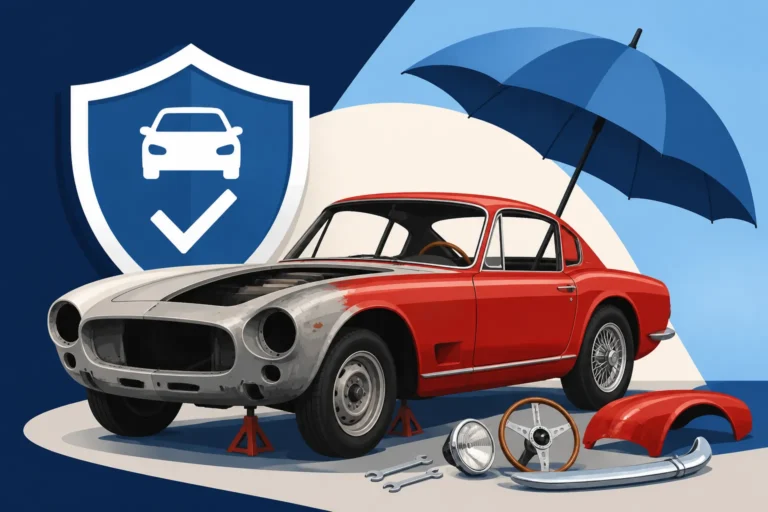
Specialized Restoration Coverage for Classic Cars (sometimes called "Vehicle Under Construction" coverage) is designed precisely for this scenario. It allows you to adjust the agreed value of your car as stages of the restoration are completed and its value grows. This ensures that if a fire breaks out in your workshop, or the car is stolen mid-project, you're compensated for your investment up to that point, including parts, materials, and labor. Companies like Hagerty understand that an unfinished project still represents substantial value. This coverage can protect your barn find as it transforms into a show winner. If you're wondering Can You Insure a Classic Car You're Restoring, the answer is a resounding yes, provided you opt for this specialized coverage.
Roadside Assistance and Trip Interruption
Breaking down in your modern daily driver is inconvenient; breaking down in your classic can be a much bigger headache. Many vintage cars aren't designed for high-speed towing, and a standard hook-and-chain tow truck could damage sensitive components, paint, or bodywork.
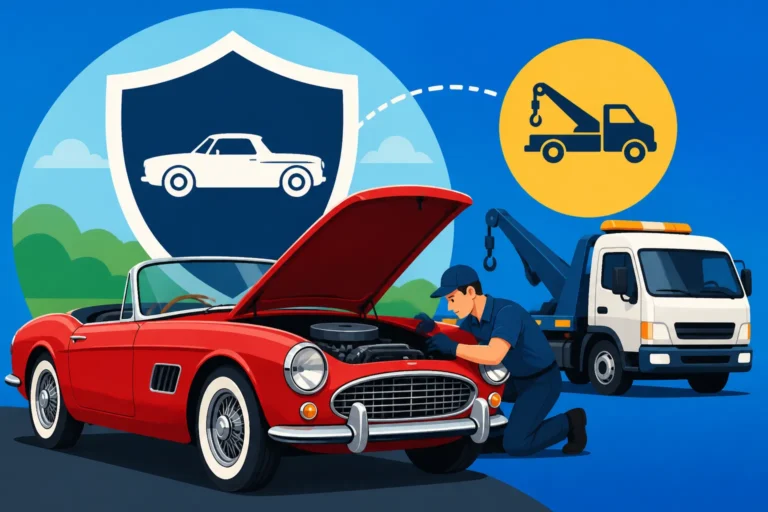
That's why specialized roadside assistance for collector cars typically includes guaranteed flatbed towing. This ensures your pride and joy is carefully loaded onto a flatbed truck and transported safely to your chosen repair shop or home, minimizing any risk of further damage. For detailed information, see Roadside Assistance Coverage for Classic Cars Explained. Additionally, if you're taking your classic on a longer journey to a car show, rally, or scenic tour, trip interruption coverage can be a real lifesaver. If your vehicle breaks down far from home, this add-on can cover expenses for lodging, meals, and alternative transportation, allowing you to continue your journey or get back home without excessive out-of-pocket costs. It's about protecting your experience, not just your car.
Inflation Guard Coverage
The market for collector cars can be volatile, with values often appreciating significantly over time. While agreed value coverage sets a specific value at the start of your policy, without an adjustment, that value could become outdated as your car's market worth climbs. This is particularly true for hot muscle cars or rare European sports cars that see rapid value increases.
Inflation Guard Coverage for Classic Cars Explained is an endorsement designed to automatically increase your car's agreed value by a small percentage (e.g., 2% to 6%) at each renewal period. This proactive measure helps ensure that your insurance payout keeps pace with the rising market value of your collector car without requiring a brand-new appraisal every single year. It’s a subtle but powerful way to guard against underinsurance as the years go by, offering an additional layer of financial security for your evolving investment.
Key Collector Car Coverage Types
Here's a quick look at the vital coverage types every collector should consider for their prized vehicle:
| Coverage Type | Description | Why It's Crucial for Collector Cars |
|---|---|---|
| Agreed Value | You and insurer agree on fixed payout amount if vehicle is a total loss. | Guarantees full market value payout, unlike depreciated ACV. |
| Collision | Covers damage to your car from an accident with another vehicle or object. | Essential for repair costs, especially with rare parts and specialized labor. |
| Comprehensive | Covers damage from non-collision events (theft, fire, vandalism, weather). | Protects against common storage risks and environmental damage. |
| Liability | Covers bodily injury and property damage you cause to others in an accident. | Protects your assets from lawsuits; state minimums often insufficient for collectors. |
| Spare Parts Coverage | Protects valuable spare parts and tools stored for your classic. | Replaces expensive, hard-to-find components crucial for restoration/maintenance. |
| Restoration Coverage | Adjusts agreed value as car is restored; covers parts/labor during project. | Protects increasing investment during active restoration phases. |
| Roadside Assistance | Includes flatbed towing to prevent further damage during breakdowns. | Ensures safe, specialized transport tailored to classic car needs. |
| Inflation Guard | Automatically increases agreed value by a small percentage at renewal. | Helps keep pace with appreciating market values without frequent appraisals. |
Factors Influencing Your Coverage Choices
Choosing the best coverage types isn't a one-size-fits-all situation. Several factors about your car and how you use it will guide your decisions.
Vehicle Usage and Storage Requirements
Specialty collector car insurance policies are predicated on responsible ownership and limited usage. Most policies require that your classic car is not used for daily commuting, racing, or off-roading. They're primarily for pleasure driving, car shows, and club events. This "pleasure-use requirement" is a key reason why premiums for collector cars are often significantly lower than for regular vehicles; less time on the road means less risk of an accident. It's a fundamental aspect of Classic Car Insurance Rules by State that you'll encounter.
Furthermore, how and where you store your car plays a huge role. Most insurers require secure, enclosed storage, like a locked garage, to qualify for a policy. They want to know your precious metal is protected from the elements and theft. Things like carports or street parking usually don't cut it. For example, Garage Storage Requirement for Classic Cars is a common stipulation. If your vehicle is truly a showpiece, driven only occasionally for specific events, your coverage needs might differ from someone who takes their classic on regular weekend drives or tours. Be honest with your insurer about your intended usage to ensure your policy remains valid.
The Value and Rarity of Your Collector Car
The inherent value and rarity of your collector car are arguably the biggest drivers of your insurance needs and premium costs. A pristine, numbers-matching 1965 Shelby GT350 with a documented history will require, and command, a much higher agreed value and more extensive coverage than a well-maintained but more common vintage sedan. The higher the agreed value of your vehicle, the more meticulous you'll want to be with comprehensive and collision coverage, ensuring that any potential loss or damage is fully covered.
Rare or exotic classics, like a Jaguar E-Type or an early Porsche 911, might also benefit from higher limits on spare parts coverage, as sourcing genuine components can be incredibly expensive and time-consuming. The rarity also impacts the need for a professional appraisal. While some insurers, like Hagerty or American Collectors, might not always require a formal appraisal for cars below a certain value threshold, it becomes increasingly important for high-value or highly customized vehicles to accurately establish and support that agreed value. Understanding How Appraisals Affect Insurance Cost can give you an idea of when to get one.
Choosing the Right Specialty Insurer
You wouldn't go to a general practitioner for brain surgery, and you shouldn't go to a standard auto insurer for your collector car. Specialty classic car insurers are experts in this unique niche. They understand the intricacies of classic car values, repairs, and the lifestyle that comes with owning one. Brands like Hagerty, Grundy, American Collectors Insurance, and American Modern are leaders in this field. They offer the tailored policies and deep knowledge that mainstream insurers often lack.
These companies often provide benefits that regular insurers don't, such as:
- Guaranteed agreed value.
- Specialized roadside assistance with flatbed towing.
- Coverage for spare parts and automobilia.
- Flexible mileage plans.
- Coverage for cars under restoration.
- Expert claims adjusters who understand classic car repair.
When comparing options, look beyond just the premium. Consider their reputation for claims handling, their knowledge of classic vehicles, and the specific endorsements they offer. For a comprehensive overview, checking out Best Classic Car Insurance Companies can be a great starting point for your research. Choosing a specialist ensures that you're working with people who genuinely understand and value your passion.
Ultimately, the best coverage types for your collector car are those that provide complete peace of mind, protecting your investment from every angle while recognizing the unique joy these vehicles bring. Don't settle for less; your cherished classic deserves specialized care.
Disclaimer
Please remember that insurance policies, coverages, and requirements can vary by state and insurer. This article provides general information and should not be considered legal or financial advice. Always consult with a licensed insurance professional to discuss your specific needs and obtain quotes tailored to your unique classic car. Review your policy documents carefully to understand your coverage.