Coverage for Automobilia Collections
It’s a familiar scenario for many classic car enthusiasts: you’ve meticulously restored your prized vehicle, found the perfect specialized insurance to protect it, but then you look around your garage or den and realize your treasured automobilia collection is probably an afterthought. Maybe it’s a shelf full of rare die-cast models, a wall adorned with vintage advertising signs, or a display case housing authentic racing memorabilia. The truth is, these items often represent a significant investment, both financially and emotionally, and relying solely on your standard homeowner's policy could leave you shockingly underinsured in the event of a loss. This guide will walk you through everything you need to know about getting proper coverage for your automobilia collections, ensuring all your automotive treasures are truly protected.
Understanding Automobilia and Its True Value
When we talk about classic cars, the vehicles themselves naturally take center stage. But for many collectors, the passion extends far beyond the sheet metal. The world of automobilia – items related to the automotive hobby – is vast and incredibly diverse, encompassing everything from historical artifacts to modern collectibles. Ignoring these items in your insurance planning is a common, and often costly, mistake.
What Exactly Qualifies as Automobilia?
Automobilia is essentially any collectible item that has a direct connection to cars, motorsports, or the automotive industry itself. It's a broad category, but think of it this way: if it makes your enthusiast heart skip a beat, it probably counts. This can include a wide array of fascinating items, each with its own unique story and value.
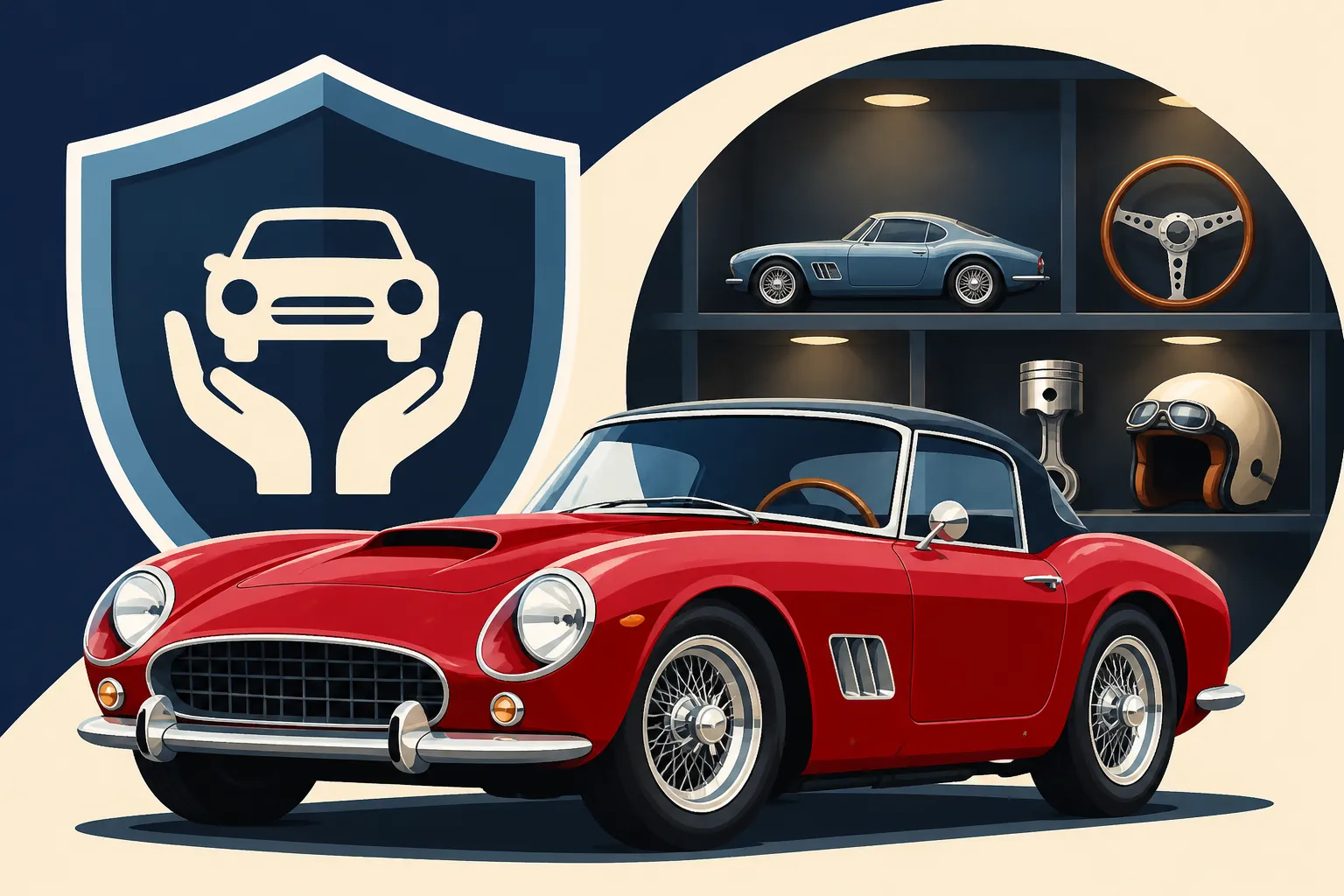
For instance, you might have a collection of vintage gas station signs, like a classic neon "Esso" or "Texaco" sign that once graced a bustling roadside. Perhaps your passion lies in historical documents, such as original sales brochures, owner's manuals, or even period photographs of iconic vehicles. Die-cast models, especially limited edition or rare finds from brands like Franklin Mint or Danbury Mint, can accumulate significant value over time. Then there's racing memorabilia: signed helmets, race programs, checkered flags from famous events, or even parts from legendary race cars. Original artwork, such as automotive paintings or sculptures, also falls under this umbrella. Even a collection of antique automotive tools, specialized repair manuals, or rare car badges and emblems could be considered valuable automobilia. Each piece, whether big or small, contributes to the rich tapestry of automotive history and often holds sentimental value that far exceeds its initial purchase price. These items aren't just decorations; they're investments and pieces of a personal legacy.
Why Standard Home Insurance Falls Short
Many people assume their homeowner's insurance policy will automatically cover their automobilia collection, just like it covers other personal belongings. While a standard policy does offer some coverage for personal property, it almost always falls short when it comes to high-value collectibles. This is a crucial distinction that can lead to heartbreak if you ever need to file a claim.
The primary issue is that standard homeowner's policies typically have low sub-limits for certain categories of items, including collectibles, art, and jewelry. For example, your policy might only cover up to $1,000 or $2,500 for all collectibles combined, regardless of their actual market value. Imagine if you have a rare, signed racing helmet valued at $5,000 and a vintage sign worth $3,000; a standard policy would only cover a fraction of that loss. Another major limitation is how these policies value items. Most homeowner's insurance uses Actual Cash Value (ACV), meaning they'll pay out the replacement cost minus depreciation. For a collectible item that gains value over time, this is disastrous. A vintage gas pump, for instance, doesn't depreciate like a washing machine; it appreciates. ACV would likely undervalue it significantly, leaving you with a fraction of what it's truly worth. Furthermore, standard policies often have a long list of exclusions for specific perils or circumstances, which might leave your unique automobilia vulnerable. This is why understanding Agreed Value vs Stated Value vs Actual Cash Value is paramount, especially for items that defy typical depreciation curves.
Specific Coverage Options for Your Collection
Protecting your automobilia properly requires a specialized approach, moving beyond the generalities of standard home insurance. This often means integrating it with your classic car insurance policy through dedicated endorsements or, for very high-value items, securing separate, tailored coverage.
Dedicated Endorsements for Automobilia
The best way to ensure your automobilia is adequately protected is through specific endorsements or riders added to a specialized classic car insurance policy. Many of the top Best Specialty Classic Car Insurers recognize the deep connection collectors have with their memorabilia and offer specific provisions for these items. These endorsements are designed to cover the unique risks associated with collectibles, providing protection that standard policies simply cannot.
For example, a dedicated automobilia endorsement can cover items like your extensive collection of vintage license plates, rare scale models, or even your treasured library of automotive history books. These endorsements often come with higher coverage limits than what a standard homeowner's policy would ever offer, allowing you to insure your collection for its true worth. Crucially, they often cover a wider range of perils, including theft, fire, damage during transport (if you take items to shows), and even accidental breakage for fragile pieces. When you speak with a specialty insurer like Hagerty, they often have specific programs tailored for "Automobilia & Memorabilia Coverage" or "Spare Parts & Tools Coverage" which can be adapted to your collection. This ensures that if your prized signed photograph of Carroll Shelby is stolen, or your meticulously restored 1950s soda machine (with automotive branding, of course) is damaged in a storm, you’ll receive appropriate compensation based on its agreed-upon value, not a depreciated amount. This level of detail is what truly differentiates a specialty policy from a generic one.
Agreed Value for Unique Collectibles
One of the most significant advantages of specialty classic car insurance for your automobilia is the concept of "Agreed Value." This is a game-changer for collectors and something you almost never find with a standard homeowner's policy. Unlike Actual Cash Value, where the insurer determines the value after a loss, Agreed Value means you and the insurance company agree on the item's value before the policy is issued.
This is particularly vital for automobilia, where market values can be highly subjective and fluctuate based on rarity, condition, provenance, and historical significance. Imagine owning a one-of-a-kind piece of art commissioned by a famous race team, or a pristine, original dealership sign from a defunct brand. Determining the value of such items can be challenging, but with Agreed Value, you eliminate the guesswork and potential disputes in a claim situation. If that item is stolen or destroyed, the insurer pays you the full Agreed Value, period. This provides incredible peace of mind, knowing that your investment is fully protected at a value you both acknowledged upfront. It’s also important to revisit and update your Agreed Value regularly, especially for items that might be appreciating rapidly. Just like you would update the agreed value on your car, you might also need to increase the agreed value for your automobilia collection as its market value rises. This is a critical aspect of Agreed Value Coverage for Classic Cars Explained, and it applies just as strongly to your non-vehicle collectibles.
Practical Steps to Insure Your Automobilia
Getting the right insurance for your automobilia might seem daunting, but with a clear plan, it's quite manageable. The key is thorough preparation and partnering with the right experts.
Documenting Your Collection for Insurance
Before you even think about getting a quote, the first and most crucial step is to meticulously document your entire automobilia collection. This isn't just about making a list; it's about building a comprehensive record that proves ownership, condition, and value. Think of it as creating a "life story" for each significant item.
Start by creating a detailed inventory. For each item, record its description, approximate date of acquisition, where it was acquired (e.g., "eBay," "local auction," "family heirloom"), and the purchase price if applicable. Then, take high-quality photographs from multiple angles, highlighting any unique features, serial numbers, or identifying marks. Don't forget to photograph any imperfections, as this helps establish the item's condition at the time of insuring. Next, gather any supporting documentation, such as receipts, certificates of authenticity, appraisal reports, or expert opinions. If you have a vintage racing poster signed by a legendary driver, a certificate of authenticity for that signature is gold. For rare items, seeking a professional appraisal can be immensely beneficial. An appraiser specializing in automobilia can provide an expert, unbiased valuation that gives both you and the insurer confidence in the Agreed Value. Remember, the more evidence you have, the smoother the process will be if you ever need to file a claim. This thorough documentation also plays a huge role in determining How to Prove a Car's Collectible Status, a concept that extends to your smaller, yet equally valuable, items.
Working with Specialty Insurers
Once your collection is thoroughly documented, it’s time to reach out to specialty insurance providers. This isn’t a job for your standard auto insurance agent who primarily deals with daily drivers. You need experts who understand the unique nuances and values of collectible assets.
Specialty insurers like Hagerty, Grundy, or American Collectors Insurance are designed precisely for this kind of coverage. They have experience with rare and valuable items, including not just cars but also the extensive world of automobilia. When you contact them, be prepared to discuss your collection in detail, sharing the documentation you’ve prepared. They will guide you through the process of adding an automobilia endorsement to your existing classic car policy, or setting up a standalone policy if your collection warrants it. Don't be afraid to ask specific questions about coverage limits, deductibles, and any exclusions. Inquire about how they handle items that appreciate in value, and what their process is for updating Agreed Value coverage annually. Many of these insurers offer flexible options for collections of varying sizes and values, ensuring you get a policy that truly fits your needs. This is also where you can inquire about things like How to Insure Multiple Classic Cars under a single collector policy, which can often include your automobilia for a more comprehensive approach.
Common Pitfalls and How to Avoid Them
Even with the best intentions, collectors can sometimes make mistakes that leave their automobilia vulnerable. Being aware of these common pitfalls can help you steer clear of potential heartache.
Underinsuring Your Priceless Pieces
Perhaps the most significant and most common mistake collectors make is underinsuring their automobilia. It’s easy to do; you might remember what you paid for that vintage sign ten years ago, but forget that its market value has quadrupled since then. Or you might simply underestimate the cumulative value of dozens of smaller collectibles.
The problem with underinsurance is that in the event of a total loss, you're left with a substantial financial gap. If your collection of rare die-cast models, appraised at $15,000, is only insured for $5,000, that’s $10,000 out of your pocket. This isn't just about monetary loss; it's about the emotional toll of losing irreplaceable items and not being able to replace them. To avoid this, make sure your documentation is always up-to-date, reflecting current market values. Regular re-appraisals, especially for highly valuable or appreciating items, are a sound investment. Be proactive in communicating any significant acquisitions or increases in value to your insurer. A small increase in premium is a far better outcome than a massive loss without adequate compensation. Don't fall into the trap of thinking a minimal coverage add-on is sufficient; ensure the Agreed Value truly reflects what your items are worth today. Understanding How Much Does Classic Car Insurance Cost and how value affects premiums can help you budget correctly for proper coverage.
Overlooking Policy Exclusions
Every insurance policy has exclusions – events or types of damage that are not covered. Failing to read the fine print of your automobilia coverage is another common pitfall that can lead to unwelcome surprises during a claim.
While specialty policies are designed to be more comprehensive than standard homeowner's, they still have limits and specific conditions. For example, some policies might not cover damage incurred during a private sale or trade, or damage from certain types of natural disasters if your collection isn't stored properly. Others might have specific requirements for security, such as alarms or secure storage, for certain high-value items. It’s crucial to understand what your policy doesn't cover as much as what it does. Are there geographical limits if you transport items to a show in another state? What about items temporarily loaned to a museum? If you plan to restore certain pieces of automobilia, ensure you understand if there's coverage for items "under restoration" or for parts you're acquiring for a project. Don't hesitate to ask your agent for clarification on any ambiguous clauses. A thorough review of Classic Car Insurance Exclusions to Know can provide a general overview that applies to both your vehicles and your treasured automobilia. Knowing these details upfront allows you to take necessary precautions or adjust your coverage as needed.
Comparing Standard Home vs. Specialty Automobilia Coverage
To truly illustrate why specialty coverage is essential for your automobilia collection, let’s look at a side-by-side comparison.
| Feature | Standard Homeowner's Insurance | Specialty Classic Car (Automobilia Endorsement) |
|---|---|---|
| Valuation Method | Actual Cash Value (ACV) – depreciated value | Agreed Value – pre-determined, fixed payout |
| Coverage Limits | Low sub-limits (e.g., $1,000-$2,500 for all collectibles) | High, tailored limits based on collection's true value |
| Perils Covered | Basic perils (fire, theft), often with many exclusions | Broader range (fire, theft, transit, accidental breakage, etc.) |
| Appreciation Coverage | None – focuses on depreciation | Often includes Inflation Guard or regular value updates |
| Proof of Value | Receipts, basic photos | Detailed inventory, appraisals, provenance documents |
| Storage Requirements | Generally none, but might impact claims if negligent | Specific requirements (e.g., secure garage, climate control) |
| Expertise | General claims adjusters, limited knowledge of collectibles | Specialty adjusters with knowledge of automotive collectibles |
| Cost Structure | Included in overall premium; not itemized | Itemized endorsement or separate policy; value-based pricing |
This table clearly highlights the stark differences. While standard home insurance might offer a sliver of coverage, it's rarely enough to protect your unique and often appreciating automobilia collection. For true peace of mind and financial security, a dedicated approach through specialty classic car insurance with an automobilia endorsement is the undisputed way to go. It's about building a How to Build a Complete Classic Car Policy that truly covers every aspect of your passion.
Disclaimer
Please remember that this article provides general information and should not be considered legal or insurance advice. Policy details, terms, conditions, and availability can vary significantly between insurance providers and states. Always consult with a qualified insurance professional to discuss your specific needs and obtain a personalized quote for your classic car and automobilia collection.