What Coverage a Modified Car Actually Needs
It's incredibly frustrating, isn't it? You pour your heart, soul, and hard-earned cash into transforming a classic car into your vision – a one-of-a-kind masterpiece. But then the anxiety kicks in: how on earth do you insure something so unique? Standard insurance companies often don't understand the true value of a custom build, leaving you worried that if disaster strikes, you'll be left with pennies on the dollar. This guide is here to cut through that confusion, explaining exactly what coverage a modified car actually needs to protect your investment properly.
Understanding Why Modified Cars Need Special Coverage
Let's be real, a modified classic isn't just a car; it's a rolling piece of art, a mechanical extension of your passion. And because of that, it simply doesn't fit into the neat little boxes that traditional auto insurance policies are designed for. When you start changing engines, adding custom bodywork, or upgrading interiors, you're venturing far beyond the realm of a typical daily driver.
The Disconnect with Standard Policies
Regular car insurance policies are built around the idea of mass-produced vehicles with readily available parts and predictable market values. If your daily driver, say a 2018 Toyota Camry, gets totaled, the insurance company will look at its Actual Cash Value (ACV), which is essentially its replacement cost minus depreciation. They can easily find another one just like it on a used car lot, or calculate the cost of generic replacement parts.
But what happens when your '69 Mustang Fastback, now sporting a modern Coyote engine swap, custom suspension, and a bespoke leather interior, gets damaged? A standard policy would likely value it as a '69 Mustang Fastback with depreciation, completely ignoring the tens of thousands you've invested in making it unique. The original factory parts are long gone, and the custom components are anything but "standard." You'd be left holding the bag, realizing that your insurance payout wouldn't even cover a fraction of what it would take to rebuild your dream car. This fundamental disconnect is why generic insurance just won't cut it for a truly modified classic.
Valuation Challenges with Modifications
The biggest hurdle for modified cars and insurance is valuation. How do you accurately put a price tag on a vehicle that no longer aligns with factory specifications or common market comparisons? This isn't just about the parts; it's about the labor, the craftsmanship, the time, and the vision that went into every custom detail. A standard appraisal might look up values for a stock model of your car and completely miss the point of a high-dollar engine rebuild or a meticulous custom paint job.
Think about a classic pickup truck. If you've taken a rusty old Ford F-100 and transformed it into a show-stopping restomod with a new chassis, a supercharged engine, and a hand-stitched interior, its value has skyrocketed far beyond what any standard price guide would suggest. Without specific provisions for these modifications, an insurer would only see a vintage F-100, leaving a huge gap between its actual worth and its insured value. This is where specialty classic car insurance steps in, recognizing that the sum of your modifications adds significant, often irreplaceable, value.
Essential Coverage Types for Modified Classics
When it comes to insuring your modified pride and joy, you need to think beyond the basics. These cars require a tailored approach, focusing on specific coverage types that acknowledge their unique value and construction. This isn't just about covering damage; it's about ensuring your investment is protected from every angle.
Agreed Value: Your Modification's Best Friend
This is arguably the most critical component of any classic car insurance policy, especially for modified vehicles. Unlike Actual Cash Value (ACV) or Stated Value policies that can leave you scrambling, Agreed Value coverage ensures that you and your insurer agree on your car's value before the policy even goes into effect. In the event of a total loss, the insurance company pays out that exact agreed-upon amount, no questions asked, no depreciation applied.
For a modified classic, this is a game-changer. It means that the unique engine, custom interior, specialized suspension – all those elements you painstakingly added – are included in that upfront agreed value. To determine this, you'll likely need to provide documentation like appraisals, receipts for parts and labor, and detailed photos. Companies like Hagerty specialize in understanding and underwriting these types of valuations, ensuring that your customized vehicle's true worth is recognized. Learning How Agreed Value Affects Premiums is important, as a higher agreed value will correlate with your premium, but it's a small price to pay for peace of mind. Getting Agreed Value Coverage Explained fully can help you understand its vital role.
Restoration and Custom Parts Coverage
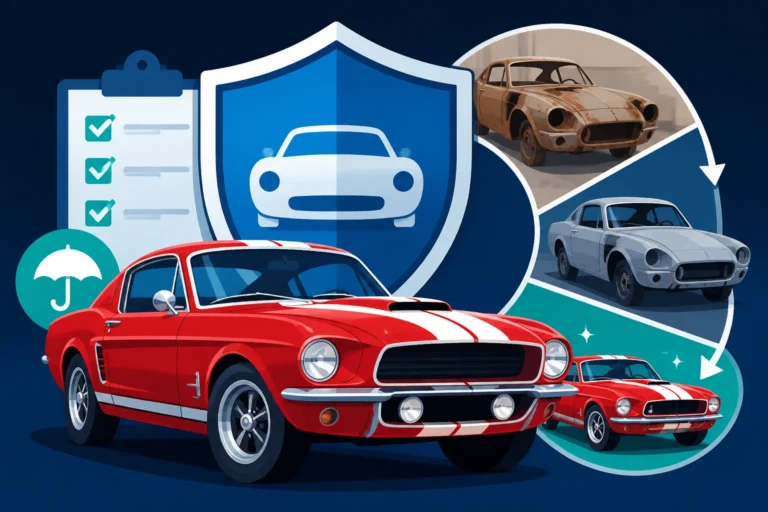
If you're still in the process of building or extensively modifying your classic, you absolutely need robust restoration coverage. Imagine spending months meticulously working on a custom engine, only for an unfortunate garage fire to destroy it before it's even installed. Standard policies might offer minimal coverage for "parts in transit" or "accessories," but they rarely grasp the true value of specialized, custom-fabricated components or the labor involved in a complex restoration.
Specialty insurers offer specific coverage that protects your car even while it's undergoing work. This can include coverage for parts that are not yet installed, materials on-site for the build, and even the increasing value of the vehicle as the restoration progresses. As you reach different milestones in your build, the car's value increases, and your policy needs to reflect that. Some policies even offer "inflation guard" to automatically adjust the agreed value to account for the rising cost of parts and labor over time. If you're undertaking a significant project, understanding Restoration Coverage for Classic Cars is non-negotiable, and knowing How to Insure a Car Under Restoration can save you a lot of heartache. Furthermore, don't overlook Spare Parts Coverage for Classic Cars Explained, as those extra custom pieces sitting on your shelf can be valuable.
Coverage for Performance Upgrades and Aesthetics
Beyond the agreed value, it's essential to ensure your specific upgrades are comprehensively covered. This isn't just about the major components like an engine swap, but also the smaller, yet still expensive, aesthetic and performance enhancements that truly define your modified ride.
Consider a custom paint job. A multi-stage, candy apple red finish with hand-painted pinstriping can easily cost thousands, sometimes even tens of thousands of dollars. Standard insurance might cover a basic factory repaint, but not the intricate artistry and specialized materials of a custom job. Similarly, if you've invested in high-performance braking systems, adjustable coil-over suspension, or a bespoke exhaust system, these are not just "accessories." They are integral, high-value components that improve performance and increase your car's overall worth. Your policy needs to explicitly acknowledge and cover these items at their replacement cost. This is why Requirements for Insuring a Modified Classic often includes a detailed inventory of all such upgrades, ensuring that every penny you've spent is protected.
Navigating Specific Modifications and Their Insurance Implications
Not all modifications are treated equally by insurers. While specialty companies are generally more accommodating, understanding how specific types of changes impact your policy can help you secure the best coverage and avoid any nasty surprises down the road.
Drivetrain Swaps and Engine Modifications
This is often one of the most significant and expensive modifications, directly impacting a car's performance and value. Swapping out a vintage V8 for a modern, fuel-injected LS engine, or even a complete electric powertrain conversion (a growing trend!), fundamentally changes the vehicle. Insurers will want to know the specifics: the type of engine, its horsepower rating, and any accompanying drivetrain upgrades like transmissions, differentials, and driveshafts.
A common concern for insurers is the increased risk associated with higher performance. A more powerful engine might mean a greater chance of accidents, or at least a higher risk perception. However, specialty insurers understand that many enthusiasts perform these swaps for reliability and improved driving dynamics, not just raw speed. When providing information, be thorough. List every component, from the engine block to the performance headers. If you've invested in a sophisticated engine management system or a custom turbocharger setup, detail those as well. This information allows the insurer to accurately assess the vehicle's current capabilities and value, making sure your coverage reflects the full extent of your investment. This directly relates to Modified Car Insurance Eligibility and what an insurer considers an acceptable modification.
Custom Bodywork, Paint, and Interior
These are the elements that often make your classic truly stand out, but they also represent a substantial financial investment. Custom body modifications, like widebody kits, shaved door handles, or chopped tops, require immense skill and hours of labor. Similarly, a high-quality custom paint job – especially one involving airbrushing, unique finishes, or multiple coats – can be incredibly expensive to replicate. Inside, a bespoke leather interior, custom dashboards, modern sound systems, or integrated navigation can elevate a car's comfort and value significantly.
For these modifications, insurers need comprehensive documentation. Detailed photographs from multiple angles, before-and-after shots, and receipts from custom shops are invaluable. This helps to establish the true cost and quality of the work. If your car has a particularly unique paint scheme or an elaborate interior, an appraisal that specifically addresses these custom features can be crucial. Remember, the goal is to leave no doubt about the extensive work and value you've added. Without this documentation, it's much harder for an insurer to agree to a higher valuation based on aesthetic upgrades.
Suspension and Braking Enhancements
Performance and safety go hand-in-hand, and upgrading your classic's suspension and braking systems is a prime example. Whether it's a modern independent front suspension, adjustable coilovers, a four-link rear setup, or a big-brake kit with drilled and slotted rotors, these modifications significantly alter the car's handling and stopping power. While these upgrades often make the car safer and more enjoyable to drive, they also represent a substantial investment that needs proper insurance coverage.
Specialty insurers generally view these modifications favorably because they improve the car's overall safety and drivability, potentially reducing accident risk. However, they still need to be documented thoroughly. Provide details on the brand and type of components used (e.g., Wilwood brakes, QA1 coilovers), the cost of the parts, and the labor involved in their installation. If you've upgraded the wheels and tires to accommodate these changes, include those details as well. A detailed list helps the insurer understand the quality and extent of the modifications, ensuring that if these critical components are damaged, they can be replaced with like-kind or superior components, not just a generic factory equivalent.
| Modification Type | Standard Policy Approach | Specialty Classic Policy Approach | Documentation Needed |
|---|---|---|---|
| Engine/Drivetrain Swap | May decline coverage; base on original engine | Covers at agreed value; assesses performance impact | Engine specs, dyno sheets, receipts for parts/labor |
| Custom Bodywork/Paint | Covers standard repaint; ignores custom value | Covers full custom value as part of agreed value | Photos (before/after), shop invoices, material specs |
| Bespoke Interior | Basic interior replacement | Covers custom materials & craftsmanship | Material samples, upholstery invoices, design plans |
| Performance Suspension | Replaces with stock components | Covers high-performance upgrades at replacement cost | Brand/model of components, installation receipts |
| Aftermarket Brakes | Replaces with stock components | Covers performance braking systems | Brand/model of components, installation receipts |
| Custom Wheels/Tires | Limits coverage based on basic replacement | Covers high-value wheels/performance tires | Wheel/tire specs, purchase receipts |
| Sound System/Electronics | Limited accessory coverage | Higher limits for custom audio/infotainment | Component list, installation receipts, appraisal if high-end |
Finding the Right Insurer and Policy for Your Modified Masterpiece
Finding insurance for a modified classic isn't like buying a standard policy. You can't just go to any big-name insurer and expect them to understand the nuances of your build. This is where specializing in classic car insurance becomes paramount.
Why Specialty Insurers are Crucial
General insurance companies often lack the expertise, valuation tools, and policy structures to properly insure a highly modified classic. Their algorithms and underwriting processes are simply not built for unique, appreciating, or custom-built vehicles. They might offer a "stated value" policy, which sounds good but often allows them to pay out the lesser of the stated value or actual cash value at the time of loss, leaving you vulnerable.
Specialty insurers, on the other hand, live and breathe classic and custom cars. Companies like Hagerty, Grundy, and American Collectors Insurance understand the enthusiast market. They employ staff who are often car people themselves, speak the language of modifications, and have access to extensive databases and appraisers to accurately value unique vehicles. They offer true Agreed Value policies, tailored coverage for things like restoration, spare parts, and even show travel. They know that a custom hot rod or a perfectly restored vintage muscle car with modern upgrades isn't just transportation; it's an investment and a passion project. Searching for the Best Classic Car Insurer for Modified Cars will usually lead you to these dedicated providers. They're often the only ones who truly get it.
Documentation is Key
No matter how great a specialty insurer is, they can only insure what they know about. This means that your role in documenting your modified classic is absolutely crucial. Think of yourself as building a detailed case for your car's value.
You'll want to compile a comprehensive portfolio including:
- Professional Appraisal: A third-party appraisal from a qualified classic car appraiser is highly recommended, especially for extensive modifications. This expert will detail the condition, originality (or lack thereof), and all modifications, providing an objective valuation. Knowing How to Get a Classic Car Appraisal is a vital step.
- Receipts and Invoices: Keep meticulous records of every part purchased and every hour of labor paid for (even if it's your own, document the hours and value of your time). These substantiate the financial investment.
- Detailed Photographs: Take high-resolution photos of every aspect of your car – exterior, interior, engine bay, trunk, chassis, and specific modifications. Photos of the build process can also be incredibly helpful.
- Build Sheets and Specifications: Any documentation outlining the custom specifications, engine rebuild details, paint codes, or unique fabrication processes should be included.
- Prior Show Winnings or Publications: If your car has won awards or been featured in magazines, this adds to its provenance and perceived value.
The more thoroughly you document your modifications and their costs, the stronger your position will be when establishing an agreed value, and the smoother the process will be if you ever have to file a claim.
Regularly Re-evaluating Your Policy
A modified classic isn't a static asset; its value can change over time. If you continue to add modifications, complete a significant stage of a restoration, or if the market for your specific type of custom car appreciates, your agreed value needs to keep pace. Failing to update your policy can lead to being underinsured, negating the very benefit of specialty coverage.
It's a good practice to review your policy annually with your insurer. Discuss any new upgrades you've made, present updated documentation, and consider if an adjustment to your agreed value is necessary. Many policies even offer "Inflation Guard" coverage, which automatically increases your agreed value by a small percentage each year to account for market appreciation, but this still doesn't replace the need for a full re-evaluation after major work. Staying proactive with your policy updates ensures that your modified car is always protected to its true, current value. This aligns with the advice on How to Add Coverage for New Modifications and ensures your coverage remains robust. Remember to compare options with different companies periodically, perhaps looking at Classic Car Insurance Companies Compared to ensure you're getting the best deal for your unique vehicle.
Disclaimer
Please note: The information provided in this article is for general informational purposes only and does not constitute financial, legal, or insurance advice. While we strive to provide accurate and up-to-date content, insurance policies and requirements can vary significantly by provider, vehicle type, and state. It is essential to consult with a qualified insurance professional to discuss your specific needs and obtain a tailored policy that adequately covers your classic or modified vehicle. Always read your policy documents thoroughly to understand your coverage, limitations, and exclusions.