Restoration Coverage for Classic Cars Explained
Embarking on a classic car restoration project is a labor of love, a journey fraught with grease, rust, and the occasional skinned knuckle. But amidst the excitement of bringing a piece of automotive history back to life, many enthusiasts overlook a critical aspect: protecting their significant financial and emotional investment. The truth is, a car undergoing restoration is incredibly vulnerable, and standard insurance often falls woefully short when disaster strikes. This comprehensive guide will explain everything you need to know about restoration coverage for classic cars, helping you safeguard your dream project every step of the way.
Understanding the Unique Risks of a Restoration Project
Let's be honest, a classic car sitting in pieces in your garage or at a professional shop is a magnet for trouble. It's not a finished, road-ready vehicle, and that "in-between" state creates a whole host of vulnerabilities that a typical auto policy simply isn't designed to address. The journey from a dusty barn find to a gleaming showstopper is rarely a straight line, and the risks involved are as unique as the cars themselves.
Vulnerability During Disassembly and Reassembly
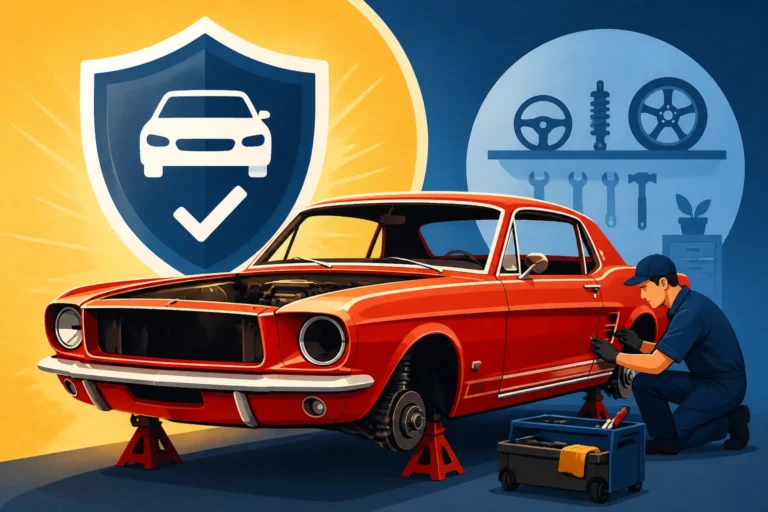
Think about it: when your prized classic is undergoing restoration, it's often a mere shell, with its engine hoisted out, interior stripped, and body panels scattered across the shop floor. This chaotic, yet necessary, state significantly increases its risk profile. A misplaced tool can dent a fender, a dropped engine part can damage the block, or even a simple slip can scratch fresh paint. These aren't just minor inconveniences; they can represent thousands of dollars in specialized labor and rare parts.
During this phase, parts are often stored separately, sometimes off-site, and are much easier to damage or go missing than when they're securely bolted to a complete vehicle. Imagine having your carefully sourced, numbers-matching carburetor stolen from a shelf, or a rare trim piece getting stepped on accidentally. The emotional and financial hit from such an event can be devastating, setting your project back months, if not years. Standard homeowners insurance might offer a sliver of coverage, but it's rarely enough to cover the true value of specialized classic car parts.
The "Barn Find" Dilemma
Many restoration projects begin life as "barn finds" – vehicles pulled from years of slumber, often in various states of disrepair. These cars might arrive on a trailer, covered in dust and rust, with engines locked up and interiors chewed by rodents. The initial purchase price might be low, but the potential value after restoration is what makes them appealing. The challenge is, insuring a car that barely qualifies as a car, or one that's non-running and destined for a complete overhaul, can be tricky with conventional policies.
A standard auto policy usually requires a car to be roadworthy and registered, which a barn find clearly isn't. You need coverage that recognizes the potential value and the inherent risks of a vehicle that is, for all intents and purposes, a collection of parts and a frame that's about to be transformed. This is where specialty classic car insurers really shine, understanding the unique lifecycle of these vehicles from discovery to debut.
Shop-Related Risks
While many enthusiasts tackle restorations in their home garages, plenty of projects involve professional restoration shops, body shops, or specialized engine builders. Handing over your beloved classic, or even just its components, to a third party introduces another layer of risk. Fires in body shops are not unheard of, accidental damage can occur during movement or storage, and sadly, theft from commercial premises can happen too, despite security measures.
It's natural to assume the shop's insurance would cover your car, but this isn't always comprehensive. Their policy might only cover their liability for damages they cause, or it might have limits that don't come close to the agreed value of your evolving project. For example, if a shop fire destroys your nearly finished 1965 Shelby GT350, you want to be sure you're covered for the significant investment you've already made, not just the original purchase price. This makes having your own robust restoration coverage absolutely vital, regardless of where the work is being done.
What Exactly is Restoration Coverage?
Restoration coverage isn't just a fancy name for a regular insurance policy. It's a specialized form of insurance designed specifically to protect a classic or collector car during its vulnerable "vehicle under construction" phase. It acknowledges that the car's value isn't static; it increases with every hour of labor and every dollar spent on parts. This distinction is crucial because traditional policies typically pay out Actual Cash Value (ACV), which would severely undervalue a car that is being lovingly restored.
More Than Just Standard Policy
A standard auto policy usually covers a car based on its market value at the time of a loss, factoring in depreciation. For a classic car, especially one being restored, this model simply doesn't work. The market value of a partially disassembled classic can be difficult to determine, and often doesn't reflect the true investment made. Restoration coverage, on the other hand, understands the appreciating nature of a classic car during its revival. It's designed to protect the escalating value of your project, safeguarding not just the initial purchase but also the cumulative cost of parts, materials, and labor.
Imagine you bought a forlorn 1969 Camaro for $15,000. You've since invested another $30,000 in bodywork, paint, and engine components. If it's stolen from the paint shop with a standard policy, you might only get close to the initial $15,000. With proper restoration coverage, your payout would reflect the $45,000 you've invested, or even more, based on a pre-determined agreed value. This makes it an indispensable tool for serious collectors.
"Vehicle Under Construction" Policies
Many specialty classic car insurers, like Hagerty, offer specific "vehicle under construction" policies or endorsements. These aren't just a generic add-on; they are tailored to the unique circumstances of a restoration. Such a policy acknowledges that the vehicle may not be roadworthy, may be in pieces, and may be stored in various locations during the restoration process. The coverage typically extends to the car itself, its parts, and materials intended for the project, whether they are on or off the vehicle.
This means if you've got a pile of NOS (New Old Stock) parts in boxes in your garage, awaiting installation, they can be covered. If your engine is at a machine shop being rebuilt, it can be covered. It's about protecting the entire project, not just the assembled vehicle. These policies also often come with specialized roadside assistance that understands the need for flatbed towing, which is crucial for delicate classics.
Agreed Value Increments
One of the most valuable aspects of restoration coverage is its reliance on "agreed value." Unlike Actual Cash Value (ACV) or even Stated Value, agreed value means you and the insurance company agree on the car's value at the outset of the policy. For a car under restoration, this is dynamic. As you invest more time and money into the project, the agreed value can (and should) be increased. This is done through increments, where you provide documentation of your expenditures – receipts for parts, invoices for labor – and the insurer adjusts the agreed value upwards.
This incremental increase ensures that your policy always reflects your current investment. If your project is a long one, say a full frame-off restoration over several years, you'll want to regularly update your agreed value to reflect the substantial progress and increasing worth. This ensures that if a total loss occurs midway through, you're not left significantly out of pocket. To learn more about this vital concept, you can read about Agreed Value Coverage for Classic Cars Explained.
Key Components and Types of Restoration Coverage
When you're delving into restoration coverage, it's not a one-size-fits-all solution. There are specific elements and considerations that make up a robust policy, designed to protect the diverse assets involved in bringing a classic back to life. Understanding these components is key to ensuring you're fully covered.
Coverage for Parts and Materials
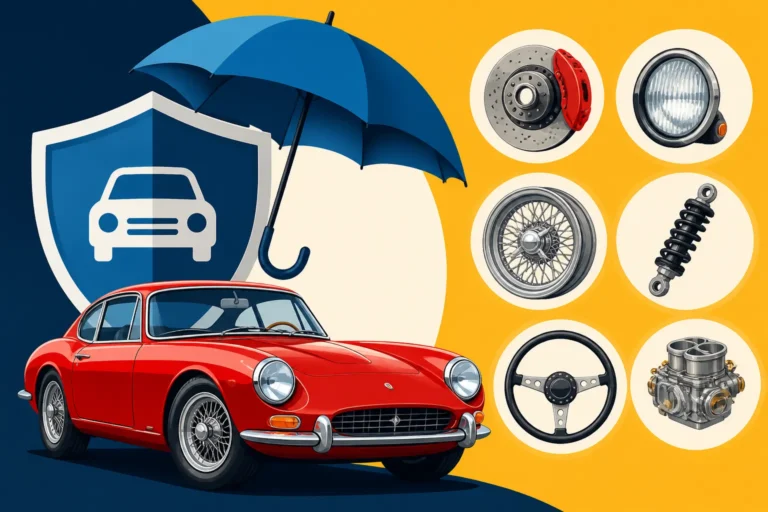
A significant portion of any restoration budget goes into acquiring parts and materials. This includes everything from rare, original equipment manufacturer (OEM) parts, custom-fabricated components, new old stock (NOS) items, to paint, chrome, and upholstery. Without specific restoration coverage, these valuable assets, especially when not yet installed on the vehicle, might not be adequately protected by a standard policy or even your homeowners insurance.
Imagine you've just purchased a pristine, hard-to-find intake manifold for your muscle car project, costing you a few thousand dollars. It's sitting in its box in your garage, waiting for engine assembly. If your garage experiences a fire or a break-in, a dedicated restoration policy would cover the cost of replacing that manifold, often at its true market value. This is a huge relief, especially for parts that might be irreplaceable or only available at a significant premium. Similarly, if you're dealing with delicate chrome pieces just back from plating or a custom-stitched leather interior kit, these are high-value items that require explicit protection.
Coverage for Labor Costs
The hours of skilled labor poured into a classic car restoration often far exceed the cost of the parts themselves. Whether it's your own sweat equity or the highly specialized work of a professional restorer, this labor contributes immensely to the vehicle's escalating value. Standard insurance policies rarely account for this "intangible" value. Restoration coverage, however, can often include an allowance for or explicitly cover labor costs, protecting your financial investment in the craftsmanship itself.
If your car is totaled mid-restoration due to an unforeseen event, such a policy would compensate you not just for the damaged parts, but also for the labor that went into assembling, fabricating, and finishing those components up to that point. This is particularly vital for intricate jobs like body panel alignment, custom paintwork, or complex engine rebuilds, where expertise carries a significant cost. You can learn more about how to manage these costs and protect your investment by understanding Classic Car Insurance Cost: Complete Breakdown.
Transit and Storage Protection
A restoration project rarely stays in one place. It might be trailered from your home to a body shop, then to a paint shop, then to an engine builder, and finally back to your garage for final assembly. During these transit stages, and when stored at various facilities, the car and its components are exposed to different risks. A flatbed trailer accident or even an incidental bump while moving the shell can cause substantial damage.
Restoration coverage typically extends to these transit and storage scenarios. This means that whether your car is being moved across town on a specialized transporter or sitting securely in a professional restoration facility, it's covered. It's important to confirm these specifics with your insurer, as some policies might have limitations on transport types or storage locations. For example, some may require the vehicle to be stored in an enclosed, locked facility rather than an open carport. More details on this can be found in How Storage Affects Classic Car Eligibility.
Fire, Theft, and Vandalism
These are the big, scary risks every classic car owner dreads, and they're amplified during a restoration. A garage fire, a workshop blaze, or a sophisticated theft operation can wipe out years of work and a lifetime of savings in an instant. A vehicle in pieces might even be seen as an easier target for thieves than a fully assembled, secured car. Vandalism, too, can be particularly destructive to a stripped-down chassis or freshly painted panels.
Robust restoration coverage will include comprehensive protection against these perils. This means if your garage burns down, or your car is stolen from a professional shop in the dead of night, you'll be compensated for the agreed value of the car at its current stage of restoration, including all the parts and labor invested. This peace of mind is invaluable, allowing you to focus on the joy of the build rather than the constant worry of potential disaster.
How Restoration Coverage Works in Practice
Getting restoration coverage isn't just about signing a policy; it's an ongoing process that requires active participation from you, the collector. Because the value of your vehicle is constantly evolving during restoration, maintaining accurate records and communicating regularly with your insurer are absolutely paramount to ensure you're adequately protected.
Initial Valuation and Agreed Value
When you first purchase restoration coverage, you'll work with the insurer to establish an initial agreed value for your project. This might be the purchase price of the barn find, or a reasonable estimate of its value in its current, disassembled state. The key here is "agreed value" – it's not a market estimate, but a figure you and the insurance company consent to. This figure then becomes the guaranteed payout amount in case of a total loss, rather than a depreciated market value.
This initial valuation serves as your baseline. As you begin the restoration process, this agreed value will be updated. Most specialty insurers understand that a car's worth skyrockets with each step of a quality restoration. They are prepared to adjust the value upwards, typically in increments, as you invest more money and effort. This flexibility is what sets restoration coverage apart from standard policies, which generally consider a vehicle's value as a fixed, depreciating asset.
Documenting Your Progress
This cannot be stressed enough: document everything. Photos, receipts, invoices, detailed logs of hours worked – every piece of documentation is critical. When you need to increase your agreed value, or God forbid, file a claim, this paper trail (or digital trail) is your proof of investment.
- Photos: Take "before" photos from every angle, documenting the car's initial condition. As you progress, take "during" photos of key stages: bodywork, engine rebuilds, paint application, interior installation. Date-stamped photos are even better. These images vividly illustrate the transformation and the work invested.
- Receipts and Invoices: Keep meticulous records of every single part purchased, every specialty tool, and every hour of professional labor. If you bought a vintage carburetor from eBay, save the listing and your payment confirmation. If you had the engine block line-bored, keep the invoice from the machine shop. These are your undeniable proofs of expenditure.
- Work Logs: If you're doing a significant amount of the work yourself, keep a detailed log of your hours. While personal labor isn't typically covered dollar-for-dollar like professional labor, consistent work logs demonstrate commitment and progress, which can support valuation adjustments.
This comprehensive documentation helps your insurer understand the true value of your ongoing project and can significantly streamline the claims process, ensuring you receive a fair payout based on your actual investment.
Adjusting Coverage as Value Increases
The beauty of restoration coverage is its dynamic nature. As you pour more money and effort into your project, its value naturally increases. This isn't a "set it and forget it" type of policy. You need to proactively contact your insurer, perhaps every six months or after significant milestones, to update your agreed value. For instance, after completing a major bodywork phase and a fresh coat of paint, you'll have substantial new investments to report.
Insurers like Hagerty offer flexible ways to increase your agreed value. You'll submit your accumulated receipts and progress photos, and they'll work with you to adjust the policy's agreed value to reflect the current investment. This continuous adjustment is key to avoiding being underinsured. Imagine investing $50,000 into a project, but only having it insured for $20,000 because you didn't update the policy. A total loss in that scenario would be financially ruinous. Regular updates ensure that if the worst happens, your passion project is financially protected at its current worth. To further explore how to keep your coverage current, check out How to Increase Your Agreed Value Over Time.
Common Misconceptions and Exclusions
While restoration coverage is incredibly comprehensive and invaluable for collectors, it's not a magic shield against every possible mishap. Like all insurance policies, it comes with specific limitations and exclusions. Understanding what isn't covered is just as important as knowing what is, preventing unwelcome surprises should you ever need to file a claim.
DIY Damage Isn't Covered
This is a common point of confusion for many DIY restorers. While restoration coverage protects against perils like fire, theft, and accidental damage caused by external forces or other parties, it generally does not cover damage that you, the owner, inflict upon your own project through negligence or error.
For example, if you accidentally drop a wrench onto a freshly painted fender and cause a dent, or if you make a mistake while wiring the engine and short out a component, these types of "owner-induced" damages are typically excluded. The rationale is that insurance is designed to protect against unforeseen external events, not mistakes made during the work itself. This means you still need to exercise extreme care and attention, even with the best insurance policy in place. It's a bit like a health insurance policy not covering a self-inflicted paper cut; it's about external risks, not internal missteps.
Pre-Existing Conditions
When you acquire a barn find or a project car, it often comes with a host of pre-existing issues—rust, seized engines, worn interiors, and various mechanical problems. Restoration coverage is designed to protect against new damages or losses that occur during the restoration process, not to cover the costs of repairing the pre-existing conditions that necessitated the restoration in the first place.
If your car already had a rusted-out floor pan when you bought it, the insurance won't pay for the sheet metal and labor to fix that specific rust. However, if a new section of frame that you've just welded in gets damaged by a fire, that would be covered. The distinction lies between addressing original defects versus covering new incidents that affect the project's evolving value. It's crucial to be transparent with your insurer about the initial condition of the vehicle to avoid any misunderstandings down the line.
Racing or Performance Testing
Classic car insurance, including restoration coverage, is generally designed for pleasure use, exhibitions, and limited touring. It explicitly excludes coverage for racing, competitive events, or any form of high-performance testing. Even if your restoration project is a race car build, driving it on a track, participating in a timed event, or even performing aggressive street testing before it's fully sorted will typically void coverage if an incident occurs.
This exclusion is in place because these activities carry a significantly higher risk of damage or total loss, which falls outside the scope of what standard collector car policies are designed to cover. If you plan to engage in track days or competitive driving with your finished classic, you would need to seek specialized track day or racing insurance, which is a separate and much more expensive type of policy. Understanding these usage limitations is key to ensuring your policy remains valid. For more on appropriate uses, consider reading Pleasure-Use Requirement Explained.
Choosing the Right Restoration Policy
Selecting the perfect restoration policy isn't about picking the first option you see. It's about finding coverage that truly understands the unique journey of bringing a classic car back to life. Standard insurers often miss the mark because they don't grasp the nuances of appreciating value and specialized risks.
Specialty Insurers Are Key
When it comes to insuring a classic car, especially one undergoing restoration, ditch the idea of using your everyday auto insurance provider. While some large carriers like State Farm or Progressive might offer some form of classic car insurance, they often lack the expertise, flexibility, and comprehensive offerings of dedicated specialty insurers. These mainstream companies typically operate on a depreciation model and struggle to understand "agreed value" for a car whose worth is constantly increasing.
Specialty insurers, on the other hand, live and breathe classic cars. Companies like Hagerty, Grundy, American Collectors Insurance, and J.C. Taylor are built around the collector car market. They employ staff who are enthusiasts themselves and understand the investment, passion, and unique risks involved. They are far more likely to offer robust "vehicle under construction" policies, understand the need for agreed value increments, and provide tailored solutions for parts coverage and transit. Trying to force a restoration project into a standard auto policy is often a recipe for underinsurance and frustration. You can explore a comparison of these providers in Best Classic Car Insurance Companies.
Comparing Options
Once you've narrowed your search to specialty insurers, it's crucial to compare their offerings thoroughly. Don't just look at the premium; delve into the policy language.
- Agreed Value Flexibility: How easy is it to update your agreed value? What documentation do they require? How frequently can you make adjustments? Some insurers are more flexible than others.
- Parts Coverage: Does the policy specifically cover uninstalled parts, and are there limits on how much they'll pay for specialty or NOS components?
- Labor Coverage: Does the policy include compensation for professional labor incurred, or even a recognition of owner-performed labor for valuation purposes?
- Transit and Storage: What are the specific requirements for storing the vehicle and its parts? Are there any restrictions on transportation?
- Deductibles: What are your deductible options? A higher deductible might lower your premium, but ensure it's an amount you're comfortable paying out-of-pocket if a claim arises.
- Customer Service and Claims Reputation: Research their claims process. You want an insurer known for fairness and efficiency, especially when dealing with a complex loss involving a restoration project.
Look for policies that offer features like "inflation guard" coverage, which can automatically adjust your agreed value by a small percentage each year to account for rising values and parts costs, saving you some of the manual updates. For a deeper dive into policy specifics, check out Classic Car Insurance Coverage Types Explained.
Getting a Quote
When you're ready to get a quote for restoration coverage, be prepared to provide detailed information. Specialty insurers will want to know:
- Vehicle Details: Year, make, model, VIN.
- Current Condition: Be honest and thorough about the car's initial state (e.g., "barn find, non-running, body off frame").
- Restoration Plan: What kind of restoration are you undertaking (e.g., full frame-off, body-on, partial)? What's the estimated timeline?
- Storage Location: Where will the car and its parts be stored during the process? (e.g., personal locked garage, professional shop, climate-controlled facility).
- Estimated Initial Value: Your purchase price or initial agreed value.
- Estimated Total Investment: What you anticipate spending on parts and labor.
- Driving Record: Your personal driving history, even though the car isn't currently driven.
- Other Vehicles: Information on your daily drivers and any other collector cars.
Having all this information ready will help the insurer provide an accurate quote and ensure you get the best possible coverage tailored to your unique restoration project. Remember, a quote for restoration coverage for a 1970 Plymouth Barracuda that's a rolling chassis will look very different from a fully restored one.
A Comparative Look at Restoration Coverage
To help clarify what restoration coverage entails, here's a general comparison of what you can typically expect to be included versus excluded. Keep in mind that specific terms and conditions will vary between insurers and individual policies. This table is a simplified guide.
| Feature / Item | Typically Included in Restoration Coverage | Typically Excluded from Restoration Coverage |
|---|---|---|
| Vehicle Value | Agreed Value (adjustable upwards in increments based on investment). Payout reflects current investment (parts + labor). | Actual Cash Value (ACV) or Stated Value (often insufficient for a project). Depreciation applied. |
| Installed Parts | Damage/loss to installed parts due to covered perils (fire, theft, collision during transit/storage). | Damage from owner's mistakes during installation (e.g., cross-threading a bolt, dropping an engine). |
| Uninstalled Parts | Coverage for new/NOS parts, custom components, materials (paint, upholstery) stored for the project, both on-site and at approved off-site locations. | Coverage for random spare parts not intended for the specific insured restoration project. |
| Labor Costs | Compensation for professional labor invested up to the point of loss. Some policies may account for owner's documented labor in valuation. | Compensation for owner's labor as a direct monetary payout (value is usually reflected in agreed value increases). |
| Transit Damage | Damage incurred while the vehicle or its components are being transported to/from a restoration shop, storage, or your home (often requires flatbed towing). | Damage during unapproved transport methods (e.g., dolly towing a sensitive classic). |
| Storage Risks | Fire, theft, vandalism, natural disaster (hail, flood, wind) while stored in an approved facility (garage, professional shop). | Damage if stored in an unapproved location (e.g., open field, unsecured carport). |
| Liability | Typically includes basic liability if the vehicle is occasionally moved or operated on private property (e.g., starting it up in the garage). May require separate liability when roadworthy. | Liability for on-road operation without proper registration and separate liability coverage. |
| Inflation Guard | Optional endorsement that automatically increases agreed value by a small percentage annually to keep pace with market trends. | N/A (this is an add-on, not a standard exclusion). |
| Owner-Caused Damage | N/A | Damage directly resulting from your own restoration errors, clumsy accidents, or poor workmanship (e.g., dropping a panel, improper welding, miswiring). |
| Pre-existing Damage | N/A | Rust, wear, or damage that existed on the vehicle before the restoration began and was not a new incident during the restoration process. |
| Racing/Competitive Events | N/A | Any damage or loss incurred while the vehicle is being raced, timed, or used in competitive events (requires separate, specialized track insurance). |
| Mechanical Breakdown | N/A (insurance covers perils, not wear and tear or manufacturing defects). | Failure of mechanical components due to wear, age, or manufacturing defects, unless directly caused by a covered peril (e.g., an engine seizing due to a fire, which would be covered for the fire damage). |
This table highlights why a specialized policy is essential. While standard insurance focuses on a car's depreciating value and on-road risks, restoration coverage embraces the appreciating nature and unique vulnerabilities of a project car.
Disclaimer
Please remember that this article provides general information about restoration coverage for classic cars. Insurance policies can vary significantly between providers and based on your specific circumstances. It is crucial to consult directly with a qualified insurance agent or a specialty classic car insurance company to discuss your individual needs and to obtain precise coverage details and quotes. The information presented here should not be considered legal or financial advice.