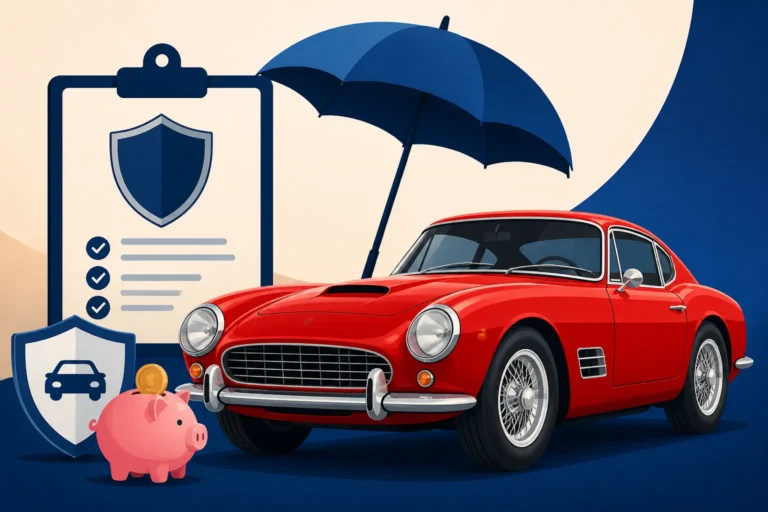
Classic Car Insurance for a Daily Driver Cost
It's a dream for many classic car enthusiasts: not just owning that beautiful piece of automotive history, but actually driving it, regularly. But if you're like me, you've probably hit a wall when trying to figure out how classic car insurance works when your beloved vintage ride isn't just a weekend showpiece, but something you want to enjoy a few times a week, maybe even for the occasional commute. The confusion around "pleasure use" versus genuine daily driving can be incredibly frustrating, leaving you wondering if you'll be stuck with sky-high regular auto insurance rates or if your passion for driving your classic will disqualify you from specialized coverage altogether. This guide is here to clear up that confusion, diving deep into the costs and considerations for insuring your classic car when it's more than just a garage queen.
The Daily Driver Dilemma: Why Classic Car Insurance Is Different for Regular Use
Let's face it, most of us who love classic cars don't just want them sitting in a climate-controlled bubble. We want to hear that engine roar, feel the road, and turn heads. But when it comes to insurance, the lines between a "pleasure vehicle" and a "daily driver" can get incredibly blurry, and it directly impacts what you pay and what's covered. Understanding these distinctions is crucial, because treating a classic like a regular car when it comes to insurance can lead to serious headaches down the road.
Understanding the "Pleasure Use" Standard
Traditionally, classic car insurance policies are designed around the concept of "pleasure use." What does that really mean in the insurance world? It essentially implies limited, recreational driving. We're talking about weekend cruises, car shows, club events, or those special Sunday drives with no particular destination. The underlying assumption is that your classic isn't your primary mode of transportation. It's not taking you to work five days a week, it's not racking up thousands of miles annually, and it's generally not being exposed to the same level of risk as a modern daily commuter.
This model allows specialty insurers to offer lower premiums because the risk profile is significantly different. Less time on the road means less chance of an accident, less exposure to parking lot dings, and less wear and tear. Imagine taking your pristine 1967 Ford Mustang to a local car show versus navigating rush hour traffic on a rainy Tuesday morning in downtown Atlanta. The potential for incident is vastly different. Insurers price their policies based on this reduced risk, which is why Classic Car Insurance vs Regular Insurance: What's Required can often reveal much more affordable options for classics under the "pleasure use" umbrella. They assume you have another vehicle for your everyday needs, and your classic is a cherished item, driven carefully and sparingly.
When a Classic Car Becomes a "Daily Driver" in the Eyes of Insurers
The moment your classic starts becoming your go-to ride for routine errands, regular commutes, or if it's genuinely the only vehicle you own and operate, it begins to cross into "daily driver" territory. For many standard insurance carriers, this transition is straightforward: if you use it like a regular car, it's insured like one, often with an Actual Cash Value (ACV) payout in case of a total loss, which almost always shortchanges a classic owner.
However, specialty classic car insurers have evolved. They recognize that "daily driver" isn't always a black-and-white term. Some owners want to drive their classics more than just a few times a month, but not necessarily for a 50-mile round-trip commute every single workday. This is where the concept of a Daily Driver Requirement Explained comes into play. It doesn't mean you can't drive your classic, but rather that its primary purpose of transportation needs to be carefully defined. If your classic is the primary vehicle in your household, or if you consistently log high mileage year-round, most classic policies built on a pleasure-use model will simply not fit, or will come with significant restrictions and higher costs. The key is transparency with your insurer about how you intend to use the vehicle.
How Insurers Calculate Costs for Daily-Driven Classics
The allure of driving your classic often comes with a dose of reality when the insurance bill arrives. For a true daily-driven classic, the calculation for premiums shifts significantly compared to a vehicle only brought out on sunny Sundays. It's no longer just about the car's inherent value; it's about the increased exposure and risk that comes with more frequent use.
Factors That Drive Up Premiums for Regular Use
When your classic transitions from a pampered showpiece to a regular on the roads, several factors begin to push those premium numbers north. First and foremost is the increased exposure to risk. Every mile driven, every parking lot navigated, every minute spent in traffic increases the statistical probability of an accident, a fender-bender, or even vandalism. A car driven 5,000 miles a year simply faces more potential hazards than one driven 500 miles.
Beyond accidents, there's the heightened risk of theft. A classic that is regularly parked in public lots, left unattended during work hours, or consistently seen in certain areas, might be perceived as a higher theft risk than one securely garaged for most of its life. Furthermore, regular driving means more wear and tear, which while not directly an insurance claim, contributes to the overall risk profile of the vehicle. Insurers also consider the geographic location and specific commute routes. Driving through congested city centers, areas with higher crime rates, or roads prone to accidents will result in higher premiums than leisurely drives through quiet rural routes. These aren't just hypotheticals; they're data points that actuaries use to determine your specific risk, directly impacting the Classic Car Insurance for a Daily Driver Cost.
The Impact of Agreed Value vs. Actual Cash Value
One of the cornerstones of specialized classic car insurance is "Agreed Value" coverage. This means you and the insurer agree on your car's value before the policy is issued. In the event of a total loss, you get that agreed-upon amount, no depreciation, no haggling. This is critical because classics often appreciate, and their market value can be vastly different from a standard depreciation model. For instance, a beautifully restored 1969 Chevrolet Camaro SS isn't just "an old car"; it's a specific, valuable asset. Understanding How Agreed Value Affects Premiums is vital.
However, if you attempt to insure a classic as a daily driver through a standard auto insurance company, you're almost certainly going to run into "Actual Cash Value" (ACV) coverage. ACV means that in a total loss, the insurer pays out the car's value at the time of the loss, minus depreciation. For a classic, this can be catastrophic. Imagine your pride and joy, that 1970 Dodge Challenger R/T you've poured countless hours and dollars into, being totaled, and a standard insurer offers you a payout based on its depreciated value as a 50-year-old car, not its actual collector market value. It's a scenario that keeps many classic owners up at night. While some specialty insurers are offering more flexible programs for daily-driven classics, they still strongly advocate for Agreed Value coverage, often adjusting the premium to reflect the increased usage risk while maintaining the guaranteed payout.
Specialty Insurers vs. Standard Carriers: Who Offers What?
When it comes to insuring your classic car, especially if you plan on driving it more frequently, you're primarily looking at two distinct avenues: specialty classic car insurers or standard auto insurance companies. Each has its own strengths, weaknesses, and a very different approach to what a "classic" truly means on the road.
Navigating Options with Specialty Classic Car Insurers
This is where the big players in the classic car insurance world shine. Companies like Hagerty, Grundy, American Collectors, and others have built their entire business around understanding the unique needs of collectors. They get that your 1957 Chevrolet Bel Air isn't just a car; it's a passion, an investment, and often a labor of love. These companies are generally the best bet for classic car owners, even those who want to drive their vehicles more often.
What makes them different? They offer policies specifically tailored to classics, including Agreed Value coverage, which is paramount. They understand that while you might want to drive your classic more, you're probably still a responsible, careful owner who takes pride in preserving it. Many of these insurers have developed programs or endorsements that allow for more liberal usage than the traditional "parade and car show only" model. For example, some may offer higher mileage tiers, moving beyond the typical 1,000 or 2,500 annual limits to 5,000 or even "unlimited" options, albeit at a higher premium. Hagerty, for instance, is known for its understanding of the enthusiast market and often provides flexible mileage options. These policies often come with special features like roadside assistance designed for classics (think flatbed towing, not a hook and chain) and coverage for spare parts. When exploring Classic Car Insurance for a Daily Driver, it's these specialty providers who truly grasp the nuances of valuing and protecting your cherished vehicle, even if it sees more asphalt than the average collector car. They'll still require you to typically have another primary vehicle for daily use, but they're more understanding of someone who wants to take their classic for a spin several times a week.
The Challenges with Standard Auto Insurance for Classics
While it might seem easier to just add your classic to your existing everyday auto policy with a standard carrier like State Farm or Progressive, this is often a recipe for disaster. The fundamental issue lies in their valuation methods and their understanding of collector cars. Standard insurers are set up to cover modern vehicles that depreciate rapidly. Their systems are simply not designed to accurately assess or protect the unique value of a classic.
The biggest shortfall, as we discussed, is the reliance on Actual Cash Value (ACV). In the event of a total loss, a standard insurer will typically look up a book value for a car of that make, model, and year, and then subtract for wear and tear. This can result in a payout that is a fraction of what your classic is actually worth in the collector market. Imagine your perfectly restored 1972 Porsche 911 T, with its original engine and meticulously sourced parts, being valued the same as a rusted-out project car of the same year. It's a terrifying thought.
Furthermore, standard policies rarely offer specialized coverage like restoration coverage or spare parts coverage, which are often vital for classic car owners. Premiums with standard carriers might also be unexpectedly high for a classic if they view it purely as an older, potentially less safe vehicle, without understanding its collector status. This is why if you're serious about protecting your classic, even if you plan to drive it more often, it's almost always in your best interest to seek out a specialty insurer who understands the distinct world of collector cars.
Key Cost-Affecting Variables for a Daily-Driven Classic
Even within the specialized classic car insurance world, the cost of insuring a daily-driven classic isn't a fixed number. It's a dynamic figure influenced by a multitude of factors, each contributing to the overall risk profile and, consequently, your premium. Understanding these variables empowers you to make informed decisions and potentially manage your costs more effectively.
Mileage Restrictions and Their Price Tag
One of the most significant cost drivers for a classic car used more frequently is mileage. Classic car policies are fundamentally built on the premise of limited use, which translates directly to limited mileage. Most specialty insurers offer various mileage tiers, often starting as low as 1,000 or 1,500 miles per year, and then escalating to 2,500, 5,000, or sometimes even higher. Each increase in the mileage tier typically comes with a corresponding increase in your annual premium.
Consider a collector who wants to drive their 1965 Ford Mustang Convertible to work twice a week, a roughly 30-mile round trip, plus weekend cruises and club events. Over a year, this could easily push them past a 2,500-mile limit. Opting for a 5,000-mile tier or an "unlimited mileage" option (if available) would certainly allow for this usage, but the cost will be notably higher. Why? More miles on the road mean a greater likelihood of an accident, increased wear and tear, and higher exposure to potential hazards like road debris or theft. Some insurers, like Hagerty, are quite flexible with their mileage options, offering various tiers to accommodate different usage needs. It's crucial to be honest about your anticipated mileage; underreporting could lead to a claim denial. Exploring Classic Car Insurance Mileage Limits by State can give you an idea of typical offerings and how they might vary.
Storage, Security, and Driving Record
Beyond mileage, how you store your classic and your personal driving history play a huge role in determining your insurance cost. Insurers want to know your classic is protected when it's not on the road. A vehicle stored in a secure, private, locked garage is generally considered a lower risk than one parked in a carport or, worse, on the street. In fact, many classic policies have a Garage Storage Requirement for Classic Cars as a basic eligibility criterion. The type of garage (attached vs. detached, alarm systems) can also influence rates. For instance, a classic tucked away in a well-secured, attached garage in a quiet suburban neighborhood might see lower rates than one in a less secure detached garage in a high-density urban area.
Security features are another big one. If your classic has a modern alarm system, GPS tracking, or other anti-theft devices, these can sometimes lead to discounts because they reduce the risk of theft. As for your driving record, it's just as important for a classic as it is for your daily driver. A history of at-fault accidents, speeding tickets, or DUIs will flag you as a higher risk driver, regardless of the vehicle you're insuring. Even if your classic isn't involved in these incidents, your overall driving history reflects on your insurability and will likely result in higher premiums for any vehicle you insure.
Vehicle Type, Value, and Modifications
The specific classic car you own also heavily influences insurance costs, especially when it's driven more frequently. A rare, high-value classic, such as a Ferrari 250 GTO replica or a pristine 1963 Split-Window Corvette, will inherently cost more to insure than a more common and less expensive classic, like a restored Volkswagen Beetle. This is primarily due to the higher Agreed Value and the increased cost of repairs or replacement parts. The more valuable the car, the higher the payout risk for the insurer in case of a total loss. Understanding How Vehicle Value Affects Premiums is fundamental here.
Furthermore, modifications can significantly impact your rates. If your classic is a "restomod" with a modern engine swap, upgraded suspension, or custom bodywork, its value might be higher, and the parts more specialized (and expensive) to replace. Hot rods and custom builds fall into a similar category. Insurers need to accurately assess the value of these modifications and the potential costs associated with repairing them. While specialty insurers are usually much better equipped to handle modified cars and their unique valuation needs, frequent driving of such a vehicle means that those modifications are exposed to risk more often, which can push premiums up.
| Feature / Usage Aspect | Typical "Pleasure Use" Classic Policy | "Daily Driver" Classic Policy (Specialty Insurer) | Standard Auto Policy (for an Old Car) |
|---|---|---|---|
| Primary Use | Recreational, shows, limited touring | More frequent recreational, occasional errands | Primary transportation, commuting |
| Mileage Limits | Strict (e.g., 1,000 – 2,500 miles/year) | Flexible, higher tiers (e.g., 5,000+ or unlimited) | No specific limits, assumed high |
| Valuation | Agreed Value (guaranteed payout) | Agreed Value (guaranteed payout) | Actual Cash Value (depreciated payout) |
| Storage Requirement | Secure, locked garage usually required | Secure, locked garage usually preferred | Varies, often no specific requirement |
| Other Vehicles | Requires another primary daily driver | Often requires another primary daily driver | Not applicable (is the primary car) |
| Roadside Assistance | Classic-specific (flatbed towing) | Classic-specific (flatbed towing) | Standard (hook & chain possible) |
| Premium Cost | Generally lower | Moderate to higher (than pleasure use) | Can be high (for older cars), less value |
| Coverage Focus | Preservation, collector-specific risks | Preservation, moderate usage risks | Basic transportation risks |
Strategies to Manage Classic Car Daily Driver Insurance Costs
Insuring a classic car that you intend to drive frequently might seem like a financial tightrope walk, but with the right approach and a clear understanding of your options, it's entirely manageable. The goal is to get comprehensive coverage without breaking the bank, recognizing that increased usage does come with increased risk and, therefore, higher premiums.
Smart Choices in Coverage and Deductibles
First, let's talk about coverage. Even if your classic is a daily driver, you absolutely need robust coverage. Liability is the legal minimum, and while Classic Car Liability Requirements by State dictate what you must carry, for a classic, you'll want more than just the bare minimum. If you're involved in an at-fault accident, robust liability protects your assets beyond just the car itself. Beyond liability, comprehensive and collision coverage are critical. Comprehensive covers non-collision events like theft, vandalism, fire, or natural disasters – risks that are elevated when your car is out and about more often. Collision covers damage from an accident, regardless of who is at fault.
When choosing a deductible, consider your financial comfort level. A higher deductible means you pay more out-of-pocket if you file a claim, but it also lowers your annual premium. If you're an extremely careful driver and only expect minor incidents, a higher deductible might save you money. However, if you're concerned about unexpected bumps or scrapes from more frequent driving, a lower deductible could offer greater peace of mind, even if it means a slightly higher premium. Be wary of cutting corners on coverage; while it might save a few dollars now, it could cost you dearly in the event of a significant incident. Discussing your options with a knowledgeable agent from a specialty insurer like Grundy can help you tailor a policy that fits both your usage and your budget.
Leveraging Discounts and Policy Adjustments
Just like with regular auto insurance, there are ways to save on classic car insurance, even for daily drivers. One of the most common ways to lower your premium is through multi-car discounts. If you have several vehicles, especially multiple classics, bundling them under one policy can often lead to significant savings. Many specialty insurers offer specific Multi-Car Collector Policy Requirements that can make this a very attractive option.
Another often-overlooked discount comes from car club memberships. If you're a member of a recognized classic car club, like the Classic Car Club of America or a marque-specific club, many insurers view this as a sign of a responsible, engaged owner and offer discounts. It's a small perk for your passion! Regularly reviewing and updating your Agreed Value is also critical. If your restoration project has made significant progress, or if market values for your particular classic have risen, increasing your Agreed Value ensures you're adequately covered. Conversely, if your car's condition has declined, or if you decide to scale back usage, adjusting the Agreed Value might slightly reduce your premium, though this is less common for actively driven classics. Always be upfront and honest with your insurer about any changes to your vehicle's condition or usage to ensure your coverage remains accurate. Don't forget to inquire about Classic Car Insurance Discounts Explained with your provider; you might be surprised at what's available.
Disclaimer
Please remember that this article provides general information and guidance regarding classic car insurance for daily drivers. Insurance policies and requirements can vary significantly by state, insurer, and the specific vehicle. It is always recommended to consult directly with a qualified insurance professional or specialty classic car insurance provider to discuss your individual needs and obtain personalized quotes and advice.