How to Insure a Classic Before Driving It Home
So, you've found it: that dream classic car you’ve been searching for, maybe at a local auction, a private sale, or even a dusty barn find miles away. Your heart's pounding, the deal is done, and all you want to do is jump in and drive your new prized possession home. But hold on a minute! Before those tires even think about hitting the pavement, there's a crucial step that far too many enthusiasts overlook or underestimate: getting the right insurance in place. Trust me, the excitement of a new acquisition can quickly turn into a nightmare if you're caught driving uninsured, especially with a vehicle that holds unique value. This guide is going to walk you through exactly how to insure that classic beauty before you even think about putting it in drive, ensuring both its safety and your peace of mind from the very first moment it's yours.
The Pre-Purchase Jitters: Why Insurance is Your First Stop
That initial thrill of buying a classic is unmatched. You’ve envisioned this moment for years, maybe decades. But amidst the excitement, it’s easy to let practicalities slip. The reality is, buying a classic car isn't like buying a new daily driver. The stakes are often higher, the value more nuanced, and the legal requirements, though similar, have different implications. Thinking about insurance before you sign on the dotted line is not just smart; it's absolutely essential.
The Legal Imperative and Your Peace of Mind
Let's be blunt: driving any vehicle on public roads without proper insurance is illegal, full stop. Every state has minimum liability requirements, and while those might seem like a nuisance, they're there for a reason – to protect you and others in case of an accident. When it comes to a classic car, the potential financial fallout of driving uninsured is astronomical. Imagine you’ve just bought a pristine 1969 Camaro, and on the way home, an unforeseen incident occurs. Without adequate coverage, you're personally liable for any damages to your new classic, damages to other vehicles or property, and any medical expenses for injuries sustained by anyone involved. This isn't just a minor traffic ticket; it could lead to devastating financial ruin.
Beyond the legal and financial penalties, consider the emotional toll. That classic car is more than just metal and rubber; it's a piece of history, an investment, and likely a passion project. Losing it or seeing it damaged, coupled with the stress of legal battles and out-of-pocket expenses, would be heartbreaking. Having insurance in place, even for that very first drive home, provides an invaluable shield against the unpredictable. It allows you to actually enjoy that first cruise, knowing you're protected. This understanding forms the bedrock of why it’s critical to explore your options for Classic Car Insurance Requirements Explained even before the purchase is finalized.
Understanding "Collectible" Versus "Daily Driver" Policies
This is where many new classic car owners trip up. They think their existing everyday car insurance policy can just extend to cover their new classic. While some standard carriers might offer some form of coverage, it's rarely appropriate or sufficient for a collector vehicle. Regular auto insurance is designed for depreciation; it pays out based on actual cash value (ACV), meaning it factors in wear, tear, and mileage, ultimately valuing your car less over time. For a classic, which often appreciates or holds a unique, agreed-upon value, this is completely inadequate. You could end up with a payout that's a fraction of what your car is actually worth.
Specialty classic car insurance, on the other hand, understands the unique nature of these vehicles. It's built around an "agreed value" model, where you and the insurer agree on your car's value upfront. In the event of a total loss, you receive that full agreed-upon amount, no questions asked about depreciation. This distinction is paramount, especially when you're just bringing a classic home. The initial drive, no matter how short, exposes your vehicle to risks. Having an agreed value policy ensures that if something unfortunate happens, your investment is truly protected. Understanding the differences between Classic Car Insurance vs Regular Insurance: What's Required is crucial for any collector.
Navigating the Immediate Coverage Landscape
Once you've decided on a classic, the clock starts ticking. You need coverage, and you often need it fast. This isn't the time for leisurely shopping around if the car is sitting, waiting to be driven or transported. Knowing what options are available for immediate coverage and how they work can save you a lot of stress and potential headaches.
Temporary Coverage Options and Their Limitations
Sometimes, the purchase happens quickly, and you need to get the car home right away. In these scenarios, you might consider a few avenues for temporary coverage, but it's vital to understand their limitations. Some standard auto insurers might offer a brief binder or a grace period, allowing you to add the new vehicle to your existing policy for a limited time (e.g., 7-30 days) before a more permanent solution is found. However, this temporary coverage will almost certainly be an actual cash value (ACV) policy, which, as we discussed, is not ideal for a classic. It’s a stopgap, not a solution.
A much better approach is to work with specialty classic car insurers who understand the urgency. Companies like Hagerty often offer immediate quotes and can issue proof of insurance very quickly, sometimes even within minutes over the phone or online. This allows you to have a proper, agreed-value policy in place before you even leave the seller's driveway. While it might still be a basic form of coverage initially, it ensures you’re legal and protected at your agreed value, rather than a depreciated market value. Always confirm the exact coverage details and ensure you receive a digital copy of your insurance card or binder immediately.
The Role of Agreed Value in Your Initial Policy
For any classic car, even if it's just being driven home, the concept of "agreed value" is your best friend. Unlike standard policies that pay out "actual cash value" (ACV), which is market value minus depreciation, an agreed value policy ensures that you and the insurer agree on a specific amount for your car at the outset of the policy. If the car is totaled, you get that agreed-upon amount. Period. This is incredibly important when you're bringing a new classic home, as its true value might be significantly higher than what a standard insurer would estimate based on typical used car metrics.
To determine an initial agreed value for transit, you'll need to provide the insurer with as much information as possible: the purchase price, recent appraisal if available, photos, and any details on its condition, rarity, or modifications. While a formal appraisal might not be ready for that immediate trip home, specialty insurers can often use photos, vehicle history, and their own valuation tools (like those offered by Hagerty) to establish a reasonable agreed value for initial coverage. This protects your investment from day one. It's truly a cornerstone of why specialty classic car insurance is superior, offering comprehensive Agreed Value Coverage Explained that regular policies simply can't match.
Step-by-Step: Insuring Your New Classic Purchase
Okay, so you understand why you need specific classic car insurance. Now, let’s get down to the nitty-gritty of how to actually get it. This isn't an overnight process if you want to do it right, but with a clear plan, you can secure coverage efficiently and confidently.
Gathering Your Vehicle Information
Before you even pick up the phone or open a browser for a quote, you need to arm yourself with all the necessary details about your new classic. Insurers need this information to accurately assess the risk and determine a fair premium and agreed value. Don't underestimate the power of thorough documentation from the start.
First and foremost, you'll need the Vehicle Identification Number (VIN). This unique identifier is crucial for any insurance policy. Then, gather the basics: the exact year, make, model, and trim of the car. If it's a rare option package or a specific muscle car model like a Z/28 or Shelby GT350, make sure to highlight that. Provide the current odometer reading, even if it’s low, as classic car policies often have mileage limits. You’ll also need details about the seller, the purchase price, and a copy of the bill of sale or purchase agreement. Finally, take plenty of clear photos of the vehicle’s current condition, both interior and exterior, from all angles. These photos are invaluable for establishing the initial agreed value and can serve as proof of condition should any claims arise, especially useful for those looking to How to Get a Classic Car Insurance Quote.
Contacting Specialty Insurers and Getting Quotes
With all your information in hand, it's time to reach out to the experts. Standard insurers might offer you a quote, but for a classic, you absolutely need to talk to specialty carriers. Companies like Hagerty, Grundy, American Collectors, and others specialize in collector vehicles and understand their unique needs. Don't settle for just one quote; comparing offers is key to finding the best balance of coverage and cost.
When you contact them, be clear that you're looking for coverage for a recently acquired classic that you need to transport home. Ask specific questions about their agreed value policies, any mileage restrictions for transit (though typically not an issue for a single trip), and how quickly they can issue proof of insurance. Provide all the details you gathered, and be honest about the car's condition and intended use. Remember, the goal is not just the cheapest policy, but the right policy. While you're at it, delve into the critical differences between Agreed Value vs Stated Value vs Actual Cash Value so you know exactly what protection you're getting.
Finalizing Coverage Before You Hit the Road
This is the moment of truth. Once you've chosen an insurer and a policy that fits your needs, it's time to finalize everything. Before you even think about putting that key in the ignition, make sure the policy is active. Don't just rely on a verbal confirmation; get it in writing. Confirm the exact date and time your coverage begins. Many specialty insurers can process policies and issue digital proof of insurance almost instantly via email or through an online portal. Print out a copy to keep in the car, and save a digital version on your phone.
You'll typically need to make the first premium payment at this stage. Discuss payment options with your insurer – some might offer monthly, quarterly, or annual plans. Ensure you understand your deductible and any specific endorsements or exclusions. Having this official proof of insurance in hand means you’re legally covered for that first drive home, protecting both you and your cherished new classic from unexpected bumps in the road, quite literally.
What If You Can't Drive It Home? Transit & Storage Considerations
Sometimes, driving your new classic home isn't an option. Maybe it's too far, not roadworthy, or you simply prefer not to expose it to road hazards immediately. In these cases, your insurance needs shift from "driving home" to "getting it home safely" and "keeping it safe once it arrives."
Insuring During Professional Transport
If your classic is coming from across the country, or even just a few states away, professional transport is often the safest bet. However, don’t assume the transport company’s insurance is all you need. While reputable carriers will have their own cargo insurance, their coverage limits might not match your car's agreed value. You also need to understand their deductibles and claim process, which can sometimes be cumbersome.
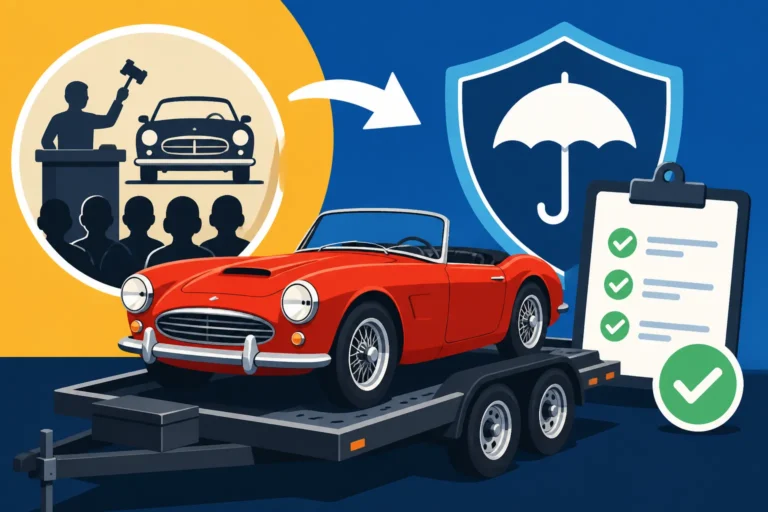
It’s always a good idea to discuss additional transit coverage with your specialty classic car insurer. Many policies can be endorsed to provide "in-transit" coverage, specifically protecting your vehicle while it's on a professional hauler. This ensures that any gap between the transporter's liability and your car's true value is covered by your own policy. Also, consider the type of transport: open-air trailers are cheaper but expose your car to elements and road debris, while enclosed trailers offer superior protection. Your insurer might even have recommendations for trusted classic car transporters. When assessing your options, consider what a comprehensive Towing Coverage for Classic Cars Explained policy might offer, even if you’re using a third-party transporter.
Coverage for Storage Before Permanent Garaging
What if your new acquisition is a project car, a barn find, or simply not ready for the road? Or maybe you’re waiting for your dedicated classic car garage to be ready. You can’t drive it, but it still needs protection. This is where "laid-up" or storage-only policies come into play. These specialized coverages protect your classic against risks like theft, fire, vandalism, and natural disasters (like floods or hail) while it's not being driven.
Such policies are typically less expensive than full driving coverage because the risk of road accidents is removed. However, you'll still need to provide details about the storage location – Is it a secure, enclosed garage? Is it heated? – as these factors can influence eligibility and rates. Even if it's not a permanent home, documenting the temporary storage location and its security measures is vital. Remember, a car stored in a locked garage is far less risky (and therefore cheaper to insure) than one sitting under a tarp in a driveway. Understanding How Storage Affects Classic Car Eligibility is key here, as insurers have specific requirements.
Common Pitfalls and Smart Strategies
Bringing a classic car into your life is an exciting journey, but it’s one that comes with its own set of unique challenges and potential traps. Being aware of these pitfalls and adopting smart strategies from the get-go can save you a world of trouble down the line.
The "Just This Once" Temptation
I’ve heard this story countless times: "Oh, it's only a few miles, I'll just drive it home quickly." This "just this once" mentality is incredibly dangerous and often leads to the worst outcomes. The moment you pull out onto public roads, you are subject to all traffic laws and liability. If you have an accident, even a minor fender bender, without insurance, the consequences can be severe.
These consequences aren't just theoretical. You could face hefty fines, points on your license, impoundment of your newly acquired classic, and even jail time in some jurisdictions. More critically, if you cause an accident, you could be personally sued for hundreds of thousands of dollars for property damage and bodily injury, wiping out your savings and more. It's simply not worth the risk. Always ensure you have adequate, agreed-value classic car insurance before that first wheel turns on public asphalt. There's no such thing as a "safe" uninsured drive.
Documenting Everything for Future Claims
You know the old adage: "An ounce of prevention is worth a pound of cure." For classic car insurance, thorough documentation is that ounce of prevention. Before you even drive your car home, and certainly before any modifications or restoration begins, meticulously document its condition. Take high-resolution photos and videos of every inch of the car – the exterior, interior, engine bay, trunk, and even the underside if possible. Note any existing dents, scratches, rust, or other imperfections. This creates a baseline.
Keep meticulous records of the purchase, including the bill of sale, title, and any communication with the seller. If the car came with any service records or provenance, keep those in a safe place. This documentation is invaluable if you ever need to file a claim. It helps prove the car's condition before an incident and substantiates its agreed value. Many insurers, including Hagerty, appreciate this level of detail as it streamlines the claims process. For higher-value vehicles, or those with unique features, a professional appraisal is a smart investment, which is a key part of How Classic Car Appraisals Work for Insurance. It provides an objective, expert valuation that solidifies your agreed value with the insurer.
After the Drive: Setting Up Your Long-Term Policy
Congratulations! Your classic is safely home. But the journey isn't over. That initial transit policy was likely a bare-bones version designed to get the car safely from point A to point B. Now, it's time to refine your coverage to truly match your collector lifestyle and protect your investment for the long haul.
Fine-Tuning Your Agreed Value
While you might have established an initial agreed value to get the car home, this is an excellent time to revisit and potentially adjust it. If your initial estimate was based solely on the purchase price or a quick online valuation, now is the time to get a more precise figure. Consider having a professional appraisal done, especially if your car is rare, has unique features, or its market value is rapidly appreciating. An expert appraiser can account for provenance, restoration quality, originality, and current market trends, providing a robust justification for a higher agreed value.
Once you have this updated valuation, contact your insurer. Providing them with a formal appraisal can help increase your agreed value, ensuring that your policy truly reflects your car's worth. Remember, the classic car market can fluctuate, so it's a good practice to review your agreed value periodically, perhaps annually or every few years, to ensure your coverage keeps pace with your car's appreciating or evolving value. This process directly relates to How Agreed Value Is Determined and ensures your investment is always adequately protected.
Expanding Coverage for Your Collector Lifestyle
With your classic safely ensconced in its new home, it’s time to think beyond basic protection and tailor your policy to your specific needs as a collector. Many specialty insurers offer a host of endorsements and add-ons that can provide truly comprehensive coverage.
If your new classic is a project car, or if you plan on undertaking significant work, consider adding Restoration Coverage for Classic Cars. This is crucial because it accounts for the increasing value of the vehicle as you invest time, money, and parts into its restoration. Without it, your policy might only cover the pre-restoration value, leaving a huge gap in protection. Do you have a treasure trove of original spare parts, tools, or automobilia? Many collectors do, and these items can be incredibly valuable. Policies can be extended to include Spare Parts Coverage Explained, protecting these valuable components from theft or damage. Finally, review your mileage limits. While many classic car policies come with low annual mileage caps (e.g., 2,500 or 5,000 miles) suitable for pleasure use, if you plan on more extensive touring or club events, you might need to adjust your mileage tier or opt for an unlimited mileage option.
Comparing Immediate and Long-Term Classic Car Insurance Options
To help you visualize the differences, here's a quick comparison of the types of coverage you might consider when acquiring a classic car.
| Feature | Immediate Transit Coverage (Basic) | Long-Term Classic Car Policy (Comprehensive) |
|---|---|---|
| Purpose | Legal compliance, basic protection for journey home | Full protection for collecting, showing, pleasure driving, and storage |
| Valuation | Often an estimated Agreed Value based on purchase price/photos | Formal Agreed Value, typically with appraisal or detailed documentation |
| Coverage Types | Liability, Collision, Comprehensive (often with higher deductibles) | Liability, Collision, Comprehensive, plus various endorsements |
| Add-ons | Minimal, focused on core vehicle protection | Restoration coverage, spare parts, roadside assistance, inflation guard |
| Mileage Limits | Usually low, suitable for single trip home | Specific mileage tiers (e.g., 1,000, 2,500, 5,000, unlimited) |
| Driver Details | Primary driver only, strict household requirements | May include occasional drivers, specific age requirements like Minimum Age for Classic Car Insurance Drivers |
| Storage Rules | Basic secure storage (garage) implied or required | Detailed requirements for secure, enclosed, non-daily storage |
| Cost | Potentially slightly higher for immediate setup if not pre-planned | Typically lower than regular insurance due to limited use |
| Flexibility | Limited, designed for quick activation | Highly customizable with many endorsements |
| Key Insurers | Hagerty, Grundy, American Collectors, American Modern | Hagerty, Grundy, American Collectors, American Modern, Heacock Classic |
Disclaimer
Please remember that insurance policies and requirements can vary significantly by state and insurer. This guide provides general information and recommendations. Always consult with a licensed insurance professional to discuss your specific needs and obtain accurate quotes and policy details for your classic car. The information provided herein is not financial or legal advice.