How to Insure a Datsun 240Z
Owning a Datsun 240Z is a unique joy, a piece of automotive history that represents a groundbreaking era for Japanese sports cars. But when it comes to insurance, many owners feel frustrated trying to fit their cherished "Z-car" into the rigid boxes of standard auto policies, which often fail to recognize its true value. This comprehensive guide will walk you through the specifics of how to insure your Datsun 240Z, ensuring it receives the specialized protection it deserves without the common headaches.
The Enduring Appeal and Unique Insurance Needs of the Datsun 240Z
The Datsun 240Z, launched in 1969, wasn't just another car; it was a phenomenon that redefined the sports car landscape. With its sleek European-inspired design, robust inline-six engine, and affordable price point, it quickly earned a reputation as the "poor man's E-Type," a testament to its performance and styling prowess. Today, the 240Z holds a significant place in collector car culture, admired for its historical impact, engaging driving dynamics, and increasingly rare status. This combination of classic appeal and rising value presents distinct challenges when seeking appropriate insurance coverage.
Why Standard Auto Insurance Misses the Mark for a 240Z
Standard auto insurance policies are designed for daily drivers, depreciating assets that lose value the moment they leave the dealership lot. They typically rely on "Actual Cash Value" (ACV) when settling a claim, meaning they'll pay out the replacement cost of the vehicle minus depreciation. For a vintage vehicle like your Datsun 240Z, which has long since passed its depreciation curve and is now appreciating in value, ACV is a completely inadequate and often devastating valuation method. Imagine pouring thousands into a meticulous restoration, only for an accident to occur, and your standard insurer offers you a fraction of what you've invested, based on some outdated market value for a regular used car.
This is a common frustration for classic car owners, who often learn the hard way that their passion project isn't protected appropriately. Regular policies simply aren't equipped to understand the nuances of collector vehicles – the provenance, the unique parts, the labor of love that goes into maintaining them. This is precisely why understanding the difference between standard and specialty coverage, as detailed in our guide on Classic Car Insurance vs Regular Insurance: What's Required, is absolutely crucial. A specialty policy recognizes your 240Z as an appreciating asset, built to protect your investment rather than merely reimburse you for a depreciated commuter car.
Key Eligibility Requirements for a Datsun 240Z Specialty Policy
Insuring a classic like your Datsun 240Z with a specialized collector car policy isn't quite the same as insuring your daily SUV. Specialty insurers have specific criteria to ensure they're covering genuine collector vehicles that are well-maintained and driven responsibly. These requirements protect both the insurer and the collector community, helping to keep premiums reasonable for everyone. Don't worry, they're typically straightforward and designed to fit the classic car lifestyle.
Vehicle Specifics and Condition Requirements
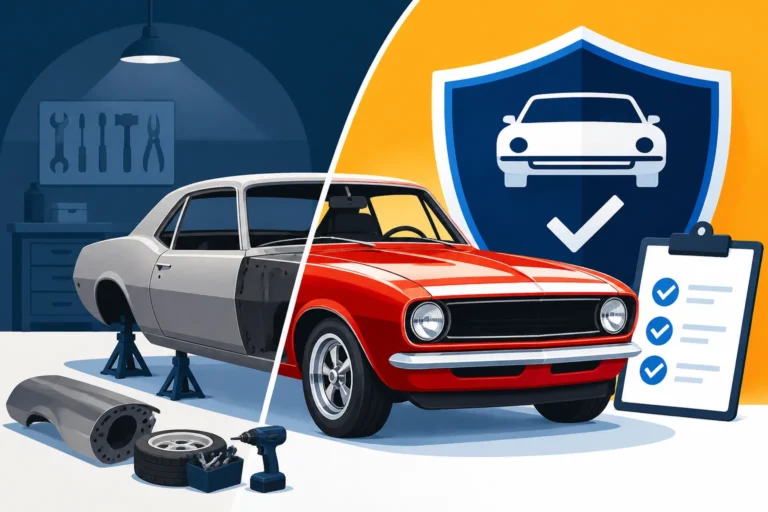
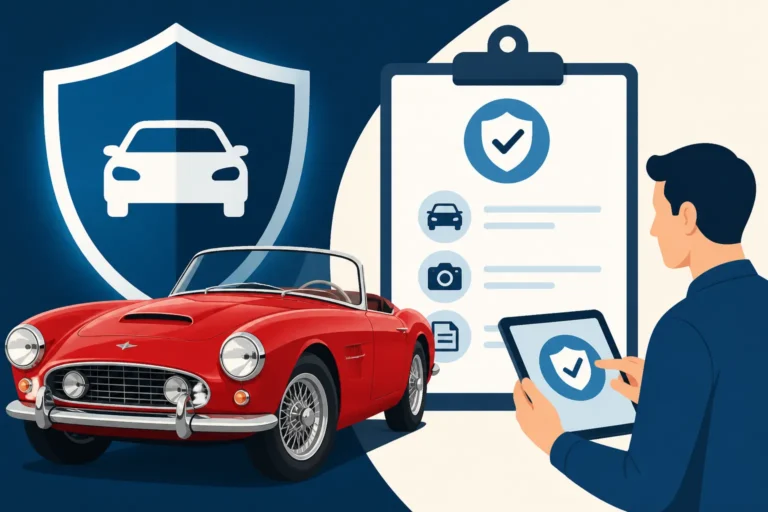
The Datsun 240Z, being an iconic model, generally fits well within most classic car insurance criteria. Typically, a car needs to be a certain age to qualify as a classic, often 20-25 years old, though some insurers consider "youngtimers" or modern collectibles. Your Datsun 240Z, depending on its year of manufacture, will easily meet this primary age requirement. For instance, a 1972 240Z is certainly old enough. Beyond age, the vehicle's condition is paramount. Insurers want to see that your 240Z is in good shape, well-maintained, and ideally restored or preserved. This doesn't mean it has to be concourse-ready, but it shouldn't be a rusty project car sitting on cinder blocks – unless you're specifically seeking coverage for a car under restoration, which some specialty providers do offer. Many companies, including prominent ones like Hagerty, often request photographs or even a light Classic Car Insurance Inspection Requirements to verify the vehicle's condition and help establish its value. This is a far cry from a basic drive-through appraisal at a standard insurance agency.
Modifications are another area to consider. While a perfectly stock 240Z is often preferred, many owners personalize their cars with period-correct upgrades or modern enhancements like improved suspension or engine modifications. If your Datsun 240Z has been modified, it's essential to disclose these changes. Some specialty insurers are more accommodating of Modified Car Insurance Eligibility for classics, understanding that tasteful modifications can enhance a car's value and driving experience, as long as they don't compromise its safety or original character. Be prepared to provide documentation for significant modifications, especially those that add substantial value.
Driver and Usage Restrictions
Classic car insurance isn't for cars that serve as primary transportation. The core principle behind the lower premiums for classic car insurance is that these vehicles are driven sparingly, with care, and primarily for pleasure. This leads to several key driver and usage requirements:
- Limited Mileage: Most policies come with Classic Car Insurance Mileage Limits by State, typically ranging from 1,000 to 5,000 miles per year. This limitation is central to the "pleasure use" clause. You're expected to use your 240Z for weekend cruises, car shows, club events, or occasional special trips, not your daily commute to work in downtown Atlanta. Some policies offer higher mileage tiers or even unlimited mileage, but these usually come with a higher premium.
- Secondary Vehicle: You almost always need a separate, modern vehicle for your daily driving needs. This is a fundamental aspect of Do You Need a Separate Car for Classic Insurance. The classic car insurance policy isn't there to cover your primary mode of transport, but rather your collectible asset.
- Driving Record: A clean driving record is usually a must. Specialty insurers generally prefer drivers with no major violations or accidents, as this indicates responsible driving habits, which aligns with the careful use of a classic. If you have a few minor blemishes, you might still qualify, but it's important to be upfront.
- Minimum Age: While you don't have to be a senior citizen, many policies have a Minimum Age for Classic Car Insurance Drivers, often requiring the primary driver to be 25 years or older. This reflects the statistical data that older, more experienced drivers typically have fewer accidents.
Adhering to these usage guidelines is vital not just for qualifying, but also for ensuring your policy remains valid. Misrepresenting your usage could lead to a denied claim down the line, which would be a heartbreaking scenario for any 240Z owner.
Secure Storage Requirements
One of the less glamorous but equally crucial aspects of classic car eligibility is secure storage. Specialty insurers expect your Datsun 240Z to be protected when it's not being driven. This usually means storing it in a locked, private garage. Parking your classic Z-car on the street, in a carport, or in an open driveway is generally not acceptable for a specialty policy.
The reasoning is simple: a secure, enclosed space significantly reduces the risk of theft, vandalism, and environmental damage. Imagine the despair of a pristine 240Z being hit by hail or stolen from an unsecured spot. That's a risk insurers want to minimize. Our guide on Garage Storage Requirement for Classic Cars delves deeper into the specifics, but the general rule is a private, fully enclosed, and lockable structure. Some policies might allow for a shared garage in an apartment complex if it's secure, but a standalone, private garage at your home is the ideal scenario. In some cases, depending on your policy and location, off-site storage in a dedicated classic car facility might also be an option if you lack adequate space at home.
Understanding Coverage Types Critical for Your Datsun 240Z
When you're insuring a vehicle as special as a Datsun 240Z, standard coverage simply won't cut it. You need specialized protection that understands and respects the true value of your car. This is where the core offerings of classic car insurance shine, providing peace of mind that your investment is genuinely protected.
Agreed Value: The Gold Standard for Your 240Z
This is arguably the most critical feature of any classic car insurance policy and an absolute non-negotiable for your Datsun 240Z. Unlike "Actual Cash Value" (ACV) which depreciates your car, or "Stated Value" which can leave you underinsured, Agreed Value Coverage Explained means that you and the insurance company agree on your car's value before the policy is issued. This specific amount, the "agreed value," is what you will be paid in the event of a total loss, no questions asked, no deductions for depreciation.
For a Datsun 240Z, whose market value can fluctuate based on condition, originality, and current collector trends, agreed value is indispensable. Let's say you've got a beautifully restored 1971 240Z with a show-quality paint job and meticulously rebuilt engine, and you agree with your insurer, perhaps Hagerty, on a value of $60,000. If that car is totaled, you get $60,000. Period. This contrasts sharply with a standard policy where a claims adjuster might look up a generic NADA guide entry and offer you a fraction of that amount, citing age and "wear and tear," despite your car being an appreciating asset. Our guide on How Agreed Value Affects Premiums further clarifies why this protection is worth every penny. It protects your financial investment and honors the blood, sweat, and tears you've put into your beloved Z-car.
Specialty Add-ons: Protecting Your Investment and Passion
Beyond agreed value, classic car insurers offer a suite of specialized add-ons and endorsements designed specifically for collectors. These additional coverages can be crucial for a Datsun 240Z owner, as they address risks and needs that are simply not present in standard auto policies.
- Restoration Coverage: If your 240Z is a work in progress, this is a lifesaver. Restoration Coverage for Classic Cars allows you to insure your car's increasing value as you invest more time and money into its restoration. You can periodically update the agreed value to reflect new parts, professional labor, and your own hard work. Imagine you're halfway through a frame-off restoration on a 1973 240Z, having already spent $25,000 on parts and labor. Without this coverage, an accidental garage fire could leave you with only the pre-restoration value. With restoration coverage, your growing investment is protected at every stage.
- Spare Parts Coverage: Many 240Z owners collect rare or expensive spare parts, knowing how challenging it can be to find genuine vintage components. Spare Parts Coverage Explained extends protection to these valuable parts, whether they're stored in your garage, at a mechanic's shop, or even in transit to a swap meet. If you have a stash of NOS (New Old Stock) carburetors, a spare engine block, or an original dashboard, this coverage ensures they're protected against theft or damage.
- Roadside Assistance: While standard roadside assistance exists, classic car policies often provide specialized services. This typically includes flatbed towing, which is essential for protecting the low ground clearance and delicate components of a classic car like the 240Z from further damage during transport. Regular tow trucks with hook-and-chain methods are a definite no-go for classics.
- Cherished Salvage Coverage: In the event of a total loss, this unique coverage allows you to retain the salvage of your beloved 240Z. This is invaluable if you want to keep sentimental parts, harvest rare components for another project, or simply can't bear to see your car scrapped entirely. It's an emotional lifeline for many collectors.
- Inflation Guard: The market for classic cars, including Datsun 240Zs, can sometimes see values increase over time. Inflation Guard automatically adjusts your car's agreed value upward by a small percentage each policy term (e.g., 2-6%) without requiring a new appraisal. This helps prevent your 240Z from becoming underinsured as its market value rises.
- Automobilia and Memorabilia Coverage: If your passion extends beyond the car itself to collectibles like vintage Datsun posters, scale models, or even original sales brochures, some insurers offer protection for these items as well. This ensures your entire collection is safeguarded.
Considering these Classic Car Insurance Add-Ons and Endorsements is crucial for building a truly comprehensive policy that reflects the reality of owning and maintaining a Datsun 240Z.
Getting the Best Classic Car Insurance Quote for Your Datsun 240Z
Navigating the world of specialty classic car insurance can seem a bit daunting at first, but with a little preparation, securing the right policy for your Datsun 240Z is a straightforward process. The key is to approach it systematically, ensuring you highlight what makes your Z-car special.
Preparing for Your Insurance Quote
Before you even reach out to an insurer, gather all the pertinent information about your Datsun 240Z. The more details you can provide, the more accurate your quote will be, and the smoother the process will go.
- Vehicle Details:
- Year, Make, Model: Of course, your Datsun 240Z, including its specific year (e.g., 1970, 1972).
- VIN (Vehicle Identification Number): Essential for identification.
- Odometer Reading: To confirm limited usage.
- Condition: Be honest and descriptive. Is it concourse, excellent, good, or a driver?
- Restoration History: Document any major restorations, including dates, costs, and before/after photos. This is particularly important if you plan to get Restoration Coverage for Classic Cars.
- Modifications: List all non-stock modifications, providing details and costs where possible. This includes engine upgrades, suspension changes, custom paint, or interior work.
- Photos: High-quality photos from all angles, including the interior, engine bay, and trunk, can go a long way. They visually confirm the condition and any modifications.
- Storage Details:
- Location: Where is your 240Z primarily stored? A locked private garage is ideal.
- Security Measures: Alarm systems, security cameras, or a secured classic car storage facility are all factors that can influence your premium.
- Usage Plans:
- Anticipated Annual Mileage: Be realistic. How many miles do you truly expect to drive your 240Z each year for pleasure, shows, or club events?
- Primary Use: Reiterate that it's for pleasure, not daily commuting.
- Car Club Memberships: Membership in a recognized Datsun or Z-car club (like the Z Car Club Association or specific regional chapters) can sometimes qualify you for discounts and demonstrates your commitment to the hobby.
- Driver Information:
- Your Driving Record: Have your driving history ready.
- Other Household Drivers: If anyone else in your household might drive the car, they'll need to be listed.
- Other Vehicles: Provide details on your daily driver(s) to confirm the 240Z is a secondary vehicle.
- Desired Agreed Value: Have a realistic target in mind. Research current market values for comparable Datsun 240Zs on sites like Hagerty Valuation Tools, Bring a Trailer, or ClassicCars.com. If your car is particularly rare or unique, you might consider an independent appraisal to support your desired value. This is a key step in determining your How to Determine Your Agreed Value.
Gathering these details upfront will make the quoting process much faster and more accurate when you embark on How to Get a Classic Car Insurance Quote.
Comparing Specialty Insurers for Your 240Z
Once you have your information ready, it's time to shop around. While standard insurers might offer "classic" policies, for a Datsun 240Z, you'll almost always get better coverage and terms from a dedicated specialty insurer. These companies live and breathe classic cars, and they understand the specific needs of collectors.
- Focus on Specialty Providers: Companies like Hagerty, Grundy, American Collectors Insurance, and Leland-West are leaders in the classic car insurance market. They specialize in agreed value policies and offer the specific add-ons that protect your unique investment. They understand the nuances of a Datsun 240Z's value and the collector lifestyle. You can find a comprehensive list of providers in our Best Classic Car Insurance Companies guide.
- Get Multiple Quotes: Don't settle for the first quote you receive. Each insurer has slightly different underwriting guidelines and pricing structures. Getting quotes from at least two or three specialty providers will allow you to compare not just price, but also the specific coverages offered, deductibles, and customer service reputation.
- Ask Detailed Questions: When comparing, go beyond just the premium. Ask about:
- Agreed Value Process: How is it established? What documentation do they require? How often can it be updated?
- Mileage Tiers: What are their Classic Car Insurance Mileage Limits by State and what are the costs associated with different tiers?
- Restoration/Spare Parts Coverage: Are these automatically included, or are they add-ons? What are the limits?
- Claim Process: How do they handle claims for classics? What is their reputation for fair payouts?
- Deductibles: What deductible options are available and how do they impact your premium?
- Exclusions: Are there any specific exclusions you should be aware of, perhaps related to certain types of modifications or events?
- Consider Bundling: While specialty insurers focus on classics, some may offer multi-car discounts if you have other collector vehicles, or even homeowner's insurance. It's worth asking if they have options for Requirements for a Multi-Vehicle Collection Policy.
For many Datsun 240Z owners, getting an insurance policy from a company like Hagerty can feel like a breath of fresh air. They speak the language of collectors, understand the passion, and provide the tailored coverage that a generic insurer simply cannot. By preparing thoroughly and comparing wisely, you can secure a policy that truly protects your cherished Datsun 240Z for years of enjoyment.
Here's a quick comparison of what you might expect from standard versus specialty classic car insurance for your Datsun 240Z:
| Feature | Standard Auto Insurance (Typical) | Specialty Classic Car Insurance (Recommended) |
|---|---|---|
| Valuation Method | Actual Cash Value (ACV) – depreciates with age | Agreed Value – predetermined payout for total loss |
| Usage | Daily driving, commute | Pleasure use, shows, limited mileage (e.g., 2,500 miles/year) |
| Storage | Any legal parking spot, including street | Secured, private garage (primary requirement) |
| Modifications | May not cover custom parts, may increase rates | Often covers tasteful modifications, some even restoration |
| Pricing | Generally higher for older vehicles due to age perception | Often lower due to limited use and responsible ownership |
| Roadside Assistance | Standard tow, may damage classic | Flatbed towing, specialized services for classics |
| Special Coverages | None typically offered (restoration, spare parts) | Restoration, spare parts, inflation guard, cherished salvage |
| Claims Process | Focus on depreciation, generic parts | Focus on agreed value, original or OEM parts, specialized repair |
| Driver Profile | All licensed drivers | Experienced, responsible drivers (often 25+), clean record |
Disclaimer
The information provided in this article is for general informational purposes only and does not constitute professional insurance advice. Insurance policies vary by provider and individual circumstances. It is essential to consult with a qualified insurance professional or specialty classic car insurance company to discuss your specific needs and obtain personalized quotes and coverage recommendations for your Datsun 240Z.