Requirements for a Replica Car Policy
Bringing a replica car into your garage is an incredibly exciting endeavor, whether you've painstakingly built it yourself or acquired a masterfully crafted recreation. You've poured your heart, soul, and often significant funds into owning something unique, a true homage to automotive history. But when it comes to insuring that beauty, you might hit a wall of confusion, realizing that standard auto policies just don't get it. This guide will meticulously break down the specific requirements and nuances of securing the right insurance for your replica car, ensuring your prized possession is properly protected without the headache of misunderstandings.
Defining a Replica Car in the World of Insurance
Before we dive into the nitty-gritty of policies, it's vital to understand what an insurance company, particularly a specialty insurer, considers a "replica car." This isn't just semantics; it directly impacts how your vehicle is valued and what coverage options are even available to you. Many owners get frustrated when their detailed, historically accurate replica isn't treated the same as an original classic, but there are distinct differences in how insurers assess risk and value.
What Makes a Car a Replica?
A replica car is essentially a vehicle designed to visually mimic another, typically classic or exotic, automobile. While some might use the term "kit car" interchangeably, there's a subtle but important distinction. A kit car often involves assembling a body onto an existing chassis, sometimes with various donor components, whereas a replica aims for a more exact visual recreation, often from a bespoke chassis or highly specialized components. Think of a meticulously built Shelby Cobra recreation versus a fiberglass dune buggy on a VW Beetle chassis. Both are "non-original" in their construction, but the intent and execution vary wildly, influencing their insurance classification.
For insurers, the key is that a replica isn't an original manufacturer's product. It's often built from the ground up, or substantially modified from a donor vehicle, to look like another car. This means it doesn't have a VIN that directly links it to the original manufacturer or model year it's mimicking. This lack of original provenance, while not diminishing its aesthetic appeal or your personal investment, presents a unique challenge for valuation and risk assessment. It's not about being "fake"; it's about being different in construction and history.
Distinguishing Replicas from Restomods and Customs
It's easy to lump all non-original classics together, but insurers draw important lines. A replica is different from a "restomod," which is an original classic car that has been restored and then modified with modern components for performance, comfort, or safety. A 1969 Camaro with an LS engine swap, modern suspension, and air conditioning is a restomod. It retains its original VIN and core identity as a '69 Camaro. Similarly, a custom car might involve unique bodywork or radical modifications, but it usually starts with an identifiable production vehicle.
For a replica, the intent is to create an appearance, not just to modify an existing one. For instance, a Ferrari 250 GTO replica, no matter how perfect, is not an original Ferrari 250 GTO. This distinction means that while a restomod might still be insured under a standard classic car policy, a replica almost certainly requires a policy specifically designed for Kit Car and Replica Insurance Requirements. Understanding this fundamental difference is the first step in getting your replica properly covered.
Why Replicas Require Specialized Insurance Policies
The challenges of insuring a replica car often catch new owners off guard. You might assume your stunning replica, which looks identical to a million-dollar classic, would slot right into a classic car policy. However, that's rarely the case. Standard auto insurance companies, accustomed to factory-built vehicles with clear market values and standardized parts, often struggle to assess the unique nature and value of replicas. They simply don't have the experience or the risk models for them, leading to either outright refusal or insufficient coverage.
Limitations of Standard Auto Insurance
Imagine trying to get your meticulously recreated 1960s Porsche 356 Speedster replica insured with a mainstream carrier like Geico or Progressive. Their systems are designed for mass-produced vehicles. They'll look at the VIN, see it doesn't match a Porsche, and potentially classify it as a "modified vehicle" with a declared value based on its donor components, not its finished form. If you've built it on a custom chassis, it might not even fit their system at all.
The biggest problem is "Actual Cash Value" (ACV). A standard policy typically pays out the depreciated market value of a vehicle in case of a total loss. For a replica, this could mean they look at the value of the engine, chassis, and body components individually, often significantly underestimating your true investment in time, labor, and specialized parts. You could be left with pennies on the dollar, a heartbreaking outcome for a car you've poured so much into. This is precisely why a classic car insurance vs regular insurance: what's required for replicas is so crucial.
The Role of Agreed Value for Replicas
This is where specialty classic car insurers like Hagerty really shine. They understand that a replica's value isn't easily determined by a blue book. Instead, they offer "Agreed Value" coverage. Agreed Value Coverage Explained means that you and the insurance company agree on the fair market value of your replica before the policy is issued. In the event of a total loss, the insurer pays out that exact agreed-upon amount, no questions asked, no depreciation applied.
For replica owners, Agreed Value is non-negotiable. It protects your significant investment in the build, the unique parts, and the skilled labor that went into creating your car. Without it, you're essentially gambling that a standard insurer would somehow grasp the true worth of your bespoke vehicle, which is a gamble you absolutely cannot afford to take. This understanding of unique value is a key differentiator when exploring Classic Car Insurance Coverage Types Explained.
Key Eligibility Requirements for Replica Car Policies
While specialty insurers are much more accommodating than standard carriers, replica cars still need to meet certain criteria to qualify for a dedicated policy. These requirements are in place to ensure the vehicle is genuinely well-built, safely operable, and maintained in a way that minimizes risk. Don't worry, they're typically quite sensible and aimed at protecting both your investment and the insurer's.
Documentation and Valuation Proof
One of the primary requirements is comprehensive documentation. Because replicas don't have a standardized market value, you'll need to prove what your car is worth. This often involves:
- Appraisal: A professional appraisal from a qualified classic or replica car appraiser is almost always required. The appraiser will assess the quality of the build, the components used, the level of detail, and current market trends for similar high-quality replicas. This appraisal serves as the foundation for your Agreed Value. Understanding Appraisal Requirements for Classic Car Insurance is vital.
- Build Sheets/Receipts: If you built the car yourself or had it built, detailed records of parts purchased, labor hours, and specialized services can significantly bolster your valuation. Photos documenting the build process are also extremely helpful.
- Title and Registration: You'll need a clear title and registration, often issued by your state as a "specially constructed" vehicle, "kit car," or "replica." The vehicle identification number (VIN) issued by the state will be unique to your replica.
- Photos: High-quality photographs of your finished replica, showing all angles, interior, engine bay, and any unique features, are essential for the insurer to understand the vehicle's condition and quality.
Without solid documentation, insurers will have a hard time establishing an Agreed Value, which could lead to lower coverage or even refusal.
Usage Restrictions and Storage Requirements
Just like original classic cars, replicas are typically insured under specific usage guidelines that reflect their limited, recreational nature. These aren't daily drivers.
- Limited Mileage: Most replica policies come with mileage restrictions, often ranging from 1,000 to 5,000 miles per year. This acknowledges that the car is primarily for pleasure drives, car shows, and club events, not commuting. You might select a mileage tier that fits your anticipated use, and this choice will affect How Mileage Limits Affect Cost.
- Pleasure Use Only: The policy will almost certainly stipulate that the car is for "pleasure use" only, meaning no regular commuting, business use, or racing. This helps specialty insurers keep premiums lower because the vehicle is exposed to less risk.
- Secure Storage: Insurers usually require that your replica be stored in a secure, enclosed, and locked garage when not in use. This could be an attached garage, a detached garage, or a dedicated storage facility. Parking it on the street or in an open carport generally won't qualify. This helps mitigate risks like theft, vandalism, and weather damage.
It's crucial to be honest about your intended use and storage. Misrepresenting these factors could lead to a denied claim down the line, a situation no owner wants to face. If you're looking into Classic Car Insurance for a Daily Driver, a replica policy probably isn't the right fit unless you have specific, rare circumstances an insurer approves.
Driver and Household Requirements
The drivers of a replica vehicle also need to meet specific criteria, which are often similar to those for other classic car policies.
- Primary Driver Experience: Typically, the primary driver needs to have a good driving record with no major infractions (DUIs, excessive speeding tickets) in recent years. This is because replicas, while often well-built, can be high-performance machines that require skill and responsibility to handle.
- Access to Other Vehicles: Insurers prefer that the replica car not be your only vehicle. They want to see that you have another primary vehicle for daily transportation, reinforcing the "pleasure use" aspect of the replica. This ensures the replica won't be pressed into service for everyday errands.
- Minimum Age for Drivers: While there isn't always a hard-and-fast rule, some insurers might have minimum age requirements for drivers, especially for high-value or high-performance replicas. They want experienced drivers behind the wheel.
- Household Drivers: All licensed drivers in your household usually need to be disclosed on the policy, even if they won't be regularly driving the replica. This allows the insurer to assess the overall risk profile of the household.
These requirements are designed to minimize the risk of accidents and ensure the replica is handled responsibly, maintaining its condition and value. For a broader look at what it takes to get coverage, consider checking out Classic Car Insurance Eligibility Requirements.
Coverage Options Beyond the Basics for Replicas
Once you meet the basic eligibility requirements, it's time to build a robust policy that truly protects your replica. Beyond the essential Agreed Value coverage, specialty insurers offer a range of add-ons and endorsements that are particularly valuable for unique, custom-built vehicles.
Comprehensive and Collision Coverage Specifics
Even with Agreed Value, the details of your comprehensive and collision coverage are vital. These policies will protect against perils like:
- Theft: Replicas, especially those mimicking highly desirable cars, can be targets for thieves. Comprehensive coverage protects against this.
- Vandalism: Malicious damage to your prized possession.
- Fire: An unfortunate risk that can be devastating for any vehicle.
- Natural Disasters: Damage from floods, hail, wind, and other acts of nature.
- Collision: Damage resulting from an impact with another vehicle or object, whether you're at fault or not.
For replicas, insurers understand that sourcing unique body panels or custom-fabricated parts can be difficult and expensive. Your policy should reflect the true cost of repairs, not just generic replacements. This is why having an accurate Agreed Value is paramount, as it informs the maximum payout for both total losses and significant repairs.
Specialized Endorsements for Unique Builds
Specialty insurers understand the unique needs of collectors, and this extends to replica owners. You'll want to consider additional coverages that standard policies simply don't offer:
- Restoration Coverage: If your replica is a work in progress or might undergo future enhancements, some policies offer "vehicle under construction" or Restoration Coverage for Classic Cars. This coverage can increase the Agreed Value incrementally as you invest more in parts and labor during the build, protecting your evolving investment. This is often crucial for custom-built replicas that are rarely truly "finished."
- Spare Parts Coverage: Many replica owners accumulate spare or custom-fabricated parts, which can be quite valuable. Spare Parts Coverage Explained protects these items, whether they're stored in your garage or traveling with your car to a show. This coverage typically has a separate limit, so discuss your needs with your insurer.
- Automobilia and Memorabilia Coverage: While not directly for the car, if you have associated items like scale models, artwork, or signed memorabilia related to the car your replica emulates, you might be able to add coverage for these items under your policy.
- Roadside Assistance and Towing: Standard roadside assistance might not be equipped for a low-slung replica or a car that needs flatbed towing. Specialty policies often include or offer an add-on for flatbed towing, ensuring your car is transported safely without damage. This is particularly important because your replica might not be as robust as a modern daily driver, and a simple tow can cause significant damage if not done properly.
When comparing options, really dig into What Does Classic Car Insurance Cover and don't just compare prices. The unique nature of a replica means generic coverage will almost certainly fall short.
Understanding the Valuation Process for Your Replica
The agreed value is the bedrock of your replica car policy. It's the guaranteed payout amount you'll receive if your car is declared a total loss. But how do you arrive at that number, and what exactly goes into it? This process is often more involved for replicas than for production classic cars, as there's no "book value" to reference.
The Role of Independent Appraisals
For many replica policies, especially for higher-value builds, an independent appraisal is a non-negotiable step. An accredited appraiser specializing in classic and custom vehicles will physically inspect your replica. They'll consider:
- Quality of Workmanship: Is the paint flawless? Are the panel gaps consistent? Is the interior trim expertly fitted? The attention to detail in the build significantly impacts value.
- Component Quality: Are you using high-end aftermarket parts, original refurbished components, or budget options? The provenance and quality of the engine, transmission, suspension, brakes, and other systems all factor in.
- Accuracy of Reproduction: How faithful is the replica to the original design it's mimicking? Is it a loose interpretation or a meticulous recreation down to the smallest badge?
- Market Demand: While replicas don't have the same market as originals, there is a recognized market for high-quality recreations. The appraiser will look at recent sales of comparable replicas.
- Documentation: The appraiser will review your build records, receipts, and photos to understand the investment and effort involved.
The appraisal report provides an unbiased, expert opinion of your replica's value, giving the insurer confidence in the Agreed Value you propose. This also helps in establishing How Agreed Value Affects Premiums.
Keeping Your Agreed Value Up-to-Date
Your replica's value isn't static. If you continue to improve it, add significant upgrades, or if the market for your specific type of replica increases, your Agreed Value should reflect that.
- Annual Review: Make it a habit to review your Agreed Value with your insurer annually, especially around renewal time.
- Documenting Improvements: Keep meticulous records of any new parts, professional labor, or significant enhancements you make to your replica. Take photos of the before-and-after.
- Updating Appraisals: For major changes or significant market shifts, consider getting an updated appraisal. Many insurers allow you to increase your Agreed Value mid-policy with proper documentation.
Failing to update your Agreed Value is a common mistake that can leave you underinsured. If your beautifully upgraded replica is totaled and your Agreed Value is from three years ago, you'll only get that older, lower amount back, missing out on your invested improvements.
Navigating the Registration Process for Replica Cars
Insuring a replica car is one hurdle, but first, you often need to jump through some specific hoops to get it legally registered for the road. The process varies significantly from state to state, and understanding your local Department of Motor Vehicles (DMV) rules is paramount. Many owners find this aspect of replica ownership more daunting than the insurance itself, as states often have less experience with these unique vehicles.
State-Specific Regulations for Specially Constructed Vehicles
Most states don't have a direct "replica car" registration category. Instead, they classify these vehicles as "specially constructed," "assembled," "kit," or "custom-built" vehicles. This often means a more involved process than registering a standard production car.
- VIN Assignment: If your replica doesn't come with a manufacturer's VIN (which most won't), your state's DMV or equivalent agency will assign a new, state-issued VIN. This usually involves an inspection to verify the vehicle's components, ensure it's not stolen, and confirm its roadworthiness.
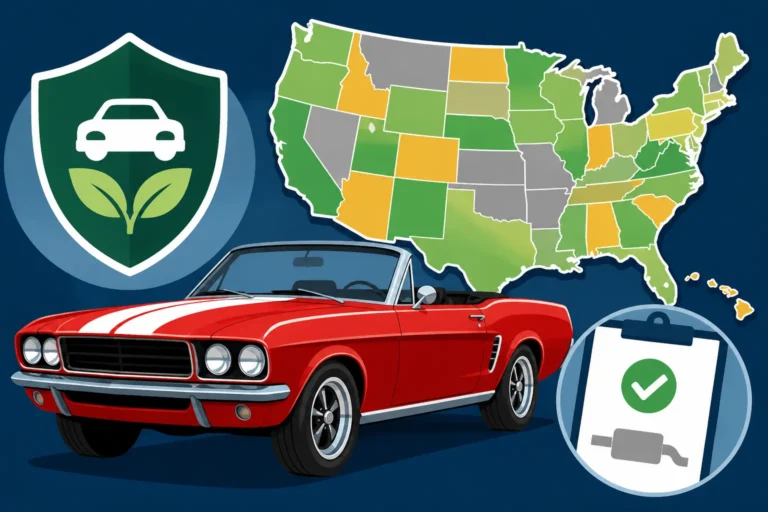
- Emissions and Safety Inspections: Depending on your state and the model year your replica represents, you might be subject to different emissions and safety standards. Some states exempt older original classics from modern emissions tests, but a newly constructed replica, even if it looks old, might be held to contemporary standards or a specific year's standards based on its engine. For example, Classic Car Emissions Test Exemptions by State might not apply to your replica even if it looks like a classic.
- Titling: The title will typically reflect its "specially constructed" status rather than a specific make and model year. This is perfectly normal and what insurers expect to see.
It's a good idea to contact your local DMV or Secretary of State office early in the build or acquisition process to understand their specific requirements. States like California and Texas, with their high volume of custom and replica builds, often have clearer guidelines than states with fewer such vehicles.
How Registration Impacts Insurance Eligibility
Your vehicle's legal registration status directly affects your ability to get insurance. An insurer will always require proof of valid registration.
- Legal Road Status: If your state considers your replica a legitimate, road-legal vehicle with a valid VIN and title, then specialty insurers can move forward. If it's only registered as an "off-road" vehicle or isn't titled, you won't be able to get a standard collector car policy.
- VIN Verification: The state-assigned VIN will be the identifier on your insurance policy. This allows the insurer to track your vehicle for purposes of claims, accident reports, and legal compliance.
- Compliance with Local Laws: Ensuring your replica meets all local safety and emissions regulations (even if it's a specially constructed vehicle) can smooth the path to insurance. A replica that fails basic safety inspections or isn't legally streetable in your area won't be insurable for road use.
Ultimately, the registration process for a replica can be detailed and sometimes frustrating, but it's a necessary step to legally enjoy your car on public roads and secure the appropriate Classic Car Insurance Requirements Explained that you need.
The Importance of Choosing a Specialty Insurer for Replicas
When it comes to insuring your replica car, the choice of insurance provider isn't just a matter of shopping for the best price. It's about finding a partner who truly understands the unique nature of your vehicle, from its construction to its value and use. Trying to force a replica into a standard auto insurance box is like trying to fit a square peg in a round hole – it just won't work, and you'll likely end up frustrated and underinsured.
Why Standard Carriers Fall Short
As we touched upon earlier, mainstream insurers typically operate on models built for mass-produced vehicles. They rely on standard VINs, widely published market values, and a high volume of similar vehicles to assess risk. Replicas defy almost all of these conventions:
- Unique Valuation: There's no Kelly Blue Book for a high-end Shelby Cobra replica or a recreated Bugatti Type 57. Standard carriers simply don't have the tools or expertise to accurately value such a unique asset. They might undervalue it drastically, offering you only "Actual Cash Value" for components, which completely ignores your investment.
- Lack of Understanding: Their agents and adjusters are not typically trained in the nuances of custom builds, unique parts, or the passion that drives replica ownership. This can lead to significant friction if you ever need to file a claim.
- Restrictive Policies: If they even do offer coverage, it will often come with severe restrictions, higher premiums than necessary, and potentially significant gaps in protection that don't address the specific risks associated with a custom-built, low-production vehicle.
You’re better off avoiding the hassle and going directly to someone who speaks your language.
Benefits of Specialty Classic Car Insurers
This is where specialty classic car insurers become your best friend. Companies like Hagerty, Grundy, or American Collectors Insurance are built specifically to serve the collector car community, including replica owners. They offer several crucial advantages:
- Expert Valuation and Agreed Value: This is their bread and butter. They have appraisers and valuation experts who understand the nuances of custom builds and can work with you and your documentation to establish a fair and accurate Agreed Value for your replica. This ensures that if the worst happens, you get paid what your car is truly worth. This directly addresses the problem of Agreed Value vs Stated Value vs Actual Cash Value for unique vehicles.
- Tailored Coverage Options: They offer policies designed with the collector in mind, including options for Spare Parts Coverage Explained, Restoration Coverage for Classic Cars, flatbed towing, and coverage for club events or tours. These aren't just add-ons; they're integral parts of comprehensive protection for a replica.
- Knowledgeable Staff: Their agents and claims adjusters are often enthusiasts themselves or are specifically trained in collector vehicles. They understand the difference between a reproduction and an original, the effort that goes into a build, and the unique challenges of sourcing parts for a custom car. This translates to a smoother, more empathetic claims process if you ever need it.
- Competitive Rates: Counter-intuitively, specialty classic car insurance for replicas often ends up being more affordable than trying to shoehorn it into a standard policy. This is because they understand the limited, pleasure-use nature of these vehicles, the secure storage requirements, and the responsible owner profile, all of which reduce their risk. This is a key reason Why Classic Car Insurance Is Cheaper Than Regular in many cases, even for replicas.
When you're ready to How to Buy Classic Car Insurance for your replica, always prioritize a specialty insurer. They are the only ones who can provide the peace of mind that your unique and cherished replica is truly protected.
Table: Key Differences in Insurance for Replicas vs. Standard Cars
To summarize the critical distinctions, here's a quick comparison of how insurance typically treats replica cars versus everyday vehicles.
| Feature | Standard Auto Insurance (Daily Driver) | Specialty Classic Car Insurance (Replica Car) |
|---|---|---|
| Valuation | Actual Cash Value (depreciated market value) or Stated Value (often capped) | Agreed Value (guaranteed payout amount pre-determined) |
| Eligibility | Production vehicles, standard VINs, broad market appeal | Unique builds, custom VINs, proof of quality/value, collector mindset |
| Usage | Daily commuting, errands, unlimited mileage (typically) | Pleasure use, limited mileage (e.g., 1,000-5,000 miles/year), shows, tours |
| Storage | Flexible, often street or driveway parking | Secure, enclosed, locked garage required |
| Driver Profile | Broad range of drivers, often includes young/inexperienced | Experienced drivers with good records, primary daily driver vehicle needed |
| Coverage Focus | Basic transportation, liability, common risks | Asset protection, unique risks (theft, specialized repair), preservation |
| Special Coverages | Limited add-ons (rental car, towing) | Restoration coverage, spare parts, automobilia, flatbed towing |
| Claims Process | Based on standard market parts and labor | Based on agreed value, specialized parts sourcing, unique repair expertise |
As you can see, the philosophical approach to insurance is vastly different. For a replica car, the specialty route is not just recommended; it's almost a necessity to ensure proper protection and peace of mind.
Disclaimer
Please remember that insurance policies and requirements can change, and state laws vary. This information is intended for general guidance only and does not constitute legal or financial advice. Always consult with a qualified insurance professional to discuss your specific needs and obtain accurate, up-to-date policy information for your replica vehicle.