Requirements for Insuring Automobilia and Parts
It's a familiar scenario for many classic car enthusiasts: you spend years meticulously hunting down that elusive NOS carburetor, painstakingly restoring a vintage gas pump, or curating a collection of rare dealership signs. You invest countless hours and significant money into these treasures, only to realize that your standard insurance policies leave them dangerously exposed. The frustration of potentially losing irreplaceable automobilia or critical spare parts due to an oversight can be immense. This comprehensive guide is designed to cut through that confusion, detailing the specific requirements and best practices for insuring your cherished automobilia and vital classic car parts, ensuring your passion is protected.
What Exactly Counts as Automobilia and Spare Parts for Insurance?
Before diving into the "how-to" of insuring your collection, it’s crucial to understand what insurance providers typically categorize as automobilia and spare parts. This isn't just a semantic exercise; it directly impacts what kind of coverage you'll need and how your items will be valued.
Defining Automobilia
Automobilia broadly refers to items related to the history, culture, and aesthetics of automobiles that are not part of a functioning vehicle itself. Think of it as the art and artifacts surrounding your classic car hobby.
For insurance purposes, automobilia can include:
- Signs and Posters: Original dealership signs, vintage advertising posters, and promotional materials. The value here often hinges on rarity, condition, and historical significance. A pristine, original neon sign from a 1950s Ford dealership could be worth thousands.
- Scale Models and Toys: High-quality, limited-edition scale models, vintage tin toys, or collectible die-cast cars. These aren't just toys; they can be serious investments.
- Literature and Manuals: Original owner's manuals, factory service manuals, sales brochures, period magazines, and historical documents. A complete set of dealer literature for a rare muscle car can be highly sought after.
- Badges, Emblems, and Mascots: Original hood ornaments, grilles, specific model badges, or even factory-issued keychains. These small items often command surprising prices due to their scarcity and connection to iconic vehicles.
- Garage Decor and Collectibles: Vintage gas pumps, oil cans, toolboxes, and other items that enhance the classic car lifestyle or recall a bygone era.
The key across all these items is their collectible value, which often far exceeds any intrinsic material worth. Their condition, provenance (history of ownership), and authenticity play massive roles in their insured value.
Understanding Spare Parts and Components
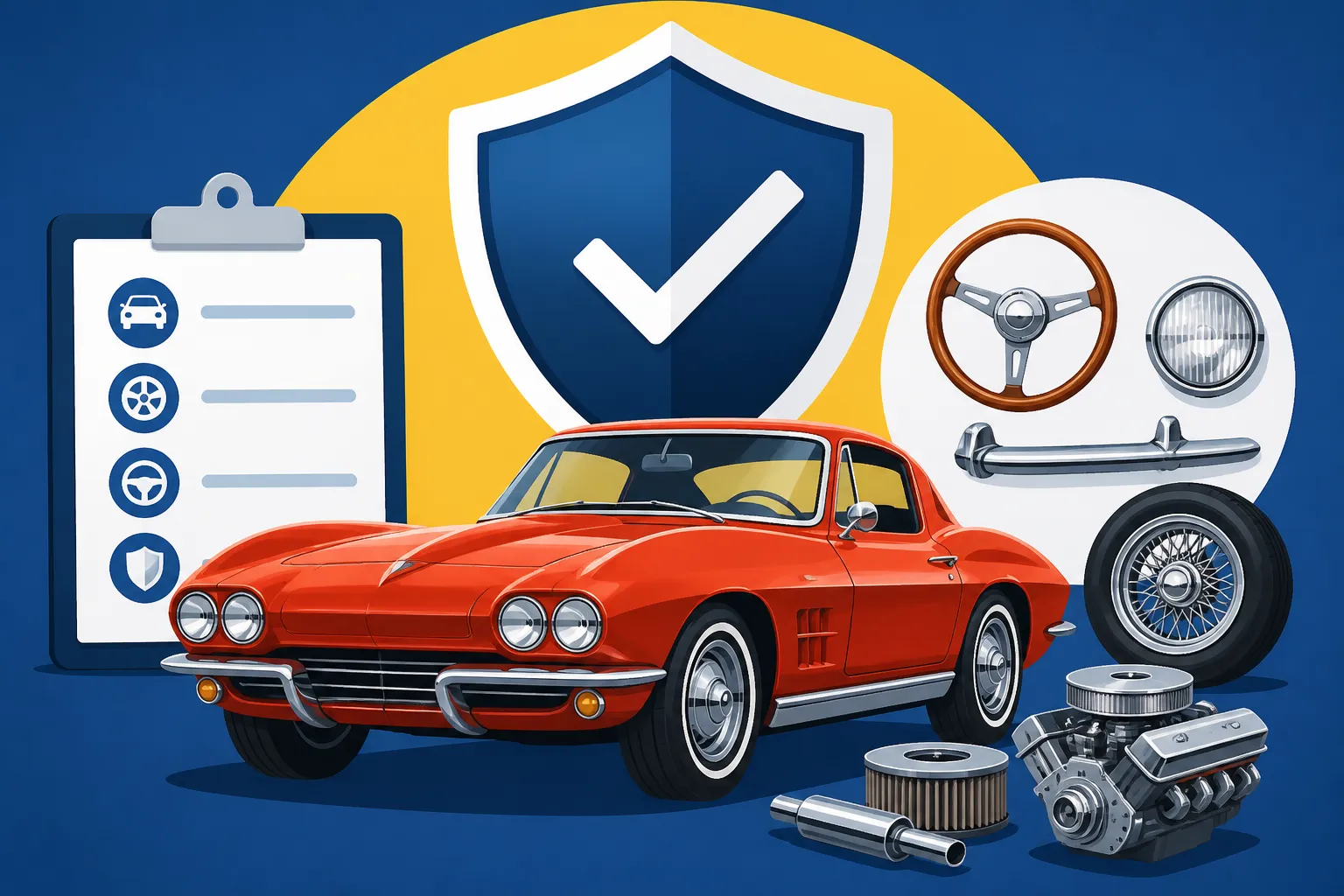
Spare parts, on the other hand, are components intended for a classic vehicle. These aren't just nuts and bolts from the hardware store; they are often rare, period-correct, or newly manufactured parts specific to collectible cars.
Categories typically include:
- New Old Stock (NOS) Parts: These are original factory parts that were never installed on a vehicle. They are highly prized by restorers and collectors for their authenticity and quality. Finding an NOS carburetor for a specific model year of a Chevrolet Corvette or a pristine grille for a 1957 Bel Air can be like striking gold.
- Rebuilt or Restored Components: Professionally rebuilt engines, transmissions, axles, or other major components that are ready for installation or kept as spares. The labor and expertise invested in these items significantly boost their value.
- Rare Used Parts: Specific trim pieces, unique interior components, or hard-to-find mechanical parts removed from donor cars. Their value comes from their scarcity and necessity for accurate restorations.
- Performance Upgrades: Vintage performance parts like period-correct intake manifolds, carburetors, or exhaust systems that might be stored separately for a specific build or as part of a collection.
- Specialty Wheels and Tires: Original factory wheels, racing wheels, or vintage tire sets that are difficult to replace.
Whether an item is automobilia or a spare part, its value is often tied to its rarity, condition, and its direct connection to specific collectible vehicles. This specialized nature is precisely why standard insurance policies typically fall short.
Why Your Standard Policies Won't Cut It for Your Collector's Cache
It's natural to assume your existing insurance policies – your homeowners insurance or your regular auto insurance – would cover these valuable items. Unfortunately, this is one of the biggest pitfalls for classic car enthusiasts. Relying on these policies for your automobilia and spare parts collection is like trying to fix a vintage engine with a modern wrench: it just won't fit, and you'll likely do more harm than good.
The Limitations of Homeowners Insurance
Your homeowners or renters insurance policy is designed to protect your personal property in a general sense, but it's typically not equipped to handle the unique nature and high value of collector items.
Here's why it often falls short:
- Low Sub-Limits for Valuables: Most standard homeowners policies have surprisingly low sub-limits for certain categories of valuables, such as jewelry, art, and collectibles. You might find that your entire collection of rare signs or vintage models is only covered up to a mere $1,000 or $2,500 in total. Imagine losing a $10,000 original Ford service sign or a set of four NOS magnesium wheels, only to discover your policy caps the payout at a fraction of their worth.
- Actual Cash Value (ACV) Payouts: While some homeowners policies might offer replacement cost coverage for general household items, many will default to Actual Cash Value (ACV) for collectibles unless a specific rider is added. ACV means you get the replacement cost minus depreciation. For a vintage item, depreciation can dramatically reduce the payout, leaving you far from able to replace your lost treasure. It certainly won't offer the kind of Agreed Value Coverage Explained that specialty classic car insurance does.
- Coverage for Specific Perils Only: Homeowners policies cover specific perils like fire, theft, or vandalism. While these are important, they might not cover other scenarios relevant to collector items, such as accidental damage during transit to a show, or damage during a restoration project.
- Storage Location Restrictions: If you store valuable parts or automobilia in an off-site storage unit, a separate workshop, or even a different garage on your property that isn't explicitly listed, your homeowners policy might not extend coverage to those locations without special arrangements.
The Gaps in Standard Auto Insurance Policies
Your daily driver's auto insurance policy is even less likely to provide adequate protection for your separate automobilia and spare parts.
Consider these critical shortcomings:
- Parts Must Be "On" the Vehicle: Standard auto insurance primarily covers parts and accessories that are permanently attached to or installed in the insured vehicle. A spare tire in the trunk might be covered, but that meticulously rebuilt engine sitting on a stand in your garage, waiting to be installed in your project car, is almost certainly not.
- No Coverage for Loose Inventory: A box of NOS trim pieces, a set of rare hubcaps, or an expensive vintage radio that isn't currently installed in any vehicle you own won't be covered by a policy designed for a functioning automobile. The policy's focus is on the vehicle as an operating unit, not its component parts in isolation.
- Limited Scope for Transport: While your regular auto policy might offer some limited coverage for personal property inside your car, it won't cover significant value in spare parts being transported in a separate trailer or vehicle unless those items are part of a specific classic car policy's Spare Parts Coverage Explained.
The bottom line is that neither your typical homeowners nor your standard auto policy is designed to appreciate or protect the unique value and risks associated with classic car automobilia and spare parts. You need specialized coverage that truly understands the collector market.
Essential Coverage Options and Documentation for Insuring Automobilia and Parts
Given the limitations of standard insurance, it becomes clear that specialized classic car insurance is the hero here. These policies, offered by companies that truly understand the collector world, are specifically designed to protect your unique investments, including those precious spare parts and automobilia.
The Power of Specialty Classic Car Insurance
Specialty insurers like Hagerty offer policies tailored for collectors. They recognize that your 1965 Ford Mustang isn't just a car; it's a piece of history, and so are the artifacts and components that go along with it. These policies extend far beyond basic vehicle coverage, offering essential endorsements and features for your wider collection.
Look for policies that offer:
- Dedicated Spare Parts Coverage: This is a game-changer. Rather than relying on a general homeowners limit, a specialty policy can provide specific coverage for your inventory of spare parts. This can be a blanket amount (e.g., $10,000 for all parts) or itemized coverage for exceptionally valuable components like a rare, rebuilt engine or a set of period-correct racing wheels. This critical add-on ensures that if a fire damages your garage or a theft occurs, those irreplaceable parts are protected.
- Automobilia and Memorabilia Coverage: Similar to spare parts, specialty policies offer specific riders or endorsements for your collection of automobilia. This means your vintage signs, collectible models, and rare literature can be insured for their true collector value, often on an Automobilia and Memorabilia Coverage basis.
- Restoration Coverage Endorsements: If you're undertaking a significant restoration project, both the car and the parts associated with it can be covered. As the value of your project increases through your efforts, some policies offer "agreed value increase during restoration" clauses, ensuring that the policy value keeps pace with your investment. This is often part of comprehensive Restoration Coverage for Classic Cars that many specialty insurers provide.
- Agreed Value for Collector Items: This is perhaps the most crucial difference. Instead of Actual Cash Value, which depreciates your items, specialty policies often allow you to insure individual high-value pieces of automobilia or specific rare parts for an "agreed value." This means you and the insurer agree on a specific payout amount before a loss occurs. For instance, if you and Hagerty agree that your original 1960s dealership clock is worth $3,000, that's what you'll get if it's a total loss. This provides immense peace of mind.
Critical Documentation and Valuation Requirements
To secure the right coverage, especially agreed value, you'll need to provide thorough documentation. Insurers want to understand the true value of what they're protecting.
- Comprehensive Inventory: Start by creating a detailed list of every item you wish to insure. For each piece, include:
- Detailed Description: Be specific. "1967 Ford Mustang Shelby GT350 tachometer, original, rebuilt by X restoration shop."
- Condition: Describe its current state (e.g., "NOS, still in original packaging," "restored to concourse quality," "excellent used condition").
- Provenance/History: Where did you acquire it? Do you have receipts or documentation of its origin?
- Identification Numbers: Serial numbers, part numbers, or any unique identifiers.
- Estimated Value: Your informed assessment of its market value.
- High-Quality Photographs: Take clear, well-lit photos of each item. Include multiple angles and close-ups of any unique features, identifying marks, or condition issues. For very valuable parts, photograph any labels or stamps. These visual records are invaluable for substantiating claims and establishing condition. It's an extension of How to Document Your Classic's Condition but applied to your parts.
- Professional Appraisals: For high-value automobilia or rare, expensive parts, a professional appraisal by an expert in the field is often required. An appraiser specializes in understanding the market for these items and can provide an unbiased, documented valuation. This helps establish a strong basis for an agreed value policy. You can learn more about this process in guides like How to Get a Classic Car Appraisal and Appraisal Requirements for Classic Car Insurance.
- Receipts and Purchase Documentation: Keep all invoices, receipts, and records of purchase or restoration work. These documents prove ownership and provide a clear history of your investment. If you purchased a rare part from a reputable dealer or had a component professionally rebuilt, those records are vital.
Having these documents meticulously organized before you even contact an insurer will streamline the process and demonstrate your careful stewardship of your collection, potentially leading to better coverage options.
Steps to Securely Insure Your Cherished Collection
Insuring your automobilia and spare parts doesn't have to be an overwhelming process. By following a structured approach, you can ensure all your prized possessions are adequately protected.
Step 1: Conduct a Comprehensive Inventory and Valuation
The very first thing you need to do is get organized. This means going through every piece of automobilia and every spare part you own and making a detailed list.
- Create Your Master List: Use a spreadsheet or a dedicated inventory app. For each item, include:
- Category (e.g., "Automobilia – Sign," "Spare Part – Engine Component")
- Item Name (e.g., "1950s Mobilgas Pegasus Porcelain Sign," "NOS Carter AFB Carburetor for 1969 Camaro Z/28")
- Manufacturer/Brand (if applicable)
- Part Number/Model Number (for parts)
- Year/Period (for both)
- Condition (e.g., Mint, Excellent, Good, Restored)
- Size/Dimensions (for larger items like signs or pumps)
- Date Acquired
- Purchase Price
- Current Estimated Market Value (do your research!)
- Notes (e.g., "Signed by designer," "Original box included")
- Research Current Market Values: For many items, you can get a good estimate by checking recent auction results, online marketplaces (like eBay's "sold" listings), or specialty dealer websites. For high-value items, this research helps you understand when a professional appraisal is warranted. Hagerty offers excellent valuation tools that can assist with understanding the market for many classic car-related items.
Step 2: Document Everything Visually
Once your inventory is complete, it's time to take high-quality photographs. These are your visual proof of ownership, condition, and existence.
- Clear, Well-Lit Photos: Take multiple photos of each item from different angles. Use good lighting.
- Detail Shots: For parts, get close-ups of any identifying marks, serial numbers, casting numbers, or unique features. For automobilia, photograph any branding, artist signatures, or condition details like chips or fading.
- "In Situ" Photos (Optional but Recommended): For larger items like vintage gas pumps or unique garage decor, photos of them within their storage environment can be helpful.
- Digital and Physical Backups: Store your photos digitally (cloud storage, external hard drive) and consider printing physical copies to keep with your inventory list.
Step 3: Obtain Professional Appraisals for High-Value Items
For any single item or a collection of items exceeding a certain value (e.g., $5,000-$10,000, depending on the insurer's requirements), a professional appraisal is highly recommended, and often required for agreed value coverage.
- Find a Qualified Appraiser: Look for appraisers who specialize in classic cars, automobilia, or specific types of collectibles. An appraiser who understands the nuances of vintage Coca-Cola signs might not be the best choice for a rare muscle car engine block. Websites of collector car organizations can often provide recommendations.
- Provide All Your Documentation: When you engage an appraiser, give them your detailed inventory, photos, and any purchase receipts or provenance information. The more information they have, the more accurate their appraisal will be.
- Understand the Appraisal Report: The appraisal report should clearly state the item's description, condition, and the assessed market value, along with the methodology used. This document will be submitted to your insurance provider.
Step 4: Seek Quotes from Specialty Classic Car Insurers
This is where you move beyond generic insurance and embrace specialized protection.
- Contact Specialty Insurers: Reach out to companies renowned for classic car insurance. Hagerty and American Collectors Insurance are two prime examples that offer comprehensive coverage for collections.
- Be Prepared with Your Data: When requesting a quote, be ready to provide your detailed inventory, photos, and appraisals. Explain that you need coverage for automobilia and spare parts, not just your vehicle.
- Discuss Specific Endorsements: Ask about Classic Car Insurance Add-Ons and Endorsements that cover parts, memorabilia, items in transit, and during restoration. Clarify how "agreed value" applies to these items.
- Review Storage Requirements: Insurers will typically ask about where these items are stored. Most require secure, private, enclosed storage like a locked garage. Be transparent about your storage arrangements; for instance, some policies might have specific requirements for Storage Options Specialty Insurers Accept.
Step 5: Regularly Review and Update Your Policy
Your collection isn't static, and neither should your insurance policy be. As you acquire new items, sell existing ones, or as market values fluctuate, your policy needs to keep pace.
- Annual Review: Make it a habit to review your policy and inventory at least once a year.
- Update Agreed Values: If a rare part you own significantly increases in market value, contact your insurer to update its agreed value. This protects your growing investment.
- Add New Acquisitions: When you buy a new piece of automobilia or a valuable spare part, immediately add it to your inventory and notify your insurer to extend coverage. Don't wait until renewal.
- Adjust for Restoration Progress: If you have parts associated with a car under restoration, and its value is increasing as work progresses, ensure your car under restoration policy reflects this escalating value.
By meticulously following these steps, you're not just buying an insurance policy; you're building a fortress of protection around the passion and investment that is your classic car collection, including every cherished piece of automobilia and every vital spare part.
Automobilia & Spare Parts Coverage Comparison
To highlight the differences, here's a quick comparison of how various insurance types typically handle automobilia and spare parts:
| Feature/Coverage Aspect | Standard Homeowners Policy | Standard Auto Policy | Specialty Classic Car Insurance |
|---|---|---|---|
| Valuation Method | Actual Cash Value (ACV) for most items, low sub-limits for collectibles | ACV for attached parts, none for loose parts | Agreed Value for car, automobilia, and specific parts |
| Loose Spare Parts | Very limited, if any, under general personal property limits | Not covered unless installed on the insured vehicle | Dedicated Spare Parts Coverage Explained endorsement available |
| Automobilia/Memorabilia | Low sub-limits (e.g., $1,000 – $2,500 total) for collectibles | Not covered | Specific Automobilia and Memorabilia Coverage endorsement with agreed value |
| Items in Transit | Rarely covered beyond personal property inside your car | Only covers parts on the vehicle if involved in an accident | Can include coverage for transport to shows/restorers |
| Restoration Coverage | No specific coverage for parts or car under restoration | No specific coverage | Specific Restoration Coverage for Classic Cars for increasing value |
| Storage Requirements | General household storage; off-site storage might need special rider | Not applicable for loose items | Often requires secure, enclosed, private garage storage |
| Documentation Needed | Limited for general items; detailed for scheduled valuables | For attached parts, usually none beyond vehicle details | Detailed inventory, photos, and appraisals for high-value items |
Disclaimer
Please remember that insurance policies can vary significantly between providers and based on your specific circumstances. This guide provides general information and recommendations. It is always crucial to read your policy documents thoroughly, understand your coverage limits and exclusions, and discuss your specific needs with a licensed insurance professional to ensure your classic cars, automobilia, and parts are adequately protected.