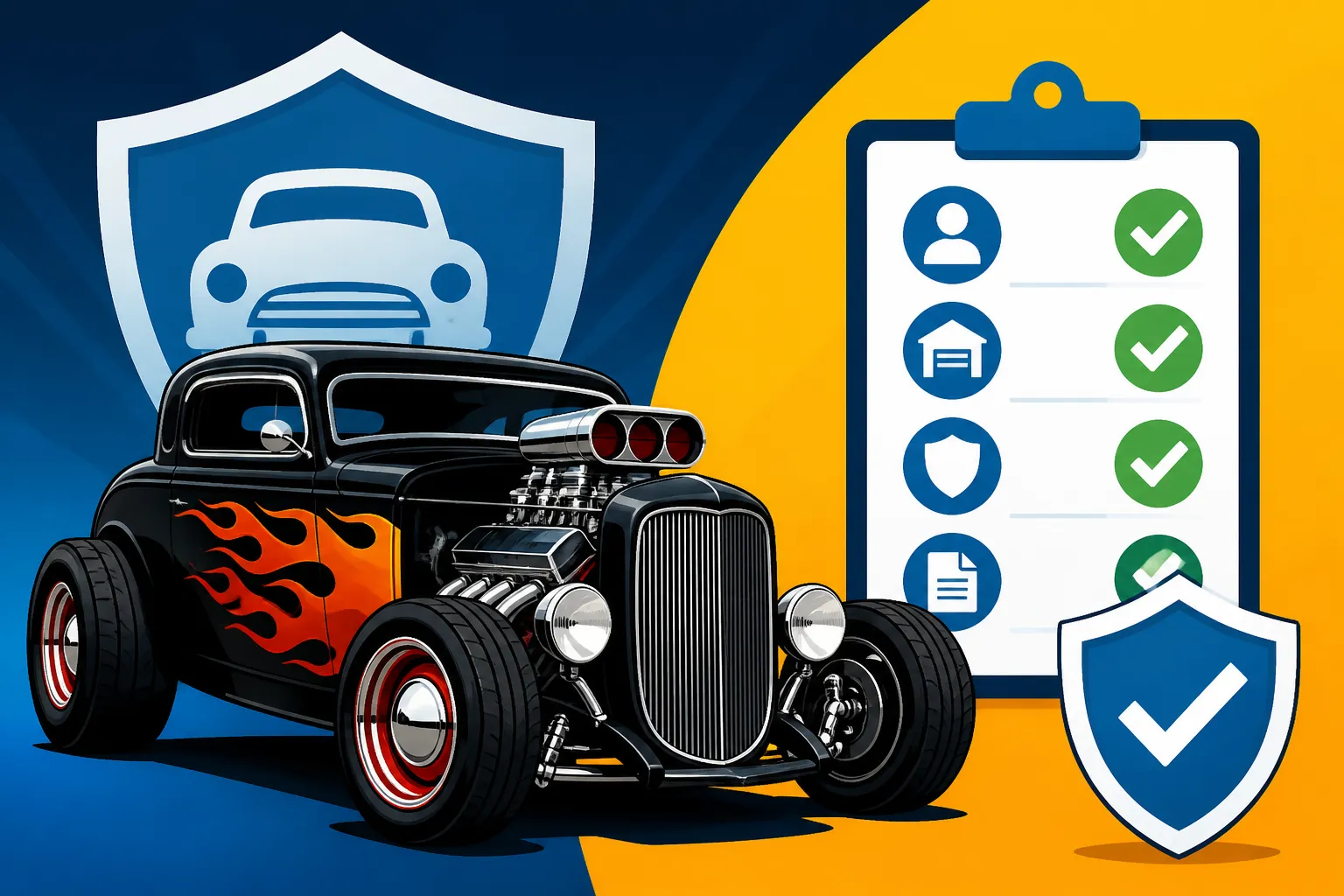
Requirements for Insuring a Hot Rod
Bringing a hot rod to life is a labor of love, countless hours, and often a significant investment, but the thought of insuring such a unique, custom-built machine can feel like navigating a minefield. You've poured your heart and soul into creating something truly one-of-a-kind, and you need coverage that understands its special value, not just treats it like any other old car. This guide will walk you through the specific requirements and considerations for insuring your hot rod, ensuring your pride and joy is properly protected.
What Makes a Hot Rod, Well, a Hot Rod?
Before we dive into the nitty-gritty of insurance, it's crucial to understand what distinguishes a "hot rod" in the eyes of an insurer. These aren't just old cars; they are expressions of automotive artistry and engineering, often significantly modified from their original factory specifications. This unique identity is precisely why standard auto insurance policies often fall short.
Defining "Hot Rod" for Insurance Purposes
When an insurance company looks at your hot rod, they're not just seeing the year, make, and model from the factory. They're looking at a vehicle that has undergone substantial modifications to its engine, suspension, body, and interior, primarily for enhanced performance or a distinctive aesthetic. Think about a classic Ford Model A with a roaring V8 engine dropped in, custom paint, a chopped top, and an entirely re-done interior. That's the essence of a hot rod. These modifications are what drive up the vehicle's value and, crucially, demand a specialized approach to coverage. Without clearly defining and documenting these changes, you risk your policy not covering the true cost of your custom build if something were to happen. It’s not just about the frame and basic components; it’s about every custom piece you’ve painstakingly added or fabricated.
How Hot Rods Differ from Restomods or Stock Classics
While a restomod also involves significant upgrades to an older vehicle, its primary goal is often to modernize the driving experience while maintaining a largely original aesthetic, often with modern amenities hidden beneath a classic facade. A stock classic, of course, aims to preserve the vehicle as close to its original factory condition as possible. Hot rods, however, embrace modification and performance above all else. They often feature exposed engines, radical bodywork changes, and interiors that bear little resemblance to their original counterparts. This distinction is vital because it influences the type of coverage you need. An insurer like Hagerty specializes in understanding these nuances, offering policies that acknowledge the inherent value of these bespoke modifications, rather than just the vintage appeal of an unmodified classic. This recognition of unique value is a cornerstone of proper hot rod insurance, setting it apart from insuring a stock 1965 Mustang or even a subtly upgraded one.
Core Requirements for Hot Rod Insurance Eligibility
Insuring a hot rod isn't quite like insuring your daily driver, and that's a good thing! Specialty insurers offer tailored policies because they understand the unique circumstances surrounding these vehicles. However, there are still some fundamental requirements you’ll need to meet to qualify.
Driving Usage and Mileage Limitations
One of the biggest distinctions for hot rod insurance is how the vehicle is used. Unlike your everyday car, hot rods are typically insured for pleasure use or limited use. This means they're usually driven for things like car shows, club events, parades, or occasional weekend cruises, not for daily commuting or running errands. Insurers expect that because your hot rod sees less time on the road, it has a lower risk of accidents compared to a daily driver. Most policies come with mileage limitations, often ranging from 2,500 to 5,000 miles per year.
It's crucial to be honest about your intended usage. If you plan to drive your hot rod frequently, potentially as a primary vehicle, you might run into issues. Some specialty insurers do offer options for a classic car insurance for a daily driver, but these policies often come with different requirements and potentially higher premiums. Understanding the Pleasure-Use Requirement Explained is key to finding the right policy and avoiding any surprises if you need to file a claim. If you exceed your agreed-upon mileage limit without informing your insurer, it could invalidate your coverage.
Storage Conditions and Security
Because hot rods are significant investments and often irreplaceable, insurers place a high emphasis on secure storage. You'll almost always need to store your hot rod in a locked, private garage or an equally secure facility. Parking it on the street, in an open carport, or in an unlocked shed usually won't cut it. This requirement aims to minimize the risk of theft, vandalism, and environmental damage.
Think about it from the insurer's perspective: a valuable, eye-catching vehicle sitting exposed is a much higher risk than one tucked away safely. Before getting a quote, make sure your storage situation aligns with these expectations. If you're building a new garage or planning to move your vehicle, discuss your storage plans with your insurer. You can find more details on what's typically required in a Garage Storage Requirement for Classic Cars guide. Some policies might even offer discounts for advanced security features like alarm systems or surveillance.
Driver History and Experience
Just like with regular auto insurance, your driving record plays a significant role in determining your eligibility and rates for hot rod insurance. Insurers typically look for drivers with a clean record, meaning no major accidents, excessive speeding tickets, or DUI convictions. While a minor traffic infraction from years ago might not disqualify you, a history of reckless driving can be a red flag.
The rationale is simple: if you're entrusted with a powerful, custom-built machine, insurers want to know you'll operate it responsibly. Some policies also have age requirements for drivers, often preferring more experienced individuals, though this can vary. It's not just about you, either. If there are other licensed drivers in your household who might operate the hot rod, their driving records could also be considered. A pristine driving record demonstrates to the insurer that you're a responsible owner and operator, making you a lower risk and potentially qualifying you for better rates.
Valuation and Appraisal for Your Custom Build
This is arguably the most critical aspect of insuring a hot rod. Standard auto insurance uses Actual Cash Value (ACV), which means if your vehicle is totaled, you get its market value at the time of loss, less depreciation. For a hot rod, with its unique modifications and often intangible value, ACV is a disaster waiting to happen. You need specialized valuation methods that recognize your investment.
The Importance of Agreed Value Coverage for Hot Rods
For hot rods, you absolutely need Agreed Value Coverage. This is where you and the insurance company agree on a specific value for your vehicle before the policy is issued. If your hot rod is a total loss, the insurer pays out that agreed-upon amount, no questions asked, minus your deductible. This is a stark contrast to ACV, which would only compensate you for the depreciated value of a stock vehicle of that year, leaving you significantly out of pocket for all your custom work.
Imagine spending $80,000 building your dream hot rod from a beat-up shell, only to have a standard policy offer you $15,000 for a total loss based on a stock valuation. That's the nightmare scenario Agreed Value avoids. It's the gold standard for insuring unique, modified, and classic vehicles, ensuring that your financial investment and the sentimental value of your custom build are properly protected. You can learn more about this vital coverage type in our comprehensive guide on Agreed Value Coverage Explained. Always verify that any policy you consider offers genuine agreed value, not "stated value," which can be a tricky distinction.
Documenting Your Modifications and Build Costs
To establish an accurate agreed value, thorough documentation of your hot rod's modifications and build costs is essential. This isn't just a suggestion; it's a requirement. You need to provide a detailed list of all upgrades, custom parts, and major components, along with receipts, invoices, and even photos of the build process.
Think of it as building a case for your hot rod's value. Did you drop in a supercharged LS engine? Get the invoice. Custom handmade leather interior? Document the cost and the artisan. Vintage suspension components? Keep those receipts. The more meticulously you document, the easier it is for the insurer to understand and agree upon its true value. This also helps should you ever need to file a claim, as it provides undeniable proof of what was installed and its cost. Don't underestimate the value of a well-organized folder of paperwork and high-quality photographs taken at various stages of the build and once completed.
Getting a Professional Appraisal
While your detailed documentation is invaluable, many specialty insurers will recommend or even require a professional appraisal, especially for higher-value hot rods or those with extensive custom work. A qualified, independent appraiser specializing in custom and classic vehicles will thoroughly examine your hot rod, considering all modifications, craftsmanship, and market trends to provide an unbiased valuation.
An appraisal lends credibility to your stated value and helps the insurer confidently offer agreed value coverage. It's an investment that pays off by ensuring you don't underinsure your prized possession. The appraiser will typically provide a detailed report, including photographs, which you'll submit with your insurance application. You can explore more about how this process works in our guide titled How Classic Car Appraisals Work for Insurance. While some insurers might initially offer a quote based on your documentation, a formal appraisal provides an extra layer of security and accuracy for your policy.
Navigating Specific Coverage Options for Hot Rods
Beyond the basic agreed value coverage, hot rods often demand additional, specialized coverage options to truly protect your investment. Standard policies simply won't have the endorsements needed for custom builds.
Coverage for Custom Parts and Equipment
Your hot rod is a mosaic of custom parts and specialized equipment that far exceeds the value of original factory components. Standard auto policies typically have very low limits for aftermarket parts, often just a few hundred or a couple of thousand dollars. For a hot rod, where a single custom engine component or unique fabrication can cost thousands, this is completely inadequate.
Specialty hot rod insurance policies, like those from Hagerty or American Collectors Insurance, understand this. They offer specific endorsements that allow you to cover the full value of your custom parts and equipment. This might be included within your agreed value, or it could be a separate rider. When discussing your policy, explicitly ask about coverage for custom paint, unique interior work, performance upgrades (like turbos, superchargers, custom exhaust systems), specialized wheels and tires, and any bespoke fabrication. These are the elements that define your hot rod and contribute most significantly to its value, and ensuring they are fully covered is non-negotiable. Don't forget to inquire about Spare Parts Coverage Explained if you keep a valuable stash of custom components on hand.
Restoration and In-Progress Build Coverage
If your hot rod is still a work in progress, or you plan future extensive modifications, you need to consider restoration or "vehicle under construction" coverage. This is a specialized type of policy that adjusts the agreed value of your vehicle as your build progresses and its value increases. Imagine you start with a bare frame worth $5,000 and slowly invest $50,000 in parts and labor over a year. Standard coverage wouldn't reflect this escalating value.
Restoration coverage allows you to update the agreed value periodically, often by submitting receipts and photos of completed work. This ensures that if a fire or theft occurs during the build, you're compensated for the value accumulated up to that point, not just the initial, lower value. This is especially vital for major projects that take months or even years. Without it, you could lose a significant portion of your investment. You can find more comprehensive details on this subject in our article about Restoration Coverage for Classic Cars.
Roadside Assistance and Towing for Modified Vehicles
Another critical, often overlooked, coverage for hot rods is specialized roadside assistance and towing. Standard towing services might use wheel-lift tow trucks, which can damage low-slung hot rods, custom body kits, or delicate suspension components. You need flatbed towing, explicitly designed to transport classic and modified vehicles without putting stress on their driveline or chassis.
Many specialty classic car insurance policies include flatbed towing and roadside assistance as standard or optional add-ons. This isn't just about convenience; it's about protecting your vehicle from further damage during a breakdown. Imagine your custom exhaust getting scraped off because it was improperly loaded onto a standard tow truck – that's a costly headache you want to avoid. Ensure your policy specifies flatbed towing with sufficient mileage limits to get your hot rod to a trusted mechanic or back to your secure garage.
Finding the Right Insurer for Your Unique Hot Rod
Choosing the right insurance provider is perhaps the most important decision you'll make for your hot rod. Not all insurers are created equal, especially when it comes to highly customized vehicles. You need a company that genuinely understands and appreciates the unique nature of hot rods.
Why Specialty Insurers Understand Hot Rods Better
Generic, mainstream insurance carriers often struggle to properly value and cover hot rods. Their underwriting models are designed for mass-produced vehicles with predictable depreciation curves and standard parts. When faced with a custom build, they might default to a low Actual Cash Value, refuse to cover certain modifications, or simply charge exorbitant premiums due to perceived "high risk."
Specialty insurers, like Hagerty or Grundy, are different. Their entire business model revolves around classic, collector, and custom vehicles. They employ staff who are enthusiasts themselves and understand the nuances of various builds, from a fully restored 1932 Ford coupe to a radical custom muscle car. They know that hot rod owners typically drive their vehicles less, maintain them meticulously, and store them securely, making them lower-risk policyholders despite the high value of their cars. This understanding translates into better coverage, fair agreed values, and often more affordable premiums. For a deeper dive into these options, check out our piece on the Best Specialty Classic Car Insurers.
Key Questions to Ask Potential Insurers
When you're shopping for hot rod insurance, don't be afraid to ask detailed questions. This isn't a one-size-fits-all product. Here are some crucial points to cover:
- Agreed Value Confirmation: "Do you offer true Agreed Value coverage, and how is that value determined and maintained throughout the policy term?" Clarify if it's based on an appraisal, your documentation, or both.
- Custom Parts Coverage: "What are the specific limits and conditions for covering custom parts, modifications, and performance upgrades?" Ensure there aren't hidden exclusions for certain components.
- Restoration Coverage: "If my hot rod is still under construction or I plan further modifications, how can I adjust the agreed value to reflect ongoing investment?"
- Mileage Flexibility: "What are the annual mileage limits, and are there options for increasing them if my usage changes?"
- Storage Requirements: "What are your exact storage requirements, and do they consider my specific setup (e.g., climate-controlled garage, secure facility)?"
- Roadside Assistance: "Does your roadside assistance include flatbed towing for hot rods, and what are the mileage limits for towing?"
- Claims Process: "What is your claims process like for a total loss on an agreed value policy?" You want to ensure a smooth, fair payout if the worst happens.
Getting Quotes and Comparing Policies
Don't settle for the first quote you receive. Just as you comparison-shopped for parts for your hot rod, you should do the same for insurance. Contact several specialty insurers and gather quotes based on the same agreed value and desired coverage. This will allow you to compare not just premiums, but also the finer details of each policy.
When comparing, look beyond the bottom line. A slightly higher premium might come with significantly better coverage for custom parts or more flexible mileage options. Pay close attention to deductibles, exclusions, and any endorsements that are particularly relevant to your unique hot rod. For example, if you frequently attend car shows, ensure your policy covers the vehicle during transit and while on display. Utilize online quote tools, but also consider speaking directly with agents who specialize in classic and custom car insurance, as they can often provide insights and options you might miss otherwise. Our guide on How to Get a Classic Car Insurance Quote offers further tips for this process.
| Feature | Standard Auto Policy (ACV) | Specialty Classic/Hot Rod Policy (Agreed Value) |
|---|---|---|
| Valuation Method | Actual Cash Value (ACV) – market value minus depreciation | Agreed Value – insurer pays pre-agreed amount in case of total loss |
| Custom Parts Coverage | Limited, often low dollar amount for aftermarket parts | Comprehensive coverage for custom parts, modifications, and fabrication |
| Usage Restrictions | Designed for daily driving, commuting, general use | Typically pleasure use, limited mileage (e.g., 2,500-5,000 miles/year) |
| Storage Requirements | Minimal, often no specific requirements | Secure, enclosed, private garage or equivalent required |
| Premium Cost | Potentially higher for high-value/modified vehicles due to risk | Often lower due to limited use and secure storage assumptions |
| Towing | Standard wheel-lift towing | Flatbed towing typically included or offered as an add-on |
| Appraisal Needed | Rarely | Often recommended or required for accurate agreed value |
Disclaimer
Please note that this article is intended for informational purposes only and does not constitute professional financial or legal advice. Insurance requirements and policies can vary significantly based on your specific vehicle, location, personal circumstances, and the insurer. Always consult with a qualified insurance professional to discuss your individual needs and ensure you have appropriate coverage for your classic car.