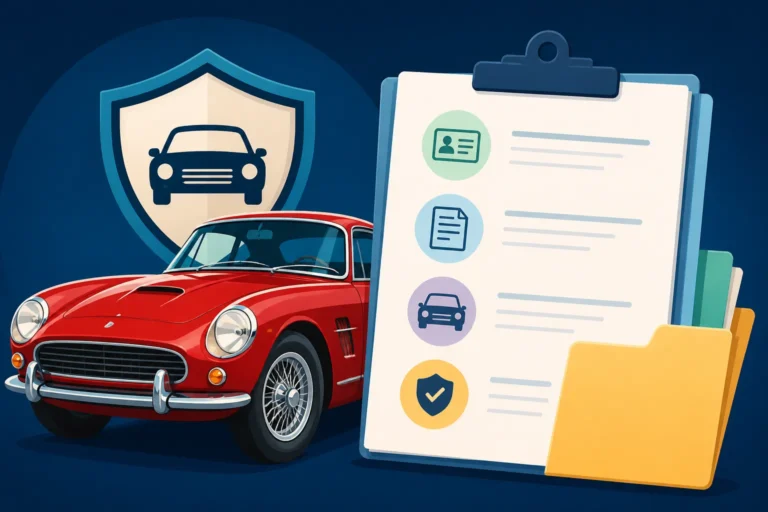
How to Insure a Ford Model A
Insuring a Ford Model A can feel like navigating a maze, especially when you consider how different these automotive treasures are from modern cars. You’re not just insuring a vehicle; you’re protecting a piece of history, often a labor of love that represents countless hours of dedication and significant financial investment. Trying to get a standard auto insurance company to understand the true value and unique needs of a car that predates most of their underwriting rules can be incredibly frustrating. This comprehensive guide is here to walk you through the specifics of how to insure a Ford Model A, ensuring you get the specialized coverage it deserves without unnecessary headaches.
Understanding What Makes a Ford Model A Special for Insurance
When you're looking to insure a Ford Model A, you quickly realize it's a completely different ballgame than getting a policy for your daily driver. These aren't just old cars; they represent a pivotal moment in automotive history, designed and built in an era vastly different from our own. Their unique characteristics directly influence how they're viewed by insurance providers, often requiring a specialized approach to valuation and coverage.
Age and Authenticity as Key Factors
A Ford Model A typically hails from between 1928 and 1931, making it well over 90 years old. This age alone automatically places it into the "antique" or "classic" category for most insurers, immediately distinguishing it from even relatively old vehicles. However, within the Model A community, authenticity is a huge factor. Is it a meticulously restored, numbers-matching original? Or has it been modified with more modern components to improve drivability or safety? Insurers care about this distinction because it directly impacts its market value and, consequently, the agreed value of your policy.
For instance, a completely original 1929 Ford Model A Roadster, with all its factory components and an unblemished history, will likely be valued differently than a 1930 Model A Coupe that has been updated with a newer electrical system or hydraulic brakes. The rarity of specific body styles, like a pristine Tudor Sedan or a sporty Phaeton, also plays a role in its collectible status and market appeal. When considering coverage, documenting your Model A's originality or any historically sensitive modifications is crucial to ensure its true value is acknowledged. This deep dive into a vehicle's history and condition is a core part of understanding Classic Car Insurance Eligibility Requirements.
Valuation Challenges for Early Classics
Determining the market value of a Model A isn't as simple as checking a blue book. These vehicles don't depreciate like modern cars; their value often appreciates over time, influenced by factors like historical significance, condition, restoration quality, and current market demand. This is where the concept of "Agreed Value" coverage becomes absolutely indispensable. Unlike "Actual Cash Value" (ACV) policies, which pay out a depreciated amount, Agreed Value means you and the insurer agree on your car's value before the policy starts. If a total loss occurs, you receive that agreed-upon amount, protecting your investment.
Without a clear understanding of Agreed Value coverage, you run the risk of underinsuring your Model A. Imagine spending years and thousands restoring a rare 1931 Model A Victoria, only for an incident to occur and your standard policy pays out a fraction of its true worth. Specialty insurers understand that Model As are investments, not just transportation, and they're better equipped to handle these complex valuations. They often refer to specialized valuation tools, auction results, and historical data to help you establish a fair agreed value. To learn more about this, it’s worth exploring Agreed Value Coverage Explained.
Common Modifications and Their Impact
While many Model A owners strive for authenticity, others make modifications to enhance safety, performance, or comfort. Common upgrades include 12-volt electrical conversions, hydraulic brakes, sealed-beam headlights, or even modern engine swaps (though less common for purist Model A owners, more so for hot rods based on Model A bodies). While these changes can make the car more drivable and reliable, they can also affect its insurance eligibility and value.
Most specialty classic car insurers are familiar with period-correct or safety-enhancing modifications. However, extensive changes that significantly alter the vehicle's original character might shift it into a different insurance category, such as a "modified classic" or "street rod." It’s vital to be upfront with your insurer about any modifications. They need to understand what they are covering to provide accurate protection. For example, a hidden turn signal kit to improve road safety is usually fine, but dropping in a modern V8 engine will entirely change its classification and likely require a different type of policy. Knowing how these changes impact your policy is key to avoiding claim disputes down the road.
Eligibility Requirements for Insuring a Ford Model A
Getting your Ford Model A insured with a specialized policy comes with a few conditions, but don't let that deter you. These requirements are generally put in place to reflect the unique way collector vehicles are used and cared for, which ultimately helps keep premiums lower than standard auto insurance. Understanding these guidelines from the outset will make the application process much smoother.
Usage Restrictions and Mileage Limits
One of the primary reasons classic car insurance is often more affordable than regular insurance is because these vehicles are not typically daily drivers. Insurers expect your Ford Model A to be used for pleasure driving, car shows, club events, and parades, not for commuting or running errands. This limited usage significantly reduces the risk of accidents, theft, and wear and tear, which translates to savings for you.
Most policies will have an annual mileage limit, ranging from 1,000 to 5,000 miles per year, though some specialty carriers like Hagerty offer flexible or even unlimited mileage options for true enthusiasts who love to hit the open road. It's crucial to be realistic about how much you plan to drive your Model A. Exceeding your mileage limit could jeopardize your coverage in the event of a claim. Be honest with your insurer about your intended usage; they can often tailor a policy to fit your specific needs, whether you're taking it to local shows or embarking on longer vintage tours. A deep dive into the nuances of these restrictions can be found in our guide on Pleasure-Use Requirement Explained.
Storage Requirements
Where you keep your Ford Model A is another significant factor for classic car insurers. They want to know that your prized possession is protected from the elements and theft. The vast majority of specialty insurers require that your classic be stored in a secure, enclosed, and locked facility when not in use. This typically means a private garage, but can also include storage units or dedicated collector car facilities.
Parking your Model A on the street, in a carport, or even in an unlocked shed usually won't cut it. This requirement reflects the vehicle's value and its vulnerability to damage and theft. If you're fortunate enough to have a multi-car garage, that's usually ideal. Insurers might even offer discounts for advanced security measures like alarm systems or surveillance. Before you get a quote, make sure your storage situation meets these criteria. For a more detailed breakdown, check out Garage Storage Requirement for Classic Cars.
Driver Qualifications
The person (or people) behind the wheel of a classic car like a Ford Model A is also a consideration for insurers. Generally, classic car policies prefer drivers with clean driving records and a certain level of driving experience. While there's no hard-and-fast rule about age, most specialty insurers prefer drivers to be at least 25 years old. The logic here is that experienced drivers are statistically less likely to be involved in accidents, especially when handling a vehicle that drives very differently from modern cars.
It's also usually required that all household members who might drive the Model A are listed on the policy. If you have a teenager in the house, it's highly unlikely they'll be approved to drive your Model A on a classic policy, as their inexperience presents a higher risk. Some companies might offer exceptions for supervised club events or specific circumstances, but it's rare for daily driving. The goal is to ensure that only responsible, experienced drivers are operating these valuable historical vehicles.
Essential Coverage Types for Your Ford Model A
When it comes to protecting your Ford Model A, standard auto insurance simply won't cut it. These unique vehicles require specialized coverage that understands their true value, the cost of their rare parts, and the specific ways collectors use them. Getting the right types of coverage is paramount to safeguarding your investment and peace of mind.
The Importance of Agreed Value
As we touched on earlier, Agreed Value is arguably the most critical component of classic car insurance for your Model A. Unlike "Actual Cash Value" (ACV) or "Stated Value" policies offered by some standard insurers, Agreed Value means that you and your insurance provider explicitly agree on the monetary value of your Ford Model A before the policy begins. Should your beloved Model A be deemed a total loss due to an accident, fire, theft, or natural disaster, the insurer will pay you that precise agreed-upon amount, no questions asked, no depreciation applied.
This is a game-changer. Imagine the heartbreak of losing your 1928 Model A Fordor Sedan, a car you spent years meticulously restoring, only to have a standard insurer offer you a depreciated market value that barely covers a fraction of your investment. With Agreed Value, you're protected. To determine this value, you might need to provide an appraisal, recent sales comps, or extensive documentation of your restoration and maintenance. Many specialized insurers, including prominent names like Hagerty, excel in this area, leveraging their extensive databases and expertise to help you arrive at a fair and accurate agreed value. Understanding How Agreed Value Is Determined is crucial here.
Specialized Coverage for Parts and Restoration
Ford Model As, by their nature, often require specialized parts or are undergoing active restoration. Finding genuine or high-quality reproduction parts can be challenging and expensive. A standard policy typically won't account for the unique cost of, say, a period-correct carburetor or a hand-fabricated fender panel. This is where specialized endorsements come in.
- Spare Parts Coverage: Many collectors accumulate a stash of spare parts for their Model A, knowing how difficult or costly they can be to replace. This coverage protects these valuable parts from theft or damage, usually up to a specified limit, even when they're not installed on the vehicle. This means if your garage floods and damages a box of NOS (New Old Stock) Model A components, you're covered. You can learn more about this by reading our article on Spare Parts Coverage Explained.
- Restoration Coverage (Vehicle Under Construction): If your Ford Model A is currently a project car, undergoing a frame-off restoration, you absolutely need this. As you pour more money and effort into the car, its value increases. Restoration coverage allows you to adjust the agreed value throughout the restoration process, ensuring that your increasing investment in labor and parts is continuously protected. It covers the car itself, and sometimes even the tools and equipment used in the restoration, against perils like fire, theft, or accident, even when the car is in pieces in your garage. Without this, your progress and financial commitment could be tragically unprotected.
Roadside Assistance and Towing Considerations
Breaking down in your Ford Model A can be more complicated than in a modern car. Many classic cars, especially those pushing a century old, aren't designed to be towed with a standard hook-and-chain method without risking damage to their delicate components or original chassis. Flatbed towing is almost always the preferred and safest method for these vehicles.
Specialty classic car insurance policies typically include or offer as an add-on, roadside assistance with flatbed towing services. This isn't just a convenience; it's a necessity. Imagine your Model A sputtering to a halt 50 miles from home, and the only tow truck available is a standard wrecker. Having specialized roadside assistance ensures that a suitable flatbed service is dispatched, preventing potential damage to your vehicle during transport. This coverage also often includes services like battery jump-starts, tire changes, and fuel delivery, providing invaluable peace of mind when you're out enjoying your antique. For more information, consider our guide on Roadside Assistance Coverage for Classic Cars.
Steps to Getting the Best Classic Car Insurance for Your Model A
Finding the right insurance for your Ford Model A doesn't have to be a daunting task. By following a structured approach, you can ensure you get comprehensive coverage that truly protects your historical vehicle and your investment. It’s all about understanding what information you need and where to look.
Gathering Necessary Documentation
Before you even start reaching out for quotes, do your homework and gather all pertinent information about your Ford Model A. This will not only streamline the quoting process but also help ensure accuracy in your policy. Insurers will want to know everything that contributes to your car's value and unique characteristics.
Start with the basics: your vehicle's Year, Make, Model (e.g., 1930 Ford Model A Coupe), and Vehicle Identification Number (VIN) or serial number. Beyond that, compile a detailed history of the car. This should include:
- Restoration records: Photos, receipts for parts, and invoices for professional labor.
- Appraisal: A professional appraisal from a qualified classic car appraiser is often highly recommended, especially for higher-value or highly customized Model As. This provides an objective, expert valuation that insurers can rely on for establishing the Agreed Value. This ties into How to Get a Classic Car Appraisal.
- Photos: High-quality, recent photographs of your Model A from multiple angles, including interior, engine bay, and undercarriage if possible. Detail shots of unique features, modifications, or any imperfections are also helpful.
- Maintenance records: Documentation of regular upkeep helps demonstrate the car's well-maintained condition.
- Membership in car clubs: Being part of a recognized club, like the Model A Ford Club of America (MAFCA) or the Model A Restorers Club (MARC), can sometimes lead to discounts and shows your commitment to the hobby.
Having this information readily available will allow you to present a clear and compelling case for your Model A's true value and condition to any potential insurer.
Finding the Right Specialty Insurer
When it comes to insuring a Ford Model A, you really want to avoid mainstream auto insurance providers who primarily deal with modern vehicles. Their standard policies and valuation methods simply aren't designed for classic cars. Instead, you need to seek out specialty classic car insurance companies. These insurers understand the unique needs, risks, and values associated with antique and collector vehicles.
Companies like Hagerty, Grundy, American Collectors Insurance, and J.C. Taylor are leaders in this niche. They employ experts who are passionate about classic cars and understand the intricacies of a Model A. They offer policies specifically tailored for collector vehicles, including essential features like Agreed Value coverage, spare parts protection, and specialized roadside assistance.
Start by getting quotes from at least two or three different specialty providers. Don't just compare prices; carefully compare the coverage details. For example, some insurers might have stricter mileage limits than others, or different requirements for appraisals. You'll find a deeper comparison in our article on Best Specialty Classic Car Insurers. When speaking with agents, don't hesitate to mention your specific Model A, its history, and any unique modifications to ensure they provide a truly accurate quote.
Understanding Your Policy and Asking the Right Questions
Once you have a few quotes, it's time to dig into the details. Never assume that all classic car policies are identical. The fine print matters, especially when dealing with such a unique asset as a Ford Model A. This is where you really need to be proactive and ask questions.
Review the policy documents carefully. Focus on:
- Agreed Value: Confirm the agreed-upon amount is clearly stated and matches your expectations. Understand the process for updating this value over time, especially if you plan further restoration.
- Usage Restrictions: Re-confirm mileage limits and approved usage (e.g., pleasure driving, shows). Make sure these align with how you actually plan to use your Model A.
- Exclusions: What specifically is not covered? Are there any exclusions for specific types of damage, driving conditions, or drivers?
- Deductibles: Understand your deductible options for various types of claims (e.g., comprehensive, collision).
- Optional Coverages: Are you getting the spare parts coverage you need? What about restoration coverage if your car is still a work in progress? Does the roadside assistance specifically include flatbed towing?
- Claims Process: Ask about the claims process for classic cars. How do they handle appraisals after an incident?
Don't be afraid to ask your agent to clarify anything you don't understand. A good agent from a specialty insurer will be happy to explain the nuances of your policy and ensure you have the best possible coverage for your beloved Ford Model A. This proactive approach will help you feel confident that your investment is truly protected, allowing you to simply enjoy the drive. You can also gain valuable insights from our guide on How to Compare Classic Car Insurance Quotes.
Disclaimer
Please remember that insurance policies and requirements can change. This information is intended for general guidance only and does not constitute professional insurance advice. Always consult with a qualified insurance agent or legal professional to discuss your specific needs and policy options.