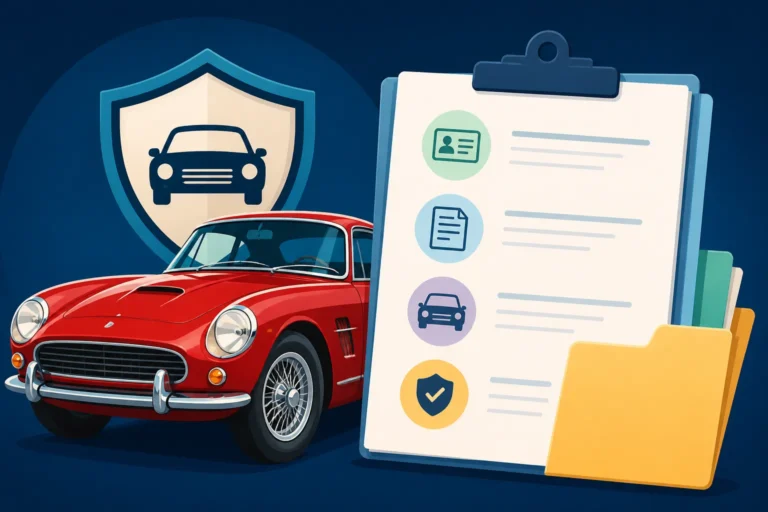
How to Insure an Imported Classic Car
Bringing home a classic car from overseas is an incredible adventure, a true testament to passion and dedication. But let's be honest, the excitement of finally seeing that dream machine in your garage can quickly turn to a headache when you start thinking about how to actually get it legally on the road and, more importantly, protected here in the States. Traditional insurance companies often scratch their heads at imported classics, leaving you feeling frustrated and wondering if you'll ever find proper coverage. This guide is here to walk you through the unique process of insuring your imported classic, ensuring your prized possession is safeguarded for years to come.
Understanding the Unique Challenges of Insuring an Imported Classic
Insuring a classic car that's been lovingly brought over from another country isn't quite the same as insuring one that's spent its whole life stateside. There are a few distinct hurdles that often trip up collectors, but knowing what they are upfront can save you a lot of grief and ensure you secure the best possible coverage.
Age and Eligibility Requirements for Imports
One of the first questions you'll face is whether your imported beauty actually qualifies as a "classic" or "antique" in the eyes of an insurer and your state's DMV. Generally, most classic car insurance providers look for vehicles that are at least 25-30 years old, often with specific requirements about how they're used. For an imported car, this age requirement is usually the same, but proving its history can sometimes be more complex. You might have a stunning 1970s European sports car, but you'll need documentation to back up its age and provenance.
Furthermore, some states have their own definitions and requirements for Classic Car Insurance Eligibility Requirements or Antique Vehicle Registration Explained. For example, a car might be old enough to be considered a classic, but if it was originally manufactured for a market outside the U.S., there could be additional checks to ensure it meets import regulations, even if those are largely waived due to its age. It's crucial to confirm that your specific vehicle's age aligns with both the insurer's criteria and any relevant state laws where you plan to register and drive it.
Valuation Hurdles for Non-Standard Vehicles
This is often the biggest sticking point for imported classics. How do you accurately determine the value of a car that might be extremely rare or have a limited market presence in the U.S.? Unlike a common domestic classic, where market data is plentiful, an imported model might not have easily comparable sales figures. This makes establishing an "Agreed Value" for your insurance policy particularly challenging, yet incredibly important. Without a clear and documented value, you risk being underinsured if the worst should happen.
Imagine you've imported a pristine, low-mileage Fiat X1/9 from Italy. A standard insurance company might look at it and only offer Actual Cash Value (ACV), which would likely depreciate it heavily, treating it like any other used car. But as a collector, you know its true value far exceeds that. This is where Agreed Value Coverage Explained becomes your best friend. Specialty insurers understand that the market value of unique imports is often higher and more stable than a typical depreciating asset, and they have processes to help determine this specialized value.
Compliance and Modification Implications
When you import a vehicle, especially a newer classic (say, from the 1990s or early 2000s), you might have needed to make modifications to meet U.S. Department of Transportation (DOT) and Environmental Protection Agency (EPA) standards. These modifications, though necessary for legal import, can sometimes raise questions with insurers. Were they done professionally? Do they alter the car's originality significantly? While older cars (typically 25 years or older) are generally exempt from many of these federal standards under the "25-year rule," it's still good practice to have documentation for any work performed.
Even if your car is older, you might have modified it for performance, aesthetics, or to personalize it after import. Understanding Requirements for Insuring a Modified Classic is vital. Insurers like Hagerty specialize in these unique situations and often have policies designed to cover the increased value of a professionally modified or restored classic. They understand that a 1960s Porsche 911 that's been impeccably restored and updated with modern safety or performance components isn't "just a car"; it's a significant investment.
Essential Steps to Get Your Imported Classic Insured
Don't let the unique aspects of insuring an imported classic deter you. With the right approach and a bit of preparation, you can secure comprehensive coverage that truly protects your investment.
Gathering Critical Documentation
The key to a smooth insurance process for an imported classic lies in having meticulous documentation. This isn't just about proving ownership; it's about establishing its history, condition, and value. Here's what you'll typically need:
- Proof of Ownership: This includes the original bill of sale, title or registration from the country of origin, and any ownership transfer documents.
- Importation Paperwork: Keep all your customs forms (e.g., CBP Form 7501, DOT HS-7, EPA Form 3520-1), import declarations, and receipts from your customs broker or shipping company. These documents confirm that the vehicle legally entered the United States.
- Appraisal Report: This is often the most critical piece of documentation for valuation. A professional appraisal from a reputable classic car appraiser, especially one experienced with international models, will provide an unbiased, detailed assessment of your car's condition, originality, and market value. This helps in determining the "Agreed Value" for your policy. You can learn more about How Classic Car Appraisals Work for Insurance.
- Photos and Records: High-quality photographs of the vehicle's interior, exterior, engine bay, and undercarriage are essential. Combine these with any maintenance records, restoration invoices (if applicable), and provenance documents (such as original sales brochures, build sheets, or historical registration papers). The more information you can provide, the easier it will be for the insurer to understand and accurately value your classic.
Finding a Specialty Insurer
This is perhaps the most crucial step. Trying to insure an imported classic with a standard auto insurance carrier is usually a recipe for disappointment. They simply aren't equipped to understand the nuances of classic car valuation, usage, or international paperwork. Their systems are built for depreciating assets, not appreciating collector items.
Instead, you need to seek out Best Specialty Classic Car Insurers. Companies like Hagerty, Grundy, and American Collectors Insurance specialize in collector vehicles, including imports. They understand the passion, the investment, and the unique risks associated with these cars. They offer:
- Agreed Value Policies: This is non-negotiable for an imported classic. It ensures that in the event of a total loss, you receive the pre-agreed amount, not a depreciated market value.
- Specialized Coverage Options: They offer tailored coverage like Spare Parts Coverage Explained, Restoration Coverage for Classic Cars, and even coverage for trip interruption if you're traveling to a show far from home.
- Expert Knowledge: Their representatives often share your passion and have a deep understanding of collector car markets, including international ones. They know the difference between a grey-market import and a fully compliant vehicle.
When you're looking to How to Insure an Imported Classic Car properly, starting with a specialist is the only way to go. They're set up to handle the complexities and provide the peace of mind you need.
Navigating the Valuation Process
Once you've chosen a specialty insurer, the next step is establishing the Agreed Value. This is a collaborative process where you and the insurer agree on the car's worth before a loss occurs.
- The Role of Appraisals: As mentioned, a professional appraisal is usually required, especially for unique imports. The appraiser will consider factors like the car's rarity, condition (concours, excellent, good, etc.), originality, modifications, and recent comparable sales (if available, even if international). They'll provide a detailed report that the insurer will review.
- Market Data for International Models: Specialty insurers have access to more extensive market data, including international auction results and sales from enthusiast communities, which helps them assess the value of cars not commonly traded in the U.S. They might consult with their own valuation experts if the vehicle is exceptionally rare.
- Ongoing Review: The value of classics can fluctuate. It's wise to review your Agreed Value annually, or if you make significant improvements or the market for your specific model sees a notable shift. You don't want to find yourself What Happens If Your Classic Is Worth More Than Agreed Value after an incident. An insurer like Hagerty often provides tools or guidance to help you keep your valuation current.
Key Coverage Considerations for Imported Classics
Beyond just the basic liability, an imported classic needs specialized protection to truly safeguard your investment. These coverages are what set specialty policies apart.
The Absolute Necessity of Agreed Value Coverage
For an imported classic, "Agreed Value" isn't just a nice-to-have; it's practically essential. This coverage means that you and your insurance provider agree on your vehicle's value at the beginning of your policy term. In the event of a total loss, the insurer will pay you that exact agreed-upon amount, no questions asked about depreciation. This protects you from the nightmare scenario of a standard insurer claiming your unique, imported 1960s Alfa Romeo Spider is only worth a fraction of what you know it is.
Consider the alternative: Actual Cash Value (ACV) or Stated Value. ACV policies pay out the market value at the time of the loss, minus depreciation, which can be devastating for a classic. Stated Value policies might list a specific amount, but often contain language that allows the insurer to pay "up to" that amount or the ACV, whichever is less. For an imported car with a potentially obscure U.S. market, relying on anything but Agreed Value is a massive risk. It gives you peace of mind that your financial investment is fully protected.
Transit and Storage Coverage
Your imported classic probably spent a good amount of time being shipped across oceans or continents. While marine cargo insurance typically covers the journey to port, what about once it's on U.S. soil but not yet fully registered or insured under a permanent policy? Or if you're moving it between storage facilities?
Specialty classic car insurers understand these scenarios. They offer specific coverages for:
-
In-Transit Coverage: This protects your vehicle while it's being transported, for instance, from the port to your home or a restoration shop, or between states if you bought it from an importer. This often includes coverage for damage during loading/unloading or while on a professional flatbed carrier.
-
Storage-Only or Laid-Up Coverage: If your imported classic is awaiting registration, undergoing restoration, or simply being stored for a period before you start driving it, you might not need full road coverage. Many specialty insurers offer policies that cover fire, theft, vandalism, and other non-driving related perils while the car is laid up or in storage. This is crucial if your car isn't immediately drivable or registered.
The table below outlines common documentation for an imported classic's insurance, showing why each piece is vital.
Document Type Purpose for Insuring Imported Classic Importance Level Original Title/Registration Proves ownership and vehicle identity from source country. High Bill of Sale / Purchase Agreement Confirms purchase and initial transfer of ownership. High Customs Entry Forms (e.g., CBP Form 7501) Verifies legal importation into the U.S. High DOT & EPA Forms (HS-7, 3520-1) Declares compliance or exemption from federal standards. High Professional Appraisal Report Establishes current market value for Agreed Value policy. Very High Detailed Photos Documents condition, originality, and features. High Restoration/Maintenance Records Justifies value enhancements and history. Medium Shipping Documentation Proof of transport logistics and condition at shipment. Medium
Spare Parts and Restoration Coverage
For many imported classics, finding replacement parts can be a quest in itself, often involving international searches and significant expense. Losing a stash of rare, original parts to fire or theft would be devastating. That's why Spare Parts Coverage for Classic Cars Explained is so important. This endorsement extends your policy to cover a specified value of spare parts, tools, and even automobilia that are related to your vehicle and often stored with it. This is particularly valuable for imports where components are not readily available at local auto stores.
If your imported classic is a "project car" or undergoing significant work, Restoration Coverage for Classic Cars is another essential add-on. This coverage allows you to increase your Agreed Value incrementally as you invest more time and money into the restoration. Imagine importing a barn-find European sports car; as you complete the bodywork, paint, and engine rebuild, its value steadily climbs. This coverage ensures your policy reflects that rising value throughout the restoration process, protecting your ongoing investment rather than just its initial "as-is" value.
These specialized coverages, often offered by companies like Hagerty, really underline the difference between a generic auto policy and one designed for the unique needs of a collector car, especially an imported one.
Common Pitfalls and Expert Tips for Imported Classics
Navigating the world of imported classic car insurance can feel a bit like crossing a minefield. Many collectors, especially those new to international acquisitions, can stumble into common traps. But with a bit of foresight and the right information, you can steer clear of these issues.
Don't Assume Standard Policies Will Work
This cannot be stressed enough: a run-of-the-mill auto insurance policy from your everyday provider is almost certainly not suitable for your imported classic. Many people try to save a few bucks or stick with their current insurer out of convenience, only to discover too late that their precious imported vehicle is grossly underinsured or, in some cases, not covered for its true value at all. Standard policies are designed for daily drivers that depreciate over time, not appreciating assets that hold sentimental and historical value. They use actual cash value (ACV), which will leave you heartbroken if your unique imported 1960s Mercedes-Benz 280SL is totaled and you receive a payout based on a depreciated value instead of its true collector worth.
These policies often have strict mileage limits, don't understand specialized repairs with rare parts, and certainly won't offer "Agreed Value" that reflects your car's true market position. Insuring an imported classic requires a partner who understands the collector market, the intricacies of sourcing parts, and the unique valuation challenges. Trying to shoehorn your vintage Italian supercar onto a policy meant for a modern minivan is like trying to fit a square peg into a round hole – it just doesn't work effectively.
The Importance of a Detailed Appraisal
For any classic car, an appraisal is important, but for an imported classic, it's absolutely critical. As we discussed, these vehicles often lack extensive U.S. market sales data, making an accurate valuation a specialized task. A thorough, independent appraisal from an experienced classic car appraiser—ideally one familiar with European, Asian, or other international markets—provides an objective assessment of your vehicle's condition, originality, and fair market value. This report becomes the bedrock for establishing your "Agreed Value" with your specialty insurer.
Without a detailed appraisal, you're essentially guessing at your car's value, and your insurer might not have sufficient data to offer a policy that truly protects your investment. Imagine importing a rare Japanese domestic market (JDM) classic like a Nissan Skyline GT-R from the early 90s. Its value is skyrocketing, but a standard insurer might only see it as an old Nissan. An appraisal highlights its specific trim, modifications, condition, and market demand, justifying a higher Agreed Value. It's an upfront cost, but one that provides invaluable protection and peace of mind, ensuring that if you ever need to file a claim, there's no dispute about the car's worth.
Be Transparent About Modifications and Compliance
It's vital to be completely honest and transparent with your insurer about any modifications your imported classic has undergone, whether they were for U.S. compliance or personal customization. For older classics (generally 25 years or older), federal DOT and EPA exemptions mean fewer mandatory modifications. However, if you brought in a "youngtimer" or a car that required significant changes to meet U.S. standards, documenting these changes is essential.
Even if the modifications are purely for performance or aesthetics, like an engine swap in a British roadster or a custom paint job on a German coupe, your insurer needs to know. These changes can significantly impact the car's value, and you want to ensure they're covered. Specialty insurers like Hagerty are accustomed to Requirements for Insuring a Modified Classic and understand that personalization is part of the classic car hobby. They can often extend coverage to include the value of these upgrades, as long as they are disclosed and professionally done. Failure to disclose modifications could lead to issues during a claim, potentially reducing your payout or even voiding certain coverages. Always discuss any planned or existing modifications with your insurer to ensure your policy accurately reflects your car's current state and value.
Leveraging the Expertise of Your Insurer
Don't be afraid to ask questions! Specialty classic car insurers are there to guide you. They deal with How to Register an Imported Classic Car and insure unique vehicles every day. Utilize their expertise to understand local regulations, navigate valuation, and ensure you have all the necessary coverage types. They can often provide insights into specific models or import challenges that generic agents simply won't know. Choosing a knowledgeable partner is just as important as choosing the right coverage.
Disclaimer
Please remember that this article provides general information and guidance regarding classic car insurance for imported vehicles. Insurance policies and requirements can vary significantly by state, insurer, and the specific characteristics of your vehicle. It is crucial to consult with a qualified insurance professional and review the terms and conditions of any policy before making insurance decisions. This content is not intended as legal or financial advice.