Can You Insure a Classic Car You’re Restoring
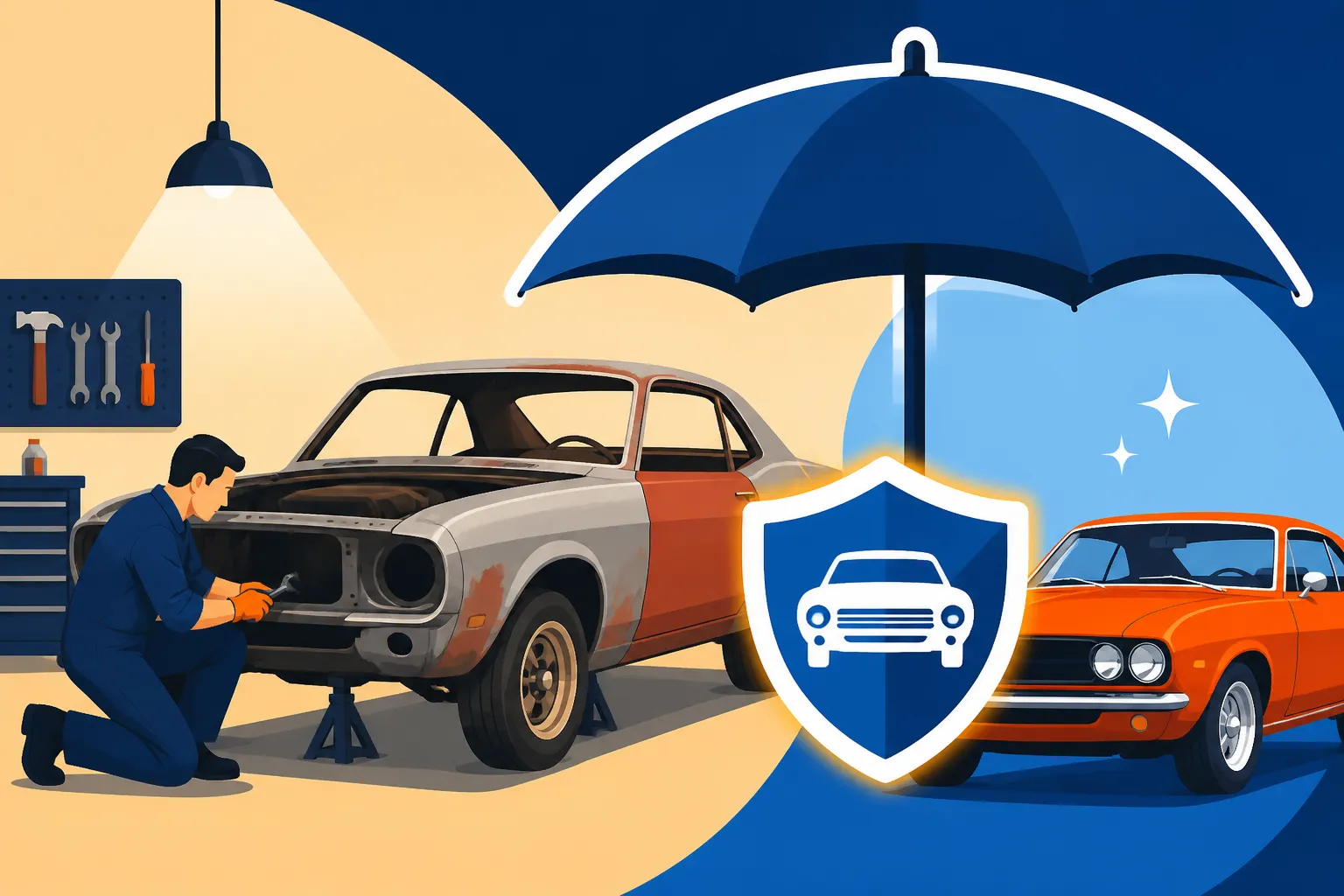
It's a common dream among classic car enthusiasts: finding that diamond in the rough, whether it's a forgotten barn find or a beloved family heirloom, and bringing it back to its former glory. But as you pour countless hours and hard-earned dollars into stripping, sanding, painting, and rebuilding your prized project, a nagging question often arises: what about insurance? Many assume their regular auto policy or even a basic classic car policy will cover a car that's not yet road-ready, only to find themselves in a vulnerable position. This guide will walk you through the specifics of how to insure a classic car you're restoring, ensuring your significant investment is protected every step of the way.
Understanding the Unique Challenges of Insuring a Restoration Project
Insuring a classic car under restoration isn't quite like insuring your daily driver, nor is it exactly like insuring a fully finished show car. There are specific nuances and risks involved that standard policies simply aren't designed to handle. You're dealing with a dynamic asset whose value is constantly changing, often stored in different conditions, and subject to unique perils.
The Evolving Value of a Classic Under Restoration
One of the biggest headaches when restoring a classic is watching its value fluctuate wildly. When you first buy that shell of a car, it might be worth relatively little, perhaps just parts value or a low "stated value." But with every new panel, every engine rebuild, every hour of professional labor, the value climbs significantly. Your initial investment quickly grows, and a standard policy based on "actual cash value" (ACV) would be a disaster if something happened. ACV often only accounts for depreciation, which for a classic being appreciated through restoration, is entirely backward.
Imagine you started with a 1969 Ford Mustang Fastback that you bought for $15,000 as a rolling chassis. You've since invested $30,000 in bodywork, a new engine, and interior components. A standard insurer might look at the chassis's initial condition and offer a paltry sum, ignoring your sweat equity and cash injections. This is precisely why specialty insurance is so crucial. They understand that a project car's value isn't static; it's a living, breathing number that needs to be regularly updated to reflect your ongoing investment.
Risks Specific to Project Cars
Beyond the evolving value, cars under restoration face a distinct set of risks that aren't typically associated with a finished, road-going vehicle. These aren't just risks of collision on the road, but rather perils related to their transitional state.
- Workshop Hazards: Your garage or workshop, while a place of passion, can also be a dangerous environment for a classic. Accidental damage from tools, dropped parts, paint booth fires, or even just someone tripping over a fender can cause significant setbacks. Think about a misplaced jack stand leading to a frame buckle, or a grinder spark igniting some rags. These aren't driving incidents, but they can be incredibly costly to repair on a delicate classic.
- Theft of Parts: When a car is in pieces, its components can be easier targets. An engine on a stand, a pristine set of original hubcaps, or even a specialized transmission sitting on a workbench could be stolen. These individual parts often hold immense value, especially if they're rare, numbers-matching components. Many standard policies only cover the vehicle as a whole, not a collection of parts scattered around a workspace.
- Fire and Natural Disasters: A car under restoration, especially one with fuel lines disconnected, paint fumes lingering, or welding torches sparking, is potentially at higher risk of fire. Furthermore, regardless of its operational status, it's still vulnerable to floods, hail, or other natural disasters that could damage or destroy the structure you're painstakingly rebuilding. A devastating fire in a garage in rural Ohio, for example, could obliterate years of work on a valuable classic without proper coverage.
This is why understanding Classic Car Insurance Coverage Types Explained is so important, especially the specific add-ons for restoration.
Specialized Coverage Options for Cars Undergoing Restoration
The good news is that specialty classic car insurers, like Hagerty, have developed specific policies designed to address the unique needs of restoration projects. They understand the passion and investment involved, and they offer tailored solutions that go far beyond what a typical auto insurance policy can provide.
Vehicle Under Construction Coverage
This is perhaps the most critical type of coverage for any classic car owner embarking on a restoration journey. As the name suggests, "Vehicle Under Construction" coverage, sometimes called "Restoration Coverage for Classic Cars," is specifically designed to protect your project while it's in various states of disassembly and reassembly. It's not just about covering the frame; it's about acknowledging the total value of the car as it incrementally increases.
Instead of a fixed value, this coverage often allows you to report your expenditures periodically, ensuring the "agreed value" of the vehicle grows with your investment. For instance, if you purchase a project car for $20,000 and then invest another $10,000 in engine work, you'd update your insurer, and your agreed value would then reflect $30,000. This process continues as you add more components, labor, and value. This means that if a catastrophic event occurs halfway through your restoration, you're compensated for what you've already put into it, not just its original purchase price or a depreciated value. This is how How Restoration Coverage Works for Collectors truly protects your financial commitment. Without this specialized protection, the financial blow of an unforeseen incident during a major overhaul could be devastating.
Parts and Tools Coverage
Restorations involve a lot more than just the car itself. There are often shelves full of expensive, sometimes rare, spare parts, specialized tools, and even automobilia that enhance the value and authenticity of your project. Many standard home or auto policies offer very limited, if any, coverage for these items, especially when they're not physically attached to a finished vehicle.
Dedicated "Spare Parts Coverage Explained" can protect the components you've sourced, often covering them up to a certain limit whether they're still in boxes, awaiting installation, or removed from the car for repair. This is especially vital for classics where a single original carburetor or a rare trim piece can be worth thousands. Similarly, valuable tools specific to automotive work – custom wrenches, professional welders, engine hoists – can be covered under an endorsement. Think about a set of vintage Snap-on tools or a specialized paint gun; these represent a significant investment in themselves. Some policies even offer Automobilia and Memorabilia Coverage for those unique collectibles that might be part of your overall collection, even if not directly part of the car itself.
Laid-Up or Storage-Only Policies
While you're knee-deep in grease and elbow room, your classic isn't going to be cruising down the highway. For many, a significant portion of the restoration involves the car being "laid up" in a garage or workshop for extended periods. During this time, you don't need collision coverage for accidents on the road, but you absolutely need protection against non-driving related perils. This is where "Laid-Up Coverage for Winter Storage" or storage-only policies come into play.
These policies provide comprehensive coverage for perils like fire, theft (of the vehicle itself, not just parts, unless specified), vandalism, and natural disasters, without the higher premiums associated with liability or collision coverage for an actively driven vehicle. This type of coverage is often a more affordable way to protect your static project. It acknowledges that the car isn't being driven, thus reducing certain risks, but maintaining protection against significant losses while it sits. Insurers like Hagerty offer flexible options that allow you to transition easily from a laid-up policy to a full pleasure-use policy once the restoration is complete and your vehicle is road-ready. Make sure your storage facility meets the Garage Storage Requirement for Classic Cars for your policy.
How to Get Insurance for Your Classic Restoration Project
Navigating the world of classic car insurance for a project can seem daunting, but with a clear understanding of the process, you can secure the right coverage. It’s all about documentation, choosing the right partner, and staying proactive.
Documenting Your Progress and Value
The cornerstone of insuring any classic, but especially one under restoration, is meticulous documentation. You need to be able to show your insurer not just what the car was, but what it is becoming and the financial investment you're making.
- Before and After Photos: Take extensive photographs from every angle before you start, during key stages of the restoration, and as major components are added. This visual diary provides irrefutable proof of your progress and the condition of the vehicle at different points.
- Receipts and Invoices: Keep every single receipt, invoice, and bill for parts purchased, professional services rendered (e.g., machining, specialized bodywork, painting), and even significant tools acquired specifically for the project. These financial records are crucial for proving your investment and justifying the growing agreed value of the car. Insurers will often need to know How to Prove Restoration Costs to an Insurer if a claim arises.
- Appraisals (at key stages): While not always required immediately, getting an appraisal at significant milestones (e.g., after bodywork and paint, or after engine/drivetrain completion) can solidify your agreed value. Even if your insurer doesn't require a formal appraisal, having a professional valuation on file can significantly strengthen your position if you ever need to file a claim. This is especially true as you approach the final stages and the vehicle's market value becomes clearer.
Choosing the Right Specialty Insurer
You wouldn't ask your family doctor to perform brain surgery, and you shouldn't ask a standard auto insurer to cover your classic restoration project. The intricacies of classic car valuation and the unique risks demand a specialist. Companies like Hagerty, Grundy, American Collectors, and others focus exclusively on collector vehicles and understand the nuances.
When you're looking for a partner, focus on insurers who explicitly offer Vehicle Under Construction Coverage. Ask about their policies for incremental value increases. Can you update your agreed value over the phone, or do you need a formal appraisal each time? What are their requirements for storage? Do they offer spare parts coverage as an add-on? Comparing "Hagerty vs Grundy: Which Is Better" for restoration projects might reveal subtle differences in how they handle progressive value increases or specific workshop risks. A good specialty insurer will also have staff who are enthusiasts themselves, speaking your language and understanding the blood, sweat, and tears that go into these projects. This personal connection often translates into a smoother claims process, should the unthinkable happen.
Updating Your Policy as the Project Evolves
One of the biggest mistakes restoration enthusiasts make is getting a policy at the beginning and then forgetting about it. As we've discussed, the value of your project car is constantly increasing. Failing to update your insurer means you're almost certainly underinsured. If you have a $50,000 agreed value policy and you've invested another $20,000 without telling your insurer, you're essentially gambling with that extra $20,000.
Make it a habit to contact your insurer after every significant milestone or major financial investment. This could be after a new engine is installed, after the body is painted, or once the interior is fully re-upholstered. Many specialty insurers make this process quite straightforward, often requiring just a quick phone call and possibly updated photos or receipts. This continuous communication ensures your agreed value always reflects the true investment you've made, protecting your financial and emotional commitment. It's a critical part of How to Update Coverage After Restoration.
Common Misconceptions and Pitfalls to Avoid
Even with the best intentions, it's easy to fall into common traps when insuring a classic car under restoration. Being aware of these pitfalls can save you significant heartache and financial loss down the road.
Assuming Standard Auto Insurance Covers It
This is perhaps the most dangerous misconception. Your everyday auto insurance policy for your modern sedan is simply not equipped to handle the complexities of a classic car, let alone one that's a pile of parts in your garage. Standard policies are built around "actual cash value" (ACV), meaning they factor in depreciation. For a classic car, especially one being restored, this is antithetical to its actual worth. An ACV policy on a partially restored 1970 Chevrolet Chevelle SS might only pay out a fraction of what you've invested, based on what a similar used car from 1970 might fetch, utterly disregarding its collectible status and your restoration costs.
Furthermore, standard policies rarely offer coverage for spare parts, tools, or the unique risks of a workshop environment. They're designed for road use, collisions, and liability in traffic, not for a vehicle parked indefinitely in a garage, undergoing extensive surgery. The limited coverage limits and restrictive terms of a regular policy mean you're essentially self-insuring most of your valuable classic project, which is a gamble no serious restorer should take. This highlights the fundamental difference between Classic Car Insurance vs Regular Insurance: What's Required.
Underinsuring Your Investment
Another frequent error is underestimating the true value of your restoration. This can happen for several reasons: perhaps you got a policy when the car was a bare shell and forgot to update it, or maybe you're doing a lot of the work yourself and aren't accurately valuing your sweat equity. However, just because you're turning wrenches doesn't mean your time and skill aren't adding significant value. If you've rebuilt an engine, that's a professional-level job, and its market value needs to be considered.
Failing to continuously update your agreed value to reflect every new part, every hour of professional labor, and every major milestone means you're leaving a huge portion of your investment unprotected. If a fire rips through your garage and destroys your almost-finished 1957 Chevrolet Bel Air, an underinsured policy will only pay out the last recorded agreed value, leaving you to absorb the difference. This isn't just about the money; it's about the time, effort, and passion you've poured into the project. Protect that passion by ensuring your policy always accurately reflects the current state and value of your restoration. Remember, it’s not just about the Cost of Adding Restoration Coverage, but the comprehensive protection it offers.
Classic Car Restoration Insurance Coverage Comparison
To help clarify the differences, here's a table comparing common insurance options for a classic car during restoration:
| Feature | Standard Auto Policy (ACV) | Basic Classic Car Policy (Agreed Value, Road-Ready) | Classic Car Restoration Policy (e.g., Hagerty) |
|---|---|---|---|
| Value Coverage | Actual Cash Value (Depreciated) | Agreed Value (Fixed at policy start) | Agreed Value (Adjustable as restoration progresses) |
| Coverage for Car Body | Limited, depreciated | Yes, for fully assembled vehicle | Yes, for vehicle in various stages of disassembly |
| Coverage for Spare Parts | Very limited or none | Very limited or none | Yes, often with dedicated limits (add-on) |
| Coverage for Tools | None (might be homeowner's, limited) | None | Yes, often with dedicated limits (add-on) |
| Workshop Perils (Fire/Theft in garage) | Might be covered by homeowner's, limited | Yes, for finished vehicle in approved storage | Yes, explicitly covers workshop risks & storage |
| Driving Permitted | Yes, for daily driving | Limited pleasure use only | No driving coverage while "under construction" |
| Liability Coverage | Yes | Yes | Often absent while laid up, added when road-ready |
| Claims Process | Standard, often complex for unique cars | Specialized, collector-focused | Highly specialized, understands restoration value |
This table clearly illustrates why a dedicated classic car restoration policy is the only way to truly protect your investment. The incremental value, the scattered parts, and the unique workshop environment are all considered, ensuring peace of mind throughout your project.
Final Thoughts on Protecting Your Project
Insuring a classic car you're restoring is not an afterthought; it's an integral part of the restoration process itself. The journey of bringing a classic back to life is immensely rewarding, filled with challenges and triumphs. Don't let a lack of proper insurance turn a triumph into a tragedy. By understanding the specific risks, choosing specialized coverage like Vehicle Under Construction Coverage, diligently documenting your progress, and partnering with an insurer who truly understands the collector car world, you can ensure your pride and joy is protected every step of the way. Whether you’re just learning How to Insure a Project Car or are a seasoned pro, taking the time to secure the right policy is an investment in your passion.
Disclaimer
Please remember that this article provides general information and guidance regarding classic car insurance for restoration projects. Insurance policies and requirements can vary significantly by insurer and state. It is always recommended to consult directly with a qualified insurance professional specializing in classic cars to discuss your specific needs and obtain personalized advice and quotes.