Spare Parts Coverage for Classic Cars Explained
It’s a frustrating scenario many classic car enthusiasts know all too well: you’ve spent countless hours, and probably a small fortune, sourcing the perfect New Old Stock (NOS) carburetor or a period-correct fender for your beloved project, only to realize your regular insurance policy might not cover it if something goes wrong. This guide aims to demystify spare parts coverage for classic cars, ensuring you understand how to protect these invaluable components that are often just as cherished as the vehicle itself.
The Hidden Value of Your Classic Car's Spare Parts
For many of us, the joy of owning a classic car isn't just about driving it; it's also about the hunt for those elusive, correct parts that bring it back to its former glory, or keep it running perfectly for years to come. These aren't just pieces of metal or rubber; they're investments, often irreplaceable components that contribute significantly to your car's value and authenticity. Yet, this crucial aspect of classic car ownership is frequently overlooked when it comes to insurance.
Why Standard Auto Policies Fall Short
The biggest frustration for classic car owners, when it comes to spare parts, is trying to fit a square peg into a round hole with a standard auto insurance policy. Think about it: if you own a brand-new Honda Civic and its fender gets damaged, your regular insurance company can easily order a replacement from a manufacturer and have it installed. There's a readily available market, and the part's value is pretty standardized.
Now, imagine that same scenario but with a NOS fender for a 1969 Dodge Charger R/T. This isn't just a fender; it's a piece of history, potentially untouched since it left the factory decades ago. Its value isn't simply the cost of manufacturing; it's tied to its rarity, originality, and the impact it has on the overall value of a meticulously restored muscle car. A standard policy, designed for depreciation and readily available parts, simply doesn't comprehend this distinction. They often default to Actual Cash Value (ACV), which means they’ll pay out what they think a used part is worth at the time of loss, which is usually pennies on the dollar compared to what you paid or what it would cost to find a similar replacement. This gap in understanding can leave you financially devastated if your valuable spares are damaged or stolen.
The Definition and Importance of Collectible Spare Parts
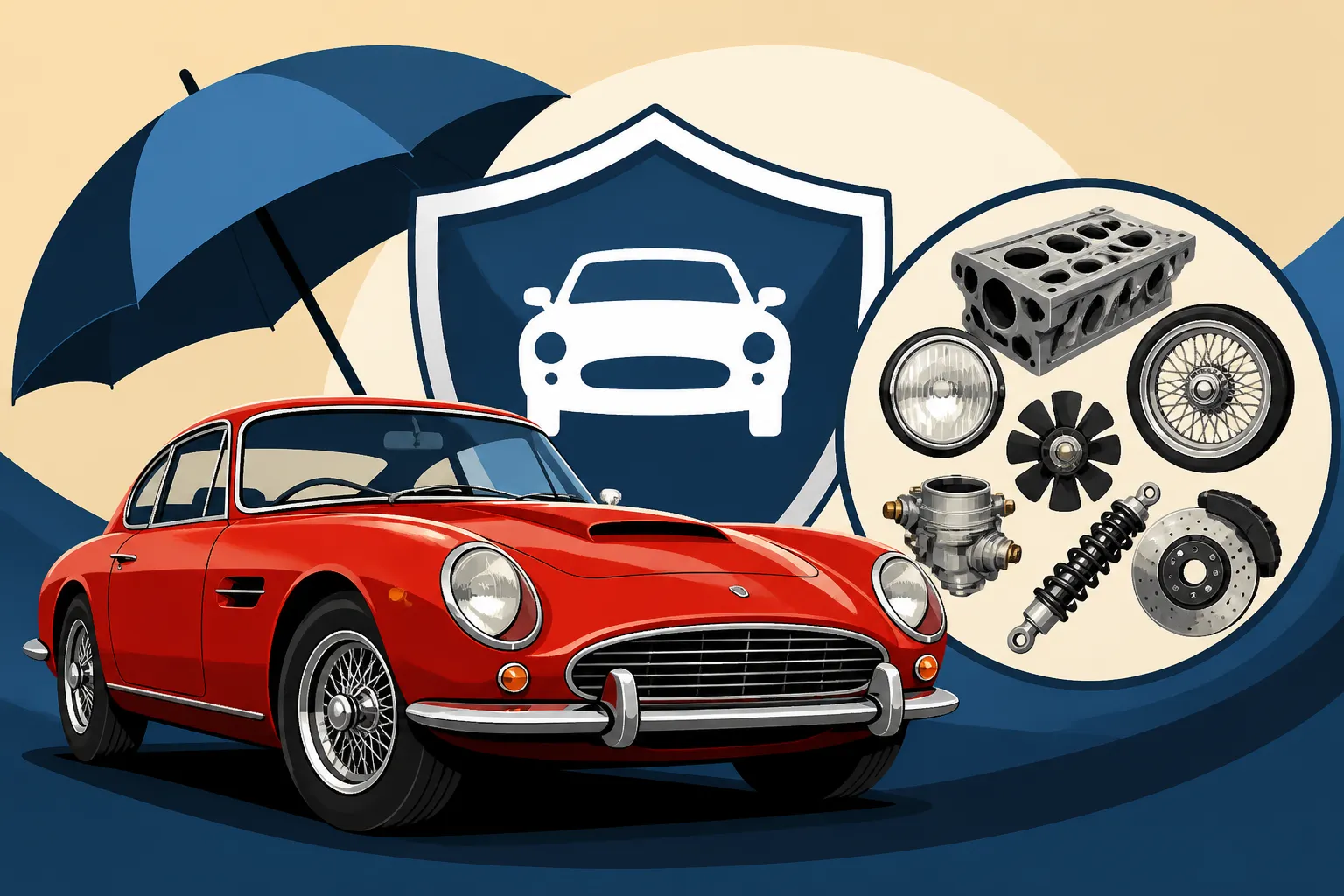
What exactly do we mean by "collectible spare parts" in the classic car world? It's a broad category, but generally, it refers to any component intended for your classic vehicle that holds significant value due to its rarity, originality, condition, or contribution to the car's authenticity. This could include a pristine 1957 Chevrolet Bel Air grille, still in its original packaging; a complete, rebuilt engine block for a vintage Ferrari; or even a set of rare magnesium wheels for a Porsche 911.
These parts are important for a myriad of reasons. Firstly, they are often crucial for maintaining the vehicle's originality, which is paramount for concours-level restorations and preserving historical accuracy. Secondly, having spares on hand acts as future-proofing. As these cars age, certain components become nearly impossible to find, making a spare a strategic asset against future wear and tear. Thirdly, these parts are often significant investments in themselves. Savvy collectors know that a rare, correct component can appreciate in value alongside the car it's destined for. Imagine acquiring a specific, hard-to-find transmission for a rare Shelby Mustang. That part isn't just a functional component; it's an asset. These items are typically stored carefully, often in a dedicated Garage Storage Requirement for Classic Cars or a secure workshop, but they are still susceptible to risks like theft, fire, or accidental damage.
Understanding Different Types of Spare Parts and Their Coverage Implications
The world of classic car parts is incredibly diverse, and understanding these distinctions is key to ensuring you have adequate insurance coverage. Not all "spare parts" are created equal in the eyes of an appraiser or an insurer, and their value can fluctuate wildly based on their origin, condition, and availability.
Categorizing Your Classic Car Components
To properly insure your spare parts, it helps to categorize them. This not only makes your inventory clearer but also helps an insurer understand the true value of what you possess.
- Original Equipment Manufacturer (OEM) vs. Aftermarket: OEM parts are those produced by the original car manufacturer or their direct suppliers. They are generally considered superior for maintaining authenticity and often command higher prices. Aftermarket parts, produced by third parties, can range from cheap reproductions to high-quality performance upgrades. While aftermarket parts can be essential for keeping a car on the road, their value usually doesn't compare to OEM for collectors focused on originality.
- New Old Stock (NOS): This is the holy grail for many restorers. NOS parts are original manufacturer components that were produced long ago but were never sold or used, remaining in their original packaging, often for decades. Finding a genuine NOS part – say, a complete dashboard for a 1970 Plymouth Hemi 'Cuda – can be incredibly challenging and expensive, sometimes costing many times more than a good used or reproduction part. Their pristine condition and authenticity make them extremely valuable.
- Period-Correct Reproductions: When NOS parts are simply unattainable, high-quality, period-correct reproductions become essential. These are new parts made to original specifications, sometimes even using original tooling. While they aren't "original" to the car's production run, they allow for accurate restorations. Their value is generally lower than NOS but still far exceeds generic modern equivalents.
- Modified/Performance Parts: Many classic car owners enjoy modifying their vehicles for better performance, handling, or a custom look. This might include upgraded suspension components, engine enhancements like turbochargers or superchargers, custom braking systems, or bespoke interior pieces. These parts often represent substantial financial investments. For example, a custom-built, forced-induction system for a classic Ford Mustang can easily run into five figures. Insurers need to understand that these aren't just "replacements" but valuable, high-performance additions.
- Tools and Memorabilia: It's important to draw a distinction here. While related to your classic car hobby, your specialized tools, vintage repair manuals, automobilia (like gas station signs, model cars, or racing posters), and other collectibles are typically covered under different types of endorsements or even separate policies, not usually under the same "spare parts" umbrella. Some policies, however, like those from Hagerty, might offer specific add-ons for Automobilia and Memorabilia Coverage.
How Insurers View Part Valuation
When it comes to insuring your classic car's spare parts, the valuation method is paramount. This is where the standard Actual Cash Value (ACV) model completely falls apart and why specialty insurers truly shine.
- Agreed Value Principle: The gold standard for classic car insurance, and vitally important for spare parts, is the concept of Agreed Value coverage. Unlike ACV, where the insurer determines the value at the time of loss (minus depreciation), Agreed Value means you and the insurer agree on the value of your classic car – and its associated parts – before the policy is issued. If a covered loss occurs, the insurer pays that agreed-upon amount, no questions asked, assuming you haven't misrepresented anything. This is critical for parts, as it acknowledges their true collectible worth rather than just their functional depreciated value. This is explained in more detail in Agreed Value Coverage Explained.
- Documentation is Key: To establish an accurate agreed value for your spare parts, documentation is non-negotiable. This means keeping meticulous records: original purchase receipts, invoices for restoration work done on the parts, photographs (dated and detailed), and any provenance (history of ownership, original vehicle they came from). The more evidence you have to support a part's value, the smoother the valuation process will be. If you're relying on market value, print out comparable sales from reputable auction sites or specialized forums.
- Inflation Guard: The value of rare classic car parts doesn't stay static. A desirable NOS part for a popular muscle car can see its value increase significantly over a few years, much like the car itself. Some specialty classic car policies offer an "inflation guard" endorsement, which automatically increases your agreed value by a small percentage (e.g., 2-6%) each year to account for market appreciation. This ensures your coverage keeps pace with the rising value of your parts without requiring a formal re-appraisal every single year.
How Spare Parts Coverage Actually Works
Understanding the mechanics of spare parts coverage is crucial to ensuring you have the protection you need. It’s not simply a blanket statement; there are limits, conditions, and specific scenarios where coverage applies or doesn't.
Typical Coverage Limits and Deductibles
Most standard classic car insurance policies will include a very basic amount of spare parts coverage, often an automatic, almost negligible, limit of around $1,000 to $2,500. While this might be enough for a few odds and ends, it's utterly insufficient if you have a collection of valuable NOS components or a complete spare engine. For instance, an original, uncracked dash pad for a 1970 Challenger can easily cost several thousand dollars on its own.
This is where you need to be proactive. Specialty insurers allow you to significantly increase these limits through specific endorsements or by adding a dedicated spare parts schedule to your policy. You might pay an additional premium to cover, say, $10,000, $25,000, or even $50,000 worth of spare parts. The amount you choose should reflect the true value of your inventory.
When it comes to deductibles, they generally apply per incident, just like with your main vehicle coverage. If you have a $500 deductible on your policy, and your garage burns down, damaging $15,000 worth of insured spare parts, you'd typically pay the first $500 of the loss, and the insurer would cover the remaining $14,500 (up to your specific parts coverage limit). Sometimes, an insurer might offer a separate deductible for parts, or it might be tied to your comprehensive or collision deductible if the loss occurred in conjunction with a car claim.
What Perils Are Covered and Exclusions to Watch For
Spare parts coverage typically protects your valuable components against a range of common perils, similar to the comprehensive portion of your main classic car policy. These generally include:
- Theft: If your parts are stolen from your garage, workshop, or even during transit.
- Fire: Damage from a fire at your storage location.
- Natural Disasters: Damage from floods, hail, windstorms, earthquakes, etc. (though flood coverage can sometimes be a separate endorsement).
- Accidental Damage: This could be a shelf collapsing, a part falling during handling, or damage during transport.
However, it's just as important to understand what's not covered. Common exclusions in Classic Car Insurance Exclusions to Know for spare parts often include:
- Wear and Tear: Normal aging, corrosion, or degradation of parts.
- Intentional Damage: Obviously, if you intentionally damage a part, it won't be covered.
- Damage Due to Improper Installation: If you install a part incorrectly and it breaks, that's typically not covered under a parts policy, although it might be relevant if the part was being installed as part of a larger restoration project covered under Restoration Coverage for Classic Cars.
- Damage to Parts Not Listed: If you have an inventory of specific parts insured, and a new, unlisted part is damaged, it might not be covered.
- Parts Left Unsecured: If you leave a valuable engine block sitting unsecured in your driveway and it's stolen, the insurer might deny the claim due to negligence, especially if your policy specifies secure storage.
Consider a scenario: you have a pristine, still-in-the-crate, numbers-matching transmission for your vintage Corvette. If it's stolen from your locked, alarmed garage in the dead of night, your spare parts coverage would kick in. But if you left it sitting out on your porch for days, the claim might be much more difficult to get approved.
Storage Requirements for Insured Parts
Insurers specializing in classic cars are particularly concerned about how and where your valuable spare parts are stored. This makes perfect sense; rare parts are often targets for thieves and can be easily damaged if not properly cared for. Most policies will stipulate that insured spare parts must be stored in a secure location.
- Secure Storage: The most common requirement is storage in a fully enclosed, locked, and secure garage or a dedicated storage facility. This typically means a structure with four walls, a roof, and a lockable door, rather than a carport or open shed. Some insurers might even ask about security features like alarms, surveillance cameras, or even if the garage is attached to a primary residence.
- Off-site Storage: If you store your parts at a separate, off-site location, such as a rented storage unit or another workshop, you need to inform your insurer. They might require additional details about the security of that facility and may adjust your premium accordingly.
- Documentation of Storage: It's a good practice to take photos of your storage setup, demonstrating how your parts are organized and secured. This provides additional evidence should a claim arise and reinforces your commitment to protecting your valuable assets. Some policies even specify that parts should be kept in a condition consistent with their value – for example, a high-value engine stored on a proper stand, not just lying on a damp concrete floor.
Securing the Right Spare Parts Coverage
Navigating the insurance landscape for classic car parts can feel like a minefield, but with the right approach and the help of specialized providers, it's entirely manageable. The key is to be meticulous and choose an insurer who truly understands the collector car hobby.
Eligibility and Documentation Essentials
Before you can even think about getting coverage, you need to meet some basic eligibility criteria, which usually tie back to your classic vehicle itself. Generally, you need to have an active classic car insurance policy for the vehicle(s) that these spare parts are intended for. Insurers aren't keen on covering a garage full of random parts if you don't actually own a collectible car.
Once you establish eligibility, documentation becomes your absolute best friend. This isn't just about proving ownership; it's about establishing value. Here's what you'll need:
- Inventory List: Create a detailed spreadsheet or document listing every single spare part you want to insure. Include the item description (e.g., "NOS 1969 Camaro Z/28 cross-ram intake manifold"), part numbers if available, condition, date acquired, and purchase price.
- Photographs: Take clear, high-resolution photos of each part. If possible, show them in their original packaging, or from multiple angles. Date these photos.
- Receipts and Invoices: Hold onto every piece of paper. The original bill of sale, restoration invoices, or even screenshots of auction results for comparable items are crucial evidence of value.
- Appraisals: For particularly rare, valuable, or one-off custom parts, a professional appraisal is highly recommended. An independent appraiser specializing in classic cars can provide a formal written valuation that carries significant weight with insurers. This is especially true for items like complete drivetrain assemblies or highly sought-after body panels. The process for this is detailed in Appraisal Requirements for Classic Car Insurance.
Working with Specialty Insurers
The reason mainstream insurers often fall short is that their business model isn't built around the unique nuances of collectible assets. They're designed for high-volume, depreciating daily drivers. Specialty classic car insurers, however, are cut from a different cloth. Companies like Hagerty, Grundy, American Collectors Insurance, and Heacock Classic live and breathe classic cars. They understand the difference between an OEM part and an aftermarket reproduction, the value of NOS, and the emotional and financial investment involved.
These Best Specialty Classic Car Insurers offer specific endorsements and policies tailored for collectors, which often include robust spare parts coverage. They understand that a rare engine block for your 1965 Corvette is an appreciating asset, not just scrap metal. They are far more likely to offer genuine Agreed Value coverage for your parts, and their claims adjusters are typically experienced with the specific challenges of sourcing and valuing classic car components. When you're considering How to Choose Classic Car Insurance, always prioritize those that offer comprehensive spare parts options.
Incorporating Parts Value into Your Overall Policy
When you get a quote for classic car insurance, it's essential to scrutinize the fine print regarding spare parts. Don't assume anything.
- Reviewing Your Main Policy: Many base policies include a minimal, almost token, amount for spare parts (as mentioned, usually $1,000 to $2,500). This is usually rolled into your comprehensive coverage. If you have a significant inventory of parts, this will not be enough.
- Dedicated Spare Parts Endorsement: The best way to protect your parts is to add a specific endorsement for spare parts coverage. This allows you to declare a higher, agreed-upon value for your entire parts inventory, or even list individual high-value items separately on a schedule. This endorsement will typically have its own specific limit, independent of your car's agreed value.
- Connecting Parts to Restoration: If you're accumulating parts for a car that is currently undergoing restoration, ensure your policy accounts for this. Some policies, such as those that include Restoration Coverage for Classic Cars, can factor in the increasing value of the project as parts are acquired and work is completed, potentially rolling the value of significant parts into the overall agreed value of the "car under construction." Always discuss your restoration plans and parts inventory with your insurer to ensure seamless coverage.
| Feature | Standard Auto Insurance (for parts) | Specialty Classic Car Insurance (for parts) |
|---|---|---|
| Valuation Method | Actual Cash Value (ACV) | Agreed Value |
| Coverage Limits | Very low, often $1,000-$2,500 default | Flexible, can be significantly increased (e.g., $10k, $50k+) |
| Rarity Recognition | Minimal to none | High, understands NOS, OEM, and unique values |
| Documentation | Basic receipts often sufficient | Detailed inventory, photos, appraisals highly encouraged |
| Claims Expertise | General automotive parts | Specialized in rare classic car components |
| Inflation Guard | Not typically available | Often available as an add-on |
| Storage Emphasis | Less stringent | Stricter requirements for secure, documented storage |
| Restoration Focus | None | Can integrate with Restoration Coverage for Classic Cars |
Navigating Claims for Lost or Damaged Parts
No one wants to think about filing an insurance claim, especially when it involves cherished classic car parts. But if the unthinkable happens – a theft, a fire, or accidental damage – knowing how to navigate the claims process can make a world of difference in getting a fair and swift resolution.
Steps to Take After a Loss
Immediate action is crucial when you discover that your spare parts have been lost or damaged. The faster and more thoroughly you act, the better your chances of a smooth claim process.
- Secure the Area and Prevent Further Loss: If possible, take immediate steps to prevent further damage. If there's a leak, stop it. If the area is compromised, try to secure it to protect other items.
- Report Theft to Police Immediately: If your parts have been stolen, contact your local law enforcement agency without delay. Get a police report number and the officer's contact information. This is an absolute requirement for any theft claim.
- Document Everything Extensively: Take copious photographs and videos of the damage or the scene of the theft. Don't rely on memory. Document the condition of the storage area, any signs of forced entry, and the specific parts that are affected. This is where your pre-loss documentation (inventory, photos) becomes invaluable. Compare your existing inventory to what's missing or damaged.
- Contact Your Insurer Promptly: Notify your classic car insurance provider as soon as practically possible. Most policies have a clause requiring timely reporting of claims. They will assign a claims adjuster to your case. Be prepared to provide the police report number (if applicable) and a preliminary list of damaged or missing items. Remember, some companies like Hagerty have dedicated classic car claims teams who understand the unique nature of these losses.
Valuation and Settlement Process
Once you've reported the loss, the claims adjuster will begin the process of valuing the damaged or stolen parts and determining the settlement. This is where the power of Agreed Value coverage truly comes into play.
- Agreed Value Principle at Play: With a specialty classic car policy that offers Agreed Value for your spare parts, the process is usually much more straightforward. The insurer will typically pay you the agreed-upon value for the specific part(s) that were lost or damaged, up to your policy's stated limit for spare parts coverage. They won't try to depreciate the value or argue about market conditions. Your diligent documentation (inventory, photos, receipts, appraisals) will support this agreed value.
- Challenges Without Proper Documentation: If you haven't properly documented your parts or have only minimal coverage, you might face challenges. The insurer might default to Actual Cash Value, offering you a fraction of what it would cost to replace a rare item. Proving the rarity or specific condition of a part without clear records can be an uphill battle, often requiring you to gather market data or get post-loss appraisals, which is far more difficult.
- Replacement vs. Cash Payout: Depending on the policy and the nature of the parts, the insurer might offer different settlement options. For widely available parts, they might offer to pay for a replacement. For rare or unique items, they are more likely to offer a cash payout based on the agreed value, allowing you to source a replacement yourself, which often requires significant searching. Always review the terms of your Classic Car Insurance Coverage Types Explained to understand your payout options.
It's crucial to understand that if the loss of parts is due to a peril specifically excluded by your policy, such as rust from long-term improper storage or damage from a known pre-existing condition, your claim may be denied. That's why understanding your Classic Car Insurance Exclusions to Know is so important.
Strategic Considerations for Comprehensive Protection
Protecting your classic car's spare parts is an ongoing process that requires careful thought and regular attention. It's not a one-and-done task; the value of your parts, your inventory, and market conditions can all change over time.
Balancing Cost and Coverage Needs
The first step in any insurance decision is always to balance what you're paying with the level of protection you're receiving. While it might seem tempting to opt for the cheapest premium, doing so for classic car parts can be a grave mistake. The financial hit from losing irreplaceable components far outweighs the savings of a low-cost, low-coverage policy.
- Assess the True Value: Honestly assess the total value of your spare parts inventory. Go through your list, consult current market prices for comparable items (online auctions, specialist forums), and consider the effort and cost involved in sourcing replacements. If you have an engine block for a rare European classic, don't just guess its value; get an Appraisal Requirements for Classic Car Insurance for it.
- Understand How Cost is Affected: Adding significant spare parts coverage will, naturally, increase your premium. However, it's often a relatively small percentage increase compared to the overall How Much Does Classic Car Insurance Cost for the vehicle itself. The cost will depend on the total declared value of your parts, their storage location, and the insurer. Understanding What Affects Classic Car Insurance Rates can help you find ways to mitigate costs. For example, secure storage and a clean claims history can help keep premiums reasonable.
- Don't Overlook the "Small" Stuff: While a spare Hemi engine commands attention, don't forget the collective value of smaller, less glamorous parts like wiring harnesses, rubber seals, or trim pieces. These can quickly add up to significant sums and are equally important for a complete restoration or ongoing maintenance.
Regular Review and Updates
Your classic car hobby is dynamic, and your insurance coverage should be too. Just like you'd update your main policy when you make significant modifications to your car, you need to keep your parts coverage current.
- Inventory Changes: As you buy new parts for a project or sell off unneeded items, update your inventory list and inform your insurer. If you acquire a highly valuable NOS component, you'll want to ensure it's specifically added to your coverage.
- Market Fluctuations: The classic car market is ever-changing, and the value of specific parts can rise or fall based on demand, new discoveries, or even the popularity of certain models. Regularly revisit the agreed value of your most significant spare parts. If you have an inflation guard endorsement, it will help, but a full review every few years is still a good idea, especially for high-value items.
- Restoration Milestones: If you're accumulating parts for a car undergoing restoration, ensure your coverage is updated as the project progresses. As parts are installed and the car's overall value increases, your spare parts coverage might need adjustment, or the parts might transition into being covered under the car's main policy.
Multi-Vehicle and Collection Policies
If you're a seasoned collector with several classic cars and a dedicated collection of parts, it might be more efficient and cost-effective to consolidate your insurance.
- Single Policy Advantage: Many specialty insurers offer multi-car collection policies. This allows you to list all your classic vehicles and your collective spare parts under one comprehensive policy. This simplifies administration and often provides discounts compared to insuring each car and its parts separately. This is usually covered in detail under Requirements for a Multi-Vehicle Collection Policy.
- Umbrella Policies: For extremely high-value collections of cars and parts, consider a personal umbrella policy. While not specific to classic cars, an umbrella policy provides an extra layer of liability coverage above and beyond your primary policies (home, auto, classic car). This can be crucial for protecting your substantial assets in the event of a catastrophic liability claim.
- Streamlined Management: Having all your classic car-related insurance needs with one specialist provider streamlines communication, ensures consistency in coverage, and means you're dealing with experts who understand your entire collection.
Disclaimer
Please remember that insurance policies can vary significantly. The information provided here is for general informational purposes only and does not constitute professional insurance advice. You should always consult with a qualified insurance agent or broker specializing in classic car insurance to discuss your specific needs and obtain tailored policy recommendations. Review your policy documents carefully to understand your coverage, limits, exclusions, and deductibles.