How Restoration Coverage Works for Collectors
Embarking on a classic car restoration project is a labor of love, a passion that demands significant time, effort, and financial investment. Yet, many collectors face the gnawing worry: what happens if disaster strikes mid-restoration, or if the value of my partially rebuilt masterpiece isn't recognized by a standard insurance policy? This guide dives deep into how restoration coverage specifically works for collectors, ensuring your prized project is protected every step of the way, from bare metal to gleaming finish.
Understanding the Unique Risks of a Restoration Project
Restoring a classic car isn't like owning a finished one; it comes with its own distinct set of vulnerabilities and challenges. You're not just protecting a vehicle, but a dynamic, ever-changing asset that's often in various states of disassembly. Standard auto policies simply aren't designed to handle this unique scenario, leaving many restorers feeling exposed.
The Volatility of a Project Car's Value
One of the biggest headaches for collectors is how to accurately value a car that's constantly gaining or losing value depending on its stage of restoration. When you start, it might be a rust bucket worth a few thousand dollars. As you pour in sweat, parts, and professional labor, its worth can skyrocket. But if it's damaged or stolen during this process, how does an insurer know what it was truly worth at that moment? This isn't a factory-new car with a static MSRP or a finished classic with a clear market value. The "Actual Cash Value" approach of standard insurance would severely shortchange you, often only paying out what the car was worth before any significant work began, ignoring all your hard work and investment.
This fluctuating value is precisely why specialized insurance, particularly policies offering "Agreed Value" coverage, becomes indispensable. It allows you and the insurer to agree on a specific value for your vehicle, a value that can be updated as the restoration progresses. This crucial aspect ensures that if a total loss occurs, you're compensated for the true worth of your investment up to that point.
Protecting Against Damage During Disassembly and Reassembly
Picture this: your beloved '69 Camaro is completely stripped down in your garage. The engine is on a stand, the interior is stacked neatly, and the body shell is on a rotisserie. A pipe bursts, or a careless worker drops a heavy tool. The damage isn't to a whole car; it's to individual components, a disassembled body, and a pile of expensive new parts. A typical policy might struggle to categorize this, leaving you scrambling to justify the cost of replacement panels, freshly painted fenders, or specialized engine components.
Restoration coverage is specifically designed to understand these intricate scenarios. It often includes provisions for parts, both original and newly acquired, and accounts for the labor costs associated with bringing the car back to its pre-loss condition, even if that condition was "in pieces." This specialized protection acknowledges that the value isn't just in the sum of its parts, but in the potential and ongoing investment.
Theft and Vandalism Concerns for In-Progress Projects
A car mid-restoration often sits in a garage, sometimes with doors off, windows out, or key components easily accessible. This makes it a prime target for theft, not just of the entire vehicle but of valuable parts—a freshly rebuilt carburetor, a rare NOS trim piece, or an expensive vintage radio. Vandalism is also a real threat, especially if the project is stored in a workshop or garage that isn't as secure as a finished car might be. The frustration of having a meticulously restored dashboard slashed or an engine bay sabotaged is immense, not just for the monetary loss but for the setback to your passion project.
Specialty insurers like Hagerty understand these unique risks. They typically require secure storage environments, but their policies are structured to cover not just the "car" but the "project." This means if a valuable part is stolen from your garage, or your partially painted body shell is defaced, the policy can help cover the replacement costs and the labor to redo the damaged work, preventing a total derailment of your restoration journey. This contrasts sharply with a standard auto policy, which usually only covers a vehicle that is registered, operable, and in a complete state.
What is Classic Car Restoration Coverage?
Classic car restoration coverage isn't just a fancy name; it's a specific type of insurance tailored to the unique journey of bringing a vintage vehicle back to life. It acknowledges that a car undergoing restoration is a living project, not a static asset, and its value is constantly evolving. This specialized protection is designed to grow with your investment, safeguarding both the vehicle itself and the significant time, effort, and money you pour into it.
How Agreed Value Adapts During Restoration
The cornerstone of effective classic car restoration insurance is the "Agreed Value" clause, and how it's applied to a vehicle under construction. Unlike Actual Cash Value (ACV) which only pays out market value minus depreciation at the time of loss, or Stated Value which offers less protection, Agreed Value ensures you and your insurer agree on the car's worth before the policy is issued. For restoration projects, this concept becomes dynamic. Many specialty insurers allow collectors to periodically update their agreed value as the restoration progresses and more money is invested in parts and labor.
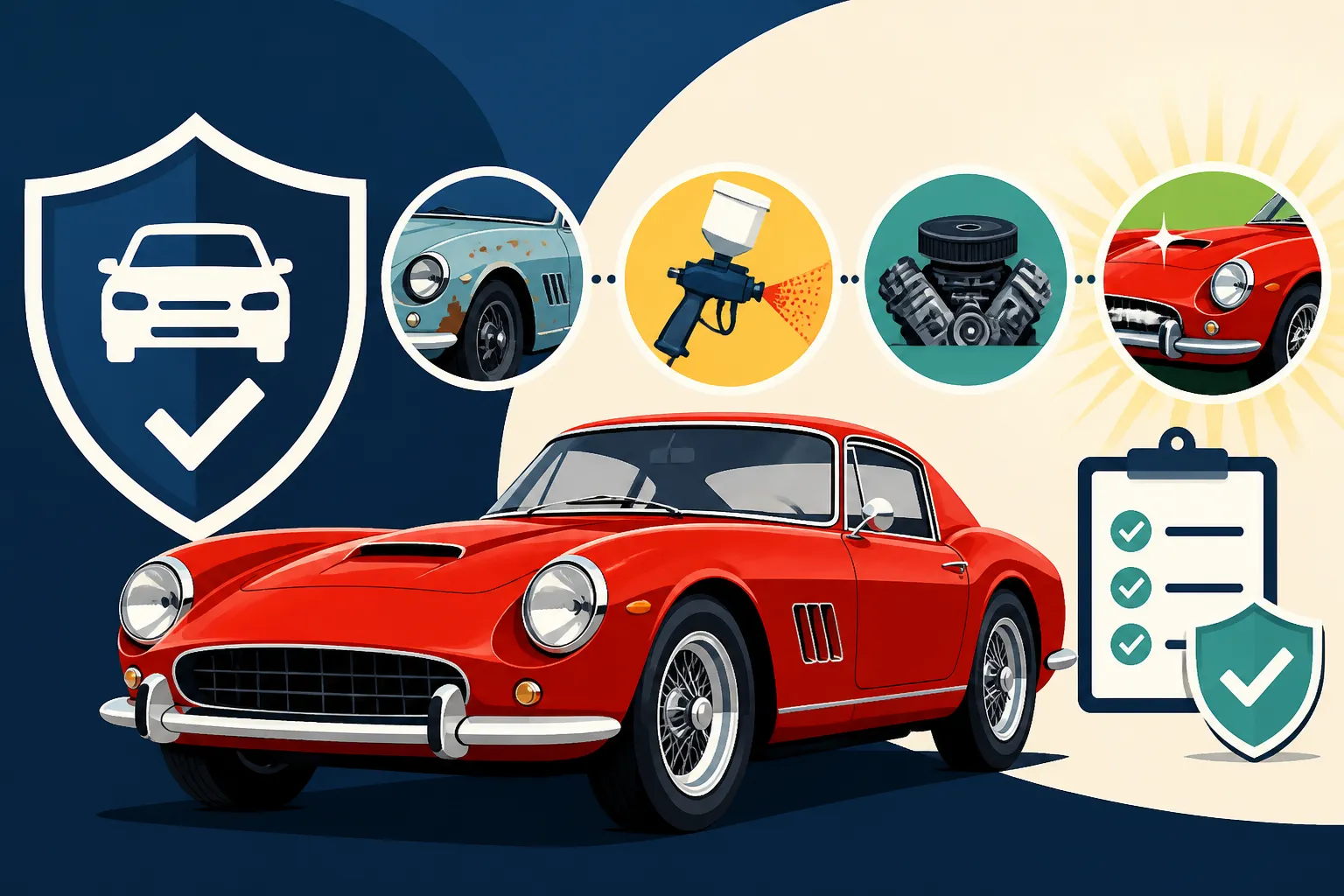
For example, when you first acquire that forlorn shell, you might establish an initial agreed value. As you replace the frame, rebuild the engine, or complete a pristine paint job, you can contact your insurer to increase the agreed value to reflect these significant investments. This way, if a fire rips through your workshop after the engine rebuild but before the paint, the payout reflects the value of the rebuilt engine and other completed work, not just the initial "barn find" price. This flexibility is critical; it’s one of the key differences when comparing classic car insurance vs regular insurance: What's Required coverage for a valuable project.
Key Coverages Included in a Restoration Policy
While specific offerings vary by provider, a robust restoration policy typically encompasses several crucial elements that go beyond basic liability.
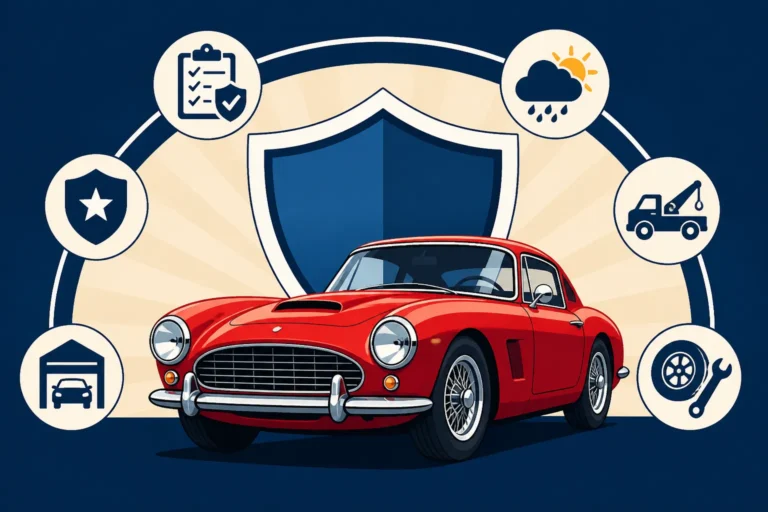
- Physical Damage Coverage (Collision & Comprehensive): This is foundational. It covers damage to your vehicle from events like accidents, fire, theft, vandalism, natural disasters, and falling objects, even when it's in various states of disassembly. This is critical because a car on jack stands can still be subject to fire or theft.
- Parts and Labor Coverage: A true restoration policy understands that the value isn't just in the car itself, but in the components and the expert labor invested. This coverage extends to new or refurbished parts purchased for the restoration, even if they haven't been installed yet. It also accounts for the cost of skilled labor to replace damaged components or redo work. Some policies might even offer specific "Spare Parts Coverage" as an add-on, vital for collectors who hoard rare or expensive components.
- Transit and Storage Coverage: Whether you're trailering your project to a specialist for engine work or simply moving it within your property, this coverage protects it during transit. Furthermore, it covers the vehicle while it's stored in your garage or a professional restoration shop. This is far more comprehensive than standard policies which might not cover a non-operational vehicle at all.
- Loss of Value (Diminished Value) Coverage: In some cases, if a partially restored car suffers significant damage but isn't a total loss, it might still lose some of its future collectible value even after repairs. Certain premium restoration policies might offer coverage for this "diminished value," which is a huge benefit for serious collectors.
The Role of Documentation in Your Restoration Policy
Documentation is not just helpful; it's absolutely essential when dealing with restoration coverage. Think of it as building a robust case for your vehicle's value. From the moment you acquire the car, every receipt, every photograph, and every invoice for parts and labor becomes a piece of evidence supporting your investment.
When you're trying to prove a car's collectible status or demonstrate the increase in its agreed value, insurers will look for a paper trail. Detailed photos before, during, and after each stage of restoration, alongside itemized receipts for every nut, bolt, paint canister, and hour of specialized labor, are invaluable. For example, if you replace a rare original engine block with a period-correct, numbers-matching unit, the receipt for that engine and photos of its installation will be crucial in updating your agreed value. This meticulous record-keeping helps substantiate your claims and ensures you get a fair payout should the worst happen. If you're wondering how to prove a car's collectible status, proper documentation is always step one.
Eligibility and Requirements for Restoration Coverage
Just like any specialized insurance, classic car restoration coverage comes with certain criteria that collectors need to meet. These requirements are in place to ensure that the project is genuinely a restoration of a collectible vehicle and that appropriate measures are taken to mitigate risk. Understanding these can help you better prepare your project for insurable status.
Secure Storage and Workshop Conditions
One of the primary concerns for insurers offering restoration coverage is the security of the vehicle and its parts. After all, a car in pieces is often more vulnerable than a complete, running vehicle. Most specialty insurance providers will require your project car to be stored in a secure, enclosed, and locked facility. This could be a private garage, a dedicated workshop, or a professional restoration shop. Parking it under a carport or leaving it exposed in a driveway usually won't cut it.
For instance, if you're undertaking a full frame-off restoration of a vintage Ford Mustang in your backyard, an insurer like Hagerty would likely expect it to be stored inside a locked garage when not being worked on, especially overnight. This requirement extends to valuable parts that are removed from the vehicle. Having your freshly chromed bumpers or rebuilt engine stored safely indoors, rather than left unsecured, demonstrates a responsible approach to protecting your investment. You can find more details about how storage affects classic car eligibility in specific guides.
Driver Experience and Usage Limitations
While a restoration project might not be driven much, or at all, during its in-progress phase, insurers still consider who will eventually drive it and under what circumstances. Typically, restoration policies are underwritten with the understanding that the vehicle will be used for pleasure purposes once completed, or for very limited mileage during testing. This usually means no daily commuting, racing, or commercial use.
Furthermore, the primary driver's experience and driving record are important. While a younger collector might be able to get classic car insurance for teenagers in the household for a finished classic, the underwriting for a restoration project might be even more stringent. Insurers want to see that the person responsible for the project has a clean driving record and a clear understanding of the responsibilities that come with owning and restoring a classic. This helps reduce the overall risk profile, even if the car is currently immobile.
Appraisal Requirements for Valuing the Project
Determining the value of a car in mid-restoration can be tricky, which is where appraisals often come into play. While some insurers might allow you to self-declare an initial value based on market research and photos, as the project progresses and significant funds are invested, they will often require an appraisal to validate the increasing agreed value. This ensures both you and the insurer have an accurate, professional assessment of the vehicle's worth at various stages.
An appraisal isn't just about the current market value of a finished car; for a restoration project, a qualified appraiser can assess the quality of work completed, the value of new parts installed, and the projected value upon completion. For example, if you're rebuilding a rare 1960s Ferrari, an initial appraisal might value the rolling chassis. After significant engine work and body panel replacement, a subsequent appraisal would document these enhancements, allowing you to effectively update your policy's agreed value. This proactive approach to valuation is key to ensuring that your policy correctly reflects your growing investment.
Maximizing Your Restoration Coverage and Payouts
Getting restoration coverage is a fantastic first step, but truly maximizing its benefits and ensuring a smooth payout in case of a claim requires ongoing effort and diligence. It's about being proactive, meticulous, and understanding the fine print.
Regular Updates to Your Agreed Value
As discussed, your project car's value isn't static. It grows significantly with every new part purchased and every hour of skilled labor invested. To truly protect your investment, you must regularly update your policy's agreed value. Don't wait until the car is finished, or worse, until a claim occurs. Most specialty insurers allow for periodic adjustments, often annually or after significant milestones.
Imagine you're restoring a vintage Porsche 911. You might start with an agreed value of $30,000 for the shell and parts you acquired. After a year of diligent work, you've invested $25,000 in engine rebuilds, suspension components, and bodywork. If you haven't updated your agreed value, a total loss would only pay out the initial $30,000, leaving you $25,000 out of pocket. By contrast, if you contact your insurer after that first year, provide documentation of your expenditures, and update your agreed value to $55,000, you're now properly covered. Think about it as continuous protection for a continuous investment. Learning how to update coverage after restoration or how to increase agreed value at renewal are vital skills for any collector.
Documenting Every Step of the Restoration Process
This cannot be stressed enough: document everything. Your camera is as important as your wrench when it comes to restoration coverage. Take detailed photographs and videos at every stage of the restoration, from the initial disassembly to component rebuilds, bodywork, paint, and final assembly. Keep meticulous records of all receipts for parts, materials, and specialized services (e.g., machining, chroming, upholstery).
These documents are your proof of investment. If you file a claim for damage or theft, the insurer will rely on this evidence to confirm the extent of your losses and the current value of the project. Without it, justifying a higher payout can be incredibly difficult. For example, if a fire damages your garage, and your recently painted (but not yet installed) fenders are ruined, dated photos of the paint process and the receipt from the paint shop will clearly demonstrate their value beyond just a raw metal panel. This kind of diligent record-keeping helps in proving restoration costs to an insurer.
Understanding Claims for Parts and Labor
When a covered loss occurs, especially with a partially restored vehicle, the claims process can be a bit different than with a fully assembled car. You'll likely be claiming for more than just the depreciated value of a whole car. Your claim could involve:
- Replacement of damaged or stolen parts: This includes both installed components and uninstalled new-old-stock (NOS) or refurbished parts you had purchased for the project.
- Cost of labor to undo damage: If a section of bodywork or a painted panel is damaged, the claim will cover the labor hours required to repair or replace it and redo any associated work.
- Loss of specialized labor: If you've paid a specialist for a particular service that's now compromised (e.g., an engine rebuild that needs to be redone), the policy may cover these costs.
It's crucial to communicate openly and thoroughly with your insurer about the specifics of the damage and your ongoing investment. Provide all documentation readily. Companies like American Collectors Insurance and Grundy are well-versed in handling these types of complex claims, but their ability to help you is directly tied to the quality of information you provide. The more detail, the smoother the process and the more accurate your payout will be.
Valuation Methods for Classic Cars in Restoration
Understanding how your classic car is valued, especially during a restoration, is critical. Not all insurance policies treat value the same, and choosing the wrong one can lead to significant financial heartache.
| Valuation Method | Description | Suitability for Restoration Projects |
|---|---|---|
| Actual Cash Value (ACV) | Pays market value minus depreciation at the time of loss. Common for standard daily driver policies. | NOT Suitable. Ignores investment in restoration; will significantly underpay. |
| Stated Value | You declare a value, but the insurer pays the lesser of the stated value, ACV, or cost to repair. | Limited Suitability. Better than ACV, but still leaves room for underpayment, especially during ongoing restoration. |
| Agreed Value | You and the insurer agree on a specific value. In case of a total loss, this agreed amount is paid out (minus deductible). | IDEAL for Restoration Projects. Can be updated as value increases, protecting your evolving investment. |
| Guaranteed Value | Similar to Agreed Value, but sometimes with a built-in inflation guard or slight premium over market trends. | Excellent. Offers the strong protection of Agreed Value, often with added benefits. |
Choosing the Right Valuation for Your Project
For a classic car under restoration, there's really only one choice that offers true peace of mind: Agreed Value coverage. This is because your car's value is in a constant state of flux. With Agreed Value, you have the opportunity to periodically update the value as you pour more money, parts, and labor into the project. This ensures that the policy keeps pace with your investment.
Imagine you started with a bare shell of a 1967 Chevrolet Bel Air with an agreed value of $15,000. Six months later, you've invested $20,000 into a fresh engine, transmission rebuild, and suspension work. If you inform your insurer and update the agreed value to $35,000, then you are properly protected. If you were on a Stated Value policy, the insurer might still argue that the "Actual Cash Value" of a non-running, partially assembled '67 Bel Air, even with a new engine, is still only $20,000, leaving you with a huge shortfall. That's why understanding how agreed value is determined and actively engaging with your insurer is so important.
Disclaimer
Please note that this information is intended for general guidance only and does not constitute professional financial or legal advice. Insurance policies vary widely, and it's essential to consult directly with a qualified insurance professional to discuss your specific needs and ensure you select the appropriate coverage for your classic car restoration project. Always review your policy documents thoroughly to understand your coverage, limitations, and exclusions.