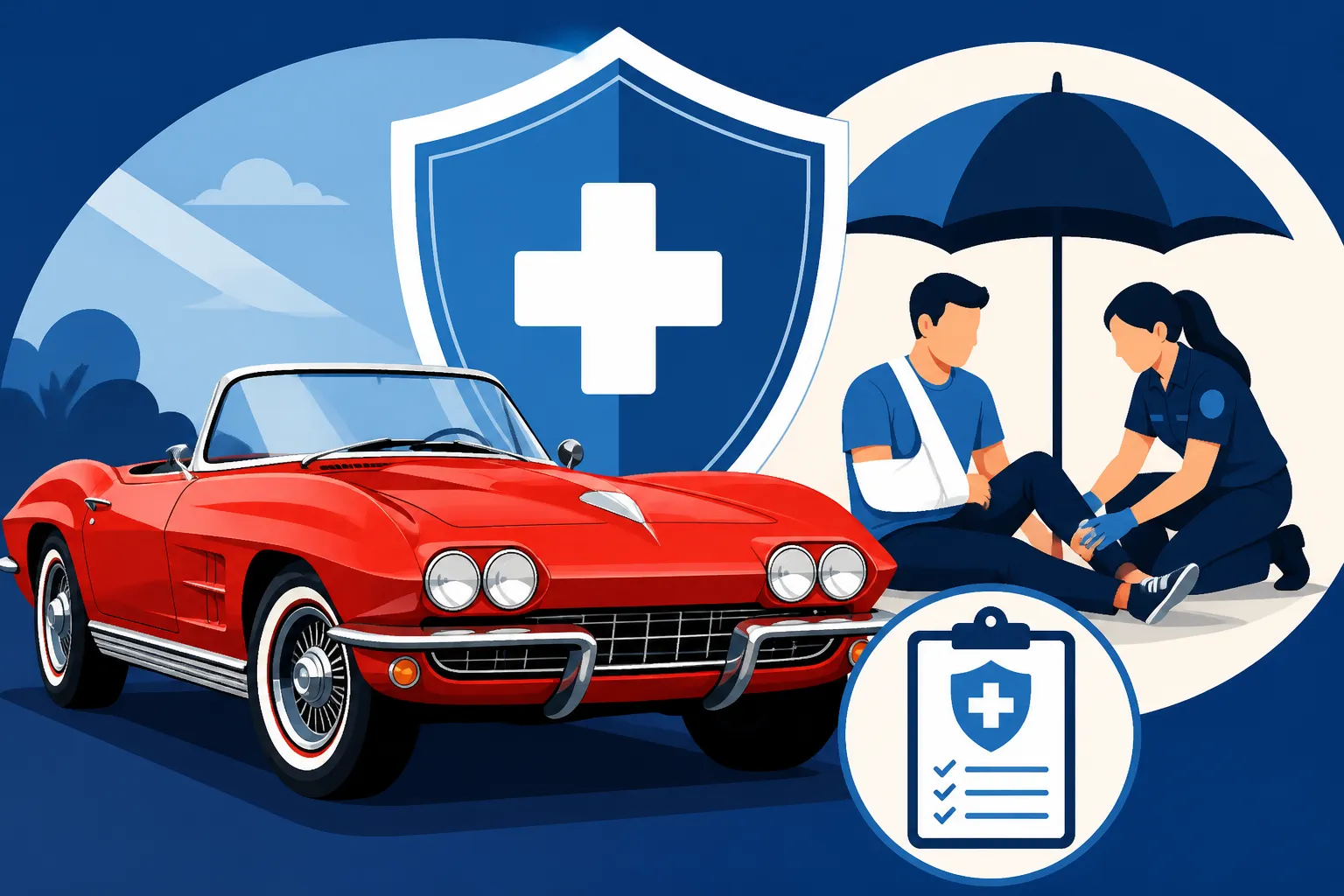
How Medical Payments Coverage Works for Collectors
The open road in your classic car is pure joy, a symphony of roaring engines and timeless design. But let's be real for a moment: nobody wants to imagine a fender bender, let alone a serious accident, especially when your prized possession is involved. Beyond the heartbreak for your vehicle, the thought of medical bills for yourself or your passengers can add immense stress. This comprehensive guide will meticulously walk you through how Medical Payments (MedPay) coverage works for classic car collectors, ensuring you understand this crucial safeguard for your well-being.
What Exactly Is Medical Payments Coverage?
When you hear "classic car insurance," most people immediately think about protecting the vehicle itself – the body, the engine, the irreplaceable chrome. But what about the people inside that beautiful machine? That's where Medical Payments coverage steps in, acting as a vital safety net. It's a type of coverage that pays for reasonable and necessary medical and funeral expenses for you and your passengers who are injured in an accident, regardless of who was at fault. Yes, you read that right: regardless of fault.
This "no-fault" aspect is really the cornerstone of MedPay. Unlike Bodily Injury Liability coverage, which pays for the injuries of others if you're deemed at fault, MedPay is designed to cover your immediate medical needs and those of anyone riding with you in your classic. It's not about assigning blame; it's about getting prompt care when you need it most. Think of it as a helpful buffer, a way to ensure that initial medical costs don't become an immediate financial burden while other aspects of an accident claim are being sorted out. It's a separate entity from your personal health insurance, though it can often work in conjunction with it, helping to cover deductibles or co-pays that your primary health plan might leave you responsible for.
Differentiating MedPay from Other Coverages
It's easy to get lost in the alphabet soup of insurance terms, so let's clarify how MedPay stands apart from other common coverages you might have on your classic car policy or even your regular daily driver insurance.
- Medical Payments (MedPay) vs. Personal Injury Protection (PIP): While both MedPay and PIP are "no-fault" coverages for medical expenses, PIP tends to be more expansive. PIP, which is mandatory in some states like Florida and Michigan, often covers not just medical bills but also lost wages, rehabilitation costs, and sometimes even essential services you can't perform due to injury (like childcare or household tasks). MedPay, on the other hand, is typically more narrowly focused on direct medical and funeral expenses. Many states don't require MedPay, but it's an incredibly valuable optional add-on, especially for classic car owners. In states where PIP isn't an option, MedPay becomes your primary no-fault medical coverage on your auto policy.
- Medical Payments vs. Bodily Injury Liability: This is a crucial distinction. As mentioned, Bodily Injury Liability coverage is all about protecting you financially if you injure someone else in an accident where you are at fault. It covers their medical bills, lost wages, and pain and suffering. MedPay, by contrast, is internal – it's there for you and your passengers, regardless of who caused the accident. This means if you are hit by an uninsured driver, or if the accident is deemed your fault, MedPay still steps up to help with your and your passengers' immediate medical care.
- Medical Payments vs. Health Insurance: Your personal health insurance is your primary coverage for most medical events. However, MedPay can fill critical gaps. It can cover deductibles, co-pays, or other out-of-pocket expenses that your health insurance might require. In some cases, if you don't have health insurance, MedPay can be a lifesaver for accident-related injuries. It also acts as immediate coverage without the bureaucratic hurdles sometimes associated with health insurance claims tied to an accident. Remember, health insurance might also have its own subrogation rights, meaning they might seek reimbursement from the at-fault party's insurance (or your own MedPay) after paying your bills.
Understanding these differences is key to building a robust insurance portfolio for your classic. While your main goal with a classic policy is often to get the right "Agreed Value Coverage Explained" for your vehicle, don't overlook the human element.
What MedPay Typically Covers
When you add Medical Payments coverage to your classic car insurance policy, you're investing in a specific set of benefits. It’s designed to be straightforward and provide quick access to funds for injury-related costs.
Here's a breakdown of what MedPay generally covers:
- Hospital and Doctor Visits: From emergency room visits immediately following an accident to follow-up appointments with specialists, MedPay helps cover these expenses. This includes consultations, diagnostic tests like X-rays or MRIs, and any necessary treatments.
- Ambulance and Emergency Services: The cost of an ambulance ride can be surprisingly high, even for a short distance. MedPay covers these crucial initial transportation costs to get you or your passengers to medical care.
- Surgical Procedures: If an injury is severe enough to require surgery, MedPay can contribute to the surgeon's fees, anesthesia, and facility charges.
- Nursing Services: Should you or a passenger need in-home nursing care or a stay in a rehabilitation facility post-accident, MedPay can help with these specialized services.
- Prosthetic Devices: In the unfortunate event of a severe injury resulting in the need for prosthetic limbs or other medical devices, MedPay can assist with these significant costs.
- Dental Care: If teeth are injured in an accident, MedPay can cover necessary dental work to restore your smile.
- Funeral Expenses: In the tragic circumstance that an accident results in a fatality, MedPay can provide coverage for funeral costs, offering some financial relief during an incredibly difficult time.
It's important to remember that MedPay limits are typically chosen by you when you purchase the policy, usually ranging from $1,000 to $10,000 or more per person. While these amounts might seem modest compared to major health insurance policies, they can be instrumental in covering immediate out-of-pocket costs, deductibles, or medical bills from less severe injuries. For classic car enthusiasts, especially those who participate in events or drives with passengers, this coverage offers an invaluable layer of protection.
Why Medical Payments Coverage is Crucial for Classic Car Owners
Collecting classic cars is about passion, history, and the sheer joy of driving something special. But that specialness also comes with unique considerations, particularly when it comes to safety and insurance. Your 1960s muscle car, as beautiful as it is, doesn't have the advanced airbags, crumple zones, or anti-lock brakes of a modern vehicle. This makes Medical Payments coverage not just a good idea, but a truly crucial component of your classic car insurance strategy.
Imagine taking your impeccably restored 1967 Mustang out for a Sunday drive. You’re being careful, but an unexpected maneuver by another driver leads to an unavoidable impact. While you’ve taken every precaution with your car's physical protection, the human occupants are inherently more vulnerable in these older vehicles. Even a relatively minor accident can result in whiplash, cuts, or bruises, and those immediate emergency room visits and doctor co-pays can quickly add up. This is precisely where MedPay steps in, offering immediate financial relief for those unexpected medical expenses. It means you can focus on your recovery and the repairs to your beloved classic, rather than agonizing over mounting medical bills.
The Vulnerability of Older Vehicles and Occupants
It's a bittersweet truth: the very features that make classic cars desirable – their original design, lack of modern tech – can also make them less safe in a collision compared to their contemporary counterparts. Modern cars are engineered with extensive safety features designed to protect occupants, from advanced restraint systems to sophisticated structural designs that absorb impact energy. Classic cars, while certainly built tough in their day, simply weren't designed with these advancements in mind.
- Limited Safety Features: Many classics lack airbags, advanced seatbelts (some only have lap belts), headrests, and reinforced side-impact protection. In a significant impact, occupants are far more exposed to direct force and potential injury.
- Rigid Construction: Paradoxically, the "solid steel" construction admired in older cars can be a detriment in a crash. Instead of crumpling to absorb energy, older frames can transfer more force directly to the occupants.
- Visibility Challenges: Some classic designs, while iconic, may have larger blind spots or less advanced lighting, potentially increasing the risk of an accident in certain driving conditions.
Because of these inherent differences, even a seemingly minor collision can lead to more serious injuries for those inside a classic car. MedPay acknowledges this reality, providing a dedicated fund to cover these potential medical costs without the delay of fault determination or the complexities of health insurance deductibles. It offers a peace of mind that allows you to truly enjoy your classic, knowing you and your passengers have a layer of protection against the "what ifs." For more details on protecting your vehicle, consider learning "Do You Need Full Coverage on a Classic Car".
Protection for Passengers and Club Events
Classic cars are often meant to be shared. Whether you're taking a loved one for a nostalgic cruise, heading to a local car show with a friend, or participating in a club rally, you're likely to have passengers. This is another area where Medical Payments coverage shines, as it extends its protection to everyone in your car at the time of an accident, regardless of their relationship to you.
Consider a typical scenario: you're driving your immaculate vintage Ford Thunderbird to a regional car meet. Your friend, who is a fellow enthusiast, is riding shotgun. On the way, a distracted driver swerves and clips your classic. Thankfully, the damage is repairable, but both you and your friend sustain minor injuries requiring immediate medical attention. Your MedPay coverage would kick in to help cover both your urgent care visit and your friend's emergency room bill, alleviating the financial stress for everyone involved. This is particularly valuable because your friend's own health insurance might have a high deductible or co-pays that MedPay can help offset.
Furthermore, if you're an active member of a classic car club or frequently attend classic car shows and events, the chances of having passengers or encountering different driving situations increase. Many events involve caravanning, cruises, or even short parade routes. Having MedPay ensures that all occupants of your classic are covered for medical expenses incurred during these beloved activities. It’s a proactive step that demonstrates responsibility and care, not just for your vehicle but for the people who share in your passion. Companies like Hagerty, who specialize in collector car insurance, often emphasize the importance of comprehensive coverage for both the vehicle and its occupants for exactly these reasons. Understanding "Club and Exhibition Use Coverage" can further enhance your event participation.
How MedPay Claims Work with a Classic Policy
Navigating an insurance claim can feel overwhelming, especially after an accident. However, understanding the process for Medical Payments coverage can simplify things considerably. The beauty of MedPay is its straightforwardness and ability to provide relatively swift relief for medical expenses, cutting through some of the red tape often associated with fault-based claims. It’s designed to be there for you and your passengers when you need it most, ensuring immediate care is prioritized.
When an accident occurs involving your classic car, and injuries are sustained, activating your MedPay coverage is usually a smooth process. You'll report the incident to your classic car insurance provider, just as you would for vehicle damage. During this report, you’ll inform them of any injuries to yourself or your passengers that required medical attention. Your insurer will then guide you through submitting the necessary medical bills and documentation. The goal is to get those bills paid efficiently, so you can focus on getting better and eventually, getting your classic back on the road.
Step-by-Step Claim Process
Let's walk through a typical scenario for filing a MedPay claim after an incident involving your classic car. This process is generally designed to be as stress-free as possible, given the circumstances.
- Prioritize Safety and Seek Medical Attention: Your first priority after any accident is the safety of yourself and your passengers. If anyone is injured, even if it seems minor, seek medical attention immediately. Call 911 if necessary for emergency services. Documenting injuries early is crucial for any insurance claim.
- Report the Accident to Your Insurer: As soon as you are able, report the accident to your classic car insurance company. Provide all details, including the date, time, location, circumstances of the accident, and that injuries were sustained. Be sure to mention that you'll be filing a claim under your Medical Payments coverage.
- Gather Medical Documentation: Keep meticulous records of all medical care. This includes ambulance bills, emergency room reports, doctor's notes, prescriptions, physical therapy bills, and any other invoices related to injury treatment. Your insurer will need these to process your claim.
- Submit Bills for Reimbursement: Your insurance company will instruct you on how to submit these medical bills. This might involve sending them directly to the insurer, or your medical providers might send them on your behalf. MedPay will then review these expenses for "reasonableness and necessity" – standard insurance language meaning they'll pay for legitimate, related medical care up to your policy limit.
- Coordination of Benefits (if applicable): If you also have personal health insurance, or if another party's insurance is eventually paying for your medical expenses (e.g., their bodily injury liability), MedPay will often coordinate benefits. This means it might pay for your deductibles or co-pays first, or it might act as secondary coverage after your primary health insurance pays its share. Always communicate openly with all insurers involved to ensure smooth processing and avoid delays.
The key takeaway is to act quickly to get medical help and inform your insurer. Classic car insurers, especially specialized ones like Hagerty or Grundy, are generally well-versed in handling these types of claims for collectors and can offer detailed guidance.
Interaction with Other Coverage Types
MedPay doesn't operate in a vacuum; it often interacts with other coverages you might have, both on your classic car policy and through other means. Understanding these interactions can help you maximize your benefits and avoid surprises.
- Your Primary Health Insurance: In most cases, if you have health insurance, it will act as your primary coverage. However, MedPay can step in to cover your deductibles, co-payments, or any services not fully covered by your health plan. For example, if your health insurance has a $2,500 deductible and you have $5,000 in MedPay coverage, MedPay could potentially cover that deductible, leaving you with no out-of-pocket medical costs directly related to the accident.
- At-Fault Driver's Bodily Injury Liability: If another driver is clearly at fault for the accident, their bodily injury liability insurance should ultimately pay for your medical expenses. However, these claims can take time to process, and fault may be disputed. MedPay offers immediate relief, covering your initial bills while the liability claim is being investigated. If the other driver's insurance eventually pays, your MedPay provider may seek reimbursement (subrogation) for what they've paid out.
- Uninsured/Underinsured Motorist Coverage: This is another crucial coverage, especially for classic car owners, because you're more likely to be injured. If the at-fault driver has no insurance (uninsured) or not enough insurance (underinsured) to cover your medical bills, your Uninsured/Underinsured Motorist Bodily Injury coverage would typically kick in. MedPay can still provide immediate funds while you await the outcome of a claim against this coverage. You can read more about "Uninsured Motorist Coverage for Classic Cars Explained".
- Personal Injury Protection (PIP): In "no-fault" states that require PIP, MedPay might be secondary or might not even be offered, as PIP serves a similar, but broader, purpose. If both are available, you'd typically exhaust your PIP benefits first before MedPay contributes.
Here’s a simplified table illustrating how MedPay often interacts:
| Coverage Type | Purpose | How MedPay Interacts |
|---|---|---|
| MedPay | Pays for your and passenger medical bills (no-fault) | Primary immediate coverage; can cover deductibles/co-pays for health insurance |
| Health Insurance | Pays for general medical bills | Usually primary; MedPay can cover gaps or act as secondary |
| Bodily Injury Liability | Pays for others' injuries (if you're at fault) | Does not cover you or your passengers; MedPay is separate |
| Uninsured/Underinsured Motorist (UM/UIM) | Pays for your injuries if at-fault driver lacks insurance | MedPay can offer immediate relief while UM/UIM claim processes |
| Personal Injury Protection (PIP) | Pays for your medical bills, lost wages, etc. (no-fault, in certain states) | Often primary to MedPay; MedPay may be secondary or not offered |
Understanding this layered approach to coverage ensures that no matter the circumstances of an accident, you and your passengers have avenues for medical care without immediate financial strain.
Key Considerations and Limitations for Collectors
While Medical Payments coverage is an invaluable asset for classic car collectors, it's not a silver bullet for all medical expenses. Like any insurance product, it comes with its own set of limits, conditions, and potential exclusions that you need to be aware of. Understanding these nuances will help you make informed decisions about your classic car insurance policy and ensure you have realistic expectations should you ever need to file a claim.
One crucial aspect is the coverage limit. MedPay policies typically offer limits ranging from a few thousand dollars up to $25,000 or more per person, per accident. While these amounts can be extremely helpful for covering immediate costs, they might not be sufficient for severe, long-term injuries that require extensive rehabilitation or ongoing care. It's vital to assess your personal health insurance coverage, your potential risk tolerance, and the types of driving you do with your classic to determine an appropriate MedPay limit. Don't just default to the lowest option; consider what a serious injury might truly cost.
Common Exclusions and Conditions
It's important to read the fine print of your classic car insurance policy to understand what Medical Payments coverage doesn't cover. While MedPay is broad in its no-fault nature, certain situations are typically excluded.
Here are some common exclusions and conditions to be aware of:
- Intentional Injuries: MedPay will not cover injuries that are intentionally self-inflicted or inflicted by another person. This is standard across almost all insurance policies.
- Injuries Sustained While Racing: Most classic car policies, and specifically MedPay components, will exclude coverage for injuries incurred during competitive racing events, timed events, or track days unless specific "Track Day and Autocross Coverage Options" endorsements are added. If your classic sees track time, always verify this specialized coverage.
- Vehicles Not Listed on the Policy: If you're injured in a vehicle that is not specifically listed on your classic car insurance policy, your MedPay coverage from that policy typically won't apply. This includes non-owned vehicles or other cars you might drive that aren't properly insured.
- Injuries While Committing a Felony: If injuries occur while you or a passenger are committing a felony, MedPay will generally not provide coverage.
- Bodily Injury to Others (unless specifically for passengers): While MedPay covers your passengers, it does not cover injuries to people in other vehicles or pedestrians you might injure. That falls under your Bodily Injury Liability coverage.
- Exceeding Policy Limits: MedPay only covers expenses up to the specified limit per person per accident. Once that limit is reached, any remaining costs become your responsibility or must be covered by other insurance (like your health insurance).
- Loss of Income or Pain and Suffering: MedPay is strictly for medical and funeral expenses. It does not cover lost wages, pain and suffering, or other non-medical damages. For those, you'd typically rely on a Bodily Injury Liability claim against an at-fault driver or your PIP (if applicable and broader).
Always discuss these exclusions with your insurance agent when setting up or reviewing your classic car policy. An agent specializing in collector cars, like those working with Hagerty or American Collectors Insurance, can walk you through the specifics and help you identify any gaps.
Choosing the Right Limits and Comparing Options
Selecting the appropriate Medical Payments coverage limits is a critical decision that balances cost with potential financial protection. It's not about picking the lowest premium, but about understanding your risk profile and existing health coverage.
Consider these factors when choosing your MedPay limits:
- Your Health Insurance Deductible and Coverage: If you have a high-deductible health plan, a higher MedPay limit (e.g., $10,000) could be invaluable for covering that deductible if you're in an accident. If your health insurance has excellent coverage with low out-of-pocket costs, you might opt for a lower MedPay limit.
- Frequency of Driving and Passengers: If you drive your classic frequently, especially with passengers, the risk of needing MedPay increases. More passengers also mean more potential individual claims, making higher per-person limits more appealing.
- Nature of Driving: Are you cruising to local shows, or do you participate in longer tours or rallies? Longer drives or more involved events inherently carry a slightly higher risk of incident.
- Cost vs. Benefit: MedPay is generally quite affordable compared to other coverages. Increasing your limit from $1,000 to $5,000 or $10,000 might only add a small amount to your annual premium, offering significant peace of mind for a modest investment.
When comparing classic car insurance quotes, always look beyond just the agreed value and liability limits. Pay close attention to the MedPay (or PIP, if applicable) offerings. Some companies might offer higher standard limits or more flexible options. Don't hesitate to ask for quotes with different MedPay limits to see the premium difference. It's also wise to compare it against what your regular auto insurance provides for MedPay, as the specific needs for a classic can be different. Ensuring you have adequate "Classic Car Insurance Coverage Types Explained" for all scenarios is always the goal.
Disclaimer
Please remember that this article provides general information and guidance on Medical Payments coverage for classic cars. Insurance policies can be complex, and coverage specifics, terms, conditions, and exclusions can vary significantly based on your specific policy, the insurance provider, and your state's regulations. It is always essential to review your individual policy documents, consult with a qualified insurance agent or broker, and understand the exact coverage you have before making any decisions. This content is not intended as legal, financial, or insurance advice.