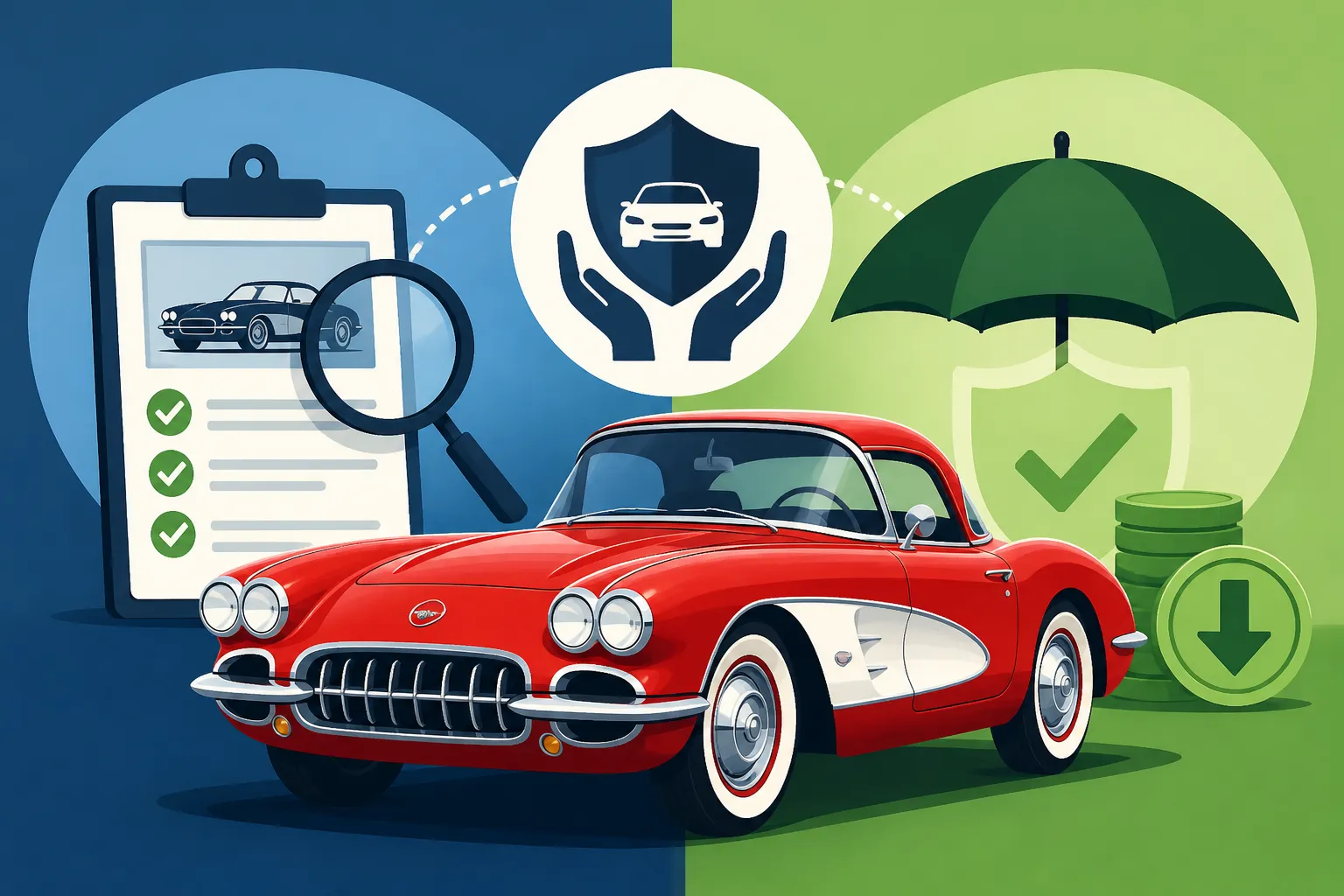
How Appraisals Affect Insurance Cost
Navigating the world of classic car insurance can feel like a maze, especially when it comes to figuring out how much your cherished vehicle is actually worth. Many owners worry they won't get a fair payout if something happens, fearing that a standard policy won't grasp the true value of their unique ride. This guide will meticulously break down how professional appraisals serve as a cornerstone in securing the right classic car insurance and how they directly influence your premiums.
The Core Challenge of Valuing a Classic Car
Insuring a classic car isn't like insuring your everyday commuter. The emotional attachment, the painstaking restoration hours, the rare parts, and the unique market dynamics all contribute to a valuation headache if you don't approach it correctly. It's a common frustration among collectors to realize that their pride and joy isn't just a vehicle; it's an investment, a piece of history, and often, a family heirloom.
Why Classics Aren't Like Daily Drivers
Think about your daily driver. As soon as you drive it off the lot, it starts losing value – that's depreciation, and it's a fact of life for most new cars. But classic cars? They often do the opposite. They appreciate, sometimes significantly, over time, especially if they're rare, well-maintained, or tied to a significant moment in automotive history. A pristine 1969 Chevrolet Camaro, for example, is valued completely differently than a 2019 model. Its worth isn't determined by mileage alone or the blue book value for a typical used car.
This fundamental difference creates a huge hurdle for traditional insurance models. Standard policies are built around the concept of depreciation, using formulas that simply don't apply to a appreciating asset. The unique condition, the modifications, the provenance – these are all critical factors that a typical insurance algorithm can't comprehend, leaving classic car owners feeling misunderstood and potentially underinsured.
The Pitfalls of Standard Insurance Valuation Methods
If you try to insure a classic car with a regular auto policy, you'll likely run into one of two valuation methods: Actual Cash Value (ACV) or Stated Value. Neither is ideal for a true classic. Actual Cash Value policies will pay out the replacement cost minus depreciation, which for a classic, is often a shockingly low figure, leaving you high and dry if your vehicle is a total loss. Imagine your lovingly restored 1957 Bel Air, worth $70,000, being valued by a standard insurer at $15,000 because of its age. It's a gut-wrenching thought.
Stated Value policies, while seemingly better, can also be problematic. With a stated value policy, you declare what you believe your car is worth. However, in the event of a total loss, the insurer typically reserves the right to pay up to that stated value or the actual cash value, whichever is less. This means if you claim your classic is worth $50,000, but they assess its ACV at $20,000, you might only receive $20,000. It's a trap many unsuspecting classic car owners fall into, leading to immense frustration when a claim needs to be filed. This is why understanding the nuanced differences between valuation types is crucial, and it's why you need to know about Agreed Value vs Stated Value vs Actual Cash Value.
What is a Classic Car Appraisal, Really?
A classic car appraisal isn't just someone looking at your car and guessing a number. It's a thorough, professional assessment that dives deep into every aspect of your vehicle to determine its true market value. For classic car enthusiasts, this document is a powerful tool, providing the objective evidence needed to secure appropriate insurance coverage.
Beyond a Simple Price Tag
A professional classic car appraisal is a comprehensive report performed by a qualified, independent appraiser specializing in collectible vehicles. These aren't just any mechanics; they are experts who understand the nuances of the collector car market, the impact of originality, the quality of restoration work, and the significance of various options and features. During an appraisal, the expert will meticulously inspect your vehicle's condition, from the engine bay to the interior, the paint quality, chrome, and even the originality of parts.
They'll also delve into its history – often called "provenance" – looking at ownership records, maintenance logs, restoration receipts, and any awards or accolades the car has received. They then cross-reference this detailed information with current market data, auction results, and sales records for comparable vehicles, often within specific geographic regions like how a classic car's value might differ in sunny California versus a more humid climate. The final report is a detailed, multi-page document outlining all these factors and culminating in a well-supported valuation.
How Appraisals Establish Agreed Value
This is where appraisals truly shine in the world of classic car insurance. The ultimate goal of an appraisal for insurance purposes is to establish an "Agreed Value" for your policy. Unlike ACV or Stated Value, Agreed Value is a set amount that you and your insurance provider agree upon at the start of the policy. In the event of a total loss (say, due to an accident or theft), the insurer will pay you that exact agreed-upon amount, no questions asked about depreciation or current market fluctuations.
An appraisal provides the objective, expert third-party validation that insurers need to confidently offer an Agreed Value policy. When you present a comprehensive appraisal report, it gives the insurer, such as a specialized provider like Hagerty, concrete evidence of your vehicle's condition, rarity, and market standing. This allows them to underwrite the policy with confidence, knowing that the agreed value is fair and defensible. If you're wondering How Agreed Value Is Determined, the appraisal is almost always the starting point.
The Direct Impact of Appraisals on Your Classic Car Insurance Costs
It might seem counterintuitive to spend money on an appraisal and then potentially face a higher premium, but overlooking this crucial step can cost you far more in the long run. An appraisal doesn't just establish value; it strategically shapes your insurance experience, often leading to a policy that truly protects your investment.
Higher Value, Higher Premium But Worth It
Let's be blunt: if an appraisal establishes a higher, more accurate value for your classic car, your insurance premium will likely be higher than if you settled for a generic, lower valuation. This is simply because the insurance company is agreeing to pay out a larger sum in the event of a total loss. However, this isn't "wasted money." It's an investment in peace of mind.
Consider a classic muscle car, a 1970 Dodge Challenger, that you've poured years and significant funds into restoring to concours condition. Without an appraisal, an insurer might estimate its value at $40,000. With a professional appraisal detailing its numbers-matching engine, rare options, and high-quality restoration, the agreed value could be $80,000 or even $100,000. Your premium will be higher on the $80,000 or $100,000 car, but if the unthinkable happens, you'll receive that full, higher amount. The seemingly cheaper policy on the $40,000 valuation would leave you with a devastating financial shortfall and no way to replace your cherished Challenger. This clearly illustrates why Is Classic Car Insurance Worth the Cost and why proper valuation is key.
Mitigating Risk for Insurers
From an insurance company's perspective, a detailed appraisal is a risk-mitigation tool. When a classic car owner presents a professional appraisal, it provides a clear, documented snapshot of the vehicle's condition and market value. This transparency helps the insurer understand exactly what they're insuring. They're not just taking your word for it; they have an expert's assessment to back up the agreed value.
This reduced uncertainty for the insurer can actually lead to more favorable underwriting decisions. They are more likely to offer comprehensive coverage and specialist add-ons when they have a verified asset value. For instance, knowing the specific value of a rare part or a bespoke interior documented in an appraisal helps them assess the cost of potential repairs or replacement. This clear understanding can sometimes translate into better policy terms, a smoother claim process, and overall a more cooperative relationship between you and your provider.
Discounts and Specialty Policy Access
While not always a direct discount in the traditional sense, having a professional appraisal can indirectly open doors to better rates and more suitable policies. Many specialty classic car insurers rely heavily on accurate valuations to tailor their offerings. For example, a detailed appraisal proving your vehicle is a genuine, high-quality collector's item might make you eligible for policies with higher coverage limits, specialized roadside assistance, or even specific coverage for parts under restoration.
Some insurers might even view the commitment to obtaining a professional appraisal as a sign of a responsible, serious collector, which can implicitly influence how they assess your overall risk profile. Furthermore, certain high-value or exceptionally rare vehicles might require an appraisal to even qualify for an Agreed Value policy, meaning skipping it could force you into a less protective, less cost-effective standard policy. It's often the prerequisite for getting truly tailored coverage that understands the nuances of your particular classic, as detailed in discussions around Classic Car Insurance Add-Ons and Endorsements.
When You Absolutely Need a Classic Car Appraisal
While generally advisable for any collectible vehicle, there are specific situations where a classic car appraisal isn't just a good idea, it's virtually essential to protect your investment properly. Ignoring these junctures can leave you exposed to significant financial risk.
Initial Policy Setup and High-Value Vehicles
When you first obtain classic car insurance, especially for a vehicle you've just acquired or completed restoring, a professional appraisal is paramount. This initial assessment sets the baseline for your Agreed Value policy. For instance, if you've recently purchased a beautiful 1965 Corvette Stingray, having an appraisal done immediately ensures that its current market value, including any recent restoration work or rare features, is accurately documented. Most specialty insurers, like Grundy or American Collectors Insurance, strongly recommend or even require an appraisal for vehicles exceeding a certain value threshold, often starting around $25,000 or $50,000, depending on the insurer and the vehicle type.
Without an appraisal at this stage, you're relying on either the insurer's internal valuation tools (which might be less precise for unique cars) or your own subjective estimate, neither of which carries the weight of a third-party expert. This is particularly true for rare finds, bespoke builds, or cars with unique historical provenance, where standard market guides simply don't capture the full picture. Understanding How to Value Your Classic Car for Insurance often begins with an appraisal.
Significant Modifications, Restorations, or Market Changes
Classic cars aren't static assets. They evolve, and so does the market around them. If you undertake a significant restoration project, adding considerable value through new paint, engine rebuilds, interior refresh, or performance upgrades, your existing agreed value will quickly become outdated. An appraisal after a major restoration is crucial to update your policy and reflect the enhanced value of your vehicle. Imagine spending $30,000 on a complete frame-off restoration of your 1972 Ford Bronco. If your agreed value was $45,000 before the restoration, you'd be severely underinsured if you didn't get a new appraisal.
Similarly, the collector car market can shift, sometimes dramatically, over a few years. Certain models can see sudden surges in popularity and value, while others might plateau. Getting periodic re-appraisals every 3-5 years, or if there's a major market correction, ensures your agreed value remains current. This is particularly relevant for "youngtimers" or emerging classics, whose values can be more volatile. Discussions on How to Increase Your Agreed Value Over Time heavily emphasize the role of updated appraisals.
Disputes and Estate Planning
Beyond insurance, appraisals serve critical functions in other aspects of classic car ownership. In unfortunate situations like divorce settlements or estate planning, an impartial, legally defensible appraisal is invaluable. It provides an objective basis for asset division or inheritance, preventing disputes among family members. For example, if a beloved 1967 Mustang Fastback is part of an estate, an appraisal ensures all beneficiaries agree on its fair market value, simplifying the legal process.
Moreover, if you ever find yourself in a dispute with your insurer over a claim settlement, having a recent, professional appraisal on hand can be your strongest evidence. It’s a powerful document that supports your position on the vehicle’s worth, providing an expert opinion that can counter an insurer's lower assessment. This reinforces why How Classic Car Appraisals Work for Insurance is a topic every owner should be familiar with.
The Appraisal Process and What to Expect
Embarking on the appraisal journey might seem daunting, but understanding the steps involved and what to prepare can make it a smooth and beneficial experience. It's about empowering yourself with the right documentation to get the protection your classic deserves.
Finding a Qualified Appraiser
The first and most critical step is finding a reputable and qualified classic car appraiser. This isn't a job for just any auto mechanic or a general appraiser. You need someone with a deep understanding of the collector car market, restoration quality, originality, and the factors that influence classic car values. Look for appraisers who are certified by recognized organizations, have a strong track record, and ideally, specialize in the type of vehicle you own (e.g., muscle cars, European sports cars, pre-war automobiles). You can often find recommended appraisers through classic car clubs, auction houses, or by asking your specialty insurance provider like Hagerty for recommendations.
When you contact potential appraisers, ask about their experience, their certification, what their process entails, and what their fees cover. Don't be afraid to ask for references or sample appraisal reports to gauge the quality of their work. A good appraiser will be transparent about their methodology and happy to answer your questions.
Preparing Your Car and Documentation
To ensure the most accurate appraisal, you'll need to do some homework before the appraiser arrives. Start by thoroughly cleaning your car, inside and out, and ensure it's in a well-lit area for inspection. More importantly, gather all relevant documentation. This includes:
- Maintenance records: Proof of regular upkeep and professional servicing.
- Restoration receipts: Detailed invoices for parts, labor, and specialized work (e.g., paint, engine rebuilds, upholstery). This is especially vital for demonstrating the value added by a Restoration Coverage for Classic Cars policy.
- Original paperwork: Build sheets, window stickers, sales receipts, original titles, or any historical documents proving provenance.
- Awards and show history: Trophies or certificates from car shows, demonstrating its quality and recognition.
- Photographs: A collection of photos documenting the car's condition before and during any restoration.
- Recent valuations or sales comps: Any market data you've collected that supports its value.
The more comprehensive and organized your documentation, the easier it will be for the appraiser to assess your car's true worth and compile a robust report.
Understanding the Appraisal Report
Once the appraiser completes their inspection and research, they will provide you with a detailed appraisal report. This document typically includes:
- Vehicle identification: Make, model, year, VIN, and other identifying features.
- Condition assessment: A thorough breakdown of the vehicle's condition, noting originality, quality of restoration, any flaws, and wear.
- Photographic evidence: Numerous photos supporting the condition assessment.
- Market analysis: Research into comparable sales, auction results, and current market trends for similar vehicles.
- Provenance and history: A summary of the car's ownership history, restoration details, and any significant events.
- Valuation statement: The appraiser's professional opinion on the vehicle's fair market value, often with different valuations (e.g., retail, auction, quick sale).
You will then present this report to your classic car insurance provider. They will review it and, based on its findings, will work with you to establish the Agreed Value for your policy. Understanding this report is crucial for ensuring your coverage accurately reflects your car's worth, and it's a key part of the process when considering How to Get a Classic Car Appraisal.
Are Appraisals Always Required? The Nuances of Different Insurers
It's a common question: do I always need an appraisal for my classic car insurance? The answer is nuanced, depending largely on the insurer, the car's value, and its specific characteristics. While often recommended, there are times when some flexibility exists, though it comes with considerations.
When Some Insurers Waive Appraisals
Some specialty classic car insurance providers recognize that not every collectible warrants a full, formal appraisal, especially for lower-value vehicles or those with more readily available market data. For instance, insurers might use their proprietary valuation tools, market databases, or even ask for detailed photographs and historical documentation in lieu of a physical appraisal for cars valued under a certain threshold – say, under $25,000 or $30,000. These internal tools pull data from recent sales, auction results, and condition reports to suggest an agreed value.
This approach offers convenience and can save you the upfront cost and time of an appraisal. For a fairly common classic, like a Ford Mustang convertible from the late 60s in good but not show-winning condition, an insurer might feel confident enough to establish an agreed value based on their extensive database without requiring an independent appraisal. This can be a great option for new collectors or those with entry-level classics. However, it’s important to understand the limitations, as these valuations might not capture every unique detail of your specific vehicle.
The Trade-Offs of Skipping an Appraisal
While it might be tempting to skip an appraisal to save money or time, doing so carries inherent risks. The biggest trade-off is the potential for underinsurance. If you rely solely on an insurer's internal tools or your own estimate, there's a chance the agreed value set for your policy might be lower than your car's true market worth. This discrepancy becomes a major problem if your car is totaled, leaving you with a payout that doesn't cover its replacement or restoration.
For example, if you have a rare trim package on your Chevrolet Chevelle SS, or if a meticulous restoration involved expensive, hard-to-find New Old Stock (NOS) parts, a generic valuation might overlook these significant value drivers. An appraisal provides a detailed, objective report that captures these nuances, ensuring a truly accurate agreed value. Without it, you're essentially betting that the insurer's generic assessment aligns perfectly with your unique vehicle's value, which is a gamble few serious collectors are willing to take. This is a crucial point when considering Classic Car Insurance Cost by Vehicle Value and ensuring you don't undervalue your investment.
Classic Car Valuation Methods Compared
To help you visualize how appraisals fit into the broader picture of classic car insurance valuation, here's a quick comparison of the common methods:
| Valuation Method | Description | Relies on Appraisal? | Payout in Total Loss | Typical Use Case | Potential Issues |
|---|---|---|---|---|---|
| Actual Cash Value (ACV) | Market value minus depreciation at the time of loss. | No | Replacement cost less depreciation (often very low for classics). | Standard auto insurance for daily drivers. | Severely undervalues classics; no consideration for appreciation. |
| Stated Value | You declare a value, but insurer pays up to that or ACV, whichever is less. | Sometimes | Up to stated value or ACV (often defaults to ACV for classics). | Often seen in standard policies trying to cover classics. | Can still lead to underpayment if ACV is low; not a true guaranteed value. |
| Agreed Value | You and insurer agree on a fixed amount at policy inception. | Yes (usually) | The full, predetermined agreed-upon amount is paid out. | Specialty classic car insurance (e.g., Hagerty). | Requires accurate appraisal; premium reflects agreed value. |
This table clearly illustrates why Agreed Value, supported by a professional appraisal, is the gold standard for classic car owners. It's the only method that truly guarantees you receive what your car is worth.
Disclaimer
Please remember that this article provides general information and insights into classic car appraisals and insurance. Insurance policies and requirements can vary significantly by provider and individual circumstances. It is always best to consult directly with a qualified classic car insurance specialist and a professional appraiser to discuss your specific vehicle and coverage needs.