Full Coverage vs Liability-Only for Classics
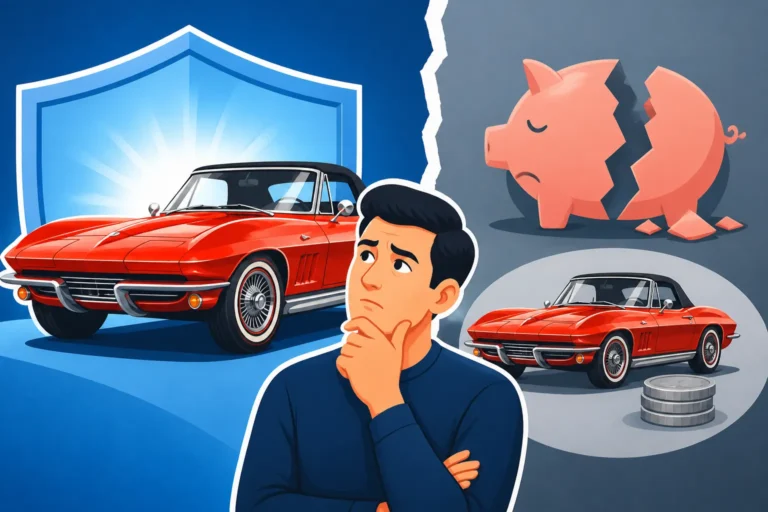
The frustration is real when you’ve finally got that classic beauty in your garage, and then you hit the insurance maze. You’re trying to protect your investment, but the terms "full coverage" and "liability-only" can feel like a foreign language, especially when a regular car policy just doesn't seem to fit. This guide will walk you through the critical differences between these two types of insurance for classic cars, helping you understand which one truly safeguards your prized possession.
Understanding Liability-Only Coverage for Classic Cars
When you hear "liability-only," it sounds simple enough, but for a classic car, it often leaves a significant gap in protection. This type of coverage is primarily designed to protect other people and their property if you're at fault in an accident. It doesn't do much for your beloved vehicle itself, which can be a tough pill to swallow if anything goes wrong.
What Liability-Only Actually Covers
Liability coverage is typically split into two main components: bodily injury liability and property damage liability. Bodily injury coverage kicks in to pay for medical expenses, lost wages, and pain and suffering for anyone you injure in an accident where you are deemed responsible. For instance, if you're out for a Sunday drive in your '67 Mustang and accidentally rear-end another vehicle, your bodily injury liability would cover the other driver's hospital bills. Property damage liability, on the other hand, covers the cost of repairing or replacing their car or property. So, in that same scenario, it would pay for the damage to the car you hit, or even a fence or mailbox if you swerved off the road.
Every state has minimum requirements for liability coverage that all drivers must carry, and classic car owners are not exempt from these. These state minimum requirements for classic cars are often quite low, though, and might not be enough to cover serious damages, even for a regular car, let alone the potential for high-value accidents. For a classic, this means your policy would pay out up to its limits, and anything beyond that would come directly out of your pocket. This is why many experienced collectors consider only having basic liability a significant gamble.
When Liability-Only Might Seem Appealing for a Classic
While typically not recommended for most cherished classics, there are specific situations where a liability-only policy might cross a collector's mind. One common scenario involves a true "barn find" or a project car that’s nowhere near roadworthy. If you've just acquired a non-running classic car, perhaps a rusty shell of a 1950s pickup that will spend years in restoration, you might consider basic liability if you need to register it for some reason, or if it will be occasionally moved on public roads (even on a trailer, but especially if flat-towed) before it's truly ready. The thinking here is, why pay for extensive coverage on a car that's literally in pieces or parked indefinitely? However, even in these cases, a "storage-only" policy from a specialty insurer like Hagerty might be a better fit, offering protection against fire, theft, or vandalism while it's garaged, without the driving liability component.
Another rare instance might be for a classic that has very low market value, perhaps one that's primarily destined for parts or that you simply view as a disposable runner with no sentimental attachment or significant resale potential. For example, if you have an older, common sedan from the 80s or 90s that barely qualifies as a "youngtimer" and you're just using it as a weekend beater with no intention of restoring its value, the cost savings of liability-only might be a primary motivator. But let's be honest, for most of us, our classics are far more than just "disposable runners," and their inherent value dictates a different approach.
The Scope of Full Coverage for Classic Cars
When we talk about "full coverage" for a classic car, we're really talking about a comprehensive suite of protections designed specifically for unique vehicles. It goes far beyond just covering the other guy; it's about protecting your investment, your passion, and your peace of mind. This is where specialty classic car insurance truly shines, offering an array of coverages that standard auto policies simply can't match.
Delving into Collision and Comprehensive Coverage
The heart of "full coverage" for any vehicle lies in its collision and comprehensive components, but for classics, these are profoundly different. Collision coverage is what steps in to repair or replace your classic if it's damaged in an accident with another vehicle or object, regardless of who is at fault. Imagine you're driving your beautifully restored 1965 Corvette, and someone runs a stop sign, damaging your front end. Collision coverage would cover the repairs to your Corvette. Or perhaps you misjudge a turn and hit a guardrail; collision takes care of that too. Without it, you'd be looking at potentially tens of thousands of dollars out of your own pocket to fix that rare fender or custom paint job.
Comprehensive coverage handles everything else that might happen to your classic, things beyond a collision. This includes theft, fire, vandalism, falling objects (like tree branches), damage from hitting an animal, and weather-related incidents like hail or floods. For a classic car, these risks are significant. A vintage Mustang stored over winter could be stolen, or an unexpected hailstorm could dent its pristine bodywork. Comprehensive coverage is your safeguard against these non-collision perils.
The absolutely critical difference when discussing full coverage for classics, especially from specialty providers, is the concept of Agreed Value Coverage for Classic Cars Explained. Unlike a standard auto policy that pays out Actual Cash Value (ACV), which accounts for depreciation, an agreed value policy ensures that you and the insurer agree on your car's value before the policy begins. If your classic is totaled or stolen, you get that pre-agreed amount, no questions asked, minus your deductible. This means if your 1969 Camaro is valued at $75,000, you'll get $75,000, not a depreciated amount that barely covers a down payment on a new car. This is why Agreed Value vs Stated Value vs Actual Cash Value is such a crucial topic for any classic car owner.
Essential Add-Ons and Endorsements for Full Coverage
Beyond the core collision and comprehensive, specialty classic car insurers offer a host of add-ons that truly tailor the protection to your unique needs. One of the most vital is Restoration Coverage for Classic Cars. If you're in the midst of a meticulous frame-off restoration, this coverage protects the value of the car as it increases with each new part and hour of labor invested, a dynamic a standard policy could never handle. Imagine spending months sourcing original parts for a vintage Porsche 911, only for it to be damaged in a workshop fire. Restoration coverage would factor in the rising value of your project.
Then there's Spare Parts Coverage Explained. Many collectors accumulate stashes of rare or valuable spare parts for their vehicles, parts that can be worth a significant sum on their own. This add-on protects these parts against theft or damage, even when they're not installed on the car. Think about that NOS carburetor or a vintage trim piece waiting to be installed; you want them protected.
Roadside assistance designed for classics is another game-changer. Standard roadside assistance might send a tow truck with a wheel lift, which can damage a classic's suspension or frame. Specialty policies, often from companies like Hagerty, specify flatbed towing to ensure your car is transported safely. For road trips or longer drives to shows, Trip Interruption Coverage for Classic Cars Explained can also be incredibly helpful, covering expenses like lodging and meals if your classic breaks down far from home. Finally, Inflation Guard Coverage for Classic Cars Explained is a smart endorsement that automatically increases your agreed value by a small percentage each year, anticipating the natural appreciation of many classics without requiring a new appraisal annually.
Deciding Between Full Coverage and Liability-Only for Your Classic
This is where the rubber meets the road. Choosing between full coverage and liability-only for your classic isn't just about cost; it's about understanding the true nature of your vehicle, your intentions for it, and your financial risk tolerance. For most classic car enthusiasts, the choice becomes clear once they weigh these factors against the unique value of their vehicle.
Factors to Consider for Your Prized Possession
Several key elements should guide your decision. First, and perhaps most obvious, is the vehicle's value. Is it a $5,000 project car that's missing an engine and transmission, or is it a concours-winning 1957 Chevrolet Bel Air worth six figures? The more valuable your classic, both financially and sentimentally, the more compelling the argument for comprehensive full coverage becomes. If you can't afford to replace it or fund a major repair out of your own pocket, you absolutely need robust protection.
Next, consider your usage patterns. How often do you truly drive your classic? Is it a pristine show car that only sees the light of day a few times a year for specific events, or is it a "driver quality" classic you enjoy taking out for regular cruises and weekend errands? Most classic car insurance policies, even those offering full coverage, often come with mileage limits or pleasure-use requirements. Understanding the Pleasure-Use Requirement Explained is key here. If your classic rarely leaves a secure garage, your risk profile is different than if you're racking up hundreds of miles monthly. However, even cars that are mostly stored need protection against non-driving perils like fire, theft, or natural disasters.
Your financial risk tolerance plays a huge role. Are you the kind of person who sleeps soundly knowing every potential mishap is covered, or are you comfortable taking on significant personal financial risk to save a few bucks on premiums? For most classic car owners, the emotional and financial investment is too great to risk losing it all for minimal savings. Lastly, the restoration status and storage conditions are important. Is the car still a non-running shell, or is it fully restored and ready for the road? And how is it stored? Most specialty classic insurers, including Hagerty, require secure, enclosed storage, like a locked garage, because it significantly reduces the risk of theft and damage. Knowing the Garage Storage Requirement for Classic Cars can influence your choice.
Practical Scenarios and Recommendations
Let's look at some real-world situations:
- Scenario 1: The High-Value, Restored Show Car. You've poured years and countless dollars into restoring your 1969 Shelby GT500 to perfection. It's a showstopper, appraised at over $150,000, and you take it to a handful of prestigious events each year. In this case, opting for anything less than full agreed-value coverage from a specialty insurer would be irresponsible. You need collision, comprehensive, spare parts coverage for your collection of NOS components, and flatbed roadside assistance. The peace of mind is invaluable.
- Scenario 2: The Non-Running Project Car or Barn Find. You just hauled home a forgotten 1953 Ford F-100 from a dusty field. It doesn't run, has no interior, and is essentially a rolling chassis. You plan to spend the next five years slowly restoring it. Here, liability-only makes little sense for a car that won't be on the road. Instead, look into "storage-only" or "vehicle under construction" coverage from a specialty provider. This offers protection against theft, fire, or vandalism while it sits in your garage or workshop, without requiring road-going liability, which would be unnecessary.
- Scenario 3: The Driver-Quality Classic. You own a reliable 1970 Chevelle SS, a great weekend cruiser that you take to local car shows and enjoy on sunny afternoons. It's in excellent shape but not a show queen, valued around $40,000. For this scenario, full agreed-value coverage is still highly recommended. While it's not a museum piece, it's still a significant investment and would be costly to repair or replace if damaged. The slight savings from liability-only wouldn't justify the risk of losing your entire investment in a fender bender or theft.
It's clear that for the vast majority of classic car owners, especially those with an emotional and financial stake in their vehicles, a comprehensive, full coverage policy tailored to classics is the only sensible choice. Specialty insurers understand that these cars aren't just transportation; they're investments, hobbies, and pieces of history.
The Unique Advantage of Specialty Classic Car Insurance
When you embark on the journey of insuring a classic car, you quickly realize that the typical policies offered by mainstream providers just don't cut it. Your classic isn't just "another car"; it's a piece of automotive art, a rolling investment, and a deeply personal passion project. This is precisely why specialty classic car insurance exists, offering a distinct advantage that directly addresses the unique needs of collectors.
Why Standard Auto Policies Fall Short
The biggest, most glaring problem with standard auto insurance policies for a classic car comes down to valuation. Regular insurers are built on the principle of depreciation. They use something called Actual Cash Value (ACV), which means if your classic is damaged or stolen, they will pay out its market value minus depreciation. For a brand new car, this makes sense; it loses value the moment it drives off the lot. But for a classic, the opposite is true! A vintage car often appreciates over time, especially if it's well-maintained or restored.
Imagine your pristine 1965 Ford Mustang convertible, meticulously restored and valued at $60,000. If you try to insure it with a standard policy, that insurer will likely look at a similar year and model, apply their depreciation formulas, and offer you perhaps $15,000-$20,000 if it's totaled. That leaves you catastrophically underinsured, effectively losing your investment. This fundamental difference is why Classic Car Insurance vs Regular Insurance: What's Required highlights the need for a specialized approach. Standard policies simply do not understand, nor are they structured to protect, the escalating value or the unique components of a classic.
Tailored Protection Beyond the Basics
Specialty classic car insurers, like Hagerty, live and breathe classic cars. They understand the nuances of the collector car market and structure their policies accordingly. The cornerstone of their offerings is Agreed Value coverage, which we've discussed. This isn't just a fancy term; it's a guarantee. You and the insurer agree on a specific dollar amount for your car at the start of the policy, and that's the exact amount you'll receive if it's a total loss (minus your deductible). This eliminates the devastating surprise of being severely underpaid by an ACV policy.
Beyond agreed value, these policies offer those crucial specialized coverages that are non-existent or inadequate in a standard policy. Think about Restoration Coverage for Classic Cars, which allows your car's insured value to increase as you invest more time and money into its rebuild. Or Spare Parts Coverage Explained, protecting that rare, original carburetor you’ve been hoarding. They also offer unique benefits like flatbed towing designed to safely transport classics, Trip Interruption Coverage for Classics for when you’re far from home, and coverage for automobilia or tools. These aren't mere perks; they are essential protections for the classic car lifestyle.
Ultimately, specialty insurers aren't just selling insurance; they're offering a partnership based on a shared passion for classic vehicles. They understand that a classic car isn't just a vehicle; it's a dream, a hobby, and a significant asset that deserves protection that's as unique as the car itself. When you look at How to Buy Classic Car Insurance, you'll find that seeking out these specialty providers is always the first, best step.
Classic Car Insurance Coverage Comparison
To put it all into perspective, here's a quick comparison of what you typically get with liability-only versus full coverage from a specialty classic car insurer:
| Feature/Coverage | Liability-Only for Classic Cars | Full Coverage (Specialty Classic Car Insurance) |
|---|---|---|
| Bodily Injury | Yes (Covers injuries to others if you're at fault) | Yes (Covers injuries to others if you're at fault) |
| Property Damage | Yes (Covers damage to others' property if you're at fault) | Yes (Covers damage to others' property if you're at fault) |
| Damage to Your Classic (Collision) | No (You pay out-of-pocket for your car's repairs if you're at fault or in a single-car accident) | Yes (Covers repairs/replacement of your classic in an accident, regardless of fault) |
| Damage to Your Classic (Comprehensive) | No (You pay out-of-pocket for theft, fire, vandalism, weather, etc.) | Yes (Covers theft, fire, vandalism, weather, hitting an animal, etc.) |
| Vehicle Valuation | Not applicable for your car's damage (or often ACV if purchased with standard add-ons) | Agreed Value (You receive a pre-determined amount if totaled or stolen) |
| Restoration Coverage | No | Yes (Protects value as it increases during restoration) |
| Spare Parts Coverage | No | Yes (Covers value of uninstalled spare parts) |
| Roadside Assistance | Basic, generic towing (often not flatbed) | Yes (Often includes guaranteed flatbed towing for classics) |
| Trip Interruption | No | Yes (Covers expenses if breakdown occurs far from home) |
| Inflation Guard | No | Yes (Automatically adjusts agreed value for appreciation) |
| Mileage Restrictions | Varies (often none for standard liability, but classic use may be questioned) | Yes (Typically limited annual mileage, e.g., Classic Car Insurance Mileage Limits by State) |
| Storage Requirements | None specified beyond state law | Yes (Usually requires secure, enclosed garage storage) |
| Primary Use | Can be daily driver if policy allows | Pleasure use, shows, parades (not daily driving) |
Disclaimer
Please remember that this article provides general information about classic car insurance. Insurance policies and requirements can vary significantly by state, insurer, and your specific vehicle. It is always recommended to consult with a qualified insurance professional to discuss your individual needs and to obtain personalized quotes and advice. Policy terms, conditions, and exclusions apply.