How Guaranteed Value Coverage Works for Collectors
It’s a nightmare scenario for any classic car owner: a sudden accident, a devastating fire, or even a theft, and then the sinking feeling as you realize your standard auto insurance policy simply doesn't understand the true worth of your cherished vehicle. Too many collectors have faced the frustrating reality of battling insurers over a payout that falls far short of their car's actual market value or the investment they've poured into it. This guide is here to shed light on how Guaranteed Value coverage works for collectors, ensuring your prized possession is protected for its genuine worth, not just a depreciated estimate.
What Exactly is Guaranteed Value Coverage, Anyway?
When you’ve invested your time, passion, and hard-earned money into a classic car, you want to know that if the worst happens, its true value is recognized. Standard auto insurance policies operate on a model of depreciation, meaning your car's value decreases over time. This approach utterly fails to grasp the essence of collector cars, which often appreciate or hold their value beautifully. That's where specialized coverage like Guaranteed Value comes into play, offering a financial safety net that truly understands the collector market.
Moving Beyond "Actual Cash Value" and "Stated Value"
To really appreciate the peace of mind that comes with Guaranteed Value coverage, it helps to understand what it isn't. Most conventional auto policies base their payouts on something called Actual Cash Value (ACV). This is simply the replacement cost of your vehicle minus depreciation. Imagine your pristine 1969 Camaro, valued at $70,000, gets totaled. With an ACV policy, an adjuster might look at what a similar 1969 Camaro would have cost new and then subtract decades of wear and tear, leaving you with a fraction of its true collector value. It's a completely unsuitable approach for classics.
Then there's "Stated Value" coverage, which sounds promising but can be misleading. With Stated Value, you declare a value for your car, and the insurer agrees to consider that amount. However, in the event of a total loss, they reserve the right to pay out either the stated value or the actual cash value or the market value, whichever is less. This means you could be paying premiums for a higher stated value, only to find yourself in the same frustrating position of negotiating a much lower payout. It's a gamble no serious collector should take. You can learn more about these different valuation methods by reading our guide on Agreed Value vs Stated Value vs Actual Cash Value.
The Core Promise: Your Car's Worth is Set in Stone
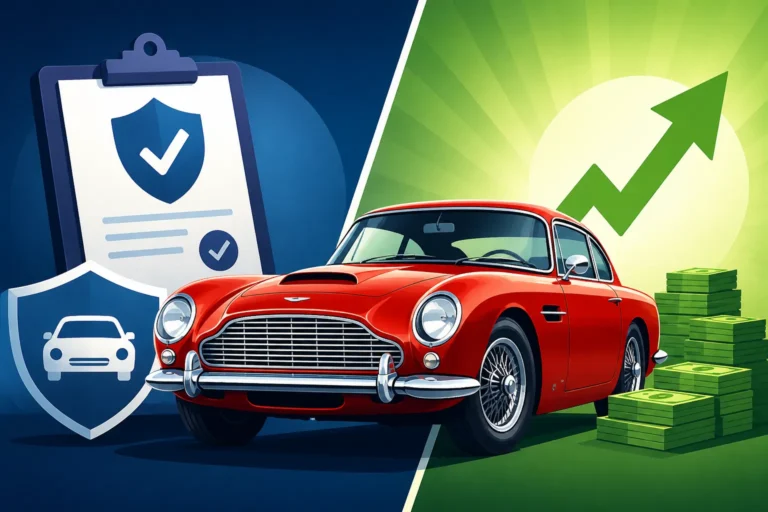
Guaranteed Value coverage, often synonymous with what many leading specialty insurers like Hagerty refer to as "Agreed Value" coverage, removes all this ambiguity and risk. This is the cornerstone of robust classic car insurance and the hero of our story today. With Guaranteed Value coverage, you and your insurer agree upon a specific value for your classic car before the policy is issued. This value is determined based on your vehicle's condition, restoration quality, provenance, and market data. Once agreed upon, that figure is truly guaranteed. If your classic car is deemed a total loss, the insurer will pay you that exact, agreed-upon amount, no questions asked, no depreciation applied, no lengthy negotiations. It's a straightforward promise that acknowledges your car as an appreciating asset rather than a depreciating utility vehicle. This upfront agreement offers unparalleled security, knowing that your investment is fully protected at a value you both consented to.
How Guaranteed Value Protects Your Investment in Real-World Scenarios
The beauty of Guaranteed Value coverage isn't just in its simplicity; it's in its unwavering protection when you need it most. This isn't just theoretical jargon; it has tangible impacts on your financial well-being and your ability to recover from unforeseen events. Let’s dive into some practical scenarios that illustrate its importance.
Total Loss: Getting What You Truly Deserve
Imagine your prized 1967 Corvette, perfectly restored and valued at $120,000, is unfortunately destroyed in an unforeseen garage fire. Under a standard ACV policy, even if the car was mint, you might only receive an offer of $40,000 to $60,000, leaving you with a massive financial shortfall and the heartbreaking inability to replace your dream car. With Guaranteed Value coverage, because you and your insurer, say a specialty provider like American Collectors Insurance, had previously agreed on that $120,000 figure, that's exactly the check you'll receive. There's no haggling, no frustrating appraisal processes post-loss, and no debate over market conditions. This allows you to either purchase a comparable replacement or simply recover your investment without suffering a devastating financial blow. It's the ultimate peace of mind for collectors who view their vehicles as more than just transportation. This is precisely Why Agreed Value Matters for Classics.
Consider this comparison:
| Coverage Type | How Value is Determined | Payout in Total Loss Scenario | Key Benefit for Collectors |
|---|---|---|---|
| Guaranteed/Agreed Value | Pre-determined & agreed | Full agreed amount | Absolute certainty of payout; no depreciation. |
| Stated Value | Declared by owner | Lesser of stated/ACV/market | Appears good, but often pays less than stated amount. |
| Actual Cash Value | Market minus depreciation | Depreciated market value | Standard for daily drivers; severely undervalues classics. |
Partial Loss: Ensuring Quality Repairs Without Compromise
It's not just total losses where Guaranteed Value shines. What if your beautiful classic suffers only partial damage? Perhaps a fender bender at a car show, or hail damage from an unexpected storm. With standard insurance, adjusters might push for cheaper, aftermarket parts or a quick-and-dirty repair job that compromises your car's originality and long-term value. They're often only obligated to restore it to its "pre-accident condition" based on ACV, which might not account for the specific, period-correct components and expert craftsmanship your classic demands.
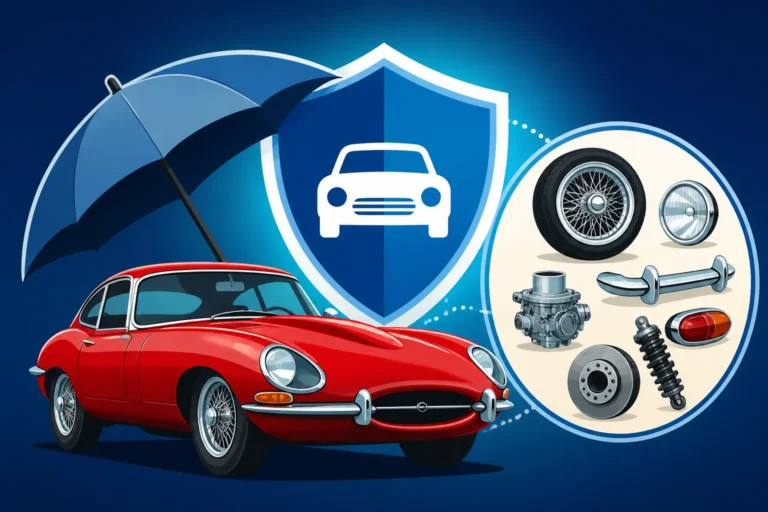
However, with Guaranteed Value coverage, the insurer understands the unique nature of your vehicle. The policy is often structured to cover the cost of authentic, original equipment manufacturer (OEM) parts, specialized labor from restoration shops, and even the diminished value your car might suffer after an accident, even if perfectly repaired. For instance, if your vintage Porsche 911 needs a specific NOS (New Old Stock) fender and paint job from a certified specialist, Guaranteed Value coverage helps ensure those costs are covered, preserving the integrity and value of your classic. This attention to detail is crucial for collectors who want their cars repaired correctly, not just cheaply. This type of coverage is part of what's covered under comprehensive Classic Car Insurance Coverage Types Explained.
The Process of Obtaining and Maintaining Guaranteed Value Coverage
Getting Guaranteed Value coverage isn't like buying a standard auto policy where you just plug in your VIN and hit submit. It's a more involved, but ultimately far more rewarding, process that acknowledges the unique nature of your collector vehicle. It's about establishing trust and a shared understanding of your car's true worth.
Documentation and Valuation: Proving Your Car's Worth
The journey to securing Guaranteed Value coverage typically begins with a thorough documentation process. You'll work closely with the insurer to establish your classic's specific value. This isn't just a number you pull out of thin air; it’s supported by evidence. Expect to provide high-quality photographs from all angles, detailed descriptions of your vehicle's condition, records of any professional restorations or significant maintenance, and documentation of rare options or unique provenance. Many insurers, including reputable ones like Hagerty, have extensive databases and valuation tools based on real-world sales and auction results that can help in this process.
In some cases, especially for higher-value or highly customized classics, an independent appraisal may be required. An accredited classic car appraiser will meticulously inspect your vehicle, consider market trends, and provide an unbiased report on its current fair market value. This appraisal serves as strong evidence to support your desired Guaranteed Value. It's an investment in itself, but one that pays dividends by ensuring your policy accurately reflects your car's worth. Our article on Appraisal Requirements for Classic Car Insurance can give you more insights into this step. Remember, the goal here is to arrive at a value that both you and the insurer agree is accurate and fair, ensuring that there are no surprises down the road.
Annual Reviews and Adjustments: Keeping Your Value Current
The collector car market is dynamic. Values can fluctuate based on rarity, economic conditions, model popularity, and even what’s being highlighted at major auctions like Barrett-Jackson or Mecum. That's why Guaranteed Value coverage isn't a "set it and forget it" kind of deal. Most specialty insurers encourage, and sometimes require, an annual review of your vehicle's agreed-upon value. This is a critical step to ensure your coverage keeps pace with the market.
If you've completed a significant restoration over the past year – perhaps a repaint, an engine rebuild, or a new interior – your car's value might have increased substantially. During the annual review, you'd present updated documentation, photos, and receipts for these improvements. The insurer would then work with you to adjust the Guaranteed Value upwards, ensuring that your increased investment is fully protected. Similarly, if the market for your particular model has seen a dip (though less common for well-maintained classics), you might adjust the value downwards, potentially saving on premiums. This flexibility ensures your policy remains accurate and relevant year after year, protecting your ever-evolving investment. Policies with Inflation Guard Coverage Explained can also help automatically adjust for minor market increases without requiring a full re-evaluation every year.
Key Considerations and Why It's a Game-Changer for Collectors
While Guaranteed Value coverage offers superior protection, it's important to understand the specific parameters and how it fundamentally shifts the insurance paradigm for classic car owners. It's not just a different type of insurance; it's a different philosophy.
Understanding the Nuances: What It Doesn't Cover
It’s crucial to remember that while Guaranteed Value protects against undervaluation in a total loss, it doesn't mean all circumstances are covered without question. Policies still come with standard exclusions found in most insurance. For example, damage resulting from racing, off-road use, or participation in speed contests is typically not covered unless you've specifically added endorsements for track events. Similarly, wear and tear, mechanical breakdowns, or damage caused by neglect are usually excluded, as insurance is designed for sudden, accidental losses, not maintenance issues.
Most Guaranteed Value policies also come with specific use limitations. These cars are meant for pleasure driving, car shows, club events, and occasional cruises, not for daily commuting or running errands. You can find more details about these requirements in our article on the Pleasure-Use Requirement Explained. It's vital to read your policy documents carefully to understand these limitations. While these seem restrictive to some, they are precisely why classic car insurance is generally more affordable than standard policies for everyday drivers – the reduced risk translates to lower premiums. Always confirm what specific activities and uses are covered with your provider.
The Peace of Mind for Serious Enthusiasts
For anyone who has poured their heart, soul, and considerable resources into a classic car, Guaranteed Value coverage isn't just an insurance policy; it's an indispensable guardian of their passion. It eliminates the gnawing anxiety that comes with the thought of an accident, knowing that if the worst happens, you won't be left fighting for fair compensation. Instead, you'll receive the full, pre-agreed amount, allowing you to move forward without a significant financial setback. This frees you up to truly enjoy your vehicle, take it to car shows, participate in tours, and share it with others, rather than constantly worrying about its monetary vulnerability.
The confidence that comes with this coverage is invaluable. It’s an acknowledgment from the insurance industry that classic cars are unique assets that appreciate, require specialized care, and deserve tailored protection. Companies like Grundy and the aforementioned Hagerty have built their reputations on providing this exact level of understanding and specialized service. When comparing different options, always ask about their Guaranteed Value (or Agreed Value) offerings to ensure your precious classic is truly protected. Understanding How to Compare Classic Car Insurance Quotes becomes much easier when you know what specific protections to look for.
Disclaimer
Please remember that insurance policies, including classic car insurance, can vary significantly in their terms, conditions, and coverage specifics. This article provides general information and insights into how Guaranteed Value coverage typically works for collectors. It is always recommended to consult directly with a qualified insurance professional or your chosen classic car insurance provider to discuss your individual needs and to obtain a personalized quote and policy explanation. The information herein is not intended as legal or financial advice.