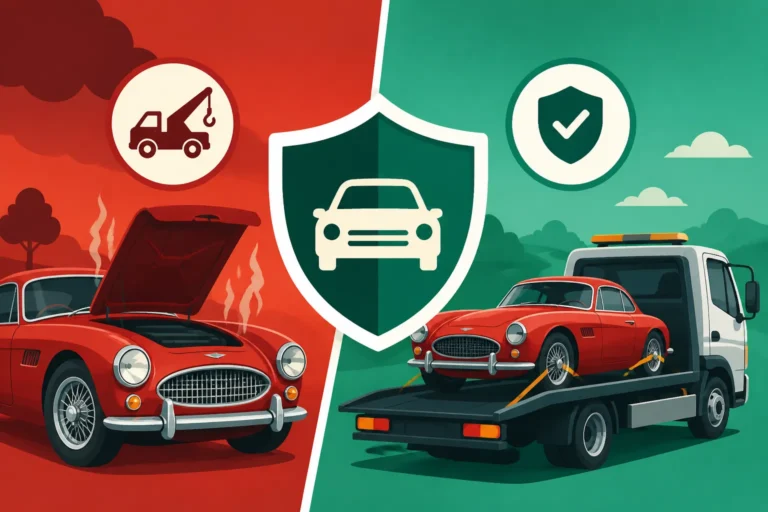
Trip Interruption Coverage for Classics
Picture this: you’ve spent countless hours tuning your vintage beauty, meticulously planning the perfect cross-country drive or even just a weekend getaway to a regional car show. You're miles from home, cruising along, when suddenly, that unmistakable clunk or sputter throws a wrench into your meticulously crafted plans. It’s not just the immediate panic of a breakdown; it’s the ripple effect – the unexpected hotel stays, the rental car scramble, the meals you hadn't budgeted for, all while your pride and joy is stuck in a strange garage. This guide is dedicated to exploring how classic car trip interruption coverage can turn that potential nightmare into a mere bump in the road, offering a much-needed financial safety net and, more importantly, peace of mind.
The Unique Vulnerabilities of Classic Car Road Trips
Owning and driving a classic car is an experience unlike any other. It’s a connection to history, a labor of love, and often, a mechanical adventure. But let’s be real, even the most pampered classic can be unpredictable, especially when venturing far from its home garage. Modern cars come with extensive warranties and a network of repair shops, but a classic is a different beast entirely.
Anticipating the Unexpected on the Highway
While we meticulously check fluids, tires, and belts before a long journey, the truth is, a vintage vehicle has components that are decades old. A fuel pump can suddenly give up the ghost, a radiator hose might decide it's had enough, or an electrical gremlin might manifest when you least expect it. These aren't necessarily signs of poor maintenance; they're just part of the charm and challenge of classic car ownership. The key is to prepare for these moments, not just with a toolkit, but with the right insurance protection. Without it, a simple mechanical hiccup a few hundred miles from home can quickly escalate into a budget-breaking ordeal, leaving you stranded and stressed.
The Ripple Effect of a Roadside Incident
When your classic breaks down away from home, the immediate concern is getting it repaired. But think about everything else that springs from that. You might be in a small town without an immediate specialist for your specific make and model. That could mean waiting days for parts or transport to a more equipped facility. During that time, you still need a place to sleep, food to eat, and a way to get around, whether it's to the repair shop, back home, or to continue your journey. These accumulating costs are where typical auto insurance often falls short, focusing solely on the vehicle's repair or replacement, not your personal disruption. This is precisely why specific classic car coverage, like Trip Interruption Coverage for Classics Explained, becomes so valuable for dedicated enthusiasts.
Understanding What Trip Interruption Coverage Entails
So, what exactly is trip interruption coverage when it comes to your classic car? It’s a specialized type of insurance benefit designed to cover reasonable expenses incurred when your classic car becomes inoperable due to a covered incident while you’re away from home. It's not about fixing your car – that's what your collision, comprehensive, or mechanical breakdown coverage is for – it's about covering the consequential costs of being stranded.
Defining a Covered Interruption
For this coverage to kick in, there needs to be a "covered interruption." Generally, this means your classic car becomes undrivable due to a mechanical breakdown, an accident, fire, theft, or even vandalism. It's crucial to understand that "away from home" usually means a certain distance, typically 50 to 100 miles, from your primary residence. If your engine conks out a block from your house, it's a nuisance, not a trip interruption under most policies. The idea is to cover the hardship of being genuinely stranded. For instance, if you're taking your 1970 Chevelle SS from Portland, Oregon to a car show in Seattle and you have an unexpected issue near Olympia, that would likely qualify.
What Expenses are Typically Covered?
The core of trip interruption coverage is its reimbursement for unexpected personal expenses. These can include:
- Lodging: Hotel stays while your car is being repaired or awaiting transport.
- Alternative Transportation: Rental car costs to continue your journey, return home, or simply get around town while your classic is in the shop. Some policies might even cover airfare or train tickets.
- Meals: Reasonable food expenses incurred during the delay.
- Transportation of the Vehicle: While often covered by Towing Coverage for Classic Cars Explained or Roadside Assistance Coverage for Classic Cars Explained, some trip interruption policies can help with additional transport costs if your car needs to be moved a significant distance for specialized repair or back to your home garage.
Most policies will have a daily limit and an aggregate limit for these expenses. For example, a policy might offer up to $200 per day for lodging and meals, with a maximum of $1,000 per incident. It’s always best to keep all receipts to ensure a smooth claim process. Reputable insurers like Hagerty are known for their clear explanations of these benefits, helping collectors understand their coverage.
Why This Coverage is Essential for Classic Owners
Unlike a modern car that can usually be fixed at any dealership or chain garage, classics often require specialized knowledge, parts, and care. This makes being stranded far from home a particularly tricky situation for a classic car enthusiast. Trip interruption coverage specifically addresses these unique challenges.
Protecting Your Passion and Your Pocketbook
Let's face it, our classic cars are more than just vehicles; they're investments, hobbies, and sources of immense pride. The last thing you want is for a joyride to turn into a financial headache. Without trip interruption coverage, a minor breakdown could easily cost you hundreds, if not thousands, of dollars in unexpected hotel bills, rental car fees, and meals. Imagine being stuck for three days waiting for a specific part for your vintage Porsche 911, needing a hotel room for yourself and your significant other, and a rental car to get to the nearest diner. Those costs add up fast, eating into your vintage car fund or worse, your everyday budget. This coverage ensures that your passion doesn't become a burden when the unforeseen occurs.
Peace of Mind for Extended Journeys
For many classic car owners, the open road is the ultimate destination. Long-distance tours, cross-state rallies, or even just driving to a distant Classic Car Show and Event Coverage Rules can be exhilarating. However, the further you stray from your comfort zone, the greater the potential for logistical nightmares if something goes wrong. Knowing you have trip interruption coverage allows you to embark on these adventures with a much greater sense of security. It’s not just about the money; it’s about the mental relief that comes from knowing you won’t be left completely high and dry. You can focus on the road, the scenery, and the enjoyment of your classic, rather than constantly worrying about "what if." This is a significant factor in What Does Classic Car Insurance Cover that often gets overlooked.
What Does Trip Interruption Coverage Typically Include?
When you’re looking at trip interruption coverage, it's not a one-size-fits-all solution. Different policies from various providers, like Hagerty or American Collectors Insurance, might offer slightly different benefits and limits. It's crucial to delve into the specifics to understand exactly what you're buying.
Lodging and Meal Reimbursement
The most common benefit of trip interruption coverage is reimbursement for hotel stays and meals. Most policies specify that these must be "reasonable" expenses, meaning you shouldn't book a five-star resort if a comfortable three-star hotel is available, nor should you expect gourmet dining to be fully covered if a standard restaurant suffices.
- Daily Limits: Expect a per-day limit, for example, $150-$250 for lodging and $50-$75 for meals per person. These limits are designed to cover basic, comfortable necessities, not luxuries.
- Total Incident Limits: There will also be an overall maximum for a single incident, often ranging from $500 to $1,500. This cap ensures the coverage remains economically viable for the insurer while providing substantial relief to you. It's important to keep meticulous records and receipts for all expenses, as you'll need them for reimbursement.
Alternative Transportation Assistance
Getting around while your classic is indisposed is another critical aspect. Trip interruption coverage can often help with this.
- Rental Car Coverage: This is a big one. If your car is in the shop for several days, you’ll likely need a rental to continue your trip or get back home. The coverage typically includes a daily limit for a rental car, often around $30-$50, for a set number of days. It's important to note that these limits might cover a basic economy or mid-size car, not necessarily another classic or a luxury vehicle.
- Public Transportation and Travel: In some cases, if it's more practical to abandon your journey and return home or fly to your destination, certain policies might contribute towards airfare or train tickets. This is less common but worth checking with your specific provider, especially for very long distances or specific classic car tours. Knowing you have options beyond waiting indefinitely can be a huge relief.
| Expense Type | Typical Coverage | Important Considerations |
|---|---|---|
| Lodging | Reasonable hotel stays (e.g., $150-$250/day) | Keep receipts, not for luxury hotels |
| Meals | Reasonable meal expenses (e.g., $50-$75/day per person) | Keep receipts, not for gourmet dining |
| Rental Car | Daily rental car cost (e.g., $30-$50/day for 3-7 days) | May have limits on vehicle class, check duration limits |
| Public Transport | Airfare, train, bus tickets (less common, usually for returning home) | Check policy specifics, often for long distances only |
| Vehicle Transportation | If beyond standard towing, specialized transport costs | Often secondary to primary towing coverage, check overlap |
| Total Per Incident | Overall maximum (e.g., $500-$1,500) | All covered expenses contribute to this single maximum |
Understanding Eligibility and Limitations
While trip interruption coverage is a fantastic safety net, it's not a blank check. There are always specific conditions that must be met for the coverage to apply, and just as importantly, certain situations that are explicitly excluded. Knowing these details upfront will save you a lot of headache down the road.
Distance and Incident Requirements
The first hurdle for trip interruption coverage is almost always the distance requirement. As mentioned earlier, your incident must occur a specified number of miles away from your primary residence. This threshold varies, but 50, 75, or 100 miles are common. For example, if you live in Dallas and your classic breaks down in Fort Worth, which is less than 50 miles, your trip interruption coverage likely won't activate. However, if you're headed to Austin (about 200 miles), you're well within the zone.
Secondly, the reason for the interruption matters. It must be due to a covered peril – typically a mechanical breakdown, accident, fire, or theft. This is important because it differentiates a genuine emergency from, say, deciding you don't like your hotel room and wanting the insurer to pay for a new one.
Common Exclusions to Be Aware Of
No insurance policy covers everything, and trip interruption coverage is no exception. Understanding these exclusions is just as vital as knowing what is covered.
- Pre-existing Conditions: If your classic car breaks down due to an issue you knew about or should have reasonably known about before you started your trip (e.g., a known transmission fluid leak you didn't address), the claim might be denied. This emphasizes the importance of proper Classic Car Insurance Inspection Requirements and maintenance.
- Lack of Maintenance: Similar to pre-existing conditions, if the breakdown is clearly attributable to gross negligence in vehicle maintenance, your claim could be in jeopardy. Insurers expect you to keep your classic in good, drivable condition.
- Incidents at Home: As discussed, if the interruption occurs within the specified "away from home" radius, it won't be covered.
- Voluntary Cancellations: If you simply decide to cut your trip short for personal reasons unrelated to a vehicle issue, trip interruption coverage won't reimburse your expenses. It's for unforeseen interruptions, not changes of plans.
- Luxury Expenses: Policies are designed to cover reasonable expenses. Extravagant hotel suites, gourmet meals, or high-end luxury rental cars typically won't be fully reimbursed, even if you choose to indulge.
- Racing or Performance Events: If your classic is damaged or breaks down during a sanctioned race, track day, or competitive performance event, this coverage, and often your standard classic car policy, will likely not apply unless you have specific endorsements for Classic Car Insurance and Track Days.
- Specific Exclusions on Your Policy: Always, always read your specific policy wording. There might be unique exclusions based on your vehicle, usage, or insurer. This is where truly understanding your Classic Car Insurance Exclusions to Know comes into play.
How to Integrate Trip Interruption Coverage into Your Policy
Adding trip interruption coverage to your classic car insurance policy is usually a straightforward process, but it requires a proactive approach. It's not always automatically included, so you need to specifically request and understand it.
Reviewing Your Current Classic Car Insurance
Your first step should be to review your existing classic car insurance policy. Many standard classic car policies, particularly from specialized insurers, offer trip interruption as an optional add-on or an included benefit within a premium package. Look for sections detailing "Additional Coverages," "Endorsements," or "Travel Protection." If you're unsure, don't hesitate to call your insurance provider or agent. They can clarify what you currently have and what your options are. This review is also a good time to check your overall Classic Car Insurance Coverage Types Explained.
Discussing Options with a Specialty Insurer
When it comes to classic cars, working with a specialty insurer like Hagerty, Grundy, or American Collectors Insurance is almost always the best route. These companies understand the unique needs of collectors and offer policies tailored to these vehicles. They are much more likely to provide robust trip interruption benefits compared to a standard auto insurer.
When speaking with them, ask specific questions:
- "Do you offer trip interruption coverage?"
- "What are the distance requirements for it to activate?"
- "What are the daily and total limits for lodging, meals, and rental cars?"
- "Are there any specific exclusions I should be aware of?"
- "How does this coverage integrate with my Roadside Assistance Coverage for Classic Cars Explained?"
- "What is the process for filing a trip interruption claim?"
Many collectors find that companies like Hagerty are very transparent about their offerings, often including comprehensive travel benefits as part of their core packages, which can be a huge value for peace of mind on the road. When you're ready to secure coverage, don't forget to How to Get a Classic Car Insurance Quote to compare options.
Real-Life Scenarios Where Trip Interruption Coverage Shines
The true value of trip interruption coverage becomes clear not in theory, but in real-world situations when things inevitably go wrong. These scenarios illustrate how this specialized coverage can truly save the day for classic car owners.
The Cross-Country Dream Turned Detour
Imagine John, from sunny California, meticulously restoring his 1969 Mustang Mach 1 for years, finally ready to drive it to the annual Mustang Roundup in Tennessee. He’s about halfway through Kansas, cruising along, when a persistent overheating issue forces him to pull over. The local mechanic he finds is good, but they need to order a specific part for the classic 428 Cobra Jet engine, which will take three days to arrive.
Without trip interruption coverage, John would be stuck paying for three nights in a motel, all his meals, and potentially a rental car to get around the small town while he waits. That could easily add up to $700-$1000 out of pocket. With his coverage, he calls his insurer, who advises him on local hotel options and rental car agencies. John's policy with Hagerty covers his reasonable lodging and meal expenses up to $200 a day and a rental car for the three days. He manages to turn an unfortunate delay into a slightly inconvenient pause, getting his car fixed and continuing his dream trip without the financial strain.
The Antique Car Rally Gone Awry
Sarah and her husband are participating in a classic car rally through the Pacific Northwest in their cherished 1957 Chevrolet Bel Air. They’re a couple of hundred miles from home, deep in the scenic mountain roads of Washington, when a sudden downpour leads to a slippery patch, and another driver clips their rear fender. No serious injuries, thankfully, but the Bel Air is undrivable and needs to be towed to the nearest body shop in Spokane for assessment.
The body shop informs them it will be at least a week to get the custom trim pieces and paint matched. Faced with a week-long wait away from home, their trip interruption coverage kicks in. It provides for a rental car, allowing them to either continue their rally in a different vehicle (if they choose) or return home comfortably without having to pay for flights and inconvenient arrangements. The coverage ensures they’re not left stranded, and can address the car’s repairs with a clear head, knowing their personal expenses are being handled. This peace of mind is invaluable, especially when dealing with the stress of an accident and navigating Classic Car Insurance Requirements in Washington.
The Unexpected Mechanical Gremlin on a Show Trip
Consider Mark, who lives in rural Pennsylvania, planning to showcase his immaculate 1932 Ford Model A at a significant national event in Ohio. Just 70 miles into his drive, a seemingly minor fuel line issue turns into a major problem when a replacement part can't be sourced locally for two days. He's stranded in a small town, far from a specialist.
Mark's classic car insurance, which includes trip interruption, allows him to book a comfortable hotel, cover his meals, and even get a rental car to explore the nearby area or simply run errands. He doesn't have to choose between missing the show or draining his savings. The policy eases the financial burden of the unexpected delay, reinforcing why specialized coverage, rather than Classic Car Insurance vs Regular Insurance: What's Required, is essential for vehicles of this caliber. He can focus on coordinating the repair, knowing his personal needs are covered.
By understanding the specifics of your policy, especially elements like Classic Car Insurance Mileage Limits by State and the Pleasure-Use Requirement Explained, you can leverage this coverage effectively, turning potential disasters into manageable inconveniences. This type of detailed protection truly separates specialty classic car insurance from standard policies.
Disclaimer
Please remember that this article is intended for informational purposes only and does not constitute professional insurance advice. Insurance policies vary significantly by provider, state, and individual circumstances. It is crucial to review your specific policy documents and consult with a licensed insurance professional or your chosen classic car insurance provider (like Hagerty, Grundy, or American Collectors Insurance) to understand the full scope of your coverage, including eligibility, limitations, and exclusions. Always obtain quotes and compare options to ensure you have the best protection for your unique classic vehicle.