How Much Does It Cost to Insure a Barn Find
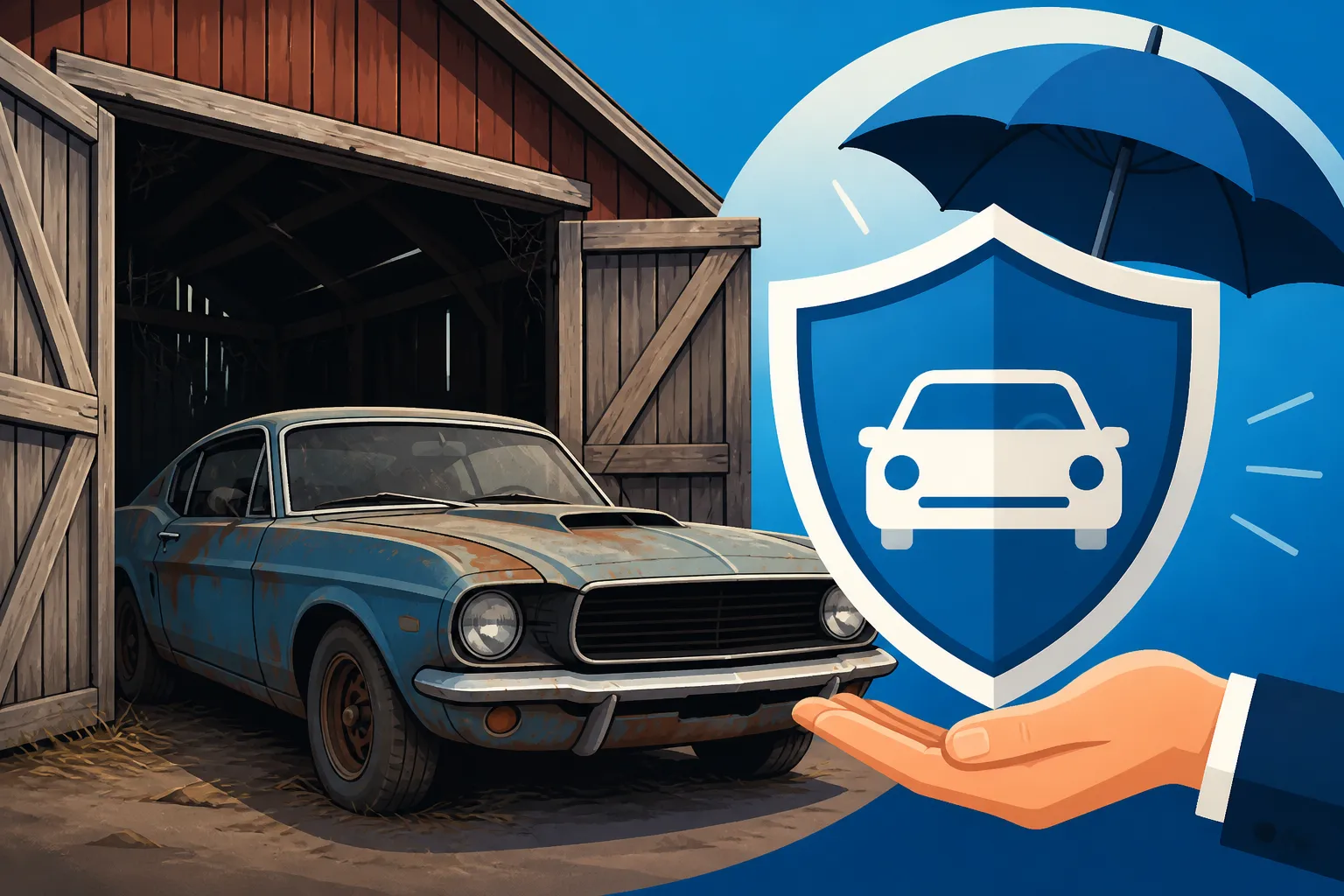
Bringing a forgotten classic out of the shadows – a true "barn find" – is an exhilarating experience for any car enthusiast. But amidst the excitement of uncovering automotive history, a practical question often looms large: how exactly do you insure something that might be a non-running shell, unregistered, and perhaps even without a clear title, and what's it going to cost? This guide will dive deep into the unique world of insuring a barn find, breaking down the factors that influence costs and helping you navigate the process from discovery to gleaming restoration.
Understanding the Unique Nature of Barn Finds for Insurance
Insuring a barn find is a whole different ballgame compared to a perfectly restored, road-ready classic. These vehicles come with their own set of quirks and challenges that standard auto insurance just isn't equipped to handle. It's crucial to grasp these distinctions to understand why the cost structure and coverage options are so specific.
The "As-Is" State and Initial Valuation Challenges
When you pull a dusty relic out of an old shed or garage, it's rarely in pristine condition. More often than not, it’s a non-running, incomplete, or significantly deteriorated vehicle. This "as-is" state presents immediate valuation hurdles for insurers. Traditional insurance policies rely heavily on market value or replacement cost for functioning vehicles, which simply doesn't apply to a project car that might be years away from hitting the road. How do you put a number on something that's less a car and more a collection of potential parts and future labor?
Insurers specializing in classic cars, like Hagerty, understand this inherent challenge. They recognize the intrinsic value of a barn find not just for what it is today, but for what it could become. The cost here is heavily influenced by the vehicle's rarity, desirability, and the potential value it will attain once restored. For example, a numbers-matching 1969 Dodge Charger barn find, even if it's rusted through, will command a different insurance approach and cost than a common sedan from the same era, simply because of its collectibility and restoration potential. This initial valuation is less about its current mechanical state and more about its long-term collectible status, which can feel counterintuitive but is essential for proper coverage.
Unregistered Status and Title Issues
Many barn finds have been off the road for decades, meaning their registration is long expired, or they might even lack a clear title. This isn't just a headache for getting it legally on the road; it also impacts insurance. An unregistered vehicle can't be driven legally, and therefore doesn't need traditional liability or collision coverage in the same way a daily driver does. However, it still needs protection from theft, fire, or other damage while it's stored or being transported.
The process of registering a car with no title can be complex and varies significantly by state. Some states offer options like a bonded title for a classic car explained, while others may require more extensive research or a court order. While insurers generally don't get involved in the title acquisition process, they do need to know the vehicle's legal status. Coverage primarily focuses on its physical protection while it’s stationary or being moved on a trailer, not for on-road incidents. The cost of insuring a barn find in this pre-registration phase will primarily reflect these storage and transit risks, rather than road-use liability.
Non-Running Condition and Storage Concerns
A defining characteristic of many barn finds is their non-running state. They might be seized, incomplete, or simply require extensive mechanical work. This condition is a significant factor in insurance costs. A non-running vehicle poses different risks than a running one. It's less likely to be involved in a collision (unless improperly loaded onto a trailer), but it's still vulnerable to damage while stored.
Insurance for a classic car stored outside will naturally be more expensive or even difficult to obtain than for one kept in a secure, enclosed garage. Most specialty insurers require that your classic, even a barn find, be stored in a locked, private garage. This significantly reduces risks like theft, vandalism, and weather exposure, which directly impacts your premium. If your barn find is truly in a dilapidated barn that isn't secure, finding comprehensive coverage can be a challenge and may involve higher costs or require you to upgrade your storage situation first. How storage affects classic car eligibility is a critical consideration from day one.
Factors Influencing the Cost of Insuring a Barn Find
Determining the cost to insure a barn find isn't a straightforward calculation. It's a blend of the vehicle's inherent value, its current condition, where it's kept, and the specific coverage you choose. Each of these elements plays a pivotal role in shaping your premium.
Vehicle Condition and Restoration Potential
The current physical condition of your barn find is paramount. Is it a rolling chassis with a mostly complete body, or is it a basket case with components spread across several crates? The more complete and structurally sound the vehicle, the easier it is for an insurer to establish an initial value and, consequently, the lower the perceived risk for them. A truly deteriorated barn find, while still valuable as a collectible, might require specialized policies for a car under restoration or even laid-up coverage, which can affect the immediate costs.
Furthermore, the vehicle's restoration potential significantly influences its insurance cost. A rare model with high demand once restored, like a Hemi 'Cuda or an early Porsche 356, will inherently have a higher implied value, even in its rough state. Insurers consider this future value when offering Agreed Value coverage, ensuring that if something happens to your barn find, you're compensated for its true worth, not just its scrap metal value. This "potential" value often means higher premiums, but it’s an investment in protecting your future asset.
Agreed Value vs. Actual Cash Value Implications
This is perhaps the most critical distinction for insuring a barn find. Standard auto policies typically offer Actual Cash Value (ACV), which pays out the depreciated market value of the vehicle at the time of loss. For a barn find, ACV would be disastrously low, often just pennies on the dollar compared to its collector potential.
This is why you absolutely need Agreed Value coverage for classic cars explained. With an agreed value policy, you and the insurer agree on a specific value for your barn find before the policy is issued. If a total loss occurs, you receive that agreed-upon amount. For a barn find, this figure will usually be based on its current condition plus its collector desirability. For example, a 1965 Corvette that's a barn find might be agreed at $25,000 in its non-running state, whereas a similar year Ford Pinto barn find might only be agreed at $2,000. This agreed value is often significantly higher than its ACV and thus will factor into a higher premium, but it's the only way to genuinely protect your investment. Understanding Agreed Value vs Stated Value vs Actual Cash Value is paramount for any collector.
Storage Environment and Security
Where your barn find rests its tired wheels makes a huge difference in insurance cost. Most specialty classic car insurers mandate secure, enclosed storage, typically a locked garage. This requirement is not just a preference; it's a fundamental aspect of their risk assessment. A vehicle stored in a secured garage is far less prone to theft, vandalism, or environmental damage from elements like hail, floods, or falling trees.
If your "barn" is truly just an old, unsecured structure, or worse, if the car is parked outside, you'll likely face significantly higher premiums or even outright denial of comprehensive coverage. Insurers like American Collectors Insurance and Grundy Classic Car Insurance generally require proof of secure storage. Investing in a proper garage, installing security measures like alarms, or even simply moving the vehicle to a safer location can dramatically reduce your insurance costs. This is why a secure garage storage requirement for classic cars is almost universal among specialty providers.
Coverage Needs During Different Phases
Insuring a barn find isn't a one-and-done deal; it evolves as your project progresses. Your coverage needs, and thus your costs, will shift through various phases:
- Initial Discovery and Transport: When you first acquire the barn find, you'll need coverage primarily for transport. This might be a standalone policy for a few days or a specific rider on an existing policy. It covers potential damage while the vehicle is being loaded, moved on a flatbed, or unloaded.
- Storage/Laid-Up Phase: While the car sits waiting for restoration, you'll need comprehensive coverage against theft, fire, vandalism, and natural disasters. This is often called "laid-up" coverage or storage-only classic car coverage, and it generally excludes collision because the vehicle isn't being driven. This can be surprisingly affordable but is vital.
- Restoration Phase: As you begin working on the car, its value will start to increase with every new part and hour of labor. Restoration coverage for classic cars is an essential add-on during this period. It allows you to periodically update the agreed value to reflect the accumulating investment, ensuring you're fully covered if an accident, fire, or theft occurs mid-restoration. This will increase your premium as the agreed value grows.
- Post-Restoration (Road-Ready): Once the car is complete and ready for the road, you'll transition to a full collector car policy, which includes liability, collision, and comprehensive coverage, still based on an agreed value. At this point, you'll also consider options like Classic Car Insurance Mileage Limits by State or pleasure-use requirements explained.
This phased approach means your insurance costs aren't static; they are dynamic, increasing as your barn find transforms from a rusty shell into a show-quality masterpiece.
Navigating Insurance Options and Finding the Right Policy
Finding the right insurance for a barn find can feel like a treasure hunt itself, but knowing where to look and what questions to ask will lead you to the best coverage. It's not about finding the cheapest policy, but the one that truly protects your unique investment.
Specialty Insurers vs. Standard Carriers
When it comes to barn finds, generic insurance companies usually fall short. They don't understand the nuances of collectible vehicles, especially those in a non-running or project state. Trying to insure a barn find with a standard carrier might lead to it being valued as scrap metal, or they might refuse coverage altogether. Their adjusters are not trained to assess the value of rare parts, historical significance, or the cost of a concourse-level restoration.
This is where specialty classic car insurers shine. Companies like Hagerty, Grundy, and American Collectors Insurance are built specifically for enthusiasts like us. They understand that a rusty shell of a '60s muscle car can be worth tens of thousands, or even hundreds of thousands, of dollars. They offer tailored products like vehicle under construction coverage, spare parts coverage explained, and, most importantly, agreed value policies that genuinely protect your investment. Their networks often include adjusters who are also car enthusiasts, able to accurately assess damage and value. While the premiums might seem higher than a "standard" policy, the coverage is incomparable and worth every penny for a barn find.
Essential Coverages for Barn Finds
A comprehensive policy for a barn find should include several key coverages beyond just the basic liability (which isn't usually needed until it's road-ready).
- Agreed Value Coverage: We've touched on this, but it bears repeating. This is non-negotiable. It guarantees you'll receive the predetermined amount if your barn find is stolen or a total loss, regardless of its "market value" as a non-runner. It’s the cornerstone of protecting your investment from day one.
- Comprehensive Coverage: This protects your barn find from non-collision damage such as theft, fire, vandalism, falling objects, and natural disasters (hail, floods, wind). Even if your car is just sitting in a garage, these risks are very real. Imagine your garage catching fire – comprehensive coverage would be invaluable.
- Restoration Coverage: This is a fantastic endorsement for barn finds. It allows you to declare a value for your vehicle, and as you put more money into parts and labor, you can periodically increase the agreed value to reflect your growing investment. This means your policy keeps pace with the vehicle's increasing worth during its transformation. For example, if you start with an agreed value of $15,000 for the unrestored car, and then invest $10,000 in engine work, you can update the agreed value to $25,000, ensuring your hard work is protected.
- Transit Coverage: If you plan on moving your barn find to a new garage, a restorer's shop, or a show, specific transit coverage is vital. This protects the vehicle while it's being transported on a trailer. Many specialty policies include this, but it's always good to confirm the specifics.
- Spare Parts Coverage: Often, barn finds come with a trove of extra parts, or you might start collecting them even before the restoration begins. This coverage protects those valuable components from theft or damage, especially important if they're rare or expensive NOS (New Old Stock) items.
These specialized coverages, which are readily available from providers like Leland-West and J.C. Taylor, ensure that your unique asset is truly protected throughout its journey from hidden gem to polished showpiece.
How to Get a Quote for a Barn Find
Getting a quote for a barn find isn't as simple as plugging numbers into an online form. It requires a bit more legwork and a conversation with a knowledgeable agent.
- Document Everything: Start by taking comprehensive photos and videos of your barn find from all angles, documenting its current condition, any existing damage, and its completeness. Note the VIN, engine number, and any other identifying marks. Gather any existing paperwork, even if it's just an old registration or bill of sale. The more documentation you have, the better. You might even consider how to prove a car's collectible status.
- Research Its Value Potential: Even in its "barn find" state, research the market value of the restored version of your vehicle. Understand what similar cars sell for at auctions like Barrett-Jackson or on platforms like Bring a Trailer. This helps you and the insurer establish a realistic agreed value. Online valuation tools, like those provided by Hagerty, can be incredibly helpful here.
- Contact Specialty Insurers Directly: Don't waste your time with mainstream insurers. Reach out to the dedicated classic car insurance providers. They have agents who specialize in unique cases like barn finds and can guide you through the process.
- Be Honest and Detailed: When discussing your barn find with an agent, be completely transparent about its condition, its non-running status, its storage location, and your restoration plans. The more information you provide, the more accurately they can assess the risk and offer appropriate coverage.
- Discuss Agreed Value and Restoration Coverage: Clearly state your desire for an agreed value policy and inquire about restoration coverage. Be prepared to discuss how you plan to restore the vehicle and how often you'll update its value.
Following these steps will streamline the quote process and ensure you get a policy that genuinely meets the unique needs of your barn find project.
Cost Breakdown and Practical Examples
Let's get down to brass tacks: what kind of numbers are we talking about for insuring a barn find? The costs will fluctuate significantly based on the factors we've discussed, but we can offer some realistic ranges for the different phases.
Initial Storage/Transport Coverage Costs
When you first unearth your barn find, you're looking at protecting it while it's immobile or moving between locations. This initial coverage is typically focused on comprehensive risks and transit.
- Temporary Transit Coverage: If you're just moving it from the barn to your garage, you might pay a relatively small fee for a short-term transit policy or an endorsement on an existing collector policy. This could range from $50 to $200 for a single transport, depending on distance and vehicle value.
- Laid-Up/Storage-Only Coverage: For a barn find that will sit for a while before restoration begins, laid-up or storage-only classic car coverage is ideal. This comprehensive-only policy protects against theft, fire, vandalism, and natural disasters. Because there's no collision risk, these policies are usually quite affordable. For a barn find with an initial agreed value of $10,000 – $30,000, you might expect to pay $150 – $400 per year. If your barn find is a higher-value potential classic, say a $50,000 project, this could be closer to $500-$700 annually. Keep in mind that a garage storage requirement for classic cars is usually strictly enforced here.
Let's consider an example: You just acquired a non-running 1967 Ford Mustang that's a genuine barn find, with an agreed value of $20,000 in its current state. You're storing it in your locked garage for the next year before starting restoration. Your laid-up policy might cost around $250 annually.
Restoration Coverage Costs
This is where the costs start to increase, but for good reason – your investment is growing! Restoration coverage, as part of a larger collector policy, allows you to continually update the agreed value.
- Increasing Agreed Value: As you pour money into parts and labor, you'll need to update your agreed value. The premium will increase proportionally with the rising value. For every $1,000 increase in agreed value, your annual premium might go up by roughly $5-$15.
- Example Scenario: Let's say your 1967 Mustang barn find started at an agreed value of $20,000. Over the first year of restoration, you invest $15,000 in engine rebuild and bodywork. You update your agreed value to $35,000. Your annual premium, which might have been $250, could now be in the range of $350 – $550.
- Additional Endorsements: If you're adding spare parts coverage or tools and equipment coverage for collectors during restoration, these endorsements will add to the overall cost, typically an extra $50 – $200 per year depending on the coverage limits.
Long-Term Collector Policy Costs Post-Restoration
Once your barn find is a road-worthy masterpiece, it transitions to a full collector car policy. This includes liability, comprehensive, and collision coverage, all based on its now much higher agreed value.
- Higher Agreed Value, Higher Premium: A fully restored classic car that was once a barn find could easily be worth $50,000, $100,000, or even more. The cost of classic car insurance for a $50,000 car will naturally be higher than for a $20,000 barn find. For a meticulously restored 1967 Mustang with an agreed value of $75,000, your annual premium could be in the range of $700 – $1,500+, depending on your location, driving record, mileage limits, and other factors.
- Mileage and Usage: Your chosen mileage limits (e.g., 1,000 miles/year, 2,500 miles/year, or even unlimited mileage classic car insurance explained) will influence the cost. Lower mileage tiers generally result in lower premiums.
- Driver History & Location: Your driving record and where you live (e.g., urban vs. rural) will also play a role, just like with regular car insurance. However, classic car insurers place less emphasis on minor infractions if you demonstrate responsible ownership.
Here's a simplified table illustrating the cost progression for our hypothetical 1967 Mustang barn find project:
| Phase of Ownership | Agreed Value (Example) | Estimated Annual Premium (Range) | Key Coverages | Notes |
|---|---|---|---|---|
| Barn Find Discovery | $15,000 – $25,000 | $150 – $400 | Comprehensive (Theft, Fire, Vandalism, Natural Disasters), Transit (Optional) | Assumes secure storage (e.g., locked garage). No driving coverage needed. |
| Under Restoration | $25,000 – $75,000 | $350 – $750+ | Comprehensive, Restoration Coverage, Spare Parts Coverage (Optional), Transit (As needed) | Premium increases as agreed value is updated with restoration progress. |
| Fully Restored | $75,000 – $150,000+ | $700 – $1,500+ | Agreed Value, Comprehensive, Collision, Liability, Roadside Assistance (Optional) | Includes driving coverage; influenced by mileage, usage, and driver profile. |
Disclaimer: These are estimated ranges and actual costs can vary significantly based on vehicle specifics, location, insurer, chosen deductibles, and individual driver profile.
Insuring a barn find is an investment in protecting a dream. While the costs escalate as the vehicle's value increases, choosing a specialty insurer like Hagerty ensures that every dollar spent on insurance is truly protecting the significant emotional and financial capital you're pouring into bringing a piece of automotive history back to life. It's not just about the car; it's about the journey.
Disclaimer
Please note that the information provided in this article is for general informational purposes only and does not constitute professional financial or insurance advice. Insurance policies and requirements vary significantly by state, vehicle type, and individual circumstances. It is crucial to consult directly with a qualified insurance professional or a specialty classic car insurance provider to discuss your specific needs and obtain accurate quotes and policy details for your barn find or classic vehicle.