How to Get a Quote from Leland-West
It’s a unique joy to own a classic car, isn't it? But trying to get it insured can sometimes feel like you’re speaking a completely different language than your regular insurance company. They often just don't grasp the true value of your cherished ride, potentially leaving you underinsured if the worst happens. That's why diving into specialty insurance providers is so crucial. This guide is all about helping you navigate the process of getting a classic car insurance quote from Leland-West, so you can protect your automotive passion with confidence.
Understanding Leland-West and Why They're a Good Fit for Your Classic
When it comes to insuring a classic, an off-the-shelf policy from a standard carrier simply won't cut it. Your vintage Mustang, perfectly restored Chevrolet Bel Air, or even that quirky old Volkswagen Beetle isn't just transportation; it's a piece of history, an investment, and a labor of love. Specialty insurers like Leland-West understand this implicitly, offering tailored coverage that regular insurers often can't match.
Why Specialist Insurance Matters for Your Classic
The biggest frustration many classic car owners face with traditional insurance is the "actual cash value" (ACV) clause. In the event of a total loss, ACV policies only pay out what they deem the car is worth at the time of the incident, factoring in depreciation. For a classic car, which often appreciates in value or has unique components that are hard to replace, this can mean receiving a payout that's a fraction of what your car is truly worth or what it would cost to restore it. Imagine pouring years into bringing a vintage Porsche back to life, only for an accident to render it a total loss and your insurer hands you a check that barely covers the cost of a beat-up daily driver. It's a gut punch, to say the least.
This is where specialty insurers shine. They offer "agreed value" coverage. This means you and the insurance company agree on the car's value before the policy is issued. If your classic is totaled, you get that agreed-upon amount, no questions asked, no depreciation applied. This peace of mind is invaluable. Companies like Leland-West and Hagerty are built around this principle, ensuring your investment is protected. They also understand that your classic isn't driven year-round, or for commuting, leading to lower premiums than a standard policy might carry. They truly get the distinct needs, from limited mileage to specialized storage requirements, that come with owning these magnificent machines.
Who is Leland-West? A Brief Overview
Leland-West is a name that resonates with many in the classic car community. For decades, they have focused exclusively on providing insurance solutions for collector vehicles, rather than dabbling in every type of insurance under the sun. This specialization means their entire operation, from underwriting to claims, is geared towards understanding and serving the unique requirements of classic car owners. They've built a reputation for offering reliable coverage and excellent customer service, becoming a trusted partner for enthusiasts across the country.
What sets Leland-West apart, much like other top-tier classic insurers, is their commitment to offering policies that reflect the true nature of classic car ownership. This isn't just about covering market value; it's about protecting the sentimental value, the countless hours of wrenching, and the historical significance of your vehicle. They offer flexible policies with various options, ensuring that whether you have a pristine concours-level car or a beloved weekend cruiser, you can find coverage that fits. Their deep roots in the collector car world mean they speak your language, understand your concerns, and can often offer advice that goes beyond just policy details.
Preparing for Your Leland-West Quote: What You'll Need
Getting a quote for classic car insurance isn't quite as simple as punching in your VIN for a modern car, but it's not overly complicated either. The key is to be prepared with the right information. The more detailed and accurate you are, the more precise and favorable your quote will be. Think of it like bringing your car to a specialist mechanic – they need specific details to give you the best assessment.
Gathering Essential Vehicle Information
The first step is to compile all the specifics about your classic. You'll need the basics like the exact year, make, model, and the Vehicle Identification Number (VIN). But for a classic, you'll also need to dive deeper into its unique characteristics.
- Modifications and Restoration Details: Has your car undergone a full frame-off restoration? Does it have a custom paint job, an upgraded engine, or period-correct modifications? Be ready to describe these. If your car is heavily modified, such as a restomod or hot rod, these details are crucial as they significantly impact its value and often require specialized coverage.
- Current Condition: Insurers will want to know the general condition of your vehicle. Is it a "show car" that regularly wins awards, a "driver quality" car that looks good but has some imperfections, or a "project car" that's still under restoration? The condition directly influences its value.
- Appraisal (if available): While not always strictly required to get an initial quote, having a professional appraisal can significantly streamline the process of setting an agreed value. An appraisal provides an unbiased, expert assessment of your car's market value, taking into account its condition, rarity, and any unique features. Even if you don't have one right away, understanding How Classic Car Appraisals Work for Insurance can help you determine if you need one and what to look for.
Driver and Usage Details
Beyond the car itself, the insurer will need to understand you, the driver, and how you intend to use and store your classic. This information helps them assess risk and tailor the policy to your specific situation.
- Your Driving Record: A clean driving record is generally a prerequisite for classic car insurance. Insurers want to see that you're a responsible driver, as classic cars are typically driven more carefully and less frequently.
- Storage Location: Where does your classic call home? Most specialty insurers require that your classic be stored in a secure, enclosed space, such as a private garage. Parking it outside or in a carport might disqualify you from certain policies or lead to higher premiums. Knowing the specifics of the Garage Storage Requirement for Classic Cars is important here.
- Estimated Annual Mileage: Classic car policies are often structured around limited annual mileage. You'll need to provide an estimate of how many miles you expect to drive your classic each year. This could be 1,000 miles, 2,500 miles, or sometimes up to 5,000 miles, depending on the policy and provider. Understanding Classic Car Insurance Mileage Limits by State is key, as these limits can directly impact your premium.
- Intended Use: Your classic isn't a commuter car. Leland-West and similar insurers offer "pleasure-use" coverage, meaning the car is primarily for leisurely drives, car shows, club events, and parades. You'll likely need to confirm that your classic isn't used for daily commuting or business purposes. For more details, look into the Pleasure-Use Requirement Explained.
- Other Household Drivers: If other licensed drivers live in your household, especially those under 25, the insurer will want information about them. While they might be able to drive your classic on occasion, the primary driver for a classic car policy is typically an experienced, mature driver. You can read up on Household Driver Requirements Explained to ensure you meet these criteria.
- Daily Driver Requirement: A common requirement for classic car insurance is that you must also own and insure a separate, modern vehicle for your daily transportation needs. This reinforces the "pleasure-use" aspect of your classic. It's not usually explicitly stated on the quote form, but it's an underlying eligibility factor. If you're wondering about this, check out the Daily Driver Requirement Explained.
Step-by-Step Guide to Getting Your Leland-West Quote
Once you have all your ducks in a row with the necessary information, getting your quote from Leland-West is a fairly straightforward process. They offer multiple avenues to obtain a quote, allowing you to choose the method that best suits your comfort level.
Online Quote vs. Speaking with an Agent
Like many insurance providers, Leland-West offers both online quoting tools and the option to speak directly with an agent. Each has its advantages.
- Online Quote: This is often the quickest way to get an initial estimate. You can fill out the forms at your own pace, any time of day, and receive a preliminary quote relatively fast. This can be great for comparison shopping or if you have a very standard classic without complex modifications. However, online forms might not capture all the nuances of your unique situation, potentially leading to a less accurate quote or missing out on certain discounts.
- Speaking with an Agent: For a truly personalized experience, talking with a Leland-West agent (or an independent agent who represents them) is often the best route. An agent can ask clarifying questions, explain complex coverage options, and help you uncover potential discounts you might not have known about. They can also provide guidance on setting your agreed value and advise on specific add-ons like Restoration Coverage for Classic Cars or Spare Parts Coverage Explained. While it might take a little more time, the depth of discussion can ensure you get the most comprehensive and tailored policy for your needs. This is especially true if you have a highly modified vehicle, a rare import, or a complex collection.
Navigating the Quote Form or Conversation
Whether you're filling out an online form or talking to an agent, the flow of information will be similar. Be prepared to provide accurate and thorough answers.
You’ll start with personal information – your name, address, contact details, and driver's license number. Then, you'll move onto the specifics of your classic car, as detailed in the preparation section. This includes the VIN, year, make, model, and descriptive details about its condition, any restoration work, and significant modifications.
Next, you'll delve into the intended use and storage of the vehicle. This is where you'll confirm its pleasure-use status, provide your estimated annual mileage, and describe its secure storage location. They'll also ask about other vehicles you own and insure, particularly your daily driver, to ensure you meet the primary vehicle requirement.
Crucially, you'll discuss the desired "agreed value" for your classic. This is the amount you believe your car is worth and want to be paid if it's a total loss. Be realistic but confident in your number. Having an appraisal or documented proof of recent sales of similar vehicles can support your requested value. For more on this, check out Agreed Value Coverage Explained.
Finally, you'll select your desired coverage types. This typically includes liability, comprehensive, and collision coverage, but also specialized add-ons tailored for classics. Understanding the nuances of Classic Car Insurance Coverage Types Explained will empower you to make informed decisions here.
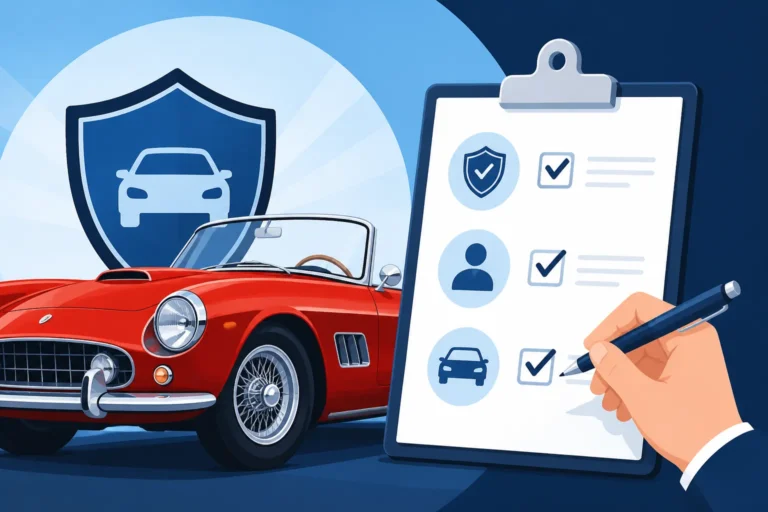
Here's a handy checklist of the essential information you'll need:
| Category | Required Information |
|---|---|
| Personal Details | Full Name, Address, Phone, Email, Date of Birth, Driver's License Number |
| Vehicle Basics | Year, Make, Model, VIN, Odometer Reading |
| Vehicle Condition | Current Condition (e.g., Show, Excellent, Good, Project), Restoration Details |
| Vehicle Value | Desired Agreed Value, Appraisal Report (if available), Photos |
| Usage Details | Estimated Annual Mileage, Intended Use (Pleasure, Shows, Tours), Daily Driver Info |
| Storage Details | Type of Storage (Locked Garage, etc.), Location of Storage |
| Driver History | Your Driving Record, Any Accidents/Violations, Other Household Drivers' Info |
| Current Insurance | Information on your current auto and home policies (for potential discounts) |
Customizing Your Coverage and Deductibles
One of the greatest benefits of working with a specialist like Leland-West is the ability to truly customize your policy. It's not just about meeting minimum state liability requirements; it's about protecting every facet of your classic car investment.
You'll need to choose your liability limits. This coverage protects you financially if you're at fault in an accident, covering property damage and bodily injury to others. While classics aren't driven frequently, it's wise to carry sufficient liability coverage to protect your assets.
Then, you'll select your deductibles for comprehensive and collision coverage. The deductible is the amount you pay out of pocket before your insurance kicks in. Higher deductibles generally lead to lower premiums, and vice-versa. You can explore how Classic Car Insurance Deductibles Explained can affect your costs.
Beyond the standard coverages, consider these important add-ons:
- Spare Parts Coverage: Many collectors accumulate a treasure trove of spare parts, some of which are incredibly rare and valuable. This coverage protects those parts, often even if they're stored separately from the car.
- Inflation Guard Coverage: The value of classic cars can fluctuate and often appreciates. Inflation Guard automatically adjusts your car's agreed value upward over the policy term, usually by a small percentage (e.g., 2-6%), to keep pace with the market, so you're not caught underinsured. For more on this, check out Inflation Guard Coverage Explained.
- Roadside Assistance and Towing: Standard towing might not be suitable for your delicate classic. Specialist policies offer flatbed towing, ensuring your car is transported safely without putting stress on its suspension or drivetrain.
- Trip Interruption: If you're on a long tour or road trip with your classic and it breaks down far from home, this coverage can help with expenses like lodging, meals, and alternative transportation.
By thoughtfully customizing these options, you ensure your Leland-West policy provides robust protection that truly reflects the unique value and usage of your classic car.
What Happens After You Get Your Leland-West Quote
Once you've gone through the process of providing all the necessary details and received your quote from Leland-West, you're in the home stretch. But don't just sign on the dotted line immediately; take a moment to review everything carefully and ensure it aligns with your expectations.
Reviewing Your Quote Details Carefully
It’s tempting to jump straight to the premium amount, but a thorough review of your quote is crucial. Remember, the cheapest policy isn't always the best, especially when it comes to something as precious as your classic car. You need to verify that the agreed value is correct and that all the coverage types you discussed or requested are included with the appropriate limits.
Take a close look at the deductibles for comprehensive and collision coverage. Are they what you expected? Also, check for any exclusions or limitations that might be specific to your vehicle or how it's stored or used. For instance, confirm that any valuable modifications or restoration work are adequately covered. If you have any questions or find anything unclear, don't hesitate to reach out to the agent for clarification. They are there to help you understand every aspect of your policy.
It's also a smart idea to compare this quote with others you might have received. While Leland-West is a prominent player, it’s always wise to get multiple quotes from specialty providers. You might compare it with a quote from Hagerty, or perhaps other carriers, to ensure you're getting the best value and coverage for your money. Understanding How to Compare Classic Car Insurance Quotes is a skill every collector should master, and looking at resources like Hagerty vs Grundy: Which Is Better can give you an idea of the comparison points.
Finalizing Your Policy and Next Steps
Once you're satisfied that the Leland-West quote meets all your needs and offers the best protection for your classic, finalizing the policy is usually a straightforward process. You'll typically confirm your acceptance of the terms, provide payment for your premium, and then receive your official policy documents.
In some cases, particularly for higher-value vehicles or those with unique characteristics, Leland-West might require a final vehicle inspection or additional photographs to confirm its condition and features before the policy is fully bound. This is a normal part of the process for specialty insurers and helps ensure the agreed value is accurately set. To prepare, you can review common Classic Car Insurance Inspection Requirements.
If you're insuring a car you've just purchased, especially if it's from an auction or a private seller far away, it’s vital to ensure you have coverage before you drive it home or arrange for shipping. Many policies can be initiated quickly to provide immediate coverage for transit. For more insight on this specific scenario, consult How to Get Coverage Before Picking Up Your Classic. Once your policy is active, you'll have the peace of mind knowing your beloved classic is properly protected by a company that understands its true worth.
Disclaimer
Please remember that this information is for educational purposes only and is not intended as financial or legal advice. Insurance policies vary, and it's essential to review your specific policy documents and discuss your unique needs with a licensed insurance professional to ensure you have appropriate coverage.