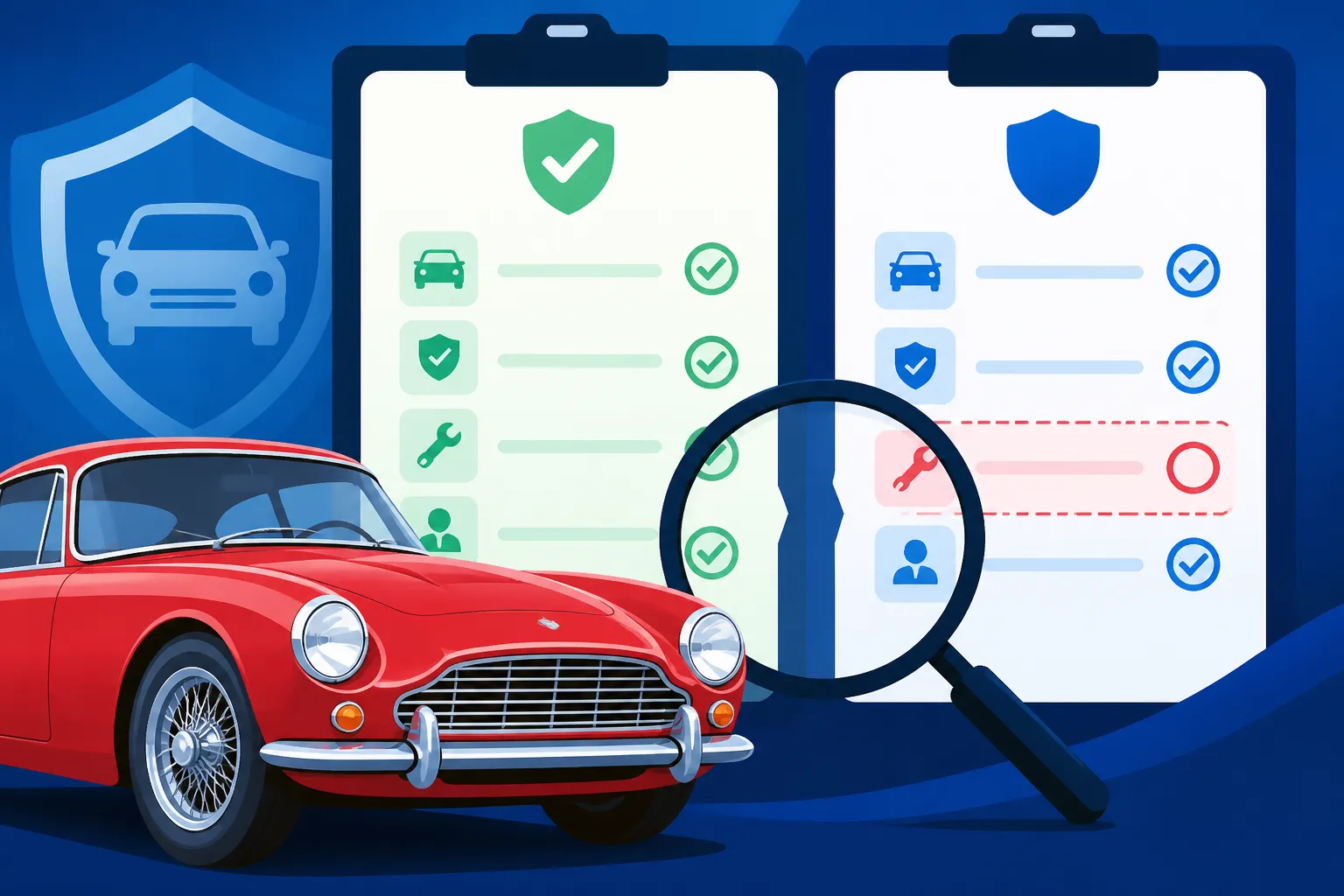
How to Spot Gaps When Comparing Policies
It's an unfortunate truth that when you're deeply passionate about your classic car, the last thing you want is for an insurance policy to fall short when you need it most. Many collectors get caught off guard, assuming a standard auto policy or even a hastily chosen "classic" policy will protect their pride and joy, only to discover glaring gaps after an incident. This guide is here to walk you through the often-confusing landscape of classic car insurance, helping you identify and avoid those sneaky coverage gaps that can leave you with a massive headache and an underinsured classic.
Understanding the Pitfalls of Standard Auto Insurance for Classics
Let's face it, your cherished 1969 Mustang or elegant 1957 Chevrolet Bel Air isn't just a car; it's a piece of history, a work of art, and a significant investment of time, money, and soul. Trying to insure it with a standard auto insurance policy is like trying to fit a square peg in a round hole – it just doesn't work, and it can lead to some truly heartbreaking financial losses.
Why Regular Policies Don't Cut It
The fundamental issue with a standard auto insurance policy, the kind you might use for your daily driver, is that it's designed for depreciation. When you buy a new car, it starts losing value the moment you drive it off the lot. A regular policy's payout in an accident is based on its "Actual Cash Value" (ACV), meaning replacement cost minus depreciation. For a classic car, this formula is disastrous. Your beautifully restored 1967 Corvette isn't depreciating; it's likely appreciating, or at the very least, maintaining a value far beyond what a standard insurer would ever acknowledge. Imagine a scenario where your classic gets totaled, and your regular insurer offers you a fraction of what you know it's worth because they're treating it like any other used car. That's a gut punch no collector wants to experience. This is why understanding Classic Car Insurance vs Regular Insurance: What's Required is so important from the outset.
The Misconception of Mileage and Usage
Another area where standard policies fail is in their understanding of how classic cars are used. Most regular insurance policies assume your vehicle is a daily commuter, accumulating thousands of miles each year. They factor this high usage into your premiums and potential claims. Classic cars, on the other hand, are typically driven sparingly, for pleasure cruises, car shows, and club events. Because you're driving it less, the risk of an accident is inherently lower. Regular insurers don't generally offer the kind of mileage-based discounts or usage restrictions that specialty classic car insurers do, which means you could be paying significantly more for coverage that doesn't even properly value your vehicle. The nuance of How Mileage Tiers Work for Classic Cars is completely lost on standard policies.
Key Coverage Gaps to Watch Out For in Classic Car Policies
Even when you venture into the world of "classic car insurance," not all policies are created equal. It’s absolutely vital to scrutinize the details, because seemingly small omissions can have massive consequences.
The Valuation Quagmire: Agreed Value vs. Stated Value vs. Actual Cash Value
This is perhaps the most critical distinction and the source of the most common gaps. You absolutely need to understand the difference.
- Actual Cash Value (ACV): We just talked about this. It’s what a standard policy offers – replacement cost minus depreciation. For a classic, it's almost always a terrible deal, severely underinsuring your vehicle.
- Stated Value: This sounds better than ACV, but it's often a trap. With stated value, you state the value of your car, but the insurer reserves the right to pay out either the stated value or the actual cash value, whichever is less, in the event of a total loss. This means if market values dip, or if they decide your stated value was too high, you could still be significantly underpaid. It puts the burden of proof, and risk, squarely on you.
- Agreed Value: This is the gold standard for classic car insurance and what you should always seek. With an agreed value policy, you and the insurer agree on your car's value before the policy is issued. If your car is a total loss, the insurer pays you that exact agreed-upon amount, no questions asked (assuming all policy conditions were met). This provides peace of mind, knowing your investment is truly protected. Many specialty insurers, like Hagerty, built their reputation on offering robust agreed value policies. For a deep dive, check out our guide on Agreed Value vs Stated Value vs Actual Cash Value.
Here's a quick comparison to help visualize the differences:
| Valuation Type | How Value is Determined | Payout in Total Loss Scenario | Benefit for Classic Car Owners | Risk for Classic Car Owners |
|---|---|---|---|---|
| Actual Cash Value | Replacement cost minus depreciation (market value) | Less depreciation | Low premiums (but not suitable for classics) | Significant underpayment if car appreciates or holds value |
| Stated Value | Owner states value, insurer agrees to up to that amount | Lower of stated value or actual cash value | Appears to offer higher coverage than ACV initially | Insurer can still pay less than stated value; unpredictable |
| Agreed Value | Owner and insurer agree on fixed value at policy start | Exact agreed-upon amount | Guaranteed payout for total loss; protects investment and appreciation | Requires accurate valuation; higher premiums than ACV/Stated Value |
Overlooked Ancillary Coverages
It's not just about the big valuation number. Classic cars come with unique needs that standard policies, and even some basic classic policies, often ignore.
- Restoration Coverage: If you're knee-deep in a project car, its value is constantly changing. A policy that doesn't offer "vehicle under construction" or Restoration Coverage for Classic Cars is a huge gap. You need coverage that automatically increases as you invest more into the restoration, protecting the labor and parts you've added. Without it, you might only be covered for the "before" value, not the "during" or "after."
- Spare Parts Coverage: Many collectors have a trove of valuable spare parts, rare NOS (New Old Stock) components, or even a second engine for their classic. What happens if these are stolen from your garage or damaged in a fire? A standard home insurance policy might cover some, but often has low limits for car-related parts. A good classic car policy should offer specific Spare Parts Coverage Explained as an add-on, giving you peace of mind that your invaluable inventory is protected.
- Roadside Assistance and Towing: You don't want your lowered hot rod or pristine concours winner being winched onto a standard tow truck with chains. Classic cars often require flatbed towing to prevent damage. Ensure your policy includes specialized roadside assistance that understands the unique needs of classics, offering flatbed service specifically.
- Inflation Guard Coverage: The value of classic cars, particularly popular models, can appreciate rapidly. An inflation guard endorsement automatically increases your agreed value by a small percentage each year (e.g., 2-6%) to keep pace with market appreciation, preventing you from being underinsured as your car's value climbs.
- Touring and Show Coverage: If you participate in rallies, tours, or car shows, your car faces specific risks. Is it covered for damage during transit on a trailer? What about while it's on display? Does it have coverage for a specific mileage tier, or is it covered for club events? Make sure your policy addresses these specific scenarios, potentially including trip interruption coverage if you break down far from home. Look into Club and Exhibition Use Coverage or Touring and Rally Coverage Requirements as needed.
Evaluating Policy Details Beyond the Premium
It's tempting to jump at the lowest premium, but doing so without a thorough understanding of the policy details is a surefire way to find yourself with unexpected gaps. The true cost of insurance isn't just the monthly payment; it's what you get (or don't get) when things go wrong. Knowing What to Look for in a Classic Car Policy involves digging deep.
Unpacking Deductibles and Payout Limits
A low premium might hide a sky-high deductible that you'd struggle to pay in the event of a claim. Conversely, a policy with a low deductible might have other limitations. Consider your financial comfort level. What deductible can you realistically afford out-of-pocket if your classic sustains damage?
Beyond deductibles, pay close attention to payout limits on specific coverages. For instance, while you might have an agreed value for your car, what are the limits for personal effects, spare parts, or even emergency lodging if your classic breaks down far from home? Some policies might have a general liability limit that's too low for comprehensive protection, especially if you have a high-value collection.
Hidden Clauses and Requirements
Specialty classic car insurance comes with its own set of rules, and these rules are often where gaps appear if you're not paying attention.
- Mileage Restrictions: Most classic car policies come with annual mileage limits (e.g., 2,500, 5,000, or 7,500 miles). While this helps keep premiums down, exceeding these limits can void your coverage or reduce your payout. Be honest about your anticipated usage. If you plan more extensive touring, ensure your policy offers a higher mileage tier or even Unlimited Mileage Classic Car Insurance Explained.
- Storage Requirements: Insurers often require classic cars to be stored in a locked, secure garage. If your cherished vehicle is kept in a carport, a shared garage, or even outside, you might not meet the policy's criteria, creating a massive gap in coverage. Always verify Garage Storage Requirement for Classic Cars and ensure your storage solution complies.
- Driver Restrictions: Who is allowed to drive your classic? Some policies might restrict coverage to drivers over a certain age, or only to you and your spouse. If you have a teenager in the household who might occasionally drive it, ensure they are explicitly covered, or understand the exclusions.
- Appraisal and Documentation: While some insurers, like Hagerty, may not always require an upfront appraisal for lower-value classics, for higher-value vehicles, an appraisal is often crucial for establishing the agreed value. If your policy has an appraisal requirement that you haven't fulfilled, you could face issues during a claim. Ensure you understand Appraisal Requirements for Classic Car Insurance.
- Modifications and Restorations: If your car is heavily modified, a hot rod, a restomod, or a kit car, a generic classic policy might not provide adequate coverage for your custom work or unique components. You need specific endorsements for Requirements for Insuring a Modified Classic to ensure your investment in bespoke parts is protected.
Steps to Building a Comprehensive, Gap-Free Classic Car Insurance Policy
Don't let the complexities overwhelm you. With a methodical approach, you can secure a policy that truly protects your classic. The goal is to proactively address potential vulnerabilities, ensuring there are no surprises when you need your insurance most. This process is all about How to Choose Classic Car Insurance wisely.
Accurately Assess Your Vehicle's Value and Your Usage
Before you even start comparing quotes, you need to have a clear picture of your classic. What is its true market value? Online valuation tools can give you a starting point, but for unique or highly restored vehicles, a professional appraisal is often the best route to determine a fair agreed value.
Beyond value, be honest about how you use your car. Are you a weekend cruiser, an avid show participant, or someone who enjoys longer tours and rallies? Your answers will dictate the necessary mileage tiers and any specific event coverage you'll need. Don't try to "save" by underreporting mileage or usage, as this is a common source of coverage gaps during a claim.
Partner with a Specialty Insurer
This is perhaps the single most important step. Standard insurance companies often lack the expertise, specialized coverage options, and understanding of the classic car market that dedicated classic car insurers possess. Companies like Hagerty, Grundy, American Collectors, or J.C. Taylor live and breathe classic cars. They understand the nuances of agreed value, restoration coverage, spare parts, and the unique risks associated with collectibles. They are far more likely to offer flexible mileage programs, specialized roadside assistance, and truly understand the passion behind these vehicles.
When you're comparing policies, make sure you're truly comparing apples to apples. A low premium from a non-specialty insurer might look appealing, but it often signifies a policy riddled with gaps when it comes to classic car-specific needs. Always compare quotes from several specialty providers to ensure you're getting the best combination of coverage and value.
Read Every Line of the Policy Document
I know, I know. Insurance documents are dense and filled with legalese. But for your classic, this is not the time to skim. Take the time to read the entire policy document, paying particular attention to:
- Declarations Page: This summarizes your coverage, limits, deductibles, and the agreed value. Double-check everything here.
- Exclusions: This section explicitly states what the policy doesn't cover. Look for exclusions related to modifications, specific usage types (like track days if you plan on them), or certain types of damage.
- Conditions: These are your responsibilities as the policyholder. They might include requirements for storage, maintenance, or reporting claims. Failing to meet these conditions can lead to a denial of coverage.
If anything is unclear, call the insurer or your agent and ask for clarification. Don't assume. Get it in writing if necessary. Our guide on How to Read a Classic Car Policy can walk you through the process.
Regularly Review and Update Your Coverage
The classic car market is dynamic, and your car's value can change over time. Its condition might improve with a restoration, or a rare part could significantly increase its worth. Don't set it and forget it!
- Annual Reviews: At renewal time, review your policy to ensure the agreed value still accurately reflects your car's current market value. Discuss any new modifications, upgrades, or significant changes in condition with your insurer.
- Post-Restoration Updates: If you complete a major restoration, immediately contact your insurer to update your agreed value. Provide documentation of the work and costs incurred.
- Market Fluctuations: Keep an eye on the market for your specific make and model. If values are soaring, your current agreed value might become a gap. Proactively discuss increasing your agreed value with your insurer, potentially leveraging an inflation guard endorsement if available.
By staying proactive and meticulously checking these areas, you can ensure your classic car insurance truly protects your cherished investment, allowing you to enjoy the open road with peace of mind.
Disclaimer
Please remember that insurance policies can vary significantly by provider and state. The information provided in this article is for general informational purposes only and does not constitute professional insurance advice. Always consult with a qualified insurance professional or agent to discuss your specific needs and to obtain a personalized quote and policy details.