Requirements for Insuring a Restomod
It’s a unique joy, isn't it? Taking a classic, something with undeniable soul and history, and giving it a modern heart, better brakes, a comfortable interior, maybe even air conditioning you can actually feel. But when it comes to insuring that beautifully blended machine, many restomod owners hit a wall of confusion and frustration. Traditional insurance companies often don't understand the significant investment and unique value of these vehicles, leaving you wondering how to protect your pride and joy properly. This guide will walk you through the specific requirements for insuring a restomod, ensuring your cherished vehicle gets the specialized coverage it deserves.
Understanding the Allure and Challenge of Restomods
Restomods represent the best of both worlds: the iconic styling and heritage of a vintage automobile merged seamlessly with the reliability, performance, and comfort of modern technology. But this very blend of old and new is what makes them a puzzle for standard insurance carriers.
Defining a Restomod vs. a Classic or Hot Rod
Let's start by clarifying what we mean by a "restomod." A classic car is typically restored to its original factory specifications, preserving its historical accuracy. A hot rod, while customized, often focuses on raw power and a specific aesthetic, sometimes with visible modifications that scream "performance." A restomod, however, takes a classic body and integrates significant modern components to enhance its driving experience, safety, and comfort without necessarily altering its outward appearance too dramatically. Think a '69 Camaro with an LS engine swap, modern independent suspension, disc brakes all around, a custom interior with Bluetooth audio, and comfortable bucket seats – it still looks like a '69 Camaro, but it drives like a contemporary performance car.
The frustration comes when you try to explain this to an insurance agent accustomed to either factory-original classics or run-of-the-mill daily drivers. They might see the VIN and think "old car," completely missing the tens or even hundreds of thousands of dollars poured into modernizing it. This misunderstanding is precisely why you can't approach restomod insurance like you would a standard vehicle.
Common Restomod Enhancements and Their Impact on Value
The beauty of a restomod lies in its thoughtful upgrades. These aren't just cosmetic tweaks; they are fundamental changes that dramatically increase the vehicle's functionality, safety, and, most importantly, its value.
- Powertrain Upgrades: Swapping out an original, often underpowered engine for a modern fuel-injected V8 (like a Coyote or LS engine) or a high-performance EV drivetrain. This includes modern transmissions and upgraded rear ends to handle the extra power.
- Suspension and Braking Systems: Out with the leaf springs and drum brakes, in with coil-overs, multi-link suspensions, power steering, and massive disc brakes. These changes transform handling and stopping power, making the car safer and more enjoyable to drive.
- Interior Comforts and Technology: Think power windows, modern air conditioning systems, custom leather interiors, advanced infotainment systems with navigation and backup cameras, and even upgraded sound deadening. These bring daily usability to a vehicle designed decades ago.
- Structural and Safety Improvements: Often, restomods will feature chassis stiffening, stronger frames, modern seatbelts, and sometimes even roll cages integrated subtly into the design for enhanced safety.
Each of these modifications, while improving the car, adds considerable cost and complexity, making its value far exceed what any standard "book value" would suggest. This is the core challenge that restomod owners face when seeking appropriate insurance.
Why Standard Auto Policies Miss the Mark for Restomods
Trying to insure your restomod with a standard auto insurance policy is like trying to fit a square peg in a round hole – it just doesn't work, and it can leave you severely underinsured. Traditional insurance companies operate on models designed for mass-produced, depreciating assets, not appreciating, custom-built works of art.
The Problem with Actual Cash Value ACV
The biggest pitfall of standard policies for a restomod is their reliance on Actual Cash Value (ACV). ACV pays out the replacement cost of your vehicle, minus depreciation, at the time of a loss. For a new car, this is straightforward. For your meticulously crafted restomod, it's a financial disaster.
Imagine your stunning 1967 Ford Mustang restomod, which started as a $20,000 shell and now has $100,000 in modern performance parts, custom paint, and a bespoke interior. If it's totaled under an ACV policy, the insurer might only look at the "market value" of a stock 1967 Mustang, factoring in its age and original condition, and offer you perhaps $30,000. All your investment in that powerful new engine, the custom interior from a specialist shop, the sophisticated braking system, and that flawless paint job? Gone, with no compensation. You'd be out tens of thousands of dollars, simply because the insurance company doesn't recognize the true value you've created. This is a common and incredibly frustrating scenario for collectors, highlighting why Agreed Value Coverage Explained is so crucial.
The Limitations of Stated Value Policies
Some standard insurers might offer "stated value" coverage as an alternative to ACV, and while it sounds better, it's still often inadequate for a restomod. With stated value, you and the insurer agree on a maximum payout amount for your vehicle. However, the critical caveat is that the insurance company typically reserves the right to pay up to that stated value, or the "actual market value" at the time of loss, whichever is less.
Let's revisit our '67 Mustang restomod. You might "state" its value at $120,000. If an accident occurs, the insurer could still argue that the "market value" for a '67 Mustang (even a modified one, in their limited view) is only $80,000, and they'd only pay that amount. This leaves you vulnerable to their interpretation of market value, which again, often doesn't account for the unique, high-cost modifications and craftsmanship involved in a restomod. The nuance between stated value and truly protective coverage can be confusing, so understanding Stated Value vs Agreed Value: Key Differences is paramount when evaluating your options.
Essential Requirements for Restomod Insurance: Your Checklist
Insuring a restomod properly requires a different approach, specifically through specialty insurance designed for collector vehicles. These policies understand that your car is an investment, not just a mode of transportation. Meeting specific criteria is key to securing this specialized coverage.
Agreed Value Coverage: The Non-Negotiable Core
For restomods, agreed value coverage is not just an option; it's an absolute necessity. This is the cornerstone of proper protection. With agreed value, you and the insurance company agree on your vehicle's exact worth when the policy is written. If a total loss occurs, the insurer pays you that agreed-upon amount, no questions asked, no depreciation deducted. This gives you peace of mind, knowing your significant investment is fully protected.
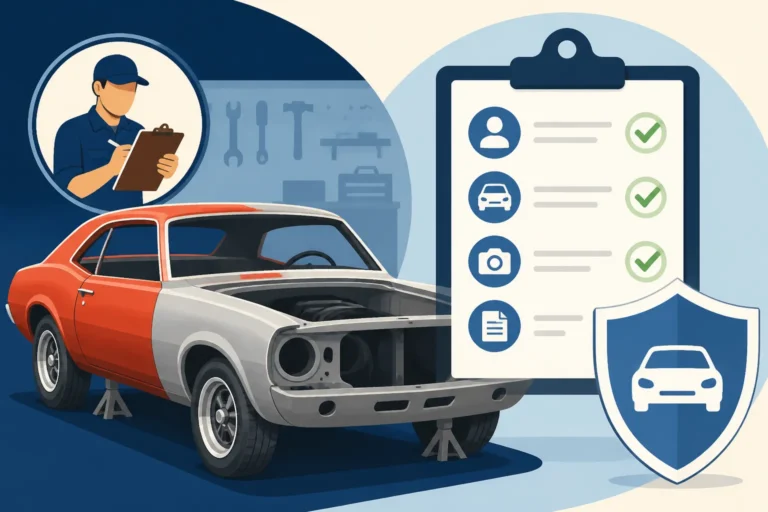
To secure an agreed value policy for your restomod, extensive documentation is typically required. This isn't just a casual conversation; it's a detailed presentation of your car's value. You'll need high-quality photographs, detailed receipts for all parts and labor, a comprehensive list of modifications, and often, a professional appraisal from a qualified expert specializing in collector cars. The insurer needs to see the true scope of your investment to agree on a fair value. As your restomod progresses or new modifications are made, it's vital to update your agreed value with your insurer to reflect the increased worth. This ensures you're never underinsured as your project evolves. This type of coverage truly highlights Why Agreed Value Matters for Classics.
Usage and Storage Restrictions
Specialty classic car insurance, including policies for restomods, comes with specific usage and storage requirements designed to minimize risk. These aren't daily drivers; they're cherished collectibles.
- Pleasure Use Only: Your restomod must be used for pleasure driving, car shows, club events, and occasional leisurely trips. It cannot be used for daily commuting, commercial purposes, or as your primary mode of transportation. Most policies have a Pleasure-Use Requirement Explained. This limited usage is a major factor in why classic car insurance is often more affordable than standard policies.
- Mileage Limits: Most policies come with annual mileage limits, typically ranging from 1,000 to 5,000 miles. Some insurers like Hagerty offer flexible mileage tiers, and even unlimited mileage options, but the expectation is still that the car is not driven extensively.
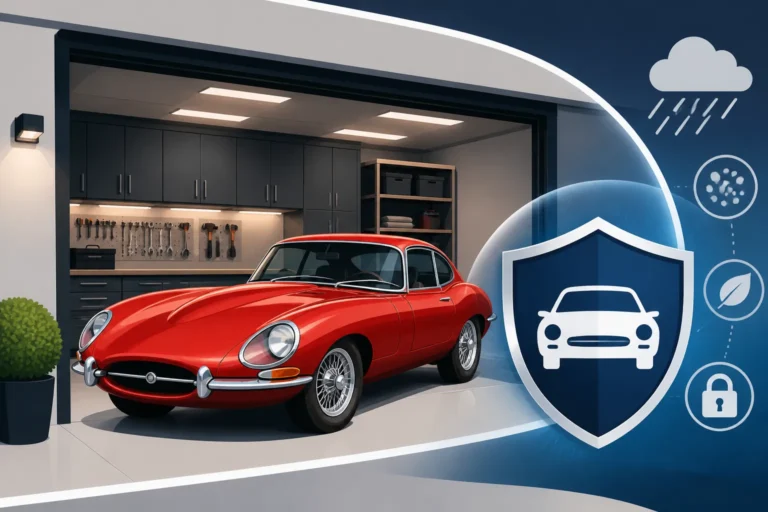
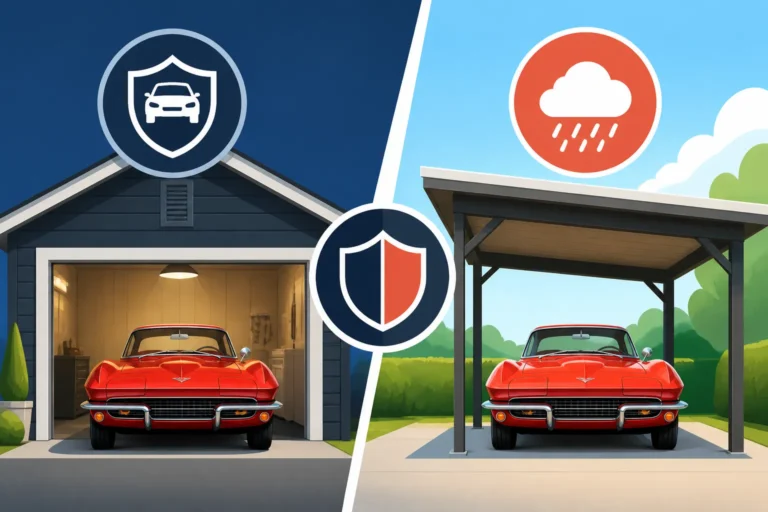
- Secure Storage: Insurers require your restomod to be stored in a secure, enclosed, and locked facility, such as a private garage or a professional storage unit. Parking in a driveway, carport, or public street typically disqualifies you. The goal is to protect the vehicle from theft, vandalism, and environmental damage. This is a common stipulation under Garage Storage Requirement for Classic Cars.
- Other Vehicle Requirement: In nearly all cases, you must have a separate, primary vehicle for daily transportation that is insured under a standard policy. Your restomod cannot be your only registered and insured vehicle. This ensures the "pleasure use" guidelines are genuinely followed.
Driver and Household Requirements
The drivers of your restomod also play a significant role in eligibility and rates. Specialty insurers prioritize responsible owners and drivers to maintain their favorable risk profiles.
- Primary Driver Age: Most specialty insurers prefer, or even require, the primary driver to be at least 25 years old. Some may extend coverage to younger drivers in the household, but specific restrictions or higher premiums might apply.
- Clean Driving Record: A clean driving record, free of major accidents, moving violations, or DUIs, is generally a prerequisite. Insurers want to see a history of safe and responsible driving habits.
- Driving Experience: While not always a hard rule, insurers appreciate drivers with established driving experience. New drivers or those with limited time behind the wheel might face stricter requirements.
- Household Drivers: Any household member who might occasionally drive the restomod needs to be disclosed on the policy. Their driving record can impact eligibility and rates. Ensure you're clear on Minimum Age for Classic Car Insurance Drivers and other household driver requirements.
Valuation and Documentation
The unique nature of a restomod means its value isn't easily determined by a database. You need to prove its worth.
- Professional Appraisal: For a restomod, a professional, independent appraisal is often mandatory. This document, prepared by an expert, details the vehicle's condition, modifications, and estimated market value based on comparable sales and the quality of the work performed. It provides objective evidence to support your requested agreed value. You can learn more about How Appraisals Affect Insurance Cost and other factors play a role.
- Comprehensive Photography: High-resolution photos of every aspect of your restomod – interior, exterior, engine bay, trunk, undercarriage, and even detailed shots of unique modifications – are crucial. These visuals substantiate the condition and modifications described in your appraisal and build sheet.
- Detailed Records: Keep meticulous records of all modifications, including receipts for parts, invoices for professional labor, and any build sheets or documentation from custom shops. These records demonstrate your financial investment and the quality of the work. If you've done much of the work yourself, consider documenting your time and materials.
- History and Pedigree: If your restomod started with a rare or historically significant base vehicle, provide any documentation that proves its pedigree. While less common for restomods than for historically accurate restorations, provenance can still contribute to overall value.
| Insurance Type | Valuation Method | Payout in Total Loss (Example: $100k Restomod) | Best For | Restomod Suitability |
|---|---|---|---|---|
| Actual Cash Value | Market value minus depreciation | ~ $30,000 (stock value – depreciation) | Daily drivers, new cars | Unsuitable |
| Stated Value | Max value set by owner, insurer pays up to market value | ~ $80,000 (insurer's market value) | Cars with some mods, but still risky | Risky, generally unsuitable |
| Agreed Value | Value agreed upon by owner and insurer upfront | $100,000 (agreed amount) | Collector cars, restomods, high-value custom vehicles | Essential |
Beyond the Basics: Advanced Considerations for Restomod Coverage
Insuring a restomod isn't just about getting the basic agreed value; it's about tailoring a policy that covers every unique aspect of your build and usage. Specialty insurers offer endorsements and specific coverages that cater directly to the needs of custom and modified vehicles.
Insuring a Restomod Under Construction
One of the most anxiety-inducing periods for a restomod owner is when the car is "under the knife." It's in pieces, vulnerable, and constantly increasing in value. Thankfully, there are options for Restoration Coverage for Classic Cars.
- Vehicle Under Construction Coverage: Many specialty insurers, like Hagerty or Grundy, offer policies specifically designed for vehicles that are still being built or restored. This coverage protects your investment as it grows, covering parts, materials, and labor even when the car isn't yet driveable. It’s a lifesaver if something happens during the build, like a garage fire or theft of components.
- Incremental Value Updates: As you complete stages of your restomod, adding significant components or completing major sections (e.g., engine installed, paint finished, interior upholstered), you can update your policy to reflect the increased value. This ensures that the agreed value keeps pace with your investment throughout the build process. Imagine finishing a complex engine swap that cost $30,000; you'd want your policy updated immediately to cover that new investment.
- Coverage for Tools and Parts: Some policies can even include coverage for specialized tools and spare parts relevant to your restoration, whether they're new old stock (NOS) or custom-fabricated pieces waiting to be installed. This can be an important add-on, as these components can be extremely valuable on their own.
Finding the Right Specialty Insurer
Attempting to insure a restomod through a standard insurance provider is usually a dead end or a disservice. They simply don't have the underwriting models or claims processes equipped for such unique vehicles. This is where specialty insurers shine.
- Understanding Unique Valuations: Companies like Hagerty, Grundy, American Collectors Insurance, and American Modern specialize in collector vehicles and understand the true worth of a restomod. They have specific valuation tools and experts who know how to assess custom builds. They're not going to undervalue your new suspension because it's "not original."
- Customizable Policies: Specialty insurers offer a range of endorsements tailor-made for restomods, such as coverage for custom paint, specialized parts, and even show and event coverage. This allows you to build a policy that truly covers every aspect of your unique vehicle. When considering Modified Car Insurance Eligibility, these are the carriers to approach.
- Claims Handling Expertise: In the unfortunate event of a claim, a specialty insurer's claims adjusters are experts in classic and custom cars. They understand the cost of sourcing rare parts, the labor involved in custom fabrication, and the true value of your agreed amount, ensuring a smoother, fairer resolution.
Understanding Modified Car Endorsements
Beyond the core agreed value, specific endorsements can be critical for comprehensive restomod coverage. These are the details that ensure every custom aspect is protected.
- Custom Parts and Equipment Coverage: This endorsement is vital. It explicitly covers the value of non-factory parts and modifications you’ve added, which are typically excluded or limited under standard policies. This includes everything from custom wheels and tires, advanced braking systems, high-performance engine components, and bespoke interior work. Without this, even with agreed value, some custom components might be overlooked.
- Roadside Assistance and Flatbed Towing: While all vehicles can benefit from roadside assistance, restomods, with their lower clearances and unique mechanicals, often require flatbed towing to prevent damage during transport. Many specialty policies include or offer this as an endorsement, which is crucial for protecting your investment if it breaks down on the road.
- Inflation Guard: The value of well-built restomods can increase over time. An inflation guard endorsement automatically increases your agreed value by a small percentage (e.g., 2-4%) each year, reflecting market appreciation without needing a new appraisal annually. This is especially helpful in a rising market for collector cars.
- Trip Interruption Coverage: If you take your restomod on long-distance tours or to far-off car shows, trip interruption coverage can be a lifesaver. It can cover expenses like lodging, meals, and alternative transportation if your vehicle breaks down far from home. This ensures that a mechanical issue doesn't ruin your entire trip.
Insuring a restomod properly means looking beyond the basic liability and collision. It's about recognizing the car for the unique, valuable creation it is and partnering with an insurer who sees it that way too. It’s important to understand How to Insure a Modified Classic to ensure all your customizations are covered.
Disclaimer
Please remember that insurance policies and their requirements can vary significantly by state, insurer, and the specific details of your vehicle and driving history. This article provides general information and should not be considered legal or financial advice. Always consult with a qualified insurance professional to discuss your individual needs and to obtain quotes and policy details tailored to your specific restomod.