Roadside and Towing for Flat-Bed Only Classics
There are few things more anxiety-inducing for a classic car owner than hearing that dreaded sputter, feeling a sudden loss of power, or seeing steam billow from under the hood while cruising down the road. Your pride and joy, often a significant investment of time, money, and passion, is suddenly stranded. The first thought isn't just "how do I fix it?" but "how do I get it home safely without further damage?" This guide will meticulously walk you through why standard towing services simply won't cut it for your cherished classic and how to ensure you have the vital flat-bed towing and roadside assistance coverage that truly protects your vehicle.
The Unique Vulnerability of Classic Cars on the Road
Owning a classic car is a commitment to a different kind of driving experience, one that comes with its own set of joys and, unfortunately, its own unique challenges when something goes wrong. These aren't modern vehicles designed for robust recovery; they're delicate machines built decades ago, and their very construction makes them susceptible to damage from improper handling.
Why Standard Towing is a No-Go
Imagine your beautiful 1967 Mustang breaking down on the side of a busy highway. You call for roadside assistance, and a standard tow truck arrives, ready to hoist it up with a wheel-lift or, even worse, a hook. The pit of your stomach drops, right? This isn't just a matter of aesthetics; it's about structural integrity. Standard wheel-lift towing, where two wheels are lifted off the ground and the other two remain on the pavement, can exert immense and uneven pressure on a classic car's chassis, suspension, and steering components. Older frames might twist, delicate body panels could warp from chain pressure, and suspension systems, not designed for modern towing stresses, can be severely damaged.
Then there's the truly archaic, but still sometimes encountered, hook towing. This method, which involves hooking chains directly to the car's axle or frame points and dragging it, is an absolute disaster waiting to happen for any classic. It can scratch paint, dent bumpers, tear off exhaust systems, and even bend the frame. Even seemingly robust muscle cars from the 60s and 70s have aged components that can't withstand such abuse. These methods are designed for modern cars with unibody construction and more resilient undercarriages, not the often more fragile, rust-prone, or meticulously restored components of your classic.
Common Breakdowns and Roadside Woes
Classic cars, despite our best efforts, are prone to breaking down. They're old, after all! It’s part of their charm, but also their Achilles' heel. Common issues include overheating due to old radiators or cooling systems, sudden electrical failures from worn wiring harnesses, carburetor issues leading to fuel delivery problems, or simply a flat tire that requires careful jacking to avoid bending rocker panels or damaging original wheels. When these happen, the need for specialized handling becomes paramount.
A simple flat tire can turn into a costly repair if an inexperienced tow truck operator tries to use a floor jack on a rusty frame rail or damages a chrome wheel with improper lug nut removal tools. An engine issue often means the car is completely immobile, preventing it from being driven onto a ramp, and requiring a winch. In every one of these scenarios, the integrity of your classic car demands a level of care and equipment that generic roadside assistance often doesn't provide. You need a service that understands the nuances of older vehicles, from their delicate finishes to their often-fragile underpinnings.
Understanding Flat-Bed Towing: Your Classic's Best Friend
When it comes to transporting a classic car that's broken down or needs to be moved without being driven, flat-bed towing isn't just an option; it's really the only option. This method ensures your vehicle is treated with the respect and care it deserves.
What is Flat-Bed Towing and How Does It Work
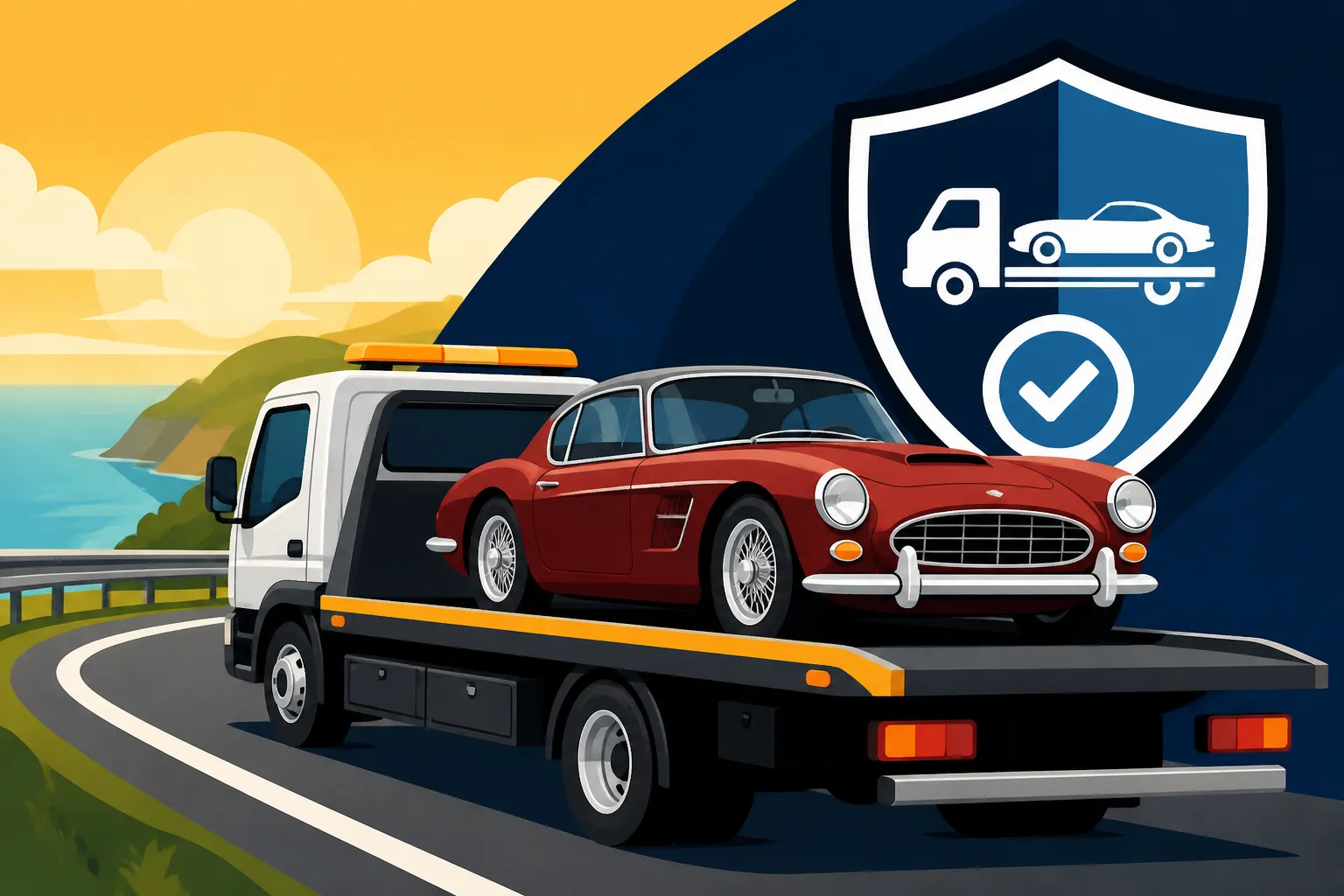
Flat-bed towing, sometimes called "rollback" or "tilt-and-load" towing, involves a truck equipped with a hydraulic flat platform that can be tilted and lowered to ground level. Your classic car is then carefully driven or winched onto this platform, secured with straps over the tires or through the wheels, and then the entire platform is raised level for transport. This means all four wheels of your vehicle are completely off the ground.
The beauty of this system is that it eliminates all the risks associated with standard towing. There's no stress on the suspension, no dragging, no potential for frame damage, and no wear and tear on the drivetrain. The vehicle rests securely on its own tires, just as it would if it were parked in your garage, but it's being transported safely to its destination. This method is the gold standard for any vehicle that is either non-operational, has all-wheel drive, or, most importantly, is a valuable classic that you want to protect from even the slightest risk of damage during transit.
The Benefits Beyond Damage Prevention
While preventing damage is the primary concern, flat-bed towing offers several other significant advantages for classic car owners. First, there's the undeniable peace of mind. Knowing your cherished vehicle is securely loaded, not being jostled or stressed, allows you to breathe easier during what is already a stressful situation. This is especially true for those pristine show cars where even a minor scratch could significantly devalue them.
Secondly, flat-bed towing provides superior security. When a car is on a flat-bed, it's less exposed to road grime, debris, and potential theft attempts during stops. It's essentially a secure mobile platform. Thirdly, it's universally suitable. Whether your car is a non-runner, has a seized wheel, or simply can't be started, a flat-bed can winch it on without further damage. This makes it indispensable for moving project cars, barn finds, or vehicles awaiting restoration. For example, if you're taking advantage of the options for How to Insure a Project Car, you'll definitely want flat-bed towing coverage for any transport needs.
Essential Roadside Assistance Features for Classic Car Owners
Standard roadside assistance plans are often a one-size-fits-all solution, which, as we've discussed, rarely fits a classic car. To properly protect your investment and sanity, you need to understand and seek out the specific features tailored for collectible vehicles.
Specific Coverage You Need to Look For
When you're looking at classic car insurance policies, the roadside assistance component is where the rubber meets the road, so to speak. You absolutely need to ensure the policy explicitly states "flat-bed towing" or "specialty vehicle towing" as the standard method of recovery. Don't settle for ambiguous language. Many specialized insurers, like Hagerty, understand this critical need and build it into their comprehensive roadside assistance packages, often including their "Hagerty Drivers Club" benefits. This means if your 1965 Corvette breaks down, they dispatch a flat-bed, not a wheel-lift, and they often have a network of tow operators who are experienced with classic and antique vehicles.
Beyond just the type of tow, consider the mileage limits. Some basic plans might only cover a few miles, leaving you with a hefty bill if you break down far from your preferred mechanic or home. Look for policies offering generous mileage limits, or even unlimited mileage for towing. This is especially important if you enjoy long-distance rallies or frequent car shows across state lines. Furthermore, ensure the service is 24/7 and that the dispatchers are aware it's a classic car, so they can relay the specific towing requirements to the operator. Having a dedicated hotline where you can immediately convey the nuances of your vehicle's needs is invaluable. This attention to detail is part of what makes Roadside Assistance Coverage for Classic Cars Explained so important to investigate when choosing a policy.
The Pitfalls of Generic Roadside Plans
Many classic car owners mistakenly rely on their regular auto insurance's roadside assistance or general programs like AAA. While these services are excellent for modern daily drivers, they often fall short for classics. The primary pitfall is the lack of guaranteed flat-bed towing. You might call them, and they'll send the closest available tow truck, which could very well be a standard wheel-lift or, heaven forbid, a hook truck. Even if you specifically request a flat-bed, the operator dispatched might not have one, or they might charge an additional, often exorbitant, fee for the "special" service.
Another issue is the lack of specialized training. Regular tow operators, through no fault of their own, might not know the proper jacking points for a vintage Cadillac, how to secure a fragile fiberglass body, or how to avoid damaging delicate chrome trim. This can lead to costly repairs down the line, negating any perceived savings from a cheaper, generic roadside plan. The limited towing radius of many generic plans can also be a significant headache, especially when you're far from home or your trusted classic car restoration shop. For these reasons, understanding Why Classics Need Flat-Bed Towing Coverage is critical, and choosing a policy specifically designed for classics is non-negotiable.
Securing Flat-Bed Towing in Your Classic Car Insurance Policy
Getting the right coverage isn't just about opting for comprehensive collision and Agreed Value Coverage Explained; it's about the often-overlooked details like roadside assistance. You need to be proactive and informed to ensure your classic is protected every step of the way, even when it's just being moved from point A to point B after a breakdown.
Choosing the Right Specialty Insurer
When it comes to insuring classic cars, "specialty" is the keyword. Unlike standard auto insurance providers, companies that specialize in collector vehicles understand the unique needs and value of these cars. They offer policies tailored to protect against the specific risks classics face, and that almost always includes robust roadside assistance with guaranteed flat-bed towing. Brands like Hagerty, Grundy, and American Collectors Insurance are well-known for their expertise in this niche. They build their services around the understanding that a 1970 Plymouth Barracuda isn't just a car; it's a piece of history.
Take Hagerty, for instance. Their roadside service, often lauded by collectors, is specifically designed to dispatch flat-bed trucks and experienced operators trained to handle classic vehicles. This eliminates the guesswork and stress when you're stranded. When you're comparing policies, make sure to delve deep into the roadside assistance fine print. Don't assume anything. For a deeper dive into providers, check out resources like Best Classic Car Insurance Companies or a detailed Hagerty Classic Car Insurance Review to understand what truly sets them apart.
Asking the Right Questions and Confirming Details
Before you commit to any classic car insurance policy, especially regarding roadside assistance, treat it like an interview. Call the insurer or your agent and ask direct, specific questions. Here's a checklist of what you should confirm:
- Is flat-bed towing guaranteed for every breakdown? Get a clear "yes" on this.
- What are the mileage limits for towing? Look for generous limits (e.g., 100+ miles) or unlimited towing.
- Do they have a network of classic car-savvy tow operators? While not always guaranteed everywhere, specialty insurers often prioritize this.
- Is the service 24/7? Emergencies don't follow business hours.
- Are there any exclusions? For example, some policies might not cover towing from private property or unpaved roads.
- Is winch-out service included? If your car slips off the road, can it be recovered safely?
Document these answers. Even better, get them in writing. Understanding the full scope of your Classic Car Insurance Coverage Types Explained helps you avoid nasty surprises down the road. This diligence is part of the overall process of How to Buy Classic Car Insurance smartly.
Documenting and Preparing for an Emergency
Even with the best flat-bed towing coverage, a little preparation on your part can go a long way in an emergency. Always keep your insurance policy information, including the dedicated roadside assistance hotline number, readily accessible in your classic car – perhaps in the glove box or a digital copy on your phone.
Consider creating a small emergency kit for your classic. This could include basic hand tools (pliers, screwdrivers, a small wrench set), a tire pressure gauge, jumper cables suitable for an older electrical system, and perhaps a small LED flashlight. If you have unique jacking points or specific instructions for towing your vehicle, print these out and keep them with your policy information. A laminated card with "FLAT-BED TOWING ONLY" in bold letters could also be placed on the dashboard if you ever need to leave your car for a moment, signaling to any passerby or arriving tow operator the special care required.
| Feature | Standard Roadside Assistance (Generic) | Classic Car Specific Roadside Assistance (Specialty Insurer) |
|---|---|---|
| Towing Method | Often wheel-lift or hook; flat-bed may be available for extra cost or if specifically requested and available. | Guaranteed flat-bed towing standard. |
| Tow Operator Expertise | General training; often unfamiliar with classic car specific needs (jacking points, securing delicate bodywork). | Operators often part of a network experienced with classic, antique, and modified vehicles. |
| Mileage Limits | Typically limited (e.g., 5-25 miles); longer distances incur out-of-pocket costs. | Generous mileage limits (e.g., 100-200 miles) or unlimited towing often included. |
| Response Time | Varies widely based on location and availability. | Often prioritized for specialty vehicles; dedicated dispatch. |
| Ancillary Services | Jump starts, tire changes, fuel delivery for modern vehicles. | Same basic services, but with an understanding of classic car mechanics (e.g., careful tire changes, appropriate jump-start points). |
| Cost | Often included in regular auto policy or low-cost add-on. | Included in specialized classic car insurance policy; generally higher premium but vastly superior service. |
| Peace of Mind | Low for classic car owners, high anxiety about potential damage. | High, knowing your vehicle will be handled correctly and safely. |
Real-World Scenarios and How Flat-Bed Towing Saves the Day
Let's face it, breakdowns happen. It's not a matter of if, but when for many classic car enthusiasts. Understanding how proper flat-bed coverage plays out in real life can truly highlight its value.
The Long-Distance Show Trip Dilemma
Imagine this: You've just spent months meticulously restoring your 1957 Chevrolet Bel Air, polishing every piece of chrome, tuning the engine to perfection. You're driving it hundreds of miles to a prestigious classic car show in Hershey, Pennsylvania, only for a sudden electrical issue to leave you stranded on a desolate stretch of I-81 in Virginia. Your heart sinks. You're far from your trusted mechanic, far from home, and the nearest tow truck could be anything.
In this scenario, if you have classic car insurance with proper flat-bed roadside assistance (like the kind offered by Hagerty), you make one call. The dispatcher understands it's a collectible car. They immediately arrange for a flat-bed tow, knowing that dragging your prize-winning Bel Air is simply not an option. Your car is safely loaded, and towed to either a nearby specialty shop (if available and vetted) or, depending on your policy's mileage limits, perhaps even all the way back home or to your primary mechanic. This saves you from having to frantically search for an appropriate tow, haggle over prices, or worry about potential damage from an inexperienced operator. This is also where understanding your Classic Car Insurance Mileage Limits by State can be crucial.
The Non-Running Project Car
Another common scenario isn't a breakdown, but simply needing to transport a project. Perhaps you've just acquired a fantastic "barn find" – a forgotten 1969 Camaro Z/28 that's been sitting for decades and isn't close to running. Or maybe your current restoration project, a rare Porsche 356, needs to be moved from your home garage to a paint shop across town or to a specialist for engine work.
These vehicles are often non-operational, have flat tires, or are in such a delicate state that even rolling them a few feet could cause damage. A standard wheel-lift or hook tow would be completely out of the question. With dedicated classic car roadside and towing coverage, you can arrange for a flat-bed to carefully winch your non-running gem onto the platform, securing it for transport. This is especially vital when dealing with unique or fragile components during the early stages of restoration. This kind of specialized transportation is a key element when you're looking into Coverage for a Car Being Restored or learning How to Register a Barn Find, as it ensures the vehicle remains as safe as possible during crucial transitions.
Disclaimer
The information provided in this article is for general informational purposes only and does not constitute professional insurance advice. You should consult with a qualified insurance professional to discuss your specific classic car insurance needs and policy options. Insurance requirements and coverages can vary significantly based on your vehicle, location, and individual circumstances.