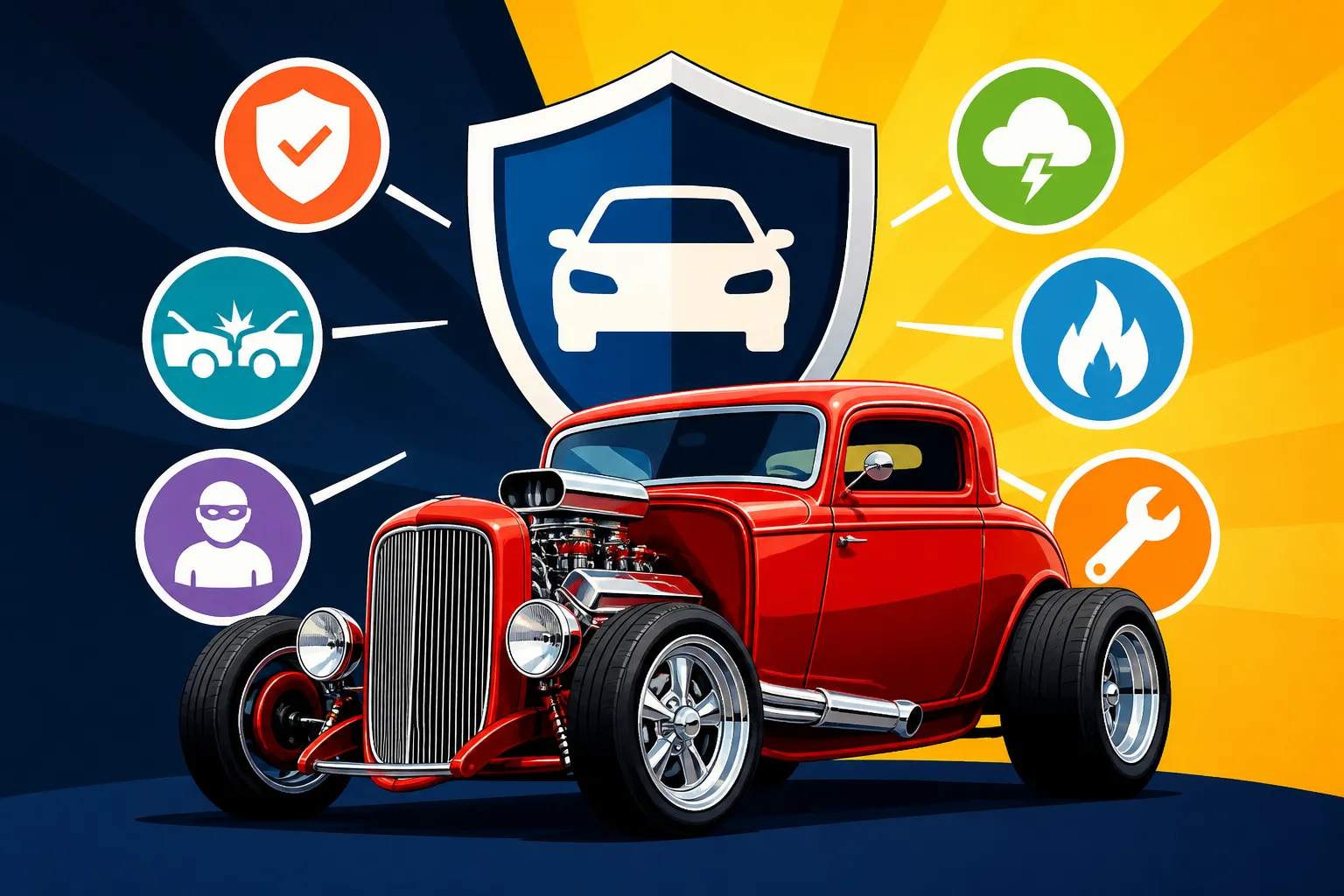
What Coverage a Hot Rod Actually Needs
Owning a hot rod isn't just a hobby; it's a passion, a lifestyle, and often, a significant investment of time, sweat, and hard-earned cash. But when it comes to insuring these custom-built beauties, many owners hit a wall. Traditional auto insurance policies just don't understand the unique value, the bespoke components, and the sheer love that goes into a hot rod, leaving owners feeling frustrated and vulnerable. This guide will walk you through the specific coverages a hot rod actually needs, ensuring your pride and joy is protected from every angle.
Understanding the Unique Nature of Hot Rods for Insurance
Unlike a factory-original classic, a hot rod is a rolling piece of art, a performance machine, or both, meticulously customized to its owner's vision. This individuality is precisely what makes insuring them with a standard policy so difficult and often inadequate.
The Definition and Valuation Challenge
For starters, what even is a hot rod to an insurance company? It's not a simple classification like a sedan or an SUV. Hot rods are typically vintage vehicles, often pre-1949, that have been extensively modified with powerful engines, custom suspensions, unique bodywork, and bespoke interiors. This means their market value isn't easily found in a Kelley Blue Book or NADA guide. The true worth of a hot rod comes from the sum of its unique parts, the labor involved, and its condition, which is almost always far beyond what a generic book value might suggest for its original make and model year. If you were to rely on an actual cash value (ACV) policy, which depreciates the vehicle's worth over time, you'd be severely underinsured in the event of a total loss. Imagine losing your cherished custom build and only getting back a fraction of what you put into it – it's a nightmare scenario. This is why understanding Agreed Value Coverage Explained is absolutely paramount for hot rod owners.
Driving Habits and Usage Patterns
Let's be honest, most hot rods aren't daily drivers. They're weekend cruisers, show cars, or special event vehicles. You're not commuting to work in your chopped '32 Ford or grocery shopping in your '57 Chevy with a supercharged big block. This limited, pleasure-use pattern is a key factor that specialty insurance providers recognize. Regular insurance companies often base premiums on daily driving assumptions, which means you could be paying for coverage you don't need or, worse, they might deny a claim if they find out your "daily driver" isn't actually your daily driver but rather a specialty vehicle. The unique usage profile of a hot rod, usually limited to car shows, club events, or leisurely drives, drastically changes the risk assessment compared to a modern vehicle navigating rush hour traffic every day.
Essential Coverage Types for Hot Rods
When you're building out an insurance policy for your hot rod, there are several foundational coverages that are absolutely non-negotiable. These aren't just "nice-to-haves"; they're critical for protecting your significant investment and passion.
The Non-Negotiable: Agreed Value Coverage
This is, without a doubt, the single most important type of coverage for any hot rod owner. With an agreed value policy, you and your insurer agree upon the car's true market value before the policy is issued. This value is typically determined through an appraisal process, photographic evidence, and detailed documentation of your modifications, parts, and labor. In the unfortunate event of a total loss, the insurance company pays you that exact agreed-upon amount, no questions asked, no depreciation applied. This peace of mind is invaluable, especially for a hot rod whose worth is so subjective and dependent on its unique build. Without agreed value, you risk the insurer only paying out the actual cash value, which, as discussed, could be a devastating financial blow, leaving you unable to replace your custom creation. To ensure you're fully covered, understanding How Agreed Value Is Determined is crucial.
Protecting Against the Unexpected: Comprehensive and Collision
Just like with any vehicle, comprehensive and collision coverage are vital, but for a hot rod, they need to be tailored to its specific risks.
Comprehensive Coverage for Non-Driving Incidents
Comprehensive coverage protects your hot rod from perils that aren't collision-related. Think about it: theft, vandalism, fire, hail, floods, falling objects (like a tree branch in a storm), or even an errant baseball shattering your custom glass. Hot rods, often stored in garages or shown at events, are still vulnerable to these threats. Imagine your '40 Ford coupe, parked safely in your garage, suffers fire damage. Comprehensive coverage would step in, ensuring repairs or replacement up to your agreed value. This is especially important as hot rods often attract attention, making them targets for theft or vandalism.
Collision Coverage for Accidents on the Road
Collision coverage handles damage to your hot rod resulting from an impact with another vehicle or object, regardless of who is at fault. While you might drive your hot rod cautiously, accidents can happen. Maybe you misjudge a turn, or another driver isn't paying attention. The cost to repair custom bodywork, specialized paint, or unique mechanical components on a hot rod can be astronomical compared to a modern production car. A robust collision policy, again tied to your agreed value, means you won't be left scrambling to cover the extensive repair bills for your one-of-a-kind machine.
The Legal Side: Liability and Uninsured/Underinsured Motorist
Even though you treat your hot rod with kid gloves, you still need to protect yourself and your assets from legal and financial fallout if an accident occurs.
Liability Coverage: Protecting Your Assets
Every state mandates a minimum level of liability insurance, and for good reason. Classic Car Liability Coverage Explained means that if you're at fault in an accident, your policy will cover the damages you cause to other people's property and their bodily injuries. Given the potential for severe damage and injury in any vehicle collision, particularly with older, heavier, or high-performance hot rods, the minimum state requirements are often woefully inadequate. It's always wise to carry higher liability limits to protect your personal assets – your home, savings, and future earnings – from potential lawsuits that could arise from a serious accident. For example, if you're involved in a fender bender at a car show, even a minor incident can lead to significant repair costs for another classic car.
Uninsured/Underinsured Motorist Coverage: Protecting Your Hot Rod
This coverage is your personal shield against other drivers who don't carry enough insurance, or worse, no insurance at all. Imagine you're cruising down the highway, and an uninsured driver swerves into your lane, totaling your custom-built hot rod. Without uninsured motorist coverage, you'd be stuck paying for the repairs or replacement of your vehicle out of pocket, even though you weren't at fault. This coverage also steps in if the at-fault driver's insurance limits are too low to cover the full extent of the damages to your high-value hot rod. Given the prevalence of underinsured drivers on the road, this protection is absolutely critical for hot rod owners who have invested so much in their vehicles.
Specialized Coverages Hot Rod Owners Should Consider
Beyond the basics, specialty insurance providers like Hagerty offer a range of specific coverages designed precisely for the unique demands of hot rod ownership. These can make a huge difference in comprehensive protection.
Protecting Your Investment During Restoration
Many hot rods begin life as project cars, undergoing extensive restoration or custom building. This process is often a multi-year endeavor, with significant value being added at each stage. Standard policies simply don't understand how to value a car that's in pieces or undergoing a complete transformation.
Vehicle Under Construction Coverage
This specialized coverage is an absolute godsend for those with a hot rod project. It protects your car while it's in various stages of restoration, whether it's just a chassis and engine, or a body awaiting paint. As you invest more money and labor into the project, the agreed value can be increased, typically based on receipts and photographic documentation. This ensures that if disaster strikes – a shop fire, theft of components, or damage during transport – you're compensated for your investment up to that point. It's heartbreaking enough to have a project interrupted; having it financially derailed because of inadequate insurance is even worse. This differs significantly from standard auto policies which might only cover a bare-bones "stored" value. For more details on this, look into Restoration Coverage for Classic Cars.
Coverage for Tools and Equipment
Hot rod owners are often hands-on, accumulating a substantial collection of specialized tools, welding equipment, lifts, and other shop gear. Many specialty policies offer endorsements to cover these items, particularly if they are stolen from your garage alongside your car, or damaged in a related incident. While your homeowner's policy might cover some tools, it often has limits and might not adequately cover the high value of specialized automotive equipment.
Valuing Your Custom Parts and Tools
The parts that go into a hot rod are rarely off-the-shelf. From custom-fabricated manifolds to bespoke interiors, these components contribute significantly to the vehicle's overall value.
Spare Parts Coverage Explained
It's not uncommon for hot rod enthusiasts to have a stash of rare, original, or custom-fabricated spare parts, engines, transmissions, or wheels. These parts, often irreplaceable or extremely expensive, represent a substantial investment in their own right. Spare Parts Coverage Explained protects these items, whether they're stored in your garage, a separate facility, or even in the trunk of your hot rod at a show. A standard policy isn't going to account for the value of a perfectly restored Hemi engine sitting on a stand, but a good hot rod policy will. This ensures that if these valuable spares are stolen or damaged, you're not out of pocket.
Automobilia and Memorabilia Coverage
For many hot rod owners, the passion extends beyond the car itself to collectibles like vintage signs, model cars, autographed items, and other automobilia. Some specialty insurers offer coverage for these collections, which might be kept in your home or a dedicated display area. It’s an extra layer of protection for the items that complete your automotive narrative.
Roadside Assistance and Trip Interruption
Even the most meticulously maintained hot rod can have an off day. Having specialized support for those moments is a huge relief.
Flat-Bed Towing for Classics
Hot rods, with their unique components, low clearances, and custom finishes, cannot be towed like a regular car. They require flat-bed towing to prevent damage. A good hot rod policy will include Roadside Assistance Coverage for Classic Cars that specifically provides for flat-bed towing, often with generous mileage limits, ensuring your vehicle is transported safely to your chosen repair shop or home without further damage. This is a critical feature, as a standard tow truck could severely damage your frame or suspension.
Trip Interruption Coverage for Road Trips
If you're taking your hot rod on a long-distance cruise or to an out-of-state show, Trip Interruption Coverage for Classic Cars can be a lifesaver. Should your hot rod break down far from home, this coverage helps with expenses like lodging, rental car costs, and even food while your vehicle is being repaired. It turns a potentially miserable experience into a manageable one, ensuring your road trip memories aren't ruined by unexpected mechanical issues.
Factors Influencing Your Hot Rod Insurance Needs
The specifics of your hot rod, how you use it, and where you keep it will significantly impact the type and cost of your insurance.
Storage, Mileage, and Driver Profile
Insurance companies assess risk based on several key factors, and for hot rods, these are especially important.
Secure Storage Requirements
Where you keep your hot rod is a major consideration. Specialty insurers generally require that your hot rod be stored in a secure, enclosed, and locked facility, such as a private garage. This significantly reduces the risk of theft and vandalism compared to parking it on the street or in a carport. Policies may specify certain types of garages – for instance, a detached, climate-controlled garage might get a better rate than an attached garage. Understanding How Storage Affects Classic Car Eligibility can help you meet these requirements.
Mileage Limitations and Usage
As mentioned, hot rods are typically not daily drivers. Most classic car insurance policies come with agreed-upon mileage limitations, such as 2,500, 5,000, or even unlimited miles per year, though unlimited mileage often comes at a higher premium. Be honest about your anticipated usage; exceeding your mileage limit could void a claim. However, these limits are usually generous enough for pleasure driving, shows, and club events. Explore How Mileage Tiers Work for Classic Cars to find the right fit for your driving habits.
Driver Requirements and Household Members
Most hot rod policies require the primary driver to have a clean driving record and often stipulate a certain age (e.g., 25 or older). They also typically require that you have another "daily driver" vehicle insured separately, reinforcing the pleasure-use nature of the hot rod. If there are other licensed drivers in your household, especially younger drivers, they may need to be listed on the policy, though restrictions on who can drive the hot rod are common to maintain its specialty status and favorable rates.
Modifications and Documentation
The very essence of a hot rod is modification, and how you document these changes is crucial for insurance purposes.
Insuring Modified Cars
The good news is that specialty classic car insurers are experts in Modified Car Insurance Eligibility. They understand that a hot rod by its nature is modified, and they have policies specifically designed to cover these custom builds. Unlike standard insurers who might view modifications as a risk or simply refuse to cover them, a specialty provider will work with you to ensure every custom component, from the engine to the paint job, is factored into your agreed value. This is why thorough documentation, including photos, appraisals, and receipts for all modifications, is paramount.
The Importance of Documentation and Appraisals
For a hot rod, documentation isn't just a good idea; it's essential. You'll want detailed records of:
- Professional Appraisals: An appraisal by a qualified classic or custom car appraiser provides an objective assessment of your hot rod's value, taking into account all modifications, condition, and market trends. Many providers, like Hagerty, can even help with valuation tools.
- Receipts: Keep every receipt for parts, labor, and specialized services. This helps substantiate the cost of your build and supports your agreed value.
- Photos and Videos: Extensive photos and videos, especially during the build process, are invaluable. They document the quality of work, the specific parts used, and the overall condition.
This comprehensive documentation supports your agreed value and ensures that in the event of a claim, the insurer has a clear picture of what your hot rod is truly worth.
Comparing Hot Rod Insurance Options
Choosing the right policy means looking beyond just the premium. You need to ensure the coverage aligns perfectly with your hot rod's unique characteristics.
| Feature / Coverage | Standard Auto Insurance (Likely) | Specialty Hot Rod Insurance (Recommended) | Why It Matters for Hot Rods |
|---|---|---|---|
| Valuation Method | Actual Cash Value (ACV) | Agreed Value / Guaranteed Value | Hot rods depreciate poorly with ACV; agreed value protects your investment. |
| Usage | Daily Driving | Pleasure Use / Limited Mileage | Hot rods are not daily drivers; specialty policies offer lower rates for limited use. |
| Modifications | May Exclude / Limit Coverage | Fully Covered (Documented) | Hot rods are defined by mods; specialty policies are built for them. |
| Storage Requirement | Not Specific | Secure, Enclosed, Locked Garage | Reduces theft/damage risk, lowers premiums. |
| Roadside Assistance | Standard Towing | Flat-Bed Towing | Prevents damage to custom hot rods during transport. |
| Restoration Coverage | Not Available | Vehicle Under Construction Coverage | Protects value as you build/restore your hot rod. |
| Spare Parts Coverage | Not Available | Specific Endorsement Available | Protects your valuable custom or rare spare parts. |
| Appraisal Requirement | Rarely | Often Required / Recommended | Establishes true market value for unique builds. |
| Flexibility | Rigid | Highly Customizable | Tailors policy to your specific hot rod and usage. |
When you're ready to get a quote, make sure to talk to providers like Hagerty, American Collectors Insurance, or Grundy. These companies specialize in collector vehicles and truly understand the nuances of hot rod insurance. Ask them specific questions about their agreed value process, their mileage tiers, and how they handle custom modifications. Getting a Classic Car Insurance Quote Checklist can help you gather all the necessary information and ask the right questions.
Final Thoughts on Insuring Your Hot Rod
Insuring a hot rod isn't like insuring your everyday commuter car. It requires a specialized approach that recognizes the vehicle's unique value, its custom nature, and its specific usage patterns. By focusing on agreed value coverage, comprehensive protection for your unique modifications, and specialized add-ons like restoration and spare parts coverage, you can ensure your beloved hot rod is truly protected. Don't settle for a generic policy that leaves you vulnerable; invest in insurance that truly understands and values your passion. It’s an investment in peace of mind, allowing you to enjoy your one-of-a-kind machine without unnecessary worry.
Disclaimer
The information provided in this article is for general informational purposes only and does not constitute professional insurance advice. Insurance policies vary widely, and it is crucial to consult with a qualified insurance professional to discuss your specific needs and obtain personalized recommendations for your classic car insurance.