Why Classics Need Flat-Bed Towing Coverage
Picture this: You’re out on a scenic drive in your pride and joy, maybe a meticulously restored 1967 Mustang or a cherished vintage Porsche, when suddenly, you hear that dreaded sputter, or worse, a grinding noise. Your classic has decided it’s had enough for the day. While the immediate panic is about getting your car home, a much bigger concern looms for classic car owners: how will it be towed without causing even more damage? This guide will dive deep into why flat-bed towing isn't just a convenience, but an absolute necessity for protecting your beloved classic.
The Unique Vulnerabilities of Classic Cars on the Road
It's easy to assume all cars are created equal when it comes to towing, but that couldn't be further from the truth, especially for classics. These aren't your average modern vehicles built with easily replaceable plastic parts and readily available service manuals. They're intricate machines, often with decades of history, and they demand a level of care that standard towing methods simply can't provide.
Fragile Components and Originality
When you invest in a classic car, you're not just buying transportation; you're often preserving a piece of automotive history. Many of these vehicles, particularly those from the 1950s, 60s, and 70s, were built with materials and designs that are incredibly fragile by modern standards. Think about those delicate chrome bumpers, the thin sheet metal, or suspension components that have seen fifty-plus years of wear and tear. A standard tow truck, often designed for contemporary vehicles with robust plastic underbodies and strong unibody construction, can easily cause irreversible damage.
Imagine a tow hook being attached directly to a vintage frame that might have some hidden rust, or chains scraping against an exhaust system that's a period-correct, irreplaceable part. The potential for bent trim, crushed rocker panels, or damaged fuel lines is significantly higher. Furthermore, finding replacement parts for a classic can be a monumental task, often requiring lengthy searches, custom fabrication, or importing from overseas, making any damage far more costly and time-consuming to repair than it would be for a newer car. This is why preserving the originality and integrity of every component is paramount.
Suspension and Drivetrain Sensitivity
Many classic cars, particularly those with older automatic transmissions or rear-wheel-drive configurations, were not designed to be towed with their drive wheels on the ground. When a car is towed by lifting only two wheels (known as a "wheel-lift" or "dolly" tow), the remaining two wheels are still free-rolling. If those are the drive wheels, particularly on older automatics, it can lead to severe and immediate transmission damage due to a lack of lubrication when the engine isn't running. Without the engine actively pumping fluid, critical transmission components can overheat and seize up in a matter of miles.
Even for manual transmissions or front-wheel-drive classics, the suspension systems often aren't designed for the stress of being dragged or having their geometry twisted during a long tow. Components like leaf springs, torsion bars, or vintage coil springs can be compromised, leading to alignment issues, cracked mounts, or premature failure. These are often complex systems, and even minor damage can require specialized knowledge and parts to correct, impacting the car's ride, handling, and ultimately, its value. Understanding how your specific classic car insurance requirements are structured can help you ensure you're covered for such eventualities.
Risk of Damage from Under-Tow Methods
Let’s talk about the traditional tow methods that simply don't cut it for our classics. The two main culprits are hook-and-chain and wheel-lift towing. Hook-and-chain, thankfully, is mostly a thing of the past for anything but junkers, but it's worth mentioning because it's the absolute worst-case scenario. It involves literally hooking chains to the vehicle's frame or axles and dragging it, almost guaranteeing structural damage, scraped paint, and bent components.
More common today is wheel-lift towing, where the tow truck uses a yoke or slings to lift two wheels off the ground, leaving the other two to roll. While better than chains, this still presents significant risks for a classic. As mentioned, it can damage transmissions if the drive wheels are left on the ground. Beyond that, the stress points where the lifting equipment connects can bend or damage fenders, bumpers, or delicate suspension pieces, especially if the vehicle has low ground clearance or is heavily customized. Even careful operators can struggle to avoid contact with sensitive areas, leading to chipped paint, scraped undercarriages, or worse, distorting the chassis itself. It’s simply not worth the gamble when you consider the investment in a classic. For these reasons, opting for flat-bed towing coverage is a crucial part of knowing how to build a complete classic car policy.
What is Flat-Bed Towing and Why is it Superior for Classics?
So, if traditional towing is such a minefield, what's the safe alternative? Enter flat-bed towing, the knight in shining armor for distressed classic vehicles. It’s the method specifically recommended and often required by specialty classic car insurers like Hagerty, and for very good reasons.
How Flat-Bed Towing Works
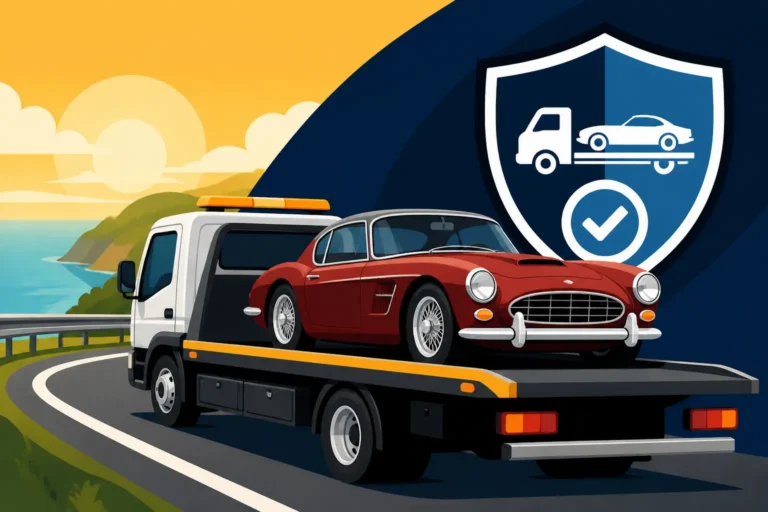
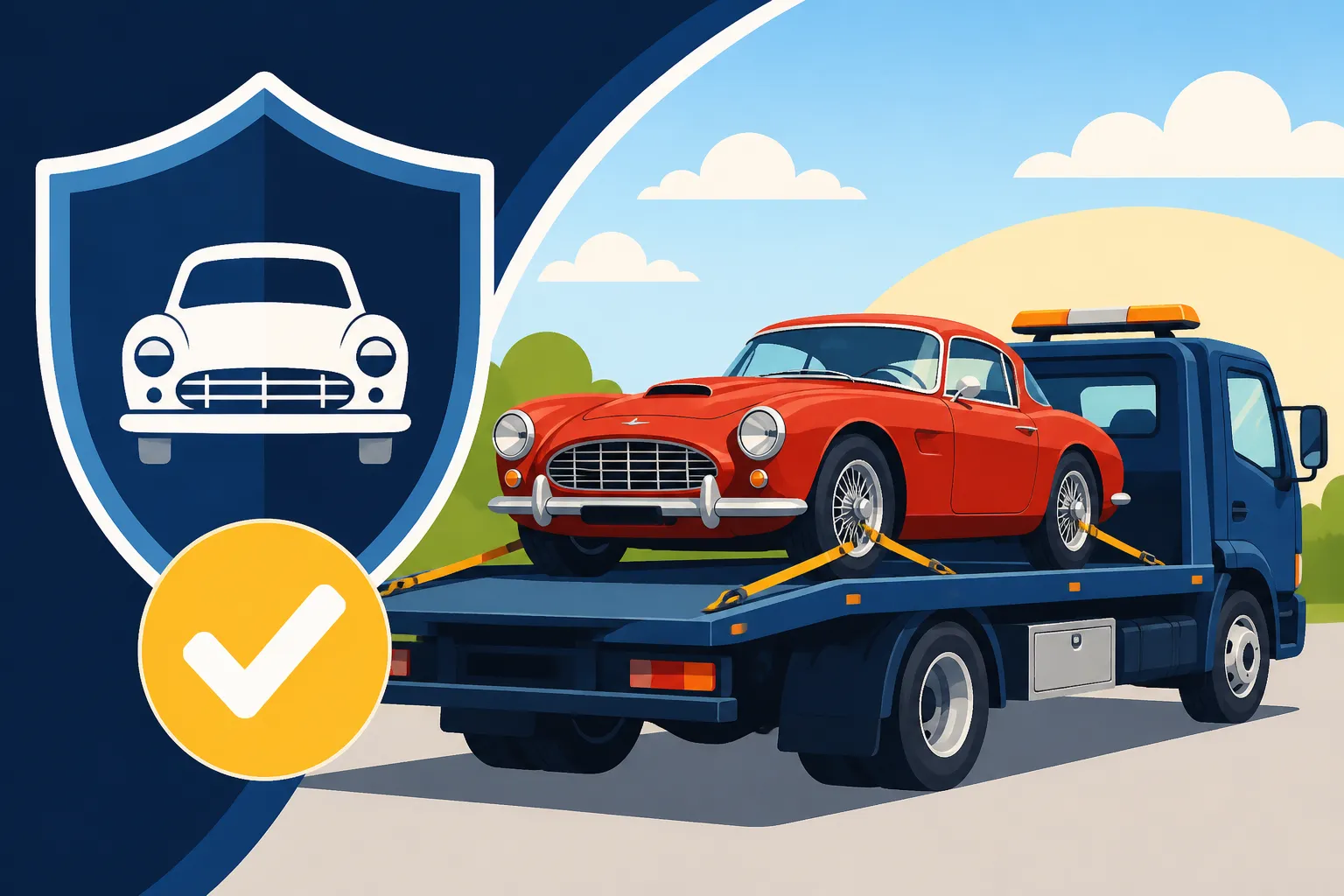
Flat-bed towing involves a specialized truck with a long, flat platform (the "bed") that can be hydraulically lowered and tilted to the ground. Your classic car is then carefully driven or winched onto this platform. Once loaded, the bed is raised back into a horizontal position, completely lifting all four wheels of your vehicle off the ground. The car is then securely strapped down at multiple points, usually around the tires or suspension components, ensuring it doesn't shift during transit.
This process eliminates all the risks associated with dragging a vehicle or leaving any wheels on the ground. Your classic sits stationary and safe, much like it would in your garage, throughout the entire journey to the repair shop or back home. It's a gentle, secure, and dignified way to transport a vehicle that deserves nothing less.
Preventing Undercarriage and Mechanical Damage
The primary advantage of a flat-bed tow is that it completely removes the vehicle from any contact with the road, aside from when it's being driven onto the bed. This means no worn-out tires are rotating unnecessarily, no delicate drivetrain components are grinding without lubrication, and absolutely no part of the undercarriage is at risk of scraping or impact with potholes, speed bumps, or uneven roads.
For a classic car, where exhaust systems, oil pans, transmission housings, and suspension linkages can be particularly vulnerable due to age, lower ground clearance, or unique designs, this full lift is indispensable. It protects these vital mechanical components from any external stress or damage during transit, ensuring that a roadside breakdown doesn't escalate into a costly repair of new, tow-induced problems. This protection is a core element of comprehensive classic car insurance coverage.
Protecting Paint and Bodywork
Beyond mechanical integrity, the aesthetic condition of a classic car is often a significant portion of its value. Scratches, dents, or paint chips caused during a tow can be devastating, especially if the vehicle has a show-quality finish or rare, original paint. Flat-bed towing inherently minimizes this risk. Because the car is driven or winched onto a flat, stable surface and secured via its tires or robust frame points, there's no need for hooks, chains, or slings to come into contact with painted surfaces, chrome trim, or body panels.
The careful strapping typically uses soft-tie straps that go around the tires or through the wheels, distributing pressure evenly and avoiding any direct contact with the body. This meticulous approach ensures that your classic arrives at its destination in the same pristine condition it was in when it broke down, safeguarding its irreplaceable finish and preserving its value. This level of protection is a crucial aspect when looking at what does classic car insurance cover.
Integrating Flat-Bed Towing into Your Classic Car Insurance Policy
Understanding why flat-bed towing is essential is only half the battle; the other half is ensuring your insurance policy actually provides it when you need it most. It's a common classic car insurance mistake to assume all roadside assistance is created equal.
Standard Roadside Assistance vs. Specialty Towing
Most standard auto insurance policies offer some form of roadside assistance. However, these services are typically designed for modern daily drivers. They might dispatch the closest available tow truck, which could very well be a wheel-lift or hook-and-chain operator. For your classic, this is like calling a plumber to fix your vintage pocket watch – they might mean well, but they lack the specialized tools and expertise.
Specialty classic car insurance policies, on the other hand, understand the unique needs of these vehicles. Companies like Hagerty or Grundy often include or offer enhanced roadside assistance that specifically guarantees flat-bed towing. They've built networks of towing providers who are equipped with the right gear and, crucially, understand how to handle collectible cars with the care they require. Without this specific provision, you might find yourself arguing with a generic tow truck driver about the best way to move your irreplaceable classic, a situation no one wants to be in during a stressful breakdown. You can explore how roadside assistance coverage for classic cars explained helps in such situations.
Specific Policy Endorsements and Providers
When you're shopping for classic car insurance, always inquire specifically about their towing and roadside assistance provisions. Don't just ask if it's "included"; ask for details. Does it guarantee flat-bed towing? What are the mileage limits for the tow? Are there any exclusions for certain vehicle types or conditions? Many specialty insurers automatically include flat-bed towing within a certain radius, and you can often extend this coverage for an additional, usually modest, premium.
For example, a provider like Hagerty is well-known for offering comprehensive roadside assistance that includes guaranteed flat-bed towing for classic and collector vehicles, often with a generous towing radius. Other insurers like American Collectors Insurance and J.C. Taylor also have similar programs. When getting a classic car insurance quote, make sure this specific need is addressed. This often comes as an endorsement or an integrated part of their specialized roadside assistance package. It’s worth the small extra cost to have that peace of mind.
Understanding Coverage Limits and Exclusions
Even with specialty classic car insurance, it’s vital to read the fine print regarding towing. There might be specific mileage limits for the tow, beyond which you'd be responsible for additional costs. For instance, a policy might cover a tow up to 100 miles, but if your breakdown happens 150 miles from your preferred shop, you'd pay the difference. Some policies might also have exclusions for off-road incidents or if the vehicle is already in a non-operable state due to a pre-existing condition not covered by the policy.
Always clarify what your towing coverage entails:
- Distance Limits: How far will they tow your vehicle?
- Destination: Can it be towed to your home, a specific repair shop, or just the nearest qualified facility?
- Additional Services: Does it include winching if your car is stuck, or lockout services?
- Cost: Is the service completely covered, or is there a deductible or out-of-pocket expense?
By understanding these nuances, you can avoid surprises and ensure that when the unforeseen happens, your cherished classic is handled exactly as it should be. This knowledge also helps you understand specific towing coverage for classic cars explained.
Practical Considerations and Best Practices for Classic Car Owners
Beyond having the right insurance, being prepared and knowing what to do in a breakdown situation can make all the difference for your classic.
Preparing Your Classic for a Tow
Even with a flat-bed on the way, there are a few things you can do to ensure a smooth and safe towing experience for your classic:
- Be Accessible: Pull over to a safe, well-lit location if possible. If you're on a busy road, ensure your hazard lights are on and you're out of harm's way.
- Clear the Way: Remove any loose items from the interior and trunk that might shift or be damaged during the loading process. If you have custom air dams or low-hanging exhaust, make sure the tow operator is aware.
- Provide Information: When the tow truck arrives, clearly communicate any specific quirks of your car – where the best tie-down points are, if it has a manual transmission that can be put in neutral, or any other unique handling requirements. Many classic cars have specific jacking points or frame rails that should be used.
- Keep Keys Handy: Ensure the keys are available for the tow operator to unlock the steering wheel or put the car in neutral if needed.
Having these details ready not only helps the tow operator but also demonstrates your care for the vehicle, often encouraging an even more cautious approach.
Choosing a Reputable Towing Service
Even if your insurance guarantees a flat-bed, you might occasionally find yourself in a situation where you need to arrange a tow independently, perhaps if you're outside your coverage area or dealing with a non-emergency move. In these cases, it's absolutely critical to choose a reputable towing service that specializes in, or at least has extensive experience with, classic and luxury vehicles.
Don't just call the first number you find. Ask specific questions:
- Do they have flat-bed trucks available?
- Are their drivers trained in handling low-clearance or specialized vehicles?
- What type of tie-down equipment do they use (e.g., soft straps over wheel nets)?
- Are they insured to cover potential damage to high-value vehicles during a tow?
Consider looking for towing companies affiliated with local classic car clubs or specialized repair shops. They often have a curated list of trusted haulers. Spending a little extra time finding the right service provider can prevent headaches and potential damage down the road. This also ties into how to choose classic car insurance, as a good policy should connect you with reputable services.
Documenting the Process
In the unfortunate event of a breakdown and subsequent tow, documentation is your best friend. Before your car is loaded onto the flat-bed, take detailed photos or videos of its current condition, especially any existing damage, and certainly the areas where the tow truck will connect. This provides a clear timestamp of its state before the tow.
Once the car is on the flat-bed, take more photos of how it’s secured. Note the tie-down points and ensure nothing looks amiss. Communicate clearly with the tow truck operator, and if you have any concerns about how they are handling your vehicle, speak up immediately and politely. In the rare instance that damage occurs during the tow, having this visual evidence can be invaluable for filing a claim with your insurance provider or the towing company’s insurance. It’s a simple step that provides an extra layer of protection for your investment.
Comparison of Towing Methods for Classic Cars
Here’s a quick overview contrasting traditional towing with the flat-bed method, highlighting why the latter is the preferred choice for classic car owners.
| Feature | Traditional Towing (Wheel-lift/Hook) | Flat-Bed Towing (Rollback) |
|---|---|---|
| Vehicle Contact | 2 wheels on ground (wheel-lift), or chassis contact (hook) | All 4 wheels fully off the ground |
| Risk to Drivetrain | High (especially for older automatics or RWD if drive wheels roll) | Minimal (no wheels turning, no lubrication issues) |
| Risk to Undercarriage | Moderate to High (scraping on ramps, potholes, speed bumps) | Minimal (vehicle lifted clear of obstacles) |
| Risk to Body/Paint | Moderate (contact with slings, yokes, potential scraping) | Minimal (secured by wheels with soft straps, no body contact) |
| Suitability for Low-Clearance Cars | Poor (high risk of scraping front/rear valances) | Excellent (gentle ramp angle, vehicle sits level on bed) |
| Stress on Suspension | Moderate (uneven weight distribution, twisting forces) | Minimal (vehicle rests evenly on its own suspension) |
| Cost | Generally lower | Generally higher (but often included/subsidized by specialty insurance) |
| Care Level | Standard (designed for common vehicles) | Specialized (designed for delicate/valuable vehicles) |
Understanding these differences reinforces why classic car insurance vs regular insurance is so vital. Your cherished possession deserves the best protection available.
Disclaimer
The information provided in this guide is for general informational purposes only and does not constitute professional advice. While we strive to provide accurate and up-to-date information, classic car insurance policies and towing practices can vary. Always consult with a qualified insurance professional and your chosen towing service to understand the specific terms, conditions, and coverage applicable to your vehicle and situation.