Requirements for a Kit Car Policy
Building a kit car is a labor of love, a passion project that culminates in a unique machine unlike anything rolling off a factory line. But once that masterpiece is complete and ready for the road, many builders hit a roadblock: securing the right insurance. Standard auto insurance policies just don't understand the unique value, construction, and usage of these custom vehicles, leaving owners frustrated and potentially underinsured. This comprehensive guide will walk you through the specific requirements for a kit car insurance policy, helping you protect your pride and joy appropriately.
Understanding What a Kit Car Is and Why It's Different
Before diving into the nitty-gritty of insurance, it's crucial to understand what a "kit car" truly entails and how it differs from other custom vehicles. This distinction is vital because insurance companies assess risk and value based on these classifications. Without a clear understanding, you might end up with a policy that doesn't adequately protect your investment.
Defining "Kit Car" vs. "Replica" vs. "Custom Build"
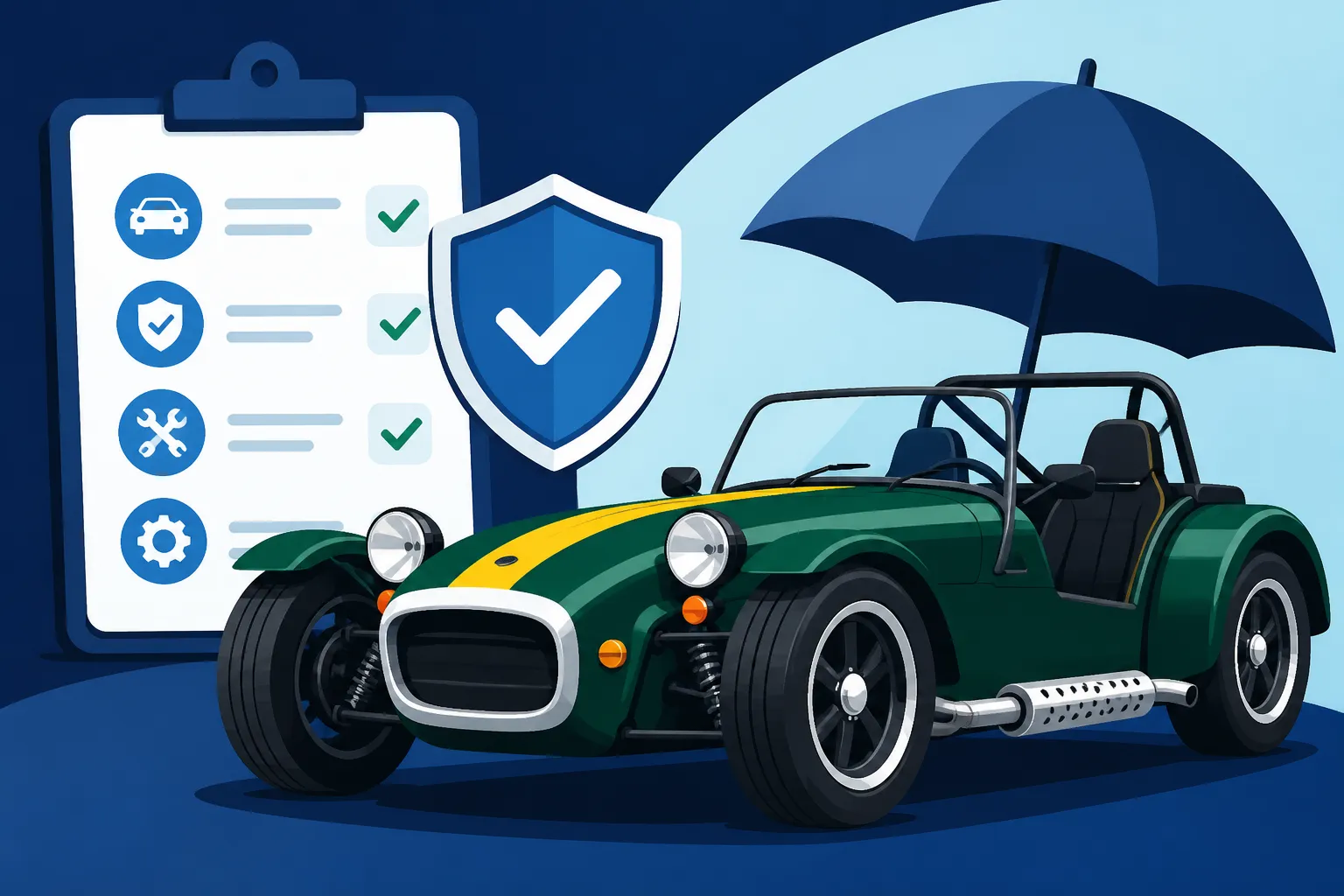
The world of custom vehicles is a fascinating one, but the terminology can often be confusing, even for seasoned enthusiasts. A kit car is essentially a vehicle assembled by an individual from a collection of parts provided by a manufacturer, often including a frame, body panels, and instructions. Think of companies like Factory Five Racing, which provides kits to build iconic replicas like the Shelby Cobra or Daytona Coupe, or Caterham, known for its Lotus Seven-inspired kits. These aren't just parts; they’re designed to come together to form a specific type of vehicle.
A replica car, while often built from a kit, specifically aims to recreate an existing production vehicle, often a rare or classic one. So, a Factory Five Cobra is a kit car and a replica. However, not all kit cars are replicas; some might be unique designs. The key here is that a replica usually implies a specific original vehicle it's mimicking.
A custom build or street rod, on the other hand, is a much broader category. This could be anything from a heavily modified production car to a completely scratch-built vehicle that uses a mix of components from various sources, sometimes fabricating significant portions from raw materials. The defining characteristic is often the high degree of personalization and departure from any original factory specification. For insurance purposes, understanding these distinctions helps the insurer properly categorize your vehicle and assess its value and risk.
Why Standard Auto Insurance Won't Cut It
The problem with trying to insure a kit car with a regular auto insurance policy is fundamental: standard policies are designed for mass-produced vehicles with a factory VIN and a readily ascertainable "actual cash value" (ACV). ACV means what a similar vehicle would sell for on the open market, accounting for depreciation.
For a kit car, this approach is disastrous. A substantial portion of your kit car's value isn't just the cost of the parts, but the hundreds, if not thousands, of hours of skilled labor you've invested. It's the painstaking effort to achieve perfect panel gaps, the custom paint job, the carefully selected engine and drivetrain components. A standard policy's ACV would likely only cover the depreciated value of the parts, completely ignoring your labor and the custom nature of the vehicle. This means if your beautiful, custom-built Cobra replica was totaled, you'd receive a payout that's a fraction of what it would cost to replace it, or even to buy a similar completed kit car. This is why specialized classic car insurance, which understands the unique characteristics of collector and custom vehicles, is absolutely essential. You'll find that the coverage types offered by specialty insurers, particularly regarding valuation, make all the difference. To learn more about this crucial difference, check out our guide on Classic Car Insurance vs Regular Insurance: What's Required.
Core Eligibility Requirements for Kit Car Insurance
Just like any other unique collectible, kit cars have a specific set of criteria that specialty insurers look for. These requirements aren't there to make your life harder; they're in place to ensure the vehicle is properly cared for, safely operated, and genuinely fits the "collector" mold, which often translates to lower risk for the insurer.
The "Build Quality" and Inspection Factor
When you're building a car from a kit, the quality of the assembly is paramount, not just for safety but for its insurable value. Specialty insurers are going to want assurances that your kit car isn't just a collection of bolted-together parts, but a well-engineered, safely constructed vehicle. This often means your build quality will be a significant factor in getting a policy.
Many specialty insurers will require photographs of your completed build, both exterior and interior, and sometimes even "under construction" photos if you're seeking coverage during the build phase. They want to see the fit and finish, the quality of the wiring, the integrity of the chassis, and the overall craftsmanship. In some cases, especially for higher-value or more complex builds, an independent appraisal or even a physical inspection might be requested. An appraiser, often a specialist in custom or classic cars, can verify the quality of the build, document the components used, and provide an expert opinion on its market value, all of which directly supports the "agreed value" discussion. You can learn more about this process in our article on Appraisal Requirements for Classic Car Insurance.
Ownership, Storage, and Usage Restrictions
Kit cars, like many other collector vehicles, typically come with certain expectations regarding their ownership, storage, and how they're used. These restrictions are often the bedrock of why classic car insurance is generally more affordable than standard auto insurance.
Firstly, storage is a major consideration. Insurers usually require that your kit car be stored in a secure, enclosed, and locked garage when not in use. This isn't just about preventing theft; it's also about protecting the vehicle from environmental damage, vandalism, and accidental bumps. A carport or street parking typically won't cut it for a specialty policy, as it indicates a higher risk of damage or theft. Our guide on Garage Storage Requirement for Classic Cars delves deeper into these specific requirements.
Secondly, usage is key. Kit cars are generally not meant to be daily drivers. Specialty policies are built around the understanding that these vehicles are driven for pleasure, car shows, club events, and occasional cruises, not for commuting or running errands. This limited usage significantly reduces the mileage and exposure to accidents, which is why the premiums are often lower. Most policies will have annual mileage limits, often ranging from 2,500 to 5,000 miles per year. Exceeding these limits could void your policy or lead to higher rates. Understanding the Pleasure-Use Requirement Explained is crucial, as is knowing about Classic Car Insurance Mileage Limits by State. While some insurers might offer policies that allow slightly more flexibility for "modern classics" or "youngtimers," for a traditional kit car, limited pleasure use is almost universally expected.
Finally, the insurer will also look at your driving record and other vehicles in your household. They generally prefer experienced drivers with clean records, and they usually require that you have a separate primary vehicle for your daily transportation needs. This further reinforces the "pleasure use" aspect of the kit car.
Essential Coverage Types for Kit Cars
When insuring a kit car, certain coverage types are not just recommended, they are absolutely essential. Standard auto insurance often falls short, but specialty classic car insurers like Hagerty offer policies tailored to protect the true value of your unique build.
Agreed Value: The Must-Have for Kit Cars
This cannot be stressed enough: for a kit car, Agreed Value coverage is non-negotiable. Unlike Actual Cash Value (ACV) or Stated Value policies, an Agreed Value policy guarantees that if your kit car is declared a total loss, the insurance company will pay you a pre-determined amount that you and the insurer agreed upon when the policy was issued. This agreed amount should reflect the true cost of your kit, the components, and your significant investment in labor.
Imagine spending years and tens of thousands of dollars meticulously building a Factory Five Shelby Cobra replica, only for it to be totaled in an unfortunate incident. With an ACV policy, the insurer would look up what a 1965 Shelby Cobra (the car it's replicating) would be worth, or more likely, what a generic "special construction" vehicle might fetch, and then depreciate it. You'd be left with pennies on the dollar compared to your actual investment. With an Agreed Value policy, if you and the insurer agreed on a value of, say, $75,000, that's exactly what you'd receive, allowing you to potentially replace or rebuild your dream car.
To establish this agreed value, you'll typically need to provide detailed documentation, including:
- Receipts for the kit itself and all major components (engine, transmission, suspension, brakes, interior, paint, etc.).
- Photographs of the build process and the finished vehicle from multiple angles.
- Potentially a professional appraisal from a qualified classic or custom car appraiser. This helps to objectively verify the quality of the build and the value of your custom features. Our article on How Agreed Value Is Determined provides an in-depth look at this process.
Without Agreed Value coverage, your kit car, which represents so much more than just a depreciating asset, is dangerously unprotected. It's truly the cornerstone of appropriate kit car insurance. For a deeper understanding of the differences, be sure to read Agreed Value vs Stated Value vs Actual Cash Value.
Coverage for Parts, Tools, and During Build
Many kit cars aren't bought fully assembled; they are built over time, often years, in a garage. This construction phase presents unique insurance needs. What happens if a fire breaks out in your garage during the build? Or if a crucial, expensive engine component is stolen before installation?
This is where Vehicle Under Construction Coverage or similar endorsements become invaluable. Some specialty insurers, like Hagerty, understand that the value of a kit car accrues as it's being built. This coverage can protect your components and partially assembled vehicle against damage, theft, or fire while it's still a project. The value of this coverage typically increases as you add more components and complete more work, reflecting your growing investment. This means you can have peace of mind even before the car is fully driveable and titled. You can find more details on insuring a project car in our guide on Requirements to Insure a Car Under Restoration.
Beyond the car itself, serious builders often accumulate a significant collection of spare parts, tools, and automobilia. Consider the specialized tools for fabricating custom parts, the rare performance engine you've had professionally rebuilt, or the NOS (New Old Stock) trim pieces you painstakingly sourced. If these items are stolen or damaged, replacing them can be incredibly expensive and time-consuming. Many specialty kit car policies offer specific endorsements for:
- Spare Parts Coverage: This protects your uninstalled parts, sometimes even those stored off-site. It's common for collectors to have a stash of rare or performance-enhancing components, and this coverage ensures they're protected. Our Spare Parts Coverage Explained article offers more information.
- Tools and Equipment Coverage: This can extend coverage to specialized tools and equipment used for the maintenance or restoration of your kit car. While your homeowner's policy might cover some tools, it often has limits that fall far short for a serious enthusiast's collection.
These add-ons ensure that your entire investment, both in the vehicle and the supporting elements, is adequately protected throughout its lifecycle, from build to show and beyond.
Navigating the Application Process for Kit Car Policies
Insuring a kit car isn't like buying a standard auto policy where you punch in your VIN and get a quote in minutes. It requires a bit more legwork and documentation, but the payoff is a policy that truly protects your unique investment.
Documentation You'll Need
When applying for a kit car policy, be prepared to provide a thorough dossier of your vehicle. The more information you can give your prospective insurer, the better they can understand and accurately value your build. Here’s a checklist of common documentation requirements:
- Proof of Ownership and Registration: You'll need your state-issued title and registration. This can sometimes be a complex step for kit cars, as they are often titled as "assembled vehicles" or "special construction" cars, rather than by a manufacturer VIN. States have varying rules for how to register a car built from a kit, so understanding your local DMV's process is crucial even before insurance.
- Detailed Build Sheet/Component List: A comprehensive list of all major components used in the build, including the kit manufacturer, engine type, transmission, differential, suspension components, brake system, and any significant aftermarket or custom parts. Include model numbers and approximate purchase dates.
- Original Purchase Receipts: Retain receipts for the kit itself, engine, transmission, and other high-value components. These help substantiate the cost of your investment.
- Photographs (Pre- and Post-Build): A series of high-quality photographs is essential. This includes:
- Photos of the kit components upon arrival (if applicable).
- Pictures documenting key stages of the build process.
- Detailed photos of the completed vehicle from all angles (front, rear, sides, interior, engine bay, trunk). Close-ups of specific custom features, paint, and upholstery are also very helpful.
- Professional Appraisal (Recommended): While not always mandatory, a professional appraisal from a qualified classic or custom car appraiser can significantly strengthen your case for an Agreed Value policy. An appraiser provides an objective assessment of your car's condition, build quality, and market value, taking into account custom work and labor. This is especially useful for highly customized or high-value kit cars. If you're looking for guidance on getting one, our article on How to Get a Classic Car Appraisal is a great resource.
- Driver Information: Details about all household drivers, including their driving records. Remember, most specialty insurers prefer drivers with clean records and require a separate daily driver.
Gathering this information upfront will streamline the application process and help you secure the best possible coverage for your kit car.
Choosing the Right Specialty Insurer
You wouldn't take your Ferrari to a general mechanic for an engine rebuild, and similarly, you shouldn't trust your kit car insurance to a generic auto insurer. The unique nature of kit cars demands a specialty insurer who understands their distinct value and the specific risks involved.
Companies like Hagerty, Grundy, American Collectors Insurance, and American Modern are leaders in the collector car insurance market. These insurers specialize in unique vehicles, from vintage classics to modern exotics, and critically, they have deep experience with kit cars, replicas, and custom builds.
Here’s why choosing a specialty insurer is paramount:
- Understanding of Agreed Value: Specialty insurers are built around the concept of Agreed Value, which, as discussed, is critical for kit cars. They have the expertise to work with you and your documentation to establish a fair and accurate agreed value for your vehicle.
- Tailored Coverage Options: They offer specific endorsements and coverage options that standard insurers don't, such as "Vehicle Under Construction" coverage, spare parts coverage, and even coverage for automobilia. For more details on these specialized protections, see Classic Car Insurance Add-Ons and Endorsements.
- Collector-Friendly Usage Rules: Their policies are designed for limited, pleasure use, aligning perfectly with how most kit cars are driven. This often results in more favorable rates.
- Expert Claims Handling: In the unfortunate event of a claim, specialty insurers have adjusters who understand the value of custom components and labor, ensuring a fairer resolution than an adjuster accustomed to valuing stock vehicles. For an example, you might look into a Hagerty Classic Car Insurance Review to see how they handle such scenarios.
When you're ready to get quotes, contacting a few of these top-tier specialty providers is your best bet. Be honest and thorough with your information, and don't hesitate to ask questions about how they specifically handle kit cars. Don't be shy about exploring options from different companies, as offerings can vary. Check out our detailed guide on Best Specialty Classic Car Insurers for more options and comparisons.
Standard Auto Insurance vs. Specialty Kit Car Insurance
To highlight why specialty insurance is so vital for kit cars, let's look at a direct comparison with typical standard auto policies.
| Feature | Standard Auto Insurance (e.g., for a Honda Civic) | Specialty Kit Car Insurance (e.g., Hagerty, Grundy) |
|---|---|---|
| Valuation | Actual Cash Value (ACV) – depreciated market value. | Agreed Value – fixed amount agreed upon at policy start. |
| Eligibility | Mass-produced, factory VIN, driven daily. | Unique vehicle, often custom-built, limited pleasure use, secure storage. |
| Coverage Scope | Basic liability, collision, comprehensive. Focus on replacing with similar production car. | Comprehensive, collision, liability, plus specialized endorsements. Focus on true cost to replace custom build. |
| Cost Assessment | Based on VIN, model year, driver record, location, mileage (assumed daily). | Based on agreed value, limited mileage, secure storage, driver record, build quality. |
| Usage Restrictions | Generally none, assumed daily driving. | Strict mileage limits (e.g., 2,500-5,000 miles/year), pleasure use only. |
| Storage Requirements | None specified beyond basic safety. | Enclosed, locked garage or secure facility typically required. |
| Build/Parts Coverage | Almost never covers parts not installed or vehicle under construction. | Often includes "Vehicle Under Construction" and "Spare Parts" coverage options. |
| Appraisal/Photos | Not usually required for quoting or policy issuance. | Often required to establish agreed value and assess build quality. |
| Claims Handling | Adjusters trained on production vehicle values and repair costs. | Adjusters with expertise in custom and classic vehicle valuation and restoration. |
This table clearly illustrates why a specialty policy is not just a preference, but a necessity for truly protecting your kit car.
Specific Challenges and Considerations
While securing a kit car policy is certainly achievable with the right approach, there are a few specific challenges and considerations that often arise. Being prepared for these can make the process smoother.
Registration and Titling Nuances
One of the biggest hurdles for many kit car builders is the initial registration and titling process. Since a kit car doesn't come off an assembly line with a standard manufacturer VIN, states have varying and sometimes complex procedures for assigning a legal identity to your vehicle.
Most states will classify a kit car as a "special construction," "assembled vehicle," or "street rod." The process typically involves:
- Obtaining a VIN: The state Department of Motor Vehicles (DMV) or equivalent agency will likely assign a state-issued VIN after reviewing your documentation (receipts for major components, proof of kit purchase, photos) and sometimes conducting an inspection. This inspection verifies that the vehicle is safely built and meets basic roadworthiness standards.
- Sales Tax: You'll generally pay sales tax on the total cost of the components, not just the kit itself.
- Title Application: Once a VIN is assigned and the vehicle passes inspection, you can apply for a title, which will usually reflect its "special construction" status.
- Emissions and Safety Inspections: Depending on your state and the age of the components used (some states base requirements on the engine's model year), you may be subject to emissions testing or more rigorous safety inspections than a typical classic car. For example, in many states, classic cars over a certain age are exempt from emissions, but a new kit car might not qualify for this exemption immediately.
Navigating these state-specific requirements can be a bureaucratic maze. It’s highly recommended to contact your local DMV early in your build process to understand their specific guidelines. Some states are far more kit-car-friendly than others. For additional context on registering unique builds, consider reading our post on How to Register a Project Car.
Modified and Performance Enhancements
Kit cars are, by their very nature, modified. Builders often choose specific engines, transmissions, and suspension setups that go beyond the basic kit offerings. This level of customization is what makes these cars so special, but it also has implications for insurance.
When you apply for a policy, be completely transparent about all modifications and performance enhancements. This includes:
- Engine Swaps: If you put a modern V8 in your classic replica, the insurer needs to know.
- Forced Induction: Turbochargers or superchargers significantly increase horsepower and, potentially, risk.
- Suspension and Brake Upgrades: While these enhance safety and handling, they also contribute to the vehicle's value.
- Custom Interiors and Paint: These aesthetic enhancements are a major part of your investment.
Failing to disclose modifications can lead to serious issues down the line. If you have a claim and the insurer discovers undisclosed modifications that significantly alter the vehicle's value or risk profile, they could deny your claim or reduce the payout.
Specialty insurers are generally well-versed in insuring modified vehicles and are typically happy to cover performance enhancements, provided they are professionally installed and contribute to a safe, high-quality build. In fact, many actively encourage you to document these changes to ensure your Agreed Value accurately reflects your investment. It's a good idea to keep a running log of all modifications, including receipts and photos, even after the initial policy is in place. If you make significant changes, contact your insurer to update your policy. Our guide on Modified Car Insurance Eligibility offers broader insight into how these changes affect insurance.
Disclaimer
Please remember that the information provided in this article is for general informational purposes only and does not constitute professional insurance advice. Insurance requirements and policies can vary significantly by state, insurer, and the specific characteristics of your kit car. Always consult directly with a qualified insurance professional or specialty classic car insurance provider to discuss your individual needs and obtain accurate quotes and policy details.