Spare Parts Coverage Explained
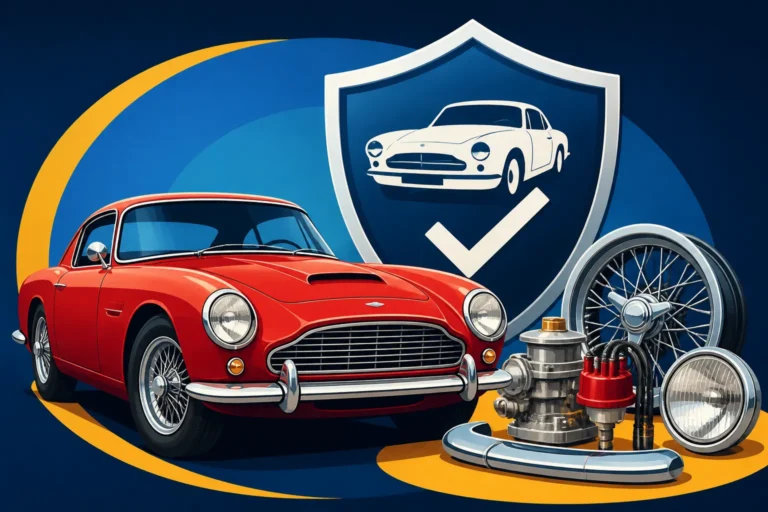
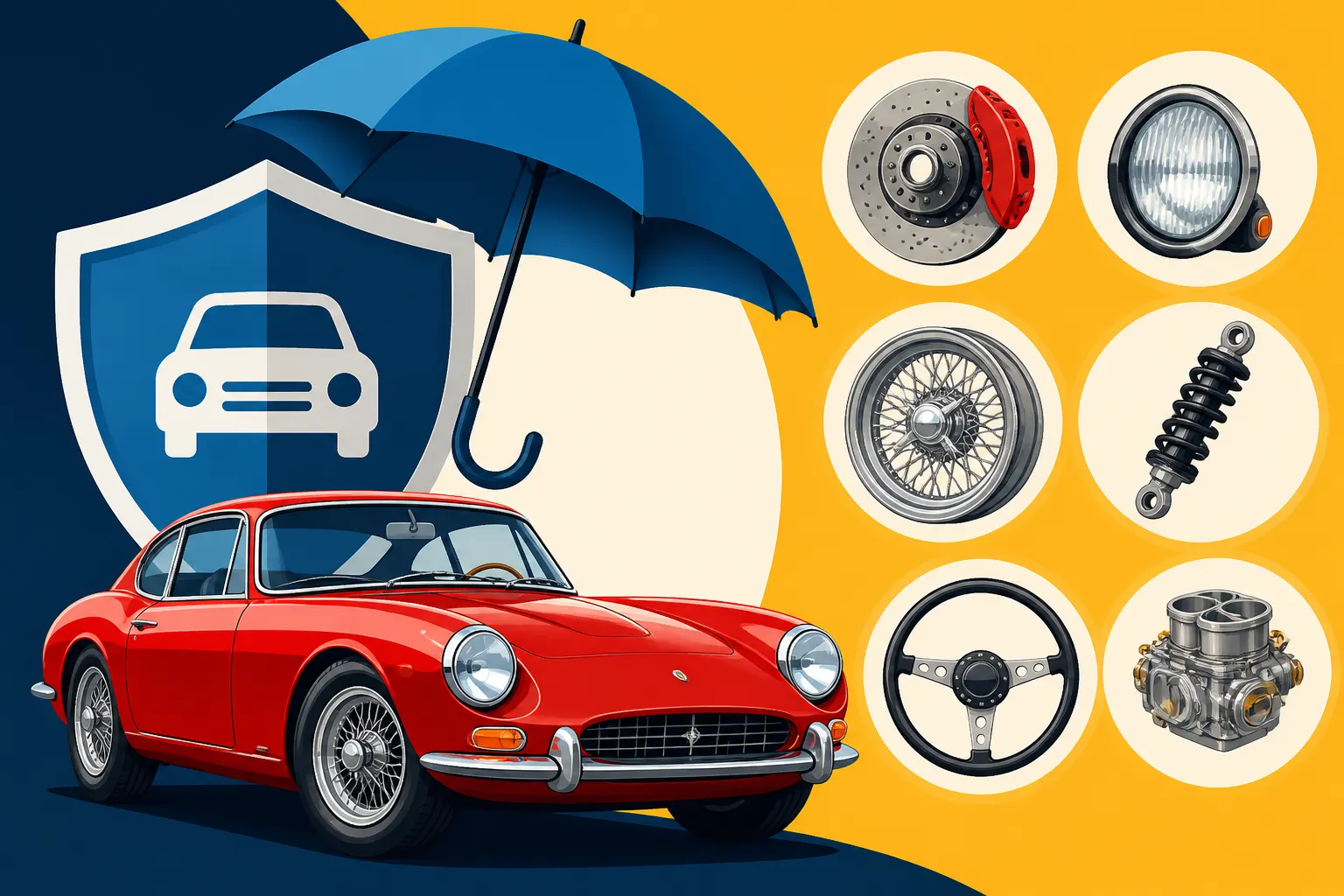
For any classic car enthusiast, the pride in their prized possession often extends far beyond the polished chrome and roaring engine; it includes the trove of spare parts, original components, and even those elusive New Old Stock (NOS) pieces lovingly collected over years. These aren't just random bits of metal and rubber; they're vital investments, often representing a significant financial and emotional value, yet many owners don't realize these irreplaceable items aren't automatically protected by their classic car's main insurance policy. This comprehensive guide will demystify spare parts coverage, explaining why it's so critical and how you can ensure your collection of automotive treasures is properly protected.
What Exactly Is Classic Car Spare Parts Coverage?
Let's cut right to it: classic car spare parts coverage is a specific type of insurance protection designed to cover those valuable components, tools, and automobilia that aren't currently installed on your insured classic vehicle. Think of it as a specialized extension of your classic car policy, acknowledging that the value of a collector vehicle often comes hand-in-hand with its associated parts and unique tools. Unlike standard auto insurance, which primarily focuses on the vehicle itself and its factory-installed components, specialty spare parts coverage recognizes the unique nature and often significant worth of a collector's inventory.
Beyond the Car's Value: Why Parts Matter
Imagine you've got a meticulously restored 1969 Chevrolet Camaro, insured with an agreed value that reflects its pristine condition. But in your garage, tucked away safely, you also have an original, numbers-matching Holley carburetor, a set of factory Rally wheels, and a NOS fender you bought years ago, just in case. If a fire rips through your garage, or a thief makes off with your parts collection, your standard agreed value policy on the Camaro itself likely won't cover these separate, uninstalled components. This is precisely where the frustration sets in for many collectors, realizing too late that their valuable spare parts are entirely exposed.
These parts aren't just monetary assets; they often hold sentimental value, representing countless hours of searching, negotiation, and anticipation. They might be crucial for a future restoration, or perhaps they're original pieces that significantly boost the authenticity and value of your already-insured classic. Losing them without proper coverage can be a devastating blow, not just to your wallet but to the very essence of your collecting passion. Specialty insurance providers, like Hagerty, understand this deep connection and offer solutions to bridge this crucial gap in protection.
Distinguishing It from Your Main Policy
It’s easy to assume that if your classic car is insured, everything in your garage related to it is too. Unfortunately, that's rarely the case. Your main classic car policy typically covers the vehicle as a complete unit, up to its "Agreed Value Coverage Explained" or "Stated Value Coverage for Classic Cars Explained." This agreed value is what the insurance company will pay you if your car is a total loss, but it's based on the vehicle as it exists on the policy. Spare parts coverage, on the other hand, is usually an endorsement or a separate line item on your policy, with its own coverage limits and sometimes its own deductible.
This distinction is vital. Without dedicated spare parts coverage, those precious NOS turn signals for your '67 Mustang, the factory manifold for your '55 Bel Air, or even a specialized tool kit for a vintage Ferrari might be considered personal property under your homeowner's policy (if at all), subject to much lower limits, higher deductibles, and typically only actual cash value payouts, which often fall woefully short of their true collectible worth. Understanding this difference is the first step in ensuring comprehensive protection for your entire classic car hobby.
Why Standard Auto Policies Fall Short for Parts
It's a common misconception that your everyday auto insurance, or even your homeowner's policy, will adequately protect your collection of classic car spare parts. Most collectors learn the hard way that these standard policies are simply not designed to understand or value the unique nature of collectible automotive components. The rules and valuation methods employed by mainstream insurers often leave enthusiasts severely underinsured when it comes to their parts inventory.
Actual Cash Value Trap
The biggest pitfall with standard insurance for classic car parts is the "Actual Cash Value" (ACV) payout. Most personal property coverage on a homeowner's policy or components covered by a standard auto policy are subject to ACV. This means that in the event of a loss, the insurer will pay you the replacement cost of the item, minus depreciation. For a classic car part, this is a disaster waiting to happen. An original 1960s carburetor, while rare and valuable to a collector, might be considered a depreciated "old car part" by a standard insurer, with its value significantly reduced.
Imagine you spent years finding a correct, original alternator for your 1972 Porsche 911 T, paying a premium because of its rarity and originality. A standard policy might look up the cost of a generic, modern reproduction alternator, apply depreciation, and offer you a fraction of what you paid or what it would cost to find another original. This gap between ACV and the true collector value is precisely why standard policies fail and why specialized "Agreed Value vs Stated Value vs Actual Cash Value" coverage is paramount for classic parts.
Lack of Specificity for Collectible Components
Mainstream insurance policies are built for mass-produced, easily replaceable items. They have no mechanism to account for the rarity, historical significance, or market demand that drives the value of classic car parts. A NOS fender for a limited-production car from the 1950s isn't just a piece of sheet metal; it's a critical component that could define the originality and value of a high-end restoration. A standard policy simply sees a fender.
Furthermore, these policies often have low sub-limits for "specialty" items or items stored in a detached garage, making them completely inadequate for a significant collection of parts. You might have $2,000 in coverage for personal property stored outside your main dwelling, which is quickly exhausted by even a few rare components. Specialty classic car insurers, on the other hand, build their policies from the ground up to recognize and insure the unique attributes of these items, much like they do for the classic cars themselves. They understand that a matching-numbers engine block is worth far more than its weight in scrap metal.
What Does Classic Car Spare Parts Coverage Typically Include?
When you delve into the world of specialty classic car insurance, you'll find that spare parts coverage is far more encompassing than any standard policy. These plans are crafted by people who genuinely understand the collector's mindset and the varied nature of their automotive treasures. What's covered can be quite broad, extending protection to items that are essential for maintenance, restoration, or simply future projects.
New Old Stock NOS and OEM Parts
This is often the bread and butter of spare parts coverage. "New Old Stock" (NOS) parts are original components that were manufactured by the original equipment manufacturer (OEM) but never sold or installed. They're still in their original packaging, often decades old, and are highly sought after by collectors for their authenticity and quality. These parts can command significant prices, far exceeding their original retail cost, and are critical for concourse-level restorations.
Specialty policies understand this premium. Whether it's a NOS carburetor for a vintage Corvette, a factory-sealed headlight assembly for a muscle car, or original trim pieces for a pre-war classic, these items are covered for their agreed or appraised value, not just their depreciated original price. This is crucial for collectors who invest heavily in maintaining originality or bringing a car back to its factory specifications. Without this specific coverage, a rare, pristine NOS part could be valued no higher than a modern reproduction, which is a financial heartbreak for any dedicated enthusiast.
Restoration Project Components
For those undertaking a "Requirements to Insure a Car Under Restoration," the garage often becomes a veritable parts warehouse. You might have a disassembled engine on a stand, freshly painted body panels waiting for assembly, or boxes of chrome trim meticulously sorted. These components, while integral to the project, are not yet part of an assembled, functioning vehicle. This is where dedicated spare parts coverage truly shines.
It protects these components from damage during the restoration process, theft from your garage, or other unforeseen events. Imagine a stack of custom-fabricated aluminum panels for a hot rod project getting accidentally damaged, or a set of reconditioned gauges for your vintage Jaguar E-Type disappearing. This coverage steps in to protect your investment in these individual parts, ensuring that the progress and value you're building into your project aren't wiped out by a single incident. This can be especially important given the rising costs and scarcity of specialized restoration services and components.
Tools and Equipment
While not always explicitly lumped under "spare parts," many specialty classic car insurance policies offer riders or additional coverage for specialized tools and equipment used for the care and restoration of your classic vehicles. This isn't about your everyday socket set; it's about the more significant, often expensive, equipment that enables your hobby.
This might include a professional-grade hydraulic lift, a specialized welding machine, a bead blaster, or a custom engine stand. These items represent a substantial investment for serious collectors and restorers. While your homeowner's policy might cover some tools, it will likely have very low limits for high-value items, especially if they're used for a hobby that generates income or are stored in a detached structure. Specialty insurers recognize these tools as extensions of the collecting passion, offering dedicated protection that reflects their true value and replacement cost. It's always worth asking about this when discussing your "Classic Car Insurance Add-Ons and Endorsements."
Eligibility Requirements: When Your Parts Qualify
Just like your classic car needs to meet certain criteria to qualify for specialty insurance, your spare parts collection also has some hoops to jump through. Insurers want to ensure that they are protecting genuine collector's items and not just a pile of junkyard scrap. These requirements often revolve around how you store, document, and manage your parts, ensuring they are treated with the same care and respect as the vehicle itself.
Storage Conditions
One of the primary considerations for spare parts coverage is where and how these items are stored. Specialty insurers typically require that your valuable spare parts be housed in a secure, enclosed, and locked structure. This usually means a private garage, a dedicated storage facility, or a secure workshop. Parking them outside under a tarp, even if they're valuable, will almost certainly disqualify them from coverage.
The logic here is simple: these parts are often rare and expensive, making them targets for theft or susceptible to weather damage. Insurers want to see that you're taking reasonable precautions to protect your investment. So, if you've got that pristine NOS hood tucked away in a shed that's seen better days, it might be time for an upgrade before seeking coverage. Secure storage not only helps with insurance eligibility but also gives you peace of mind. For more on this, you might look into "Garage Storage Requirement for Classic Cars" or "Storage Options Specialty Insurers Accept".
Relationship to Insured Vehicle
Many spare parts policies require that the covered parts have a direct relationship to an insured classic vehicle. This means the parts are either intended for a specific classic car on your policy, are from that car but currently removed for restoration, or are general classic car parts that are period-correct and intended for a similar vehicle within your collection. Insurers want to avoid covering generic automotive parts that have no direct connection to your collector hobby.
For example, a crate engine intended for a 1965 Mustang that's also insured on the same policy would likely qualify. However, a stack of tires for your modern daily driver, or generic shop supplies, would typically not. This requirement ensures that the policy is truly serving the purpose of protecting your classic car investment, rather than broader household or personal property items. It ties the value and purpose of the parts back to the core collector passion.
Documentation Needs
Just as you'd value your classic car, proving the value of your spare parts is crucial. Insurers will often require thorough documentation to support the agreed value or coverage limits you're requesting for your parts. This can include original purchase receipts, invoices from reputable parts suppliers, appraisals, and detailed photographs.
If you claim to have a rare, original carb, be prepared to provide photos of casting numbers, date codes, and any other identifying marks that prove its authenticity and value. For a large collection, a detailed inventory spreadsheet can be incredibly helpful. This documentation not only validates your claim to the insurer but also helps you keep track of your valuable assets. Without proper records, you might find it challenging to justify a higher payout if a loss occurs. When considering how to get coverage, remember that "Appraisal Requirements for Classic Car Insurance" can extend to high-value parts too.
Determining Value and Coverage Limits
One of the most critical aspects of classic car spare parts coverage is accurately determining the value of your components and setting appropriate coverage limits. This isn't always straightforward, as the market for vintage parts can be volatile and unique. Underestimating can leave you significantly out of pocket, while overestimating can lead to unnecessary premium costs.
The Importance of Receipts and Appraisals
When it comes to proving the value of your classic car parts, documentation is your best friend. Every receipt, invoice, or bill of sale for a part purchase should be kept meticulously. These documents serve as tangible proof of what you paid, and in the world of classic parts, what you paid often reflects the market value for rare or desirable components.
For particularly high-value individual parts or an extensive collection, a professional appraisal can be invaluable. A qualified appraiser specializing in classic car parts can assess authenticity, rarity, condition, and market demand to provide an unbiased valuation. This is similar to how an appraisal works for the car itself and gives the insurer confidence in the declared value. Companies like Hagerty have extensive valuation tools that can help estimate the worth of many common classic car components, but for truly unique or rare pieces, a dedicated appraisal is often the gold standard. Learn more about "How Classic Car Appraisals Work for Insurance".
Understanding Aggregate Limits and Per-Item Limits
Spare parts coverage policies typically operate with either an aggregate limit, a per-item limit, or both. An aggregate limit is the total maximum amount the insurer will pay for all covered spare parts in a given policy period, regardless of how many individual items are lost or damaged. For example, you might have an aggregate limit of $10,000 for all your spare parts.
A per-item limit, on the other hand, specifies the maximum amount the insurer will pay for any single item within your spare parts collection. You might have an aggregate limit of $20,000, but a per-item limit of $2,500. This means if you lose a single part valued at $5,000, the policy would only pay out $2,500 for that item, even if your total aggregate limit hasn't been reached. It's crucial to understand these limits and choose them carefully to ensure your most valuable individual components are adequately protected. Always discuss with your insurer whether specific high-value parts require their own separate, declared value to ensure full coverage.
How to Get Spare Parts Coverage: Step-by-Step
Getting spare parts coverage for your classic car collection doesn't have to be a daunting task. It’s a process that largely mirrors insuring your classic vehicle itself, focusing on proper valuation and matching your needs with the right specialty provider. Taking a systematic approach will help ensure all your valuable components are adequately protected.
Reviewing Your Current Policy
Before you do anything else, grab your existing classic car insurance policy and give it a thorough read. Look specifically for any mention of "spare parts," "uninstalled components," "tools," or "automobilia." Many standard classic car policies might include a very basic, often minimal, amount of spare parts coverage as a default, but it's usually quite low (e.g., $500 or $1,000) and might not be sufficient for your collection.
You need to understand exactly what's currently covered, what the limits are, and what the exclusions might be. Is it "Agreed Value Coverage for Classic Cars Explained" for parts, or something less favorable? Does it cover theft from a detached garage? Knowing your current standing is the foundation for determining what additional coverage you need. Don't assume anything; the fine print matters, especially when dealing with unique collector items.
Discussing Options with Specialty Insurers
Once you know where you stand, it's time to reach out to specialty classic car insurance providers. These are the companies that truly understand the collector market, like Hagerty, Grundy, or American Collectors Insurance. They offer dedicated policies designed specifically for enthusiasts, and spare parts coverage is a common offering. When you "How to Get a Classic Car Insurance Quote" for your vehicle, make sure to explicitly ask about spare parts coverage as a separate component.
Be prepared to discuss the nature of your parts collection: what types of parts do you have (NOS, OEM, restoration components), their estimated value, and how they are stored. These insurers are equipped to provide quotes for this specific type of coverage, often as an endorsement to your main classic car policy or sometimes as a standalone policy if you have a significant parts collection without an active project car. They can guide you through the various options and help you tailor a policy that fits your unique needs, whether it's for a small cache of critical spares or a large, diversified inventory.
Documentation and Valuation Process
As we discussed, proving the value of your parts is paramount. When you apply for spare parts coverage, the insurer will likely ask for documentation. This is your chance to shine! Compile all your purchase receipts, invoices, and any appraisals you have for high-value items. Taking clear, detailed photographs of your parts, especially rare or unique ones, can also be incredibly helpful. Labeling and cataloging your inventory, perhaps in a simple spreadsheet with descriptions and values, will not only assist the insurance process but also help you manage your collection.
For extremely rare or high-value individual components, the insurer might recommend or even require a formal appraisal. This ensures that the "Agreed Value" for that specific part is fair and accurate for both you and the insurance company. The more organized and thoroughly documented your parts collection is, the smoother the underwriting process will be, and the more confident you can be that you're getting the right level of protection. This due diligence pays off immensely in the event of a claim.
Common Exclusions and Limitations to Watch Out For
While spare parts coverage is a fantastic safety net for your classic car components, it's not a blanket solution for everything under your roof. Like all insurance policies, it comes with specific exclusions and limitations designed to keep the coverage focused on its intended purpose. Understanding these nuances upfront can prevent frustrating surprises down the road.
Everyday Tools and Consumables
It's important to differentiate between specialized automotive tools, which might be covered under an equipment rider, and everyday household tools or general garage consumables. Your classic car spare parts policy is unlikely to cover your drill set, your lawnmower, a common wrench set you bought at a hardware store, or a container of oil filters for your modern sedan. These items typically fall under your standard homeowner's or renter's insurance, if they're covered at all.
The focus of spare parts coverage is on items directly related to the unique nature and value of classic car collecting. So, while a specialized vintage timing light for a specific engine might be considered, your general purpose diagnostic scanner for a new car likely would not. Always clarify with your insurer what exactly falls into the "tools and equipment" category for coverage purposes to avoid any ambiguity.
Parts Not Associated with an Insured Vehicle
As mentioned earlier, many policies require a clear connection between the spare parts and an insured classic vehicle. This means if you have a random collection of parts from a car you once owned, or parts you picked up at a swap meet with no specific classic in mind that's covered by your policy, they might not be eligible for coverage. The intent is to protect the investment you have in your collector cars, not speculative parts you might sell or that have no current use within your collection.
This limitation is in place to ensure the coverage remains targeted and to prevent it from essentially becoming a general property policy for any automotive item. If you acquire parts for a future project car that isn't yet insured, you might need to discuss specific temporary coverage options or ensure you have a clear plan for insuring that future vehicle once it's acquired to bring the parts under protection.
Wear and Tear Versus Damage
Insurance, by its nature, covers unforeseen events and accidental damage, not the natural deterioration of items over time or issues arising from poor maintenance. Spare parts coverage will protect against theft, fire, certain types of impact damage, or catastrophic events like floods (if flood coverage is included). However, it won't cover parts that rust away over decades due to improper storage, or a component that simply fails due to old age and wear.
For instance, if a rare original dashboard for your 1970 Dodge Challenger is stolen from your garage, that's a covered event. But if that same dashboard slowly cracks and deteriorates over 30 years because it was stored in direct sunlight, that's typically not covered. The policy focuses on sudden and accidental losses, reflecting the core principle of property insurance. It's crucial to understand these distinctions to manage expectations about what your policy will and won't do.
Comparing Options: What to Look for in a Policy
Navigating the world of classic car spare parts coverage means understanding the nuances between policies. Not all coverage is created equal, and what might be suitable for one collector could be entirely inadequate for another. Comparing your options carefully ensures you get the most comprehensive and valuable protection for your unique collection.
Agreed Value vs. Stated Value for Parts
Just like with your classic car itself, the valuation method used for your spare parts is paramount. You want "Agreed Value Coverage for Classic Cars Explained" for your parts, not stated value or actual cash value.
- Agreed Value: This is the gold standard. You and the insurer agree on a specific value for your parts (either as a total collection or for individual high-value items) when the policy is written. In the event of a total loss, the insurer pays you that exact agreed amount, no questions asked, minus your deductible. This removes all ambiguity and protects your investment fully.
- Stated Value: This is less ideal. While you state a value, the insurer typically reserves the right to pay out the lesser of the stated value, the actual cash value, or the cost to repair/replace. This can leave you vulnerable to a lower payout than you expected, especially for rare or unique parts.
- Actual Cash Value (ACV): As discussed, this is the worst-case scenario, paying out replacement cost minus depreciation. Avoid this for classic car parts at all costs.
When comparing policies, always confirm that your spare parts coverage is on an agreed value basis. This ensures that the value you've carefully documented and agreed upon with the insurer is truly the amount you'll receive if a loss occurs.
Deductibles and Payout Structures
Beyond the valuation method, pay close attention to the deductibles and payout structures for spare parts coverage. Deductibles for parts coverage can vary, sometimes mirroring your vehicle's deductible, or being a separate amount. A higher deductible will typically lower your premium, but it means you'll pay more out-of-pocket if you need to file a claim. Consider what makes sense for your budget and the overall value of your parts.
Also, inquire about the payout structure. Is it a single aggregate payout for multiple lost items, or are there individual payouts up to a per-item limit? Understanding these mechanics is crucial. For example, if you have an aggregate limit of $10,000 and a per-item limit of $1,000, and you lose five unique parts, each valued at $3,000, you'd only receive $1,000 per part, totaling $5,000, not the full $10,000 aggregate you might have assumed. Always ask your potential insurer for concrete examples of how a claim would be handled to fully grasp the policy's payout structure.
Essential Tips for Managing Your Spare Parts Inventory
Properly insuring your classic car spare parts is only one piece of the puzzle. Effective management of your inventory is equally important, not only for insurance purposes but also for the overall enjoyment and organization of your hobby. A well-maintained parts inventory can save you time, money, and headaches in the long run.
Detailed Cataloging and Photography
This tip cannot be stressed enough: create a detailed, organized catalog of your spare parts. This should go beyond a simple list. For each significant part, include:
- Description: Be specific (e.g., "NOS 1969 Ford Mustang Mach 1 Fender, Passenger Side").
- Part Number: If available, this is crucial for identification.
- Purchase Date and Price: Essential for documenting value.
- Condition: Describe whether it's new, used, restored, or needs work.
- Location: Where is it stored in your garage or facility?
- Photographs: Take multiple high-resolution photos from different angles, including any identifying marks, serial numbers, or condition issues.
Store this catalog digitally (cloud backup is a must!) and consider a printed copy in a secure, off-site location. This comprehensive record serves as invaluable proof for your insurer if a claim arises, making the process much smoother. It's also incredibly helpful for finding the right part when you need it for your next project.
Secure and Organized Storage Practices
Beyond meeting insurance eligibility, smart storage protects your investment. Here are some best practices:
- Climate Control: Protect sensitive parts (rubber, plastics, electronics, chrome) from extreme temperature fluctuations and humidity to prevent rust, cracking, and deterioration.
- Elevate from Floor: Store parts off the concrete floor using shelving units or pallets to protect against moisture and potential spills.
- Individual Packaging: Wrap delicate or painted parts in protective materials (bubble wrap, soft cloths) and store them in labeled boxes or bins to prevent damage and keep them organized.
- Security: Reinforce your garage or storage area with robust locks, an alarm system, and even security cameras. Consider dedicated storage cabinets or safes for extremely valuable small parts.
- Avoid Overcrowding: A cluttered garage increases the risk of accidental damage to parts and makes inventory management a nightmare.
Remember, a well-organized and secure storage environment is not just about insurance; it's about preserving the integrity and value of your cherished components for years to come. For more insights on this, refer to "How Storage Affects Classic Car Eligibility".
Regular Inventory Reviews and Valuation Updates
The value of classic car parts, especially rare NOS or highly sought-after components, can fluctuate significantly over time. Market demand, new reproduction availability, or even trends in the collector car world can impact what a part is truly worth. This means your initial valuation for insurance might become outdated.
Make it a habit to periodically review your spare parts inventory and reassess their values, perhaps annually or every couple of years. If you've acquired new, expensive parts, or if the market value of existing parts has significantly increased, reach out to your insurer to adjust your coverage limits. This proactive approach ensures you're never underinsured. Keeping your inventory and valuations current with your insurer means that should the worst happen, your policy truly reflects the current market worth of your collection. This is similar to how you would "How to Increase Your Agreed Value Over Time" for the vehicle itself.
Conclusion: Don't Let Your Parts Become an Afterthought
Your classic car is more than just an assembled vehicle; it's a passion, a project, and an investment that extends to every nut, bolt, and panel you’ve collected along the way. It would be a true shame to pour countless hours and resources into finding and preserving these irreplaceable spare parts, only to find them unprotected in the event of theft, fire, or accidental damage. Standard auto and homeowner's policies simply don't understand the unique value proposition of collectible automotive components.
Dedicated classic car spare parts coverage is not an optional extra; it's an essential safeguard for any serious enthusiast. By understanding the specific inclusions, eligibility requirements, and the critical difference that agreed value coverage makes, you can ensure that your entire automotive legacy—from the show-stopping vehicle to the rarest piece of trim in your workshop—is fully protected. Don't let your valuable parts become an afterthought; make them a priority in your classic car insurance strategy.
Disclaimer
Please remember that this information is intended for general guidance only and does not constitute professional insurance advice. Insurance policies vary widely in terms, conditions, coverage, and exclusions. It is always recommended to consult directly with a qualified insurance professional or a specialty classic car insurance provider to discuss your specific needs and obtain a personalized quote and policy explanation. Ensure you fully understand your policy's details before making any decisions.